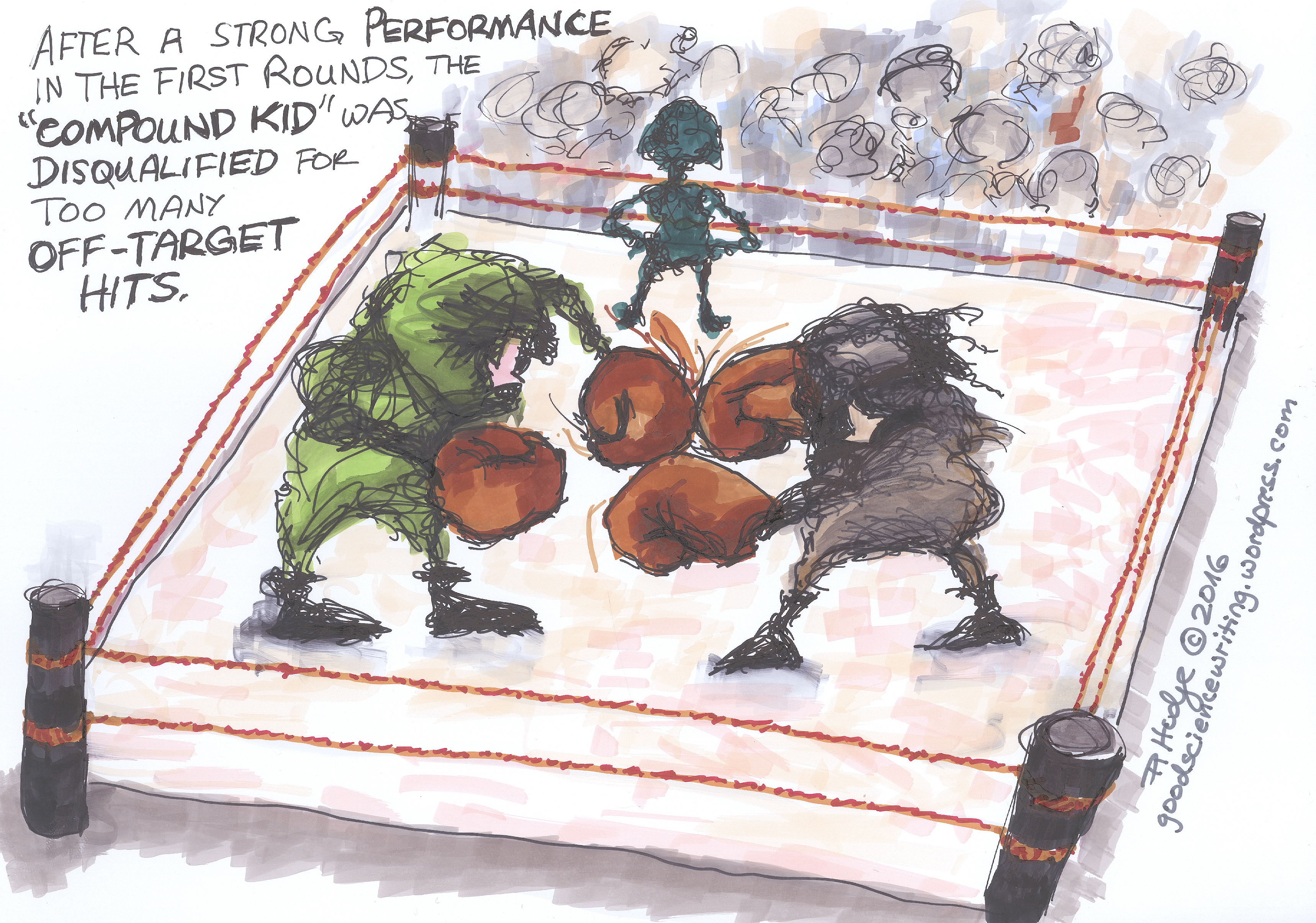
Scientists now know what no nose knows vs. what the nose knows but no nose knows that noses know


A minireview


I don’t know how closely you’ve been following recent research into the nose – that didn’t come out quite the way I intended – but things are flowing right along. A big paper came out this week, just two years after the last one, which is impressive when you consider that entire decades can go by without a major finding in the nose. Individuals find something in there all the time, of course, but they don’t usually get scientific papers out of it.

Why hasn’t the nose achieved the prominence in science that it has on our faces? Noses don’t have the sex factor – a major disease to lobby for them. You don’t see stories that begin, “Every year three million Europeans die of infections due to the magenta nose virus, which causes the nose to turn a deep shade of magenta and then fall off. Patients who survive experience a decrease in quality of life due to the discomfort of wearing a prosthesis. Transplants offer an alternative, but they are often rejected, by both the person’s immune system and everyone who looks at the foreign nose, creating an important social burden.”

Cases of magenta nose virus are rare – in fact, nonexistent – so scientists are forced to start their stories with leads like, “The central position of the nose makes it a natural focal point for scientific inquiry.” Or, “Here we address an issue that has long puzzled a number of scientists, although not that big a number, and not that long, although it seems like it to those who work in the nose lab.”

The current paper answers the question: How many genes does it take to build a human nose? Previous estimates ranged anywhere from 1 to 23,500. The new study says 4 genes are required. That sounds about right: one for length, one for width, and one for each nostril. To know how they solved this you’d have to read the methods section, which is usually about as interesting as reading the instruction manual for your toaster. One approach would be to knock down 23,496 genes until the embryo developed only a nose.

The conclusion of the paper was somewhat modest, which is disappointing, because it’s the place where authors are usually willing to make wild speculations. Instead I’ll repeat what one of the authors said in an interview, anonymously: “This represents such a dramatic step forward in nose science that we believe it would not be entirely unreasonable to expect that it will open an avenue, a car-pool lane, or at least a mule path toward an entirely new discipline. We propose the following name: Systems Biology for the Regeneration of Personalized Noses, or SyBiRePeNos, although we may change the acronym because when people say it out loud it sounds like ‘cyber-penis.'”

I found this statement a bit grandiose, but at least the author didn’t claim they’d found the Holy Grail of the Nose. Maybe they wanted to but couldn’t – the Holy Grail of the Nose had already been found – just two years ago, in the study mentioned earlier.

* * * *

Every scientific field has a Holy Grail – which is good, because otherwise, why would people waste years of their lives looking for it? Holy Grails are so common in research, in fact, that if you pick up a rock you’re liable to find one. It happens every couple of weeks in one part of science or another, and the scientists who found it get free champagne and a parade. A single lab can find more than one Holy Grail, but only after the previous one passes its expiration date, which is more than two years.

To qualify as a Holy Grail, your work has to meet four criteria, and the Holy Grail of the Nose found in May 2014 met them all. The work has to involve 1) a group of experts (in this case, plastic surgeons); 2) the use of a high-throughput technology (questionnaires); 3) an appropriate model system (people’s faces); and 4) the thing you actually find.

What the lab discovered was a nose, of course, but not just any nose: they found the Perfect Nose. And if that doesn’t raise your pulse rate, notice where it was found: on the head of actress Scarlett Johansson. More specifically, on the ventral side of the head, running in a line along the anterior-posterior axis that divided the face almost perfectly symmetrically, slightly below the midline of the face.

This is the kind of study that sounds like it started in a bar at a convention of plastic surgeons; unusually, somebody remembered upon emerging from the next morning’s hangover, collected data, ran it through analytical and statistical programs, and voilà!  Scarlett Johansson had the “perfect nose.” Hey, if it passes through the peer review system, it qualifies as science, right?

How fortunate it was that the perfect nose was found on someone who was already a celebrity. It gave noses an instant spokesperson who could raise international awareness of the issue (the political issue, not the fluid), start funding drives for the nose-impaired, attract money for research, and lobby for an International Nose day.

It was also a nice experience for Scarlett’s individual nose; in 2014 other parts of her body had just been awarded the title “Sexiest Woman Alive.” Her nose was invited to that ceremony, of course, as a guest, so that it would appear the red carpet pictures. But it hadn’t received a single mention in the press – or any appreciation for the thankless, essential role it had played in her success. I doubt very much that Scarlett would have received all those film roles or been crowned “Sexiest Woman Alive” without a nose.

Scarlett’s nose quickly became the focus of intense media attention, got invited to all the best parties, made the talk show circuit, signed a book deal. Her nose got its own Facebook page, twitter account, marketing campaign, and a product line that could be bought from the official website; the best-seller has been scented tissues. For 59 days “Scarlett Johansson’s nose” was the top-searched item on Google, and that doesn’t include a thousand variations typed in by people who couldn’t remember whether there were double-Ts or Ns, added some more, left some out, or had missed school the day they taught the apostrophe.

Fame, however, is a double-edged sword. At first the attention was nice, but soon it began to take its toll. Entire fleets of paparazzi began following her nose around, to the point that it needed its own bodyguard. And not all of the public commentary was polite. Scarlett’s nose was made a political issue, particularly by the Tea Party, who managed to link her nose to the climate change debate, then held it as proof that the nose could not have arisen by the principles of Darwinian evolution. Donald Trump stated that if he were elected President, he would deport her nose, because it could not produce a proper birth certificate, and once it was outside the country, he would build a wall so that it could not come back in. Feelings on the issue intensified to the point that a single mention of Scarlett Johansson’s nose set off fist-fights, which usually ended in someone’s getting their nose broken.

As the nose was, literally, in the foreground of the media frenzy, many of the effects spilled over onto other parts of her face. “At the beginning it was very strange,” she said in a recent interview. “I’d do an interview on television, and the entire time the camera would be zoomed in on my nose. It had very little media experience on its own; I had to train it to hold still when I talked, for example. Everybody’s nose moves, but you never notice because the whole face is moving.”

People would come up to talk, she said, and during the entire conversation their eyes would be fixed on her nose. “They’d be thinking, What makes it so special, so much better than mine?’ You couldn’t catch their eye; they were always looking a little farther down on your face. It was as if my nose had developed special powers, some sort of irresistible force. When people realized it they tried to tear their eyes away, but within just a few seconds they’d be drawn back to it again.” The only way to get them to stop, she said, was to zap their eyes with a laser pointer.

* * * *

While the Perfect Nose had been found, the mechanisms that led it to develop on Scarlett Johansson’s face remained unknown. This week’s study provides a way of finding them, by comparing the sequences of four of her genes to those found in the rest of the population. Presumably she has a unique combination of sequences that explains both her Perfect Nose and the imperfect noses of everyone else.

The chances of these particular versions coming together in one person may be so small that they will never occur again, unless the actress engages in inbreeding and her descendants continue to do so for many generations. Alternatively, CRISPR/Cas gene editing technology may one day be advanced enough to introduce perfect nose genes into human embryos.

At the moment, ethical considerations would make this illegal. There is nothing, however, to prevent scientists from placing Scarlett’s genes in animal genomes. So in the near future we can expect to see mice, rats, and other model organisms, including zebrafish, flies, and worms, all bearing the perfect nose.

One thing the discoverers of the Holy Grail of the Nose might not have taken into account: It is currently impossible to carry out gene therapy to correct most defects in adult tissues. If these challenges can be resolved, however, it may eventually be possible to infect an existing nose with a virus that will rebuild it and render it perfect. In identifying the Perfect Nose, the scientists may have unwittingly triggered the demise of their own profession, by making the Nose Job a thing of the past.


References:

Kaustubh Adhikari, Macarena Fuentes-Guajardo, Mirsha Quinto-Sánchez, Javier Mendoza-Revilla, Juan Camilo Chacón-Duque, Victor Acuña-Alonzo, Claudia Jaramillo, William Arias, Rodrigo Barquera Lozano, Gastón Macín Pérez, Jorge Gómez-Valdés, Hugo Villamil-Ramírez, Tábita Hunemeier, Virginia Ramallo, Caio C. Silva de Cerqueira, Malena Hurtado, Valeria Villegas, Vanessa Granja, Carla Gallo, Giovanni Poletti et al. A genome-wide association scan implicates DCHS2, RUNX2, GLI3, PAX1 and EDAR in human facial variation. Nature Communications 7, Article number: 11616. 19 May 2016. http://www.nature.com/ncomms/2016/160519/ncomms11616/full/ncomms11616.html


Omar Ahmed, MD; Amrita Dhinsa; Natalie Popenko, BS; Kathryn Osann, PhD, MPH; Roger L. Crumley, MD, MBA; Brian J. Wong, MD, PhD. Population-Based Assessment of Currently Proposed Ideals of Nasal Tip Projection and Rotation in Young Women. JAMA Facial Plast Surg. 2014;16(5):310-318. doi:10.1001/jamafacial.2014.228.
http://archfaci.jamanetwork.com/article.aspx?articleid=1883794
Carmen Birchmeier’s Brains


brain1

Festschrift

on the occasion of
Carmen Birchmeier’s 60th birthday

“It’s complicated.”

– Walter Birchmeier

Abstract


In 2013, unbeknownst to most of her colleagues, friends, enemies, distant cousins, and predoctoral students, although not necessarily in that order, Carmen Birchmeier adapted ancient procedures from Medieval alchemists, added some spices from old family recipes, and developed a method of extracting human brains from their natural environment and maintaining them in vitro in the lab. The second step was somewhat harder than the first. Debrainings have been performed before, of course, but the methods remain nearly as labor-intensive and time consuming as they were thousands of years ago. Birchmeier’s innovation was to develop an automated, high-throughput pipeline. But the more serious bottleneck was Step 2: keeping a human brain alive in the lab for more than, say, 10 seconds. That’s where the spices came in.

Once the brains were surviving long enough, Carmen’s carried out some relatively successful experiments to replace the brain in the head, usually that of the original owner, although in one case some sort of administrative error led to what is probably best termed an “involuntary exchange.” The problem was not detected for quite some time because as it turned out, each of the brains preferred its new habitat. Each brain knew that it was in the other body, but it didn’t know whether the other brain knew, and if it didn’t know, well what it didn’t know wouldn’t hurt it. This led to some strange conversations in which everyone was pretending to be someone else, which can be confusing, especially when you were sitting across from yourself. But you don’t need to know any of this. In fact, just forget the last paragraph, because nothing in it reached statistical significance.

The lab attempted to publish a paper on the subject, but reviewers rejected it on the grounds that it was “merely methodological” and “unlikely to have any practical clinical applications.”

Because she feels, however, that this work might be useful to other neuroscientists, her lab has collected a number of protocols describing the proper treatment of brains in the laboratory. This document is intended as a guide to other groups who might be interested in replicating her work.


– Russ Hodge, 2015


Removal of the brain


  1. Open the skull.
  2. Unplug the wires connecting the brain to the eyes.
  3. Unscrew the ears (in a counter-clockwise direction).
  4. Detach the jugular and carotid vessels. The jugular is blue; carotid, red. During reinstallation, reattaching the vessels to the wrong targets will cause the person to think backwards.
  5. Rotate the brain on the brainstem approximately 90 degrees (counterclockwise) until you feel a firm “click”.
  6. Remove the brain.
  7. Don’t forget to close the blood-brain barrier: turn the wheel-shaped handle in a clockwise direction.
  8. Check the surface and interior of the skull for any flora or fauna that have crept through the ears and established colonies. Gently swab with a disinfectant to remove.
  9. Check the brainstem and apply a little water if it seems dry.
  10. Recover Q-tips or any other objects, such as pencils, that have been pushed through an ear and fallen inside the brain cavity.
  11. Store the head (and any other parts of the body, as desired) in a cool, sterile environment for potential reuse.


Checking the overall status of the brain’s health


Hold the brain between your two hands and give it a gentle squeeze. A healthy brain should have the consistency of cauliflower. Is it firm or squishy? Does it smell like alcohol, garlic, or cigarette smoke?

Which type of cheese does the brain resemble most?

  • Edam? (Healthy)
  • Swiss? (Alzheimer’s)
  • Camembert? (An undefined but clearly pathological condition)

Perform the “drop test:”

  • Hold the brain approximately 1m above a firm, flat, clean surface.
  • Drop it.
  • Measure the maximum height of the first bounce. A healthy brain should attain approximately 50cm.
  • Catch it before it rolls away.

Check overall symmetry by rolling the brain over a level surface. If the owner has worn a hat for many years, it may be squished on one side.


Tests of memory and basic cognitive functions

brain2

Before removing the brain, you should obtain a general sense of its overall function. Since brain functions are based on electrochemical energy, two simple tests can be performed:


  1. Insert a device that can deliver an electrical stimulus at various degrees of strength (taser, cattle prod) into one ear, and attach a voltmeter to the other ear. Deliver the charge and measure the net loss in voltage.
  • If the net loss is > 50%, try another brain.
  • If you detect a burning smell, lower the charge and try again.
  • Do not be surprised if the voltmeter records a charge higher than the one you delivered, especially after repeated trials. This indicates long-term potentiation.

2. Insert a USB cable into the ear and see if the brain appears as an external device on your Mac computer (OS X.7 or higher). If you do not see the “brain” symbol on your desktop, try to mount it using the Disk Utility. If this does not succeed, try another brain. If the brain is password-protected, ask the owner for permission to access it.


“Do’s and don’ts:”

Basic protocols for handling brains in the lab


If kept outside the body for long periods of time, brains should be occasionally turned to avoid bedsores.

There is anecdotal evidence that brains enjoy an occasional massage.

If the brain is to be replaced in a new body, use a powerful magnet to erase old memories. The operating system may need to be reinstalled.

Brains may be frozen. For defrosting, use the LOWEST setting on the microwave oven.

The “three-second rule:” If a brain is accidentally dropped, but picked up within three seconds, it is unlikely to be contaminated. Simply brush off any visible dirt.

The brain’s expiration date should be written somewhere on the bottom. Check the date before reinstalling a brain. A brain may be kept past this date if it has been refrigerated and does not smell. Expired brains can be fed to pets.

Meticulously record all tune-ups and repairs in the service manual, which is generally found in a pocket inside the skull near the left ear.

Do not use the brain in games of Nerf basketball or other sports activities.

Do not allow pets to play with brains.

Don’t let the brain get bitten by mosquitoes. The itching will drive it insane.

Brains sunburn very easily, so any brain exposed to sunlight should be generously coated with a sun-blocker with a rating of 50 or above.

Advise patients to get brain insurance before any procedure so that they can receive compensation in case anything goes wrong, providing they remember.

Brains often shrink slightly when stored outside the body. Upon reimplantation, use bubble packing to make up for the extra space.

If the brain seems too large for the skull upon reimplantation, use Vaseline or some other petroleum-based lubricant to ease it in.

If you have replaced a brain and notice some extra parts lying around, such as the hippocampus, just put them in wherever there is space. They will automatically migrate back to the proper position.

A reimplanted brain may need to be reanimated with an electric charge to function. Any normal taser will do. Stick the business end in one ear and deliver a charge until the patient tells you to stop.

If upon brain removal you find a computer chip or some other electronic device, you should assume that it is government property. Destroying it is a federal offense accompanied by a mandatory sentence and a fine. Get rid of it, but make it look like an accident.

If the brain belongs to a friend or acquaintance, you may be tempted to carry out some slight alterations to improve its personality. Any such measures are, of course, unethical, unless they are intended to improve the person’s singing. Do not be tempted by additional suggestions for improvements from the patient’s spouse or family.

It is illegal to sell a brain, but you may pawn it for short periods of time. Do not bet a brain in a poker game, even among members of the lab.

Don’t dress it in a silly hat, doll’s clothes, or make distasteful drawings on it with a permanent marker. Only write on the brain with an erasable whiteboard marker.

There is no evidence that when a brain is removed from the body, it can control the minds of people around it. Of course, that’s what it would want us to think.

If the brain belongs to a famous person, don’t take it out in public and show it around, especially in a bar. You may, however, do whatever you like with the body, provided it is restored to its former condition before the brain is reinstalled.

Do not stick Post-its directly onto the surface of the brain.

Do not use a brain as a Halloween Jack-o’-lantern.

Although brains are highly similar in appearance, each brain is unique and gives off a distinct smell. Train a dog to distinguish them.

A brain is not a pet. Do not try to teach it tricks.


Cussing in Kansas

Note: this piece continues the theme of learning the Kansas state song in the first grade, covered in an article below. In case you don’t remember, it’s Home on the Range, and the text goes like this:

Oh give me a home where the buffalo roam
And the deer and the antelope play,
Where seldom is heard a discouraging word,
And the skies are not cloudy all day.

First graders never understand the third line of our state song, but by the time you get to it you no longer care. “I’ll sing it first and then it’s your turn,” your teacher says, as if a flock of parrots has flown in and replaced her pupils. A few of us parrots put our hands over our ears. Barely 15 minutes into our academic careers, we’ve already learned a lot of interesting things : chalkboards can make a horrible screeching sound, a lot like our teacher’s singing, although not quite as bad.

“Where seldom is heeeeearrrrd a discouraging woooorrrrd,” she screeches, and the chorus, 25 tone-deaf first graders yowling at the limits of lung capacity, produces a sound that causes the fillings in your teeth to vibrate. The text is beyond us, but the last two lines were about animals, so this must be their herd. Seldom is a herd of what? A herd of buffalo?

You’d like to ask, but you’re supposed to raise your hand and now you discover you can’t. Learning the first two lines of the song has been exhausting work. There have been too many new facts, and hints that your family has been keeping things from you. Why have they never talked about Lucrezia Borgia, and all of the millions of buffalo and husbands she murdered? At home do you really speak English, or is it some foreign language? “I never want to hear the word ‘ain’t’ in this classroom,” your teacher said a minute ago. “Some of you don’t speak right. It’s not your fault, but we’re going to fix it, starting now.”

Are you one of the ones that needs fixing? Has your whole life been a lie?

You’ve made your first foray into the science of zoology, with a plan for a field study to count antelopes. And even before you’ve learned the alphabet, grammar has reared its ugly head. Buffalo or buffalos? Deer or deers? You used to know, but you’re no longer sure.

All this thinking has sapped your energy. Your brain burns up all the energy it has, then starts drawing what’s stored up in your body, even your toes, which hold only a little bit, and burns that. In just five minutes a whole day’s supply of energy has been used up, leaving your body as limp as a noodle. Only seven hours more hours until school’s out.

So we squeeze the third line through our ears and it makes a lump in our brains, like a pig swallowed by a python, in hopes it will be digested later. But that may never happen. The lump may have to be surgically removed. And some of us, tragically, may die without ever having understood the full meaning of “Home on the Range.” A brain scan of the corpse would reveal a small lump, shaped like a pig. That’s the third line of the song, which never got digested.

Usually you figure out what it means many years later, when you’re in the middle of something important and completely unrelated. You may be drinking beer while sitting in a fishing boat in your garage. Or giving a speech to the American Nephrological society. Or you’re a detective on a stakeout, wearing a walrus suit as a disguise, and that’s the moment when the moment of enlightenment strikes.

“A discouraging word,” you realize, means a curse word, or, in the first-grade venacular, a cuss word. Saying that it is seldom heard implies that Kansans don’t cuss as much as people in other states. As publicity goes, that kind of information will attract one type of person, and another will say, “No thanks, I’ll just stay in Missouri.” In the end, both states are happy.
You’d expect this claim about the amount of cussing to have some empirical data behind it, but I’ve never been able to track it down. In my experience, people in Kansas cuss plenty. Which makes you wonder how they talk in other places.

First graders in particular use a lot of cuss words, which compose most of your vocabulary, aside from a few nouns and verbs that have practical uses. You find cuss words everywhere: on the playground, or when someone injures himself, or when guys come over to watch football with your dad. Cuss words stick to you; you come home covered in them. You don’t know what they mean, but you discover that they have magical powers that make the people around you do interesting things.

Cussing takes many years to master because words have different degrees of power and affect various categories of people differently, much like pharmaceutical substances. Your mom, grandmother and minister have no tolerance at all, probably because of some immune deficiency.

The weakest cuss words are used to express pain, or in situations involving automotive vehicles: getting a parking ticket, locking yourself out of the car, or criticizing the driving of others on the road. Higher on the scale come words related to poop. Then come legal issues surrounding the marital status of your parents at the time of your birth. Close to the top are words for various parts of your anatomy, followed by the things that can be done with those parts, particularly in relation to family members or animals.

All these things are valid topics of discussion, but they’re considered uncivilized. Cultured folk have an entirely different set of words that mean exactly the same things but won’t make your mom go crazy. Why? Nobody knows. It’s magic.

First graders pick up all these words and bring them home without considering the potential consequences: embarrassment, the loss of dessert privileges, or extended periods of incarceration. But at that age you’re not even sure whether something is a cuss word; the only way to find out is to test it on your mom.

You come home from school and find her baking cookies. “Have one,” she says, and gives you a cookie. You stare up at her with big, grateful brown eyes.

“Mom?” you say.

“Yes, dear,” she smiles at you.

“What does mmm-mmm mean?” you say.

She turns pale and stares down at you, thinking, He can’t have said what I think he just said. “What did you say?” she asks, which is the wrong question, because to give an honest answer you have to say it again.

“WHAT did you say???” she says – she can’t help herself – but manages to clap a hand over your mouth, just in time. She takes back the cookie, which is unfair, and says, “I’m going to discuss this with your father.” In your family, that’s the equivalent of getting out the nuclear launch codes.

* * * * *

By the second or third grade you can usually tell if a word is a cuss word, and you’ve learned they’re about as welcome in the house as pet spiders or head lice; all three are better left in the garage. The arrival of puberty presents entirely new challenges. One is a change in the wiring of your brain, connecting it directly to your mouth, without first passing by the censorship bureau, which lies just above your tonsils. Anything in your mind, even in the subconscious part, can pop out at any moment: death threats, family secrets, and an entire reservoir of cuss words, dammed up in your brain and ready to break out at any moment.

This is also the period of your life in which for a week every summer, you’re shipped off to Scout Camp. For your parents, Scout Camp provides a brief respite from sharing their home with a person who exhibits all the symptoms of clinical insanity. For you, Scout Camp imparts the lesson that you never, under any circumstances, want to be sent to the Gulag, which is, in all essential respects, just like Scout Camp.

Scout Camp will be the subject of an article of its own in the near future. For now let me just say that you learn skills that will serve you throughout life. You learn to tie knots, in case you ever need to hang somebody. You learn how to survive in the wilderness, which is a patch of woods above the picnic area at the lake, with a pocketknife, a map, a compass, a roll of Saran wrap, and a single match. These items, used in the right order, provide a solution to any situation you’re likely to encounter. They also have many creative uses as instruments of torture.

In the Gulag, over 90 percent of the words you hear in the Gulag are profanities, so at the end of the week you’re covered with them. Combine that with the total loss of control over your mouth and you’ve got real problems when the Gulag commutes your sentence and sends you home.

You come in the door and your mom is baking cookies, and she smiles at you and says how much she missed you, and the first thing out of your mouth is a cuss word.

“One more filthy thing out of your mouth, young man, and I’m going to wash that mouth out with soap,” your mom says.
Basically it’s a dare. You don’t want to take her up on it, it’s absolutely the last thing you want to do, but your brain and mouth are not under your control. You can guess what happens next.

Your mother is a gentle soul, an angel, but her threat is absolute; it leaves no room for a retreat with dignity. She’s committed herself and there’s no going back. So she leads you into the bathroom and washes your mouth out with soap.

This is a life experience just as important as being sent to the Gulag. It gives you a chance to learn techniques for projectile vomiting, which will come in handy the first time you get drunk. If you’re not willing to zap your tongue with a Taser, soap is the only substance capable of breaking the brain-to-mouth circuitry. It activates the trauma center of your brain, which records every sensation with perfect fidelity and will replay this event when triggered by the proper stimulus. In this case, a cuss word.

For years and decades to follow, any time you start to say one, your mouth will be filled with a powerful taste of soap and cause violent projectile vomiting. You don’t even have to say the word: just thinking it will provoke the symptoms.

And it’s hard, very hard, not to think of a thing when you’re trying not to. The harder you try, the more you think of it. Even right now, sitting here writing this…

I think I’ll change the subject now.

Best of PubMed – another Christmas Special!

Just in time for Christmas – finally another edition of the Best of PubMed! For those of you unfamiliar with these articles, these are references to publications (mostly from the Biomedical literature) listed at www.pubmed.org. If you want to follow up on an article, cut and paste the “PubMed ID” number into the search field at the PubMed website. Happy reading and happy holidays!

Check out past “Best of PubMed” entries on a range of themes – from Halloween to the World Series to the dangers of shooting out your eye with a BB gun – here on the blog. More to come soon!

Do reindeer and children know something that we don’t? Pediatric inpatients’ belief in Santa Claus.
Cyr C.
CMAJ. 2002 Dec 10;167(12):1325-7. No abstract available.
PMID: 12473618

The tooth fairy, Santa Claus, and the hard core drinking driver.
Chamberlain E, Solomon R.
Inj Prev. 2001 Dec;7(4):272-5. No abstract available.
PMID: 11770650 Free PMC Article

[Why is Santa Claus bowed?].
Leirisalo-Repo M.
Duodecim. 1998;114(23):2481-6. Finnish. No abstract available.
PMID: 11757148

Christmas, santa claus, sugarplums and the grinch.
Lau DC.
Can J Diabetes. 2011 Dec;35(5):484-5. doi: 10.1016/S1499-2671(11)80001-8. No abstract available.
PMID: 24854970

All I want for coagulation.
Nunn KP, Bridgett MR, Walters MR, Walker I.
Scott Med J. 2011 Nov;56(4):183-7. doi: 10.1258/smj.2011.011154. Review.
PMID: 22089036

“Here comes Santa Claus”: what is the evidence?
Highfield ME.
Adv Emerg Nurs J. 2011 Oct-Dec;33(4):354-8. doi: 10.1097/TME.0b013e318234ead3.
PMID: 22075686

“Yes, Virginia, there is a Santa Claus”.
Angelica JC.
J Pastoral Care Counsel. 2011 Spring-Summer;65(1-2):10.1-2. No abstract available.
PMID: 21928502

Safer toys coming, but not with Santa Claus.
Thibedeau H.
CMAJ. 2009 Sep 15;181(6-7):E111-2. doi: 10.1503/cmaj.109-3003. No abstract available.
PMID: 19752130 Free PMC Article

Visiting Santa: a supplemental view.
Trinkaus J.
Psychol Rep. 2008 Dec;103(3):691-4.
PMID: 19320200

Hemoglobin’s moving around (to the tune of “Santa Claus is Coming to Town”).
Ahern K.
Biochem Mol Biol Educ. 2007 Nov;35(6):478. doi: 10.1002/bmb.118. No abstract available.
PMID: 21591150

Song: Glucagon is coming around (to the tune of “santa claus is coming to town”)*.
Ahern K.
Biochem Mol Biol Educ. 2006 Jan;34(1):36. doi: 10.1002/bmb.2006.49403401036. No abstract available.
PMID: 21638631

Germs and angels: the role of testimony in young children’s ontology.
Harris PL, Pasquini ES, Duke S, Asscher JJ, Pons F.
Dev Sci. 2006 Jan;9(1):76-96.

Santa Claus and staff retention.
Olivi PM.
Radiol Manage. 2005 Sep-Oct;27(5):10-1. No abstract available.
PMID: 16294580

Oliver Twist and Santa Claus.
Gannon F.
EMBO Rep. 2004 May;5(5):431. No abstract available.
PMID: 15184969

[Is Santa Claus still needed?].
Tamminen T.
Duodecim. 2003;119(23):2317-22. Finnish. No abstract available.
PMID: 14768260

Images in cardiovascular medicine. Santa Claus in the echo lab.
Kobza R, Duru F, Jenni R.
Circulation. 2003 Dec 23;108(25):3164. No abstract available.
PMID: 14691023

Neurogenetics: three wishes to Santa Claus.
Coutinho P.
Arch Neurol. 2000 Jan;57(1):59. No abstract available.
PMID: 10634444

[Santa Claus as a consultant. “Then we together will rejoice, children’s eyes will shine with joy”].
Puumalainen AM, Vapalahti M.
Duodecim. 1997;113(23):2467-70. Finnish. No abstract available.
PMID: 10892154

[Santa Claus is perceived as reliable and friendly: results of the Danish Christmas 2013 survey.]
Amin FM, West AS, Jørgensen CS, Simonsen SA, Lindberg U, Tranum-Jensen J, Hougaard A.
Ugeskr Laeger. 2013 Dec 2;175(49):3021-3023. Danish.
PMID: 24629466

Syntrophin proteins as Santa Claus: role(s) in cell signal transduction.
Bhat HF, Adams ME, Khanday FA.
Cell Mol Life Sci. 2013 Jul;70(14):2533-54. doi: 10.1007/s00018-012-1233-9. Epub 2012 Dec 21. Review.
PMID: 23263165

What does God know? Supernatural agents’ access to socially strategic and non-strategic information.
Purzycki BG, Finkel DN, Shaver J, Wales N, Cohen AB, Sosis R.
Cogn Sci. 2012 Jul;36(5):846-69. doi: 10.1111/j.1551-6709.2012.01242.x. Epub 2012 Mar 29.
PMID: 22462490

Santa Claus: good or bad for children?
Nelms BC.
J Pediatr Health Care. 1996 Nov-Dec;10(6):243-4. No abstract available.
PMID: 9052114

Perhaps there is a Santa Claus.
Van Eldik DT.
J Fla Med Assoc. 1994 Dec;81(12):795-6. No abstract available.
PMID: 7861106

Encounter with reality: children’s reactions on discovering the Santa Claus myth.
Anderson CJ, Prentice NM.
Child Psychiatry Hum Dev. 1994 Winter;25(2):67-84.
PMID: 7842832

Do you believe in Santa Claus?
Atkinson J.
Nurs Stand. 1988 Dec 31;3(13-14):20-1. No abstract available.
PMID: 3068551

Epidemiology of reindeer parasites.
Halvorsen O.
Parasitol Today. 1986 Dec;2(12):334-9.
PMID: 15462756

A letter to Santa Claus.
Shusterman C.
Am Laund Dig. 1985 Dec 15;50(12):14-6. No abstract available.
PMID: 10275266

In the absence of Santa Claus.
Tebben MP.
Public Health Rep. 1985 Jul;100(4):355. No abstract available.
PMID: 19313171

Picture Reports: Influenza virus, Santa Claus, or a mouse playing tennis?
Getty B.
Br Med J (Clin Res Ed). 1984 Dec 22;289(6460):1744. No abstract available.
PMID: 20742372 Free PMC Article

Children’s belief in santa claus: a developmental study of fantasy and causality.
Prentice NM, Schmechel LK, Manosevitz M.
J Am Acad Child Psychiatry. 1979 Autumn;18(4):658-67.

Imaginary figures of early childhood: santa claus, easter bunny, and the tooth fairy.
Prentice NM, Manosevitz M, Hubbs L.
Am J Orthopsychiatry. 1978 Oct;48(4):618-28.

Santa Claus will probably be coming.
Ammer DS.
Hosp Purch Manage. 1977 Dec;2(12):2-3. No abstract available.
PMID: 10305079

A note on the absence of a Santa Claus in any known ecosystem: a rejoinder to Willems.
Baer DM.
J Appl Behav Anal. 1974 Spring;7(1):167-9. No abstract available.
PMID: 16795462 Free PMC Article

The d.a. Who was Santa Claus?
Peyraud AP.
CAL. 1972 Dec;36(6):26-30. No abstract available.
PMID: 4510978

Another note to Santa Claus.
Cummins S, Garms N, Zusne L.
Percept Mot Skills. 1971 Apr;32(2):510. No abstract available.
PMID: 4932683

Meet Dr. Cloonan Santa Claus 365 days a year.
Penny PL.
CAL. 1970 Dec;33(6):15-9. No abstract available.
PMID: 5277587

Santa Claus drawings by Negro and white children.
Coyle FA Jr, Eisenman R.
J Soc Psychol. 1970 Apr;80(2):201-5. No abstract available.
PMID: 4924834

Barefoot in the hospital park or yes Virginia, there is a Mrs. Santa Claus known as the administrator’s wife.
Spencer V.
Hosp Manage. 1967 Dec;104(6):33-7. No abstract available.
PMID: 6063631

Charlie’s Santa Claus.
Stollard ML.
Nurs Times. 1965 Dec 24;61(52):1762. No abstract available.
PMID: 5849676

[The sweet Christmas rash.]
Gyldenløve M, Nepper-Christensen S, Thyssen JP, Faurschou A.
Ugeskr Laeger. 2013 Dec 2;175(49):3025-3026. Danish.
PMID: 24629468

The Christmas tree foreheadplasty: a novel technique used in combination with a bandeau for fronto-orbital remodelling in craniosynostosis.
Britto JA, Gwanmesia I, Leshem D.
Childs Nerv Syst. 2012 Sep;28(9):1375-80. doi: 10.1007/s00381-012-1806-9.
PMID: 22872251

The need for gas-specific “Christmas tree” connections.
Atlas G, Lee M.
J Patient Saf. 2012 Jun;8(2):88. doi: 10.1097/PTS.0b013e31824a4af4. No abstract available.
PMID: 22610127

[A woman with Christmas in sight].
Fickweiler W, de Vries MM, Postma G.
Ned Tijdschr Geneeskd. 2011;155(51):A4242. Dutch.
PMID: 22200154

SIRT1 regulates the ribosomal DNA locus: epigenetic candles twinkle longevity in the Christmas tree.
Salminen A, Kaarniranta K.
Biochem Biophys Res Commun. 2009 Jan 2;378(1):6-9. doi: 10.1016/j.bbrc.2008.11.023. Epub 2008 Nov 21. Review.
PMID: 19010308

The importance of elves.
Nurs Spectr (Wash D C). 1996 Dec 16;6(26):3.
Hess RG Jr.
PMID: 9433318

The gnome of Dulwich.
Goodwin P.
Nurs Times. 1971 Sep 2;67(35):1096.
PMID: 5565702

[Santa Claus is perceived as reliable and friendly: results of the Danish Christmas 2013 survey.]
[Article in Danish]
Amin FM1, West AS, Jørgensen CS, Simonsen SA, Lindberg U, Tranum-Jensen J, Hougaard A.
Ugeskr Laeger. 2013 Dec 2;175(49):3021-3023.

Abstract
INTRODUCTION:
Several studies have indicated that the population in general perceives doctors as reliable. In the present study perceptions of reliability and kindness attributed to another socially significant archetype, Santa Claus, have been comparatively examined in relation to the doctor.
MATERIALS AND METHODS:
In all, 52 randomly chosen participants were shown a film, where a narrator dressed either as Santa Claus or as a doctor tells an identical story. Structured interviews were then used to assess the subjects’ perceptions of reliability and kindness in relation to the narrator’s appearance.
RESULTS:
We found a strong inclination for Santa Claus being perceived as friendlier than the doctor (p = 0.053). However, there was no significant difference in the perception of reliability between Santa Claus and the doctor (p = 0.524).
CONCLUSION:
The positive associations attributed to Santa Claus probably cause that he is perceived friendlier than the doctor who may be associated with more serious and unpleasant memories of illness and suffering. Surprisingly, and despite him being an imaginary person, Santa Claus was assessed as being as reliable as the doctor.

What does God know? Supernatural agents’ access to socially strategic and non-strategic information.
Purzycki BG1, Finkel DN, Shaver J, Wales N, Cohen AB, Sosis R.
Cogn Sci. 2012 Jul;36(5):846-69. doi: 10.1111/j.1551-6709.2012.01242.x. Epub 2012 Mar 29.

Abstract
Current evolutionary and cognitive theories of religion posit that supernatural agent concepts emerge from cognitive systems such as theory of mind and social cognition. Some argue that these concepts evolved to maintain social order by minimizing antisocial behavior. If these theories are correct, then people should process information about supernatural agents’ socially strategic knowledge more quickly than non-strategic knowledge. Furthermore, agents’ knowledge of immoral and uncooperative social behaviors should be especially accessible to people. To examine these hypotheses, we measured response-times to questions about the knowledge attributed to four different agents–God, Santa Claus, a fictional surveillance government, and omniscient but non-interfering aliens–that vary in their omniscience, moral concern, ability to punish, and how supernatural they are. As anticipated, participants respond more quickly to questions about agents’ socially strategic knowledge than non-strategic knowledge, but only when agents are able to punish.

Christmas, santa claus, sugarplums and the grinch.
Lau DC.
Can J Diabetes. 2011 Dec;35(5):484-5. doi: 10.1016/S1499-2671(11)80001-8.
PMID: 24854970

All I want for coagulation.
Nunn KP1, Bridgett MR, Walters MR, Walker I.
Scott Med J. 2011 Nov;56(4):183-7. doi: 10.1258/smj.2011.011154.

Abstract
Evidence-based medicine underpins modern practice of medicine. This paper describes a fictional consultation between Santa Claus and a doctor regarding deep vein thrombosis (DVT) prophylaxis, giving a review of the evidence for DVT prophylaxis in travellers while exposing the difficulty in applying evidence to atypical clinical encounters. Medline and the Cochrane Library were searched, and guidelines reviewed. Keywords used were DVT, thromboembolism, deep vein thrombosis and air travel-related venous thromboembolism. All relevant studies found, have been included in this review, with additional studies identified from the references in these articles. In conclusion, compression stockings, with or without a one-off dose of either aspirin or heparin, are the most evidence-based approaches for prophylaxis in someone with established risk factors for DVT prior to a long-haul flight. Simple exercises should also be encouraged.

“Here comes Santa Claus”: what is the evidence?
Highfield ME1.
Adv Emerg Nurs J. 2011 Oct-Dec;33(4):354-8. doi: 10.1097/TME.0b013e318234ead3.

Abstract
The purpose of this article is to examine the strength of evidence regarding our holiday Santa Claus (SC) practices and the opportunities for new descriptive, correlation, or experimental research on SC. Although existing evidence generally supports SC, in the end we may conclude, “the most real things in the world are those that neither children nor men can see” (Church, as cited in Newseum, n.d.).

Save the date! Science cabaret on Jan. 23, 2015, DAI Heidelberg

If you’ll be in or near Heidelberg (for example, somewhere in the Milky Way galaxy) at 8pm on Jan. 23, don’t miss my first Heidelberg performance of the Science cabaret – “The revenge of the mammoths.” An hour of stand-up comedy on the topic of the collision between science and society.

Details in German here.

Here’s the announcement in English:

Science is zooming by in the fast lane at 250 km/h, leaving most of us stuck behind a truck. Are we headed for a massive traffic jam? Or will the “zipper system” finally work? Russ Hodge, native Kansan (his parents’ fault), long-time resident of Germany (his wife’s fault), and science writer (his own fault) takes us to the edge of today’s research (and occasionally way over the edge) in a talk loaded with fascinating information. For example, the human genome is 4% Neanderthal, 14% Genghis Khan, and 48% Jim, a sheep farmer from Ohio. Random and useless facts are woven together with practical information about the Republican plan for surviving the Zombie Apocalypse, building your own anti-tornado device, and how to launch a successful Biotech start-up using only the contents of your belly-button. We’ll explore the evolution of horror films, how to distinguish true Conspiracy Theories from crazy stuff on blogs, and the search for Amelia Earhart’s DNA in the species that most likely ate her.

The talk will be held in Kansas English, refined and distilled for European consumption.

Searching for Oslo: a non-hypothesis-driven approach

Note: I will be speaking at a conference on science communication in Oslo in September. This is not the talk I will give there; however, it was inspired by the invitation.

First let me thank the conference organizers for this wonderful event and inviting me to this lovely city. I’ve been to Oslo many times and have always enjoyed it, but I’m not the type of tourist who studies up on a place before he goes. In fact, and this is embarrassing to admit, I’m not even sure exactly where I am. I told one of my kids I was coming to Oslo and she said, “Where exactly is Oslo, anyway?”

“It’s up, and to the left,” I told her.

Actually I didn’t have the slightest idea. I’d never looked it up on a map. I realized that I hardly ever use maps anymore. Almost nobody does. You don’t need to. You just go to the airport on time, go to the right gate, and the airlines and trains take care of the rest. Or you have an iPhone. You tell it where you want to go and it calculates your route, starting with your exact current position. Your iPhone says: “Go out the door. Turn left. Walk 1,213 kilometers. Turn right.”

If you’re going to go looking for something, it’s a good idea to start out with a general idea of its location. In the case of Oslo, it’s helpful to know that it is located in the Milky Way galaxy. It helps more to know it’s in our own solar system, even right here on our planet. It’s hard to calculate the odds of that happening; we’d need to know more about the state of the early universe at 0.00001 seconds after the Big Bang. However Oslo got here on Earth, its location is convenient. If it were anywhere else in the solar system, for example on Mars, we probably wouldn’t know it existed.

Once you have narrowed the search area to Earth, you’re getting close. At that point my knowledge of geography starts to get fuzzy, so you should just stop somebody and ask for directions.

But a little more information can help. I knew Oslo was in Scandinavia, which means you won’t waste a lot of time looking for it in the Pacific Ocean, or South America. I would like to note, here, that Scandinavia is a concept I don’t fully understand. We usually give names to continents, or countries, or hurricanes, or new species. As far as I can tell Scandinavia doesn’t fit into one of those categories, so I’m not sure why it needs a special name. On the other hand, if people want to call themselves Scandinavians, I guess there’s no law against it. At least they picked a nice name. Usually these things are decided in a committee, and you know how committees are. If you let a committee pick the name, Scandinavia would probably be called “Roger”.

I don’t know if you’ve ever seen a map of Scandinavia, but it’s huge. And there are a lot of blank areas. Many of these appear to be isolated regions that have never been explored. Scandinavia is so large that there could be 10 Oslos hiding out there, and you could spend your whole life looking for them, especially if they didn’t want to be found. Plus, we’re lacking a lot of information that would have been helpful. It is unclear how many groups have gone off searching for Oslo and failed to find it. These were negative results, so they couldn’t get their papers published. In other cases, groups found one Oslo and then broke off the search, never considering that there might be 9 more Oslos out there. So the data may be skewed toward one Oslo that happens to be easiest to find.

Today you should never start any scientific project without an exhaustive search of the literature, for example, by typing “Oslo” into Google. Here you find one fact that can significantly narrow the search area: Oslo is located in Norway. With that piece of information alone you can eliminate 2/3rds of Scandinavia from the search area. So it would only take 0.33333… lifetimes to search the remaining area and find 10 Oslos. The probability of finding only 1 Oslo would be a tenth of that, so you ought to calculate 3.3333… lifetimes. In a grant application, that comes to three full-time positions and one third-time position, probably a technician.

Now I think it’s reasonable to invest that much effort in searching for Oslo, especially since you might find other things while you were at it. Who knows what remains to be discovered in these large, unexplored areas of the country? You might find a species of Archaea that evolved 3 billion years ago in a thermal vent on the ocean floor. It’s a long ways from that deep ocean vent to a valley in Norway, but you can crawl a long way in 3 billion years. Especially if the colony is being driven by a male Archaea, who doesn’t waste time seeing the sights along the way, and keeps the pit stops as short as possible. You might also find the last surviving tribe of Yeti. Or secret UFO landing sites. You should keep your eye out for these things. If you find one of them, you should mention it in your supplemental data.

It’s quite common in science to start looking for one thing and end up finding something else. In fact, sometimes you find things when you aren’t looking for anything particular at all. You know how it is: you come into the lab on a Sunday, just to putter around a bit, and suddenly, lying there in your Petri dish, is the ribosome.

This is the type of science we call non-hypothesis driven research. You grope around in the dark and suddenly your hands grasp onto something. Please don’t think of this as a reference to some sort of sexual activity because it is not. In any case, in non-hypothesis-driven research, you should always be prepared for surprises. You’re out in the field looking for Oslo, or maybe a new species of Archaea, and suddenly you find a Yeti. You’ll never get a Yeti back to the lab in a Petri dish. So when you’re doing non-hypothesis driven research, you should always take along a big net. And some tranquilizer darts.

It’s hard to get funding for this kind of research. When you apply for a grant they always ask what you’re expecting to find. This is kind of silly, because if you already knew, you wouldn’t need their money to find it. So when you’re applying for a grant you just sort of pretend that you don’t know what you’re going to find.

That’s harder to do when you’re trying to get funding for non-hypothesis-driven research. Under the section on “Expected results and impact,” you can’t just write, “I have absolutely no idea.” Instead you should say something like, “We expect to find either a new species of Archaea, the city of Oslo, or a Yeti.” It’s wise not to mention secret UFO landing sites in grant applications.

You work hard to finish the application, send it off, and then you start waiting. You wait for years and years, and you never hear back from the grant commission. The entire system is biased against non-hypothesis-driven research.

But think where we’d be without it. I don’t know who the first person was who discovered Oslo, but he certainly didn’t find it by using a map. Without that bold pioneer, we wouldn’t be here. We’d be somewhere else. Probably in Stockholm.

A novel, non-hypothesis-driven method to determine the location of Oslo

Abstract. Traditional methods of locating large foreign cities involve a time-consuming, manual inspection of maps, sometimes with the aid of a magnifying glass. Recent years have seen the development of automated, high-throughput technologies such as Google Maps. These methods, however, are of limited applicability in cases where you don’t have the right map, or when you are at Starbucks and the Internet server crashes. Here we use Oslo as a model system to develop a novel, non-hypothesis-driven approach for determining the location of any large object on Earth. The method can easily be adapted to find other cities as well as smaller entities, such as new species of Archaea, or Yeti.

On the publication of “Remote sensing” by the magazine Occulto

Some remarks given on May 31, in Berlin, on the presentation of the newest edition of Occulto…

My name is Russ Hodge, and I’m honored that Occulto is publishing my short story “Remote Sensing” in the new issue. I believe this is the first time the magazine has published a short piece of fiction, and I hope it won’t do any permanent damage.

Originally I had hoped the story would come up here on stage with me. I would just introduce it and step back and let it speak for itself. But at the last minute it got cold feet. “You go ahead,” it said, “I’ll just wait here at the bar.” A lot of stories are shy in public, and the authors are to blame. Some writers bring their stories on stage and undress them, right there in front of everyone. As if stories don’t have feelings. Well, they can experience humiliation like anybody else. They can also be quite passionate. Check into a hotel room with a story sometime, order some champagne, light some candles, and you’ll see what I mean.

Stories shouldn’t need much introduction because they are small, complete worlds, self-contained and self-sufficient, like a universe within a snow globe. Inside a story, the normal rules of logic and even the laws of physics don’t necessarily apply. You wouldn’t want this strange reality to leak out into the real world. Suppose, for instance, you put some antimatter into a story. If it escaped it could cause what physicists call a naked singularity. I don’t know what that means, or why it’s naked, but I do know that a naked singularity could cause the end of the world, which one should avoid whenever possible.

This story is probably safe. There are no genetically modified organisms that might escape and destroy the world. There is a small amount of radioactive material, but it is handled with extreme care.

The topic is the relationship between a young man and his grandfather, during the last few months of his grandfather’s life. The story ends before anyone actually dies, which avoids a lot of medical terminology, gruesome details about the autopsy, or all the ways lawyers earn money on a fresh corpse. Some authors write on and on about these things, but that’s not my style. I killed a character one time and it made some of my friends so mad that they stopped talking to me.

That happened in another story, which was about a man who got bitten by two snakes. The first bite occurred immediately before the story began and the second came right at the end. Basically, by the first sentence, the guy was already dying. I did my best to save him, and he put in some effort himself, but it was no use.

Neither of us saw the second snake, hiding under a rock on the last page. Suddenly it was just there, and it scared the hell out of both of us. Now I’m a great believer in the craft of writing, and I know people who plan a story down to every detail. I’m not like that. Hemingway said, “If in a story there’s a gun hanging over the fireplace, it had better go off.” But you have to plan these things. Somebody grabs the gun and tries to shoot it, only to discover that the author forgot to buy any bullets.

But a lot of the process of writing is still a mystery to me. I start with a character, and a first sentence, and they seem to take over from there. Just about anything can happen. Like that second snake. Suddenly there it was, and it seemed inevitable. The same thing happened with this story: the final sentence appeared out of nowhere, through a process that I don’t understand. But you know it is exactly the right ending.

Well, my friends didn’t agree about the snake. The story was only about 10 pages long, but that was enough for them to develop a deep emotional attachment to this character. I tried to tell them that he was purely a fictional construct, and that he didn’t really exist. They would have nothing of it. You’d think I’d murdered a family member. A family member they got along with.

“You can’t kill him,” they said. “You’ve got to change the ending!” I apologized, but told them the matter was out of my hands. “It’s a story about a guy who gets bitten by two snakes,” I said. “That’s just how it is.”

This incident taught me an important lesson. Now I try not to kill anyone in a story unless it’s absolutely necessary. I also try to follow this principle in my daily life. Going around murdering people just for the entertainment value of it can cause all kinds of complications.

Well, I promise you there are no snakes in this story in Occulto at all. Which is really a bit odd, considering that the story is set in my home state of Kansas. I can tell you first-hand that we have plenty of dangerous snakes. Copperheads, rattlesnakes, water moccasins. The copperheads like leafy spots in the shade, rattlesnakes lie on rocks in the sun, and water moccasins hang out in the lakes and rivers. Basically, you’re not safe anywhere. All right, you could hide in your mailbox. You won’t find any snakes there, because the mailboxes are already occupied. By black widow spiders.

I never considered myself a “regional” writer until I moved to Europe and lived here for about 20 years. One morning I woke up and found all my stories moving back to Kansas. Maybe it’s nostalgia. Or some sort of neurodegenerative disease that is wiping out my short-term memory. Maybe I’ll wake up someday and believe that it’s 1966 and I’m in the second grade.

What I really think is that I’m experiencing a universal law of physics, or an old folk saying – it’s one of those two, I can’t remember which: You never fully appreciate something until it’s lost. That’s certainly true of our health, and of many more things. For example, your car keys. And life itself. The only people who can totally enjoy life are dead people. And the rule also applies to your mother-in-law. You never really appreciate her absence until she comes for a visit.

So maybe I should say a few words about Kansas. This is totally unnecessary in understanding the story, but I don’t know what else to talk about.

Kansas occupies the exact geographical center of the continental United States. On the maps they show us in grade school, the US is at the center of the world. This is somewhat inconvenient for the Russians, whose country is split in half, and to get from East Moscow to West Moscow you have to travel across the whole world, but we paid for the map.

In cosmological terms, astronomers tell us that all the galaxies in the sky are flying away from us at tremendous speeds. Put all this information together and you discover that Kansas lies at the navel of the universe.

People are proud of this location but we don’t make a big deal out of it. You have to remember we didn’t choose to live there. A long time ago when the government drew Kansas on a map, that’s where they stuck us. We would have preferred to be closer to one ocean or the other, but nobody asked. Somebody has to live at the center of the universe, and it just happens to be us. Anyway, we have lots of other things to be proud of. Right at the moment I can’t think of any, but ask me again in a couple of weeks. I’ll do some research.

This location is why so many aliens visit Kansas: imagine you’re traveling from one end of the universe to the other, at warp speeds; at some point you need a pit stop. We’re conveniently and centrally located. We have clean bathrooms, good coffee, and really good steaks. About a quarter of Kansans claim to have been abducted by aliens. The aliens don’t intend us any harm. They take you for a few hours, and subject you to strange experiments, hoping to find a steak in you somewhere. When the experiments show that you aren’t a cow, they let you go again.

Some facts about Kansas: the state flower is the sunflower, the state bird the Meadowlark, and our state song is “Home on the Range.” We learn it in the first grade, and it goes like this:

Oh give me a home where the buffalo roam
And the deer and the antelope play…

When they teach us this song you think, this doesn’t sound like the Kansas I know. Sure, we have a lot of deer. If you live in the outer suburbs they come right into your yard. In deer season, you can hunt them right from the back porch. But you have to be careful. It’s easy to mistake your neighbors’ lawn ornaments for a deer, and people are awfully sensitive about having their lawn ornaments shot to pieces. In deer season it is not unusual to see garden gnomes, plaster statues of the Virgin Mary, and bird feeders outfitted in fluorescent orange hunting jackets.

But there are strange things about this song. Where the deer and the antelope play. Now we know that the plural form of deer is deer. Nobody, even in Kansas, puts an –s on deer. But the antelope… We’re not so sure about that one. “Antelopes” sounds fine to me. So in the song, they’re either talking about one specific deer and one specific antelope, or a bunch of deer and that one particular antelope.

Try as I might, I have never seen that animal. And I’ve looked for it, believe me. Every time I’ve driven through my state, I have kept a sharp eye out. But I’ve never seen the antelope.

And where are the buffalo that are supposedly roaming around all over the place? Your teacher says, “We killed them all.” Doesn’t seem like nice behavior towards an animal featured right there in the first line of your state song, but there you have it.

And the song neglects other prominent species in our state. Right now, for example, Kansas is up to its neck in llamas. Everywhere you go these days, somebody’s started a llama farm. I don’t think you can milk one, and their eggs are inedible, but a llama must be good for something. Whatever it is, we should consider changing the state song. For example,

Oh give me a home where the buffalo used to roam
And the deer and the camelids play…

The song goes on to say,

…Where seldom is heard
a discouraging word
and the skies are not cloudy all day.

Here, we’re talking outright lies. I’ve heard a lot of discouraging words in my time – a lot, it is true, from foreigners from places like Paris, and Nebraska, but every once in a while a native will rip you with a criticism. And we do have clouds. There is the tall and majestic variety, which look like clipper ships, or six-packs of beer, or Snoopy on his Sopwith Camel, and other times they’re low and grey, hiding tornadoes and hail and all sorts of other unpleasantness.

Or perhaps I’ve misinterpreted this line. Maybe the song intends to say, “The skies are not cloudy all day long.” In other words: “Okay, we have clouds, but they never stay in the sky all day long, because eventually the wind pushes them into Missouri.” In any case, you have to admit, the original is either a lie or is misleadingly ambiguous.

The state motto is Ad astra per aspera, which is Latin, which is interesting considering that the number of Latin speakers in Kansas is approximately the same as the number of ancient Romans. If you say it really fast, with a Kansas twang, it sounds like “a disaster for aspirin,” but you can run it through Google Translate. Our motto means, “To the stars with difficulty.”

They got that right. It’s difficult for anybody to get to the stars, but it’s a special challenge in Kansas. We don’t have any mountains. If you climb a mountain the stars are still far away, but they’re just a little bit closer. States with mountains have an unfair advantage when it comes to going to the stars.

The science story that has it all

Some scientific stories – think of Watson and Crick’s discovery of the structure of DNA – are so electrifying that you instantly realize they’re bound for a Nobel prize or some other lofty pinnacle of greatness. This wasn’t one of them. My first impression was that it was free-falling rapidly in the other direction. If nobody has put it up it for an IgNobel yet, you may consider this article an official nomination.

It’s one of those quirky little pieces that make you think, “Wow, you can obtain funding for anything if it’s crazy enough,” or “The guy who wrote this grant must be a genius; let’s hire him,” or “There are waaay too many people getting PhDs these days.” But then you bite into it, the way you might try a hamburger made of soybeans, just to please your girlfriend, and you realize that it’s the gift that keeps on giving, if only in the form of several days of gastrointestinal distress.

I’m speaking, of course, of the invention of 3D eyeglasses for praying mantises. If you haven’t seen the pictures, visit this site and prepare not to get much work done for the next few hours.

The project is the work of Jenny Read, from the Institute of Neuroscience at Newcastle University. The story issued by their press office doesn’t mention publication in a peer-reviewed journal, but it does say that the group received £1 million pounds from a certain Trust, so who cares? (I’m not naming the Trust until I’ve sent them five grant applications that I’ve been hanging onto, waiting for just the right funding body; I found the story, so I have the right to a head start.) In case you were wondering, £1 million pounds amounts to 1.23 million Euros at today’s rate of exchange.
Besides, who cares about getting a paper published when your work produces a video that will go instantly viral? Or maybe the lab was about to be scooped, and had to get the story out there.

I will return to the fascinating scientific aspects of this story, and its wonderful potential for industrial applications, but first let me say that this is obviously one of those projects that started in a pub. They caught a praying mantis by trapping it in a beer glass; everybody gathered around, and somebody said, “Hey, I bet to that bug, we look like we’re on a huge IMAX screen.”

A lot of British studies, particularly from psychological research, start in a pub and spend millions proving things we already know. Remember the classic paper proving that “Men and women who have consumed a moderate amount of alcohol find the faces of members of the opposite sex 25% more attractive than their sober counterparts.” That one got its support from the Universities of St. Andrews and Glasgow, which were probably closest to the pub.

This type of research is much harder than it sounds. It requires a particular skill set: you have to be able to do statistics, or at least count, while drunk. Then you have to remember to save all the soggy napkins and beer coasters that you’ve been using to gather statistical data. Finally, you must be able to read your own handwriting in the morning. It’s worth cultivating these talents as you work on your PhD; they’ll practically guarantee you a position in a lab in the UK.

But back to the praying mantis. One intriguing part of the story is that, as opposed to other insects, this species already has 3D vision. That’s because they have smooth eyes, as opposed to the eyes of certain dragonflies and moths, which are broken up into 30,000 or so bubble-like ommatidia. I guess that means they have 30,000D vision, which probably makes it hard to see anything at all. It’s a good thing such insects don’t drive cars, because they’d need a lot of mirrors – all of which would be labeled, “Objects in the mirror are fewer than they appear.” Now those are insects that could really use 3D glasses, just to watch normal TV, but it would take a farm of Cray supercomputers 12 billion years to work out the optics and design the things, and by that time the dragonflies would have evolved into helicopters.

How do you attach glasses to a praying mantis? With beeswax, of course. You grab a mantis, glue some glasses to its eyes, and stick it in front of a computer monitor which is showing The Fast and the Furious 17, or whatever number they’ve gotten to these days. If the mantis jumps back to avoid getting mashed on the grill of an oncoming car, you know that the glasses work. Another good piece of evidence is if the mantis tries to grab Paul Walker, mate with him, bite off his head, and eat him. I’ve known a few human women who respond the same way when they see Paul Walker in 3D.

One of the researchers involved in this project was a certain Dr. Vivek Nityananda; say it three times in a row, fast, and you really have to wonder if Newcastle is pulling our leg. He proclaims: “This is a really exciting project to be working on. So much is still waiting to be discovered in this system. If we find that the way mantises process 3D vision is very different to the way humans do it, then that could open up all kinds of possibilities to create much simpler algorithms for programming 3D vision into robots.”

I find this somewhat enthusiastic, but molecular biologists say such things, too; translated into their discipline it comes out: “3D glasses attached to the eyes of praying mantises present a promising new target for potential cancer therapies.” Particularly cancer of the eyeball, I suppose.

Dr. Vivek Nityananda doesn’t mention the fact that the research should also result in a lot more customers attending the local IMAX. You could fit 1,980,722,314,222 praying mantises into the theater, although it’s unclear how they will pay, unless the research subjects are getting a cut of that £1 million pounds.

For a writer there’s an even more compelling reason to be interested in this project. Garrison Keillor, the great American humorist, once said that a great story has five elements: a mystery, religion, money, sex, and family relationships. In a Nov. 8, 1997 broadcast of A Prairie Home Companion, he managed to capture them all in just twelve words, although it’s 14 if you expand the contractions:

“God,” said the banker’s daughter, “I’m pregnant. I wonder who’s the father?”

By extension, the perfect science story would have those elements, too, plus a bit of technology. That’s rare, but here we have them all, if you think about the mating practices of female praying mantises, usually with males from their own species, or perhaps with Paul Walker. Add this story’s elements of murder and cannibalism, and I foresee a book, a screenplay, and a feature film. I’m currently trying to buy the rights to the story. There’s still time to get in on this; just send me a mail and I’ll tell you where to send your contribution.