LEBENSKÜNSTLER

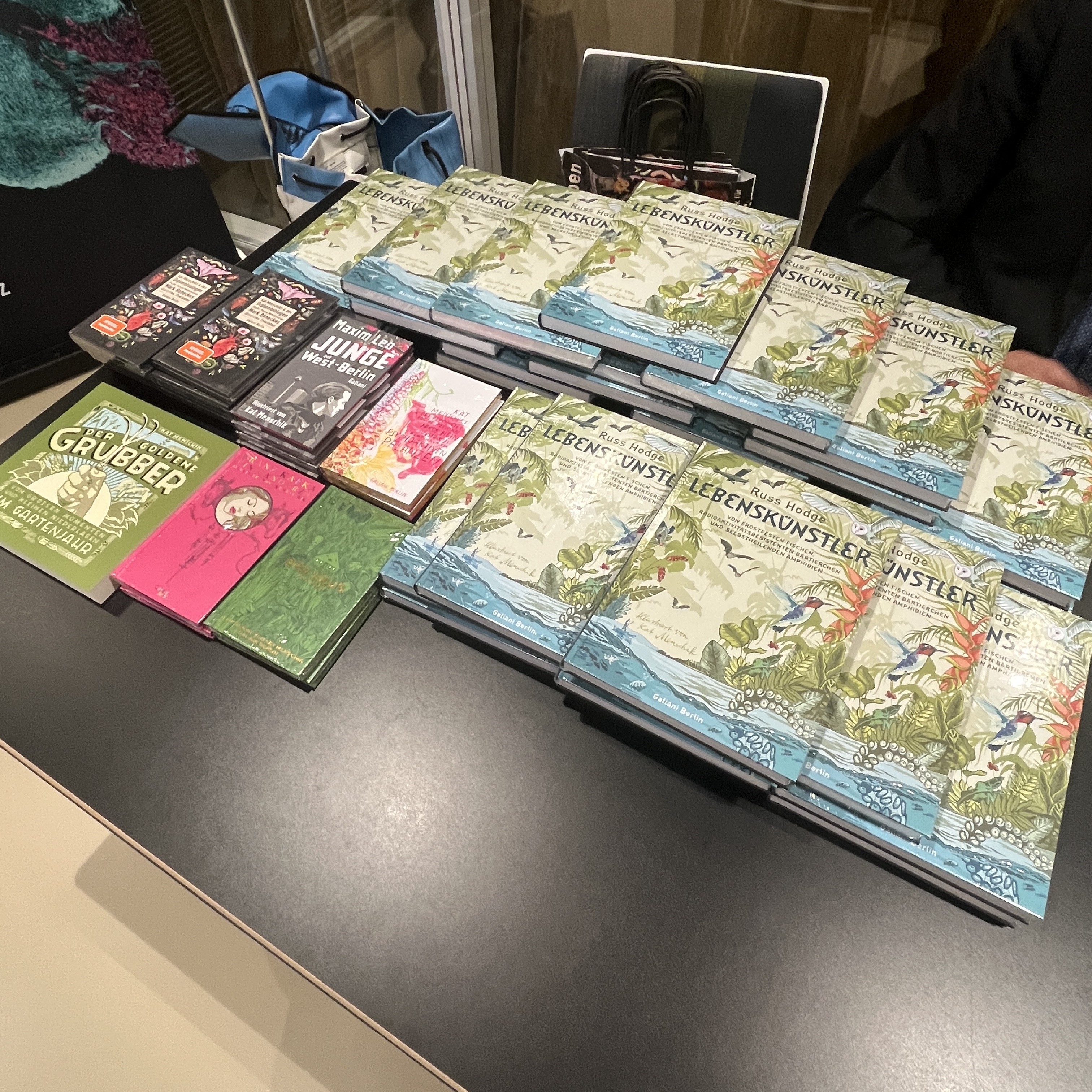
The Galiani Publishing House in Berlin has just published the German edition of my book “REMARKABLE,” illustrated by the wonderful Kat Menschik, and translated by my friend Stefan Widdess. We are promoting it at the Frankfurt Book Fair. The book is now available for order… See the link below.

We are looking for a publisher for the English version! The entire book is finished in English – if you know a publisher who might be interested, please let me know!

Order the book in German from Verlag Galiani.

WORLD SERIES MADNESS at the Best of PubMed!!!

This is a special edition of the Best of PubMed, in honor of the World Series, which is underway. As you’ll see, scientists have devoted an extraordinary amount of research into baseball… revealing that they aren’t immune to the obsession regarding gathering data and statistics that marks the true baseball fan!

We work our way from the pregame, to umpires, to the fellow at the plate, through the infield, and into the outfield. A lot of this is SERIOUS research, guys, really, really, really serious!

Here you’ll find answers to all those burning questions that you’ve wondered about: from the physics of the curve ball, to the life expectancy of left-handed vs. right-handed pitchers, whether being in the Hall of Fame extends your life, how to end a batting slump, whether hot days bring teams off the bench for a brawl, how to know where to run to catch a fly ball, whether there’s really an “at-home” advantage, does the team that bats last have an advantage…What can Babe Ruth teach psychologists? What can they learn from center fielders? The list goes on and on. Many of the links point to abstracts or even free full articles…

Be sure not to miss the hot topic of whether baseball players whose initials spell out “good” words (like “ACE”) live longer than those whose initials are bad (like “ASS”)!!! (See the section on epidemiology.)

So, it’s off to the ball park (and PubMed) for some World Series madness…

LET THEM PLAY BALL.
BARNES FE Jr.
N C Med J. 1964 Oct;25:439-40.
PMID: 14200489

Before the game and behind the plate:

Singing the national anthem at major league baseball stadiums raises awareness of ALS.
Herreria J.
Profiles Healthc Mark. 1998 Jul-Aug;14(4):18-20.
PMID: 10186395

Concussions experienced by Major League Baseball catchers and umpires: field data and experimental baseball impacts.
Beyer JA, Rowson S, Duma SM.
Ann Biomed Eng. 2012 Jan;40(1):150-9.
PMID: 22012084

[A study on the effect of physical load of baseball umpire, during a baseball game in the summer].
Kurakake S, Sugawara K, Kumae T, Shimaoka A, Mathida K, Okamura N.
Nihon Eiseigaku Zasshi. 1988 Feb;42(6):1013-22. Japanese.
PMID: 3398288

Life expectancy of major league baseball umpires.
Cohen RS, Kamps CA, Kokoska S, Segal EM, Tucker JB.
Phys Sportsmed. 2000 May;28(5):83-9. doi: 10.3810/psm.2000.05.904.
PMID: 20086642

Umpire needed
Pope A.
BMJ. 1999 May 8;318(7193):1280A.
PMID: 10231267

Quiet eye gaze behavior of expert, and near-expert, baseball plate umpires.
Millslagle DG, Hines BB, Smith MS.
Percept Mot Skills. 2013 Feb;116(1):69-77.
PMID: 23829135

Visual gaze behavior of near-expert and expert fast pitch softball umpires calling a pitch.
Millslagle DG, Smith MS, Hines BB.
J Strength Cond Res. 2013 May;27(5):1188-95. doi: 10.1519/JSC.0b013e318269ab15.
PMID: 22836605

Contextual influences on baseball ball-strike decisions in umpires, players, and controls.
MacMahon C, Starkes JL.
J Sports Sci. 2008 May;26(7):751-60. doi: 10.1080/02640410701813050.
PMID: 18409106

Magnitude of stress experienced by baseball and softball umpires.
Rainey DW.
Percept Mot Skills. 1994 Aug;79(1 Pt 1):255-8.
PMID: 7991318


AT THE PLATE:

Who is this ball player?
Fox K.
HDA Now. 2013 Summer:27-8.
PMID: 24079151

Balls, Strikes, and VIPs.
Kao A.
Virtual Mentor. 2001 May 1;3(5). doi:pii: virtualmentor.2001.3.5.dykn1-0105. 10.1001/virtualmentor.2001.3.5.dykn1-0105.
PMID: 23273008

Hitting is contagious: experience and action induction.
Gray R, Beilock SL.
J Exp Psychol Appl. 2011 Mar;17(1):49-59. doi: 10.1037/a0022846.
PMID: 21443380

Visual search strategies of baseball batters: eye movements during the preparatory phase of batting.
Kato T, Fukuda T.
Percept Mot Skills. 2002 Apr;94(2):380-6.
PMID: 12027326

Ending batting slumps in baseball: a qualitative investigation.
Prapavessis H, Grove JR.
Aust J Sci Med Sport. 1995 Mar;27(1):14-9.
PMID: 7780772

First-rib stress fractures related to hitting in two baseball teammates.
Young EJ, Curtis RJ.
Clin J Sport Med. 2008 May;18(3):300-1. doi: 10.1097/JSM.0b013e31816ffbd4.
PMID: 18469578

Thrown a curve.
Makaryus AN, Henry SA, Rutkin B, Boxt L.
Am J Med. 2007 May;120(5):420-1.
PMID: 17466652

You Can’t Think and Hit at the Same Time: Neural Correlates of Baseball Pitch Classification.
Sherwin J, Muraskin J, Sajda P.
Front Neurosci. 2012;6:177. doi: 10.3389/fnins.2012.00177. eCollection 2012.
PMID: 23267311

The effect of fastball backspin rate on baseball hitting accuracy.
Higuchi T, Morohoshi J, Nagami T, Nakata H, Kanosue K.
J Appl Biomech. 2013 Jun;29(3):279-84. Epub 2012 Aug 22.
PMID: 22923374

Transitions between central and peripheral vision create spatial/temporal distortions: a hypothesis concerning the perceived break of the curveball.
Shapiro A, Lu ZL, Huang CB, Knight E, Ennis R.
PLoS One. 2010 Oct 13;5(10):e13296. doi: 10.1371/journal.pone.0013296.
PMID: 20967247

Hitting what one wants to hit and missing what one wants to miss.
Regan D, Gray R.
Vision Res. 2001;41(25-26):3321-9. Review.
PMID: 11718776

Expert baseball batters have greater sensitivity in making swing decisions.
Gray R.
Res Q Exerc Sport. 2010 Sep;81(3):373-8.
PMID: 20949857

How baseball players prepare to bat: tactical knowledge as a mediator of expert performance in baseball.
McPherson S, MacMahon C.
J Sport Exerc Psychol. 2008 Dec;30(6):755-78.
PMID: 19164840

A triarchical model of batting abilities: applying psychological statistics to baseball.
Kaufman JC.
Percept Mot Skills. 1997 Aug;85(1):299-304.
PMID: 9293591

ON THE MOUND:

The effects of extended play on professional baseball pitchers.
Murray TA, Cook TD, Werner SL, Schlegel TF, Hawkins RJ.
Am J Sports Med. 2001 Mar-Apr;29(2):137-42.
PMID: 11292037

Assessing pitcher and catcher influences on base stealing in Major League Baseball.
Loughin TM, Bargen JL.
J Sports Sci. 2008 Jan 1;26(1):15-20.
PMID: 17852677

Effect of three different between-inning recovery methods on baseball pitching performance.
Warren CD, Brown LE, Landers MR, Stahura KA.
J Strength Cond Res. 2011 Mar;25(3):683-8. doi: 10.1519/JSC.0b013e318208adfe.
PMID: 21311344

A biomechanical comparison of the fastball and curveball in adolescent baseball pitchers.
Nissen CW, Westwell M, Ounpuu S, Patel M, Solomito M, Tate J.
Am J Sports Med. 2009 Aug;37(8):1492-8. doi: 10.1177/0363546509333264. Epub 2009 May 15.
PMID: 19448049

The impact of pitch counts and days of rest on performance among major-league baseball pitchers.
Bradbury JC, Forman SL.
J Strength Cond Res. 2012 May;26(5):1181-7. doi: 10.1519/JSC.0b013e31824e16fe.
PMID: 22344048

Lefties are still a little shorter.
Abel EL, Kruger ML.
Percept Mot Skills. 2007 Apr;104(2):405-6.
PMID: 17566429

Do right-handers live longer? An updated assessment of baseball player data.
Hicks RA, Johnson C, Cuevas T, Deharo D, Bautista J.
Percept Mot Skills. 1994 Jun;78(3 Pt 2):1243-7.
PMID: 7936949

Left-handed major-league baseball players and longevity re-examined.
Abel EL, Kruger ML.
Percept Mot Skills. 2004 Dec;99(3 Pt 1):990-2.
PMID: 15648498

Analysis of data from Reichler’s (1979) The Baseball Encyclopedia: right-handed pitchers are taller and heavier than left-handed pitchers.
Fudin R, Renninger L, Hirshon J.
Percept Mot Skills. 1994 Jun;78(3 Pt 1):1043-8.
PMID: 8084677


STUCK IN THE OUTFIELD:

Controlled variables: psychology as the center fielder views it.
Marken RS.
Am J Psychol. 2001 Summer;114(2):259-81.
PMID: 11430151

How baseball outfielders determine where to run to catch fly balls.
McBeath MK, Shaffer DM, Kaiser MK.
Science. 1995 Apr 28;268(5210):569-73.
PMID: 7725104

People favour imperfect catching by assuming a stable world.
López-Moliner J, Keil MS.
PLoS One. 2012;7(4):e35705. doi: 10.1371/journal.pone.0035705. Epub 2012 Apr 25.
PMID: 22558205

Catching balls: how to get the hand to the right place at the right time.
Peper L, Bootsma RJ, Mestre DR, Bakker FC.
J Exp Psychol Hum Percept Perform. 1994 Jun;20(3):591-612.
PMID: 8027714

Catching of balls unexpectedly thrown or fired by cannon.
Kenward B, Nilsson D.
Percept Mot Skills. 2011 Aug;113(1):171-87.
PMID: 21987918

Catching fly balls: a new model steps up to the plate.
Cipra B.
Science. 1995 Apr 28;268(5210):502.
PMID: 7725094

On catching fly balls.
Jacobs TM, Lawrence MD, Hong K, Giordano N Jr, Giordano N Sr.
Science. 1996 Jul 12;273(5272):257-8; author reply 258-60.
PMID: 8668999

I Lost It in the Lights: The Effects of Predictable and Variable Intermittent Vision on Unimanual Catching.
Lyons J, Fontaine R, Elliot D.
J Mot Behav. 1997 Jun;29(2):113-118.
PMID: 12453788

Catch this!
Gauldin D.
J Perinat Educ. 2002 Winter;11(1):49.
PMID: 17273288

WATCH YOUR TEMPER!

Temper, temperature, and temptation: heat-related retaliation in baseball.
Larrick RP, Timmerman TA, Carton AM, Abrevaya J.
Psychol Sci. 2011 Apr;22(4):423-8. doi: 10.1177/0956797611399292. Epub 2011 Feb 24.
PMID: 21350182

Impact of Yankee Stadium Bat Day on blunt trauma in northern New York City.
Bernstein SL, Rennie WP, Alagappan K.
Ann Emerg Med. 1994 Mar;23(3):555-9.
PMID: 8135433

THE EPIDEMIOLOGY OF BASEBALL:

Longevity of major league baseball players.
Abel EL, Kruger ML.
Res Sports Med. 2005 Jan-Mar;13(1):1-5.
PMID: 16389882

Major League Baseball Players’ Life Expectancies.
Saint Onge JM, Rogers RG, Krueger PM.
Soc Sci Q. 2008 Jul 17;89(3):817-830.
PMID: 19756205 [PubMed] Free PMC Article
Soc Sci Q. 2008 Jul 17;89(3):817-830.
RESULTS:
Compared to 20-year-old U.S. males, MLB players can expect almost five additional years of life. Height, weight, handedness, and player ratings are unassociated with the risk of death in this population of highly active and successful adults. Career length is inversely associated with the risk of death, likely because those who play longer gain additional incomes, physical fitness, and training.
CONCLUSIONS:
Our results indicate improvements in life expectancies with time for all age groups and indicate possible improvements in longevity in the general U.S. population.

The longevity of Baseball Hall of Famers compared to other players.
Abel EL, Kruger ML.
Death Stud. 2005 Dec;29(10):959-63.
PMID: 16265814
Abstract
The authors compared the longevity of all baseball players alive at the time of their induction into the Baseball Hall of Fame with age-matched controls who were likewise alive at the time of the Hall of Famer’s induction, and also matched them for career length, player position, and body-mass index, to assess if fame in sports is associated with increased longevity. Median post-induction survival for Hall of Famers was 5 years shorter than for noninducted players (18 vs. 23 years, respectively). In a second analysis, significantly more Hall of Famers died of cardiovascular or stroke causes than other players for whom cause of death was known. Baseball fame may have a hitherto unrecognized price.

Symbolic significance of initials on longevity.
Abel EL, Kruger ML.
Percept Mot Skills. 2007 Feb;104(1):179-82.
PMID: 17450979
Abstract
The longevities of deceased major league baseball players who died prior to 1950 (N=3835) and whose initials formed acronyms, words, or names with “positive” or “negative” affect, as rated a priori by two judges, were compared with those for a group of neutral controls matched for birth year and career length, using the Berkeley standardized mortality tables. Players (n=11) with positive initials, e.g., A.C.E., lived a mean of 13 years longer than players (n=30) with negative initials, e.g., D.E.D., or players with neutral initials (n=864). These results corroborated a previous study and suggest positive name symbols are associated with increased longevity in this sample.

Another look at baseball player initials and longevity.
Smith G.
Percept Mot Skills. 2011 Feb;112(1):211-6.
PMID: 21466094
Abstract
Abel and Kruger (2007) reported that Major League Baseball players whose names have positive initials (such as ACE or GOD) live an average of 13 years longer than do players with negative initials (such as ASS or BAD) or players with neutral initials (such as GHR or TSW). However, this conclusion is based on a very small sample, selective initials, and a flawed statistical test. There is no statistically significant relationship between initials and longevity for Major League Baseball players when a correct test is applied to independently selected initials.

The “birthday blues” in a sample of major league baseball players’ suicides.
Lester D.
Percept Mot Skills. 2005 Oct;101(2):382.
PMID: 16383067

Seasonality of birth in the majors, 1880-1999.
Abel EL, Kruger ML.
Soc Biol. 2005 Spring-Summer;52(1-2):47-55.
PMID: 17619630
Abstract
We examined two alternative explanations, one demographic, the other sociological, for the uneven distribution of birth months of Major League baseball (MLB) players active between 1880 and 1999. Beginning in 1900, players born between August and October were significantly overrepresented, and this uneven distribution was almost identical for the next five 20-year periods. During the last 20-year period (1980-1999), the disparity in birth months became even more pronounced. Ethnicity, handedness, player position, accomplishment (winning an award), and career length were not significantly related to birth month. Prior to 1980, the distribution of births for MLB players did not differ significantly from the distribution for the general population, but after 1980, it did. We concluded that up until 1980, the uneven distribution of birth months in MLB originated in the demographic seasonality-related excess number of births in August and September in the United States. Beginning in the 1980s, this seasonality pattern was institutionally reinforced by the growing influence of Little League and related junior baseball leagues and their reliance on the August 1 birth date for age grouping.

Mortality salience of birthdays on day of death in the Major Leagues.
Abel EL, Kruger ML.
Death Stud. 2009 Feb;33(2):175-84. doi: 10.1080/07481180802138936.
PMID: 19143110
Abstract
The authors assessed the relationship of mortality salience, as represented by birthdays, on the day of death. Preliminary studies considered the role of possible artifacts such as seasonality of birth and death, and time units for evaluation. On the basis of terror management theory’s concept of “mortality salience,” the authors hypothesized that famous people, in this case Major League Baseball (MLB) players, would be more likely to die on or after their birthdays than would be expected by chance (the “birthday blues”), and that the greater their fame, as represented by induction into the Baseball Hall of Fame, the greater the concentration of deaths shortly after birthdays. The results supported the hypothesis. Theoretical underpinnings of these results and practical implications were discussed.

Birth month and suicide among major league baseball players.
Abel EL, Kruger ML.
Percept Mot Skills. 2005 Aug;101(1):21-4.
PMID: 16350605

Do right-handers live longer? An updated assessment of baseball player data.
Hicks RA, Johnson C, Cuevas T, Deharo D, Bautista J.
Percept Mot Skills. 1994 Jun;78(3 Pt 2):1243-7.
PMID: 7936949

Body type and performance of elite cuban baseball players.
Carvajal W, Ríos A, Echevarría I, Martínez M, Miñoso J, Rodríguez D.
MEDICC Rev. 2009 Apr;11(2):15-20.
PMID: 21483313 [PubMed] Free Article

Major league baseball performances of players who were later suicides or homicide victims.
Lester D, Topp R.
Percept Mot Skills. 1989 Aug;69(1):272.
PMID: 2780186

IMPROVING YOUR ODDS:

Batting last as a home advantage factor in men’s NCAA tournament baseball.
Bray SR, Obara J, Kwan M.
J Sports Sci. 2005 Jul;23(7):681-6.
PMID: 16195017

Human face structure correlates with professional baseball performance: insights from professional Japanese baseball players.
Tsujimura H, Banissy MJ.
Biol Lett. 2013 Apr 10;9(3):20130140. doi: 10.1098/rsbl.2013.0140. Print 2013.
PMID: 23576779

Home advantage in retractable-roof baseball stadia.
Romanowich P.
Percept Mot Skills. 2012 Oct;115(2):559-66.
PMID: 23265018

Measuring circadian advantage in Major League Baseball: a 10-year retrospective study.
Winter WC, Hammond WR, Green NH, Zhang Z, Bliwise DL.
Int J Sports Physiol Perform. 2009 Sep;4(3):394-401.
PMID: 19953826

A major league loss.
Cloud J.
Time. 2003 Mar 3;161(9):60.
PMID: 12632674

Batting last as a home advantage factor in men’s NCAA tournament baseball.
Bray SR, Obara J, Kwan M.
J Sports Sci. 2005 Jul;23(7):681-6.
PMID: 16195017

Evidence of a reduced home advantage when a team moves to a new stadium.
Pollard R.
J Sports Sci. 2002 Dec;20(12):969-73.
PMID: 12477006


JUST SAY NO!

Use of smokeless tobacco in the 1986 World Series.
Jones RB.
N Engl J Med. 1987 Apr 9;316(15):952.
PMID: 3821849

Prevalence of spit tobacco use across studies of professional baseball players.
Greene JC, Walsh MM, Letendre MA.
J Calif Dent Assoc. 1998 May;26(5):358-64. Review.
PMID: 10528568

A program to help major league baseball players quit using spit tobacco.
Greene JC, Walsh MM, Masouredis C.
J Am Dent Assoc. 1994 May;125(5):559-68.
PMID: 8195497

Toxicological deaths of major league baseball players.
Boren S, Erickson TB.
J Toxicol Clin Toxicol. 1998;36(7):737-42.
PMID: 9865245

GENERAL ISSUES:

Psychology and “the Babe”.
Fuchs AH.
J Hist Behav Sci. 1998 Spring;34(2):153-65.
PMID: 9580977

High-speed video analysis of head-first and feet-first sliding techniques in collegiate baseball players.
Hosey RG, Mattacola CG, Shapiro R.
Clin J Sport Med. 2003 Jul;13(4):242-4.

Major league baseball players get dental coverage.
[No authors listed]
J Am Dent Assoc. 1969 Apr;78(4):737.
PMID: 5251266

Major league dreams.
Hallberg J.
Minn Med. 2000 Jun;83(6):12-6.
PMID: 10881568

A replay of the baseball data.
Coren S, Halpern DF.
Percept Mot Skills. 1993 Apr;76(2):403-6.
PMID: 8483647

What can major league baseball teach us about healthcare?
[No authors listed]
J Neurosci Nurs. 2012 Feb;44(1):1. doi: 10.1097/JNN.0b013e31823fdcec.
PMID: 22210298

SCOTT 3.0

ANNOUNCING SCOTT 3.0
Science Communication Teacher Training program (SCOTT)

What we are doing goes far beyond just teaching scientists essential skills as communicators and teachers. The tools of communication can help scientists become better thinkers and do better research, which adds value to their careers and the institute as a whole.

SCOTT is a new program based at the Max Delbrück Center in Berlin, aimed primarily at advanced career stage scientists with excellent (near native) English and solid writing and presentation skills. The goals are to:

  • help participants develop additional professional qualifications as science communication trainers, teachers, writers, editors, etc., by giving them the theoretical background and skills to be multipliers; 
  • serve as a unique model program to encourage other organizations to institutionalize in-house, excellent science communication training;
  • develop highly creative new projects in science communication and teaching: books, courses, teaching materials, games, etc.

SCOTT runs for 16 months. SCOTT 1.0 finished in summer 2023; SCOTT 2.0 will finish in the coming summer. There will be two months overlap between the last group and the next one.

We have accomplished some great things. We made a “board game” about molecular biology, and are developing popular science materiasl  and other projects on the theme of model organisms. Both projects received funding from the Stiftung Charité and are under development with book and game publishers. 

We have developed new courses on “Coping with Talk Anxiety” and “How to Read a Paper,” have helped prepare graduate schools and the institute for important reviews, applications to create programs and a new institute, and are working on several other projects. SCOTT members participated in many public science events, developed projects for school classes, etc. We are preparing new applications for the Stiftung’s latest call and will seek funding from additional external sources.

I am now accepting applicants for the third “class,” which will start in April 2024 and run until June 2025.

Who are we looking for?

SCOTT 3.0 will be open to 20 scientist/trainees. Priority will be given to postdocs and advanced career stage scientists at the MDC, although we will consider PhD students and exceptional candidates with very diverse qualifications from other institutes. We also welcome applicants from other fields – other natural sciences, data science, informatics, journalism, teachers, etc. The first group included an artist who has worked on projects bridging art and science. The second group includes a high school teacher.

What does the program entail?

Participants will need to make a firm commitment to the entire program and be prepared to attend the seminars, which meet for one full day per month in Berlin. They should count on spending at least one additional day per month working on SCOTT projects. 

Activities will include seminars, observations of courses, outside assignments, and teaching. The seminar days will include very interesting invited speakers and guests. We will also start collaborations with journalists and teachers. The program is divided into 3 phases:

  • Seminars, observation, and discussions to provide a solid theoretical introduction to practices and problems in scientific communication, didactics and learning styles. The group will hone their own science communication skillsobserve ongoing courses in a range of skill areas, discuss anddeconstruct the teaching, and creatively brainstorm to improve the theory and methodology. We will work on lesson plans together and feed new ideas into the next cycle of courses. 
  • In the second phase, participants will co-teach modules of ongoing courses themselves, with supervision, observation by colleagues and sessions for constructive feedback afterwards.
  • In the third phase participants will complete a communication/teaching project they have designed and begin teaching independently, with support from the instructor and the group. We will present the program to the MDC and other institutes through lectures, demonstrations and group workshops, to inform and engage the community. “Graduates” will help recruit and work with the next class of trainers, export the model to their future institutes, and become the basis of a network that will continue to work together over the long term.

SCOTT will offer special types of support to the participants’ home labs, such as customized workshops and help with projects such as papers, theses, and presentations.

All seminar dates for 2024 will be set soon.

Here are the dates so far: March 1, April 5, May 10, June 7.

What do we hope to achieve?

High-quality communication training can add value to an institute by improving not only the skills of its scientists but also their research. This concept is based on an established theoretical background and teaching methodology that is still being refined, improved, and expanded. As a group we will collect experience, improve the program, develop original teaching methods and materials and produce a handbook for future trainers.  We will enhance current training structures at the MDC and on campus by offering more support to students and scientists, developing content for the Long Night of Sciences, the Gläsernes Labor and other venues, and producing games, teaching materials for schools, etc.

The program will be extremely transparent. Group leaders, scientists and other staff at the MDC are welcome as observers or participants at any time. In return, we will support their work by offering customized workshops and helping develop communication and education modules for grants or institutional projects. Contact the program if you are interested.

We will offer lectures and demonstration courses to other institutes and organizations within the Helmholtz Association and beyond, to promote the wider institutionalization of this model of training.

If you are interested or have questions, please contact Russ Hodge directly, at hodge@mdc-berlin.de

As a part of registration, we will set up an individual appointment to discuss details of the program and your individual interests and needs.

Announcing SCOTT 2.0

Science Communication Teacher Training program (SCOTT) 

What we are doing goes far beyond just teaching scientists essential skills as communicators and teachers. The tools of communication can help scientists become better thinkers and do better research, which adds value to their careers and the institute as a whole.

SCOTT is a new program at the Max Delbrück Center in Berlin, aimed primarily at advanced career stage scientists with excellent (near native) English and solid writing and presentation skills. The goals are to:

  • help participants develop additional professional qualifications as science communication trainers, teachers, writers, editors, etc., by giving them the theoretical background and skills to be multipliers; 
  • serve as a unique model program to encourage other organizations to institutionalize in-house, excellent science communication training;
  • develop unique new projects in science communication and teaching: books, courses, teaching materials, games, etc.

The first “class” of SCOTT is finishing soon and we have accomplished some great things. We are making a “board game” about molecular biology and a popular science book about unusual model organisms. (We have just submitted two grants that may provide funding for those projects.) We are designing new courses on “Coping with Talk Anxiety” and “How to Read a Paper,” have helped prepare graduate schools and the institute for important reviews, and are working on several other projects.

Now we are accepting applicants for the second “class,” which will start in April 2023 and run until June 2024.

Who are we looking for?

SCOTT 2.0 will be open to 15 scientist/trainees. Priority will be given to postdocs and advanced career stage scientists at the MDC, although we will consider PhD students and exceptional candidates with other qualifications and from other institutes. We also welcome applicants from other fields – other natural sciences, data science, informatics, etc. The first group included an artist who has worked on projects bridging art and science.

What does the program involve?

Participants will need to make a long-term commitment and be prepared to attend the seminar, which meets for one full day per month. They should count on spending at least one additional day outside, working on SCOTT projects. Activities will include seminars, observations of courses, outside assignments, and teaching. The program is divided into 3 phases:

  • Seminars, observation, and discussions to provide a solid theoretical introduction to practices and problems in scientific communication, didactics and learning styles. The group will hone their own science communication skillsobserve ongoing courses in a range of skill areas, discuss and deconstruct the teaching, and creatively brainstorm to improve the theory and methodology. We will work on lesson plans together and feed new ideas into the next cycle of courses. 
  • In the second phase, participants will co-teach modules of ongoing courses themselves, with supervision, observation by colleagues and sessions for constructive feedback afterwards.
  • In the third phase participants will think up and complete a communication/teaching project and begin teaching independently with support from the instructor and the group. We will also present the program through lectures, demonstrations and group workshops, at the MDC and elsewhere, to inform and engage the community. “Graduates” will help recruit and work with the next class of trainers, export the model to their future institutes, and become the basis of a network that will continue to work together over the long term.

SCOTT will offer special types of support to the participants’ home labs, such as customized workshops and help with projects such as papers, theses, and presentations.

Seminar days for 2023: 

April 14, May 5, June 2, July 7, Aug. 4, Oct. 6, Nov. 3, Dec. 1

What do we hope to achieve?

Excellent communication training can add value to an institute by improving not only the skills of its scientists but also their research. This work is based on an established theoretical background and teaching methodology, but it can still be refined, improved, and expanded. As a group we will collect experience, improve the program, develop original teaching methods and materials and produce a handbook for future trainers.  We will enhance current training structures at the MDC and on campus by offering more support to students and scientists, developing content for the Long Night of Sciences, the Gläsernes Labor and other venues, and producing games, teaching materials for schools, etc.

The program will be extremely transparent. Group leaders, scientists and other staff at the MDC are welcome as observers or participants at any time. In return, we will support your work by offering customized workshops and helping develop communication and education modules for grants or institutional projects. Contact the program if you are interested.

Over the long term we will offer lectures and demonstration courses to other institutes and organizations within the Helmholtz Association and beyond, to promote the wider institutionalization of this model of training. 

If you are interested or have questions, please contact Russ Hodge directly, at hodge@mdc-berlin.de

As a part of registration, we will set up an individual appointment to discuss details of the program and your individual interests and needs.

Announcing our new Science Communication Teacher Training Program at the MDC (SCOTT) 

Aims

SCOTT is a new program aimed primarily at advanced career stage scientists with excellent (near native) English and solid writing and presentation skills. The goals are to:

  • help participants develop additional professional qualifications as science communication trainers, teachers, writers, etc.;
  • produce a group of highly trained, excellent teachers to act as multipliers at the MDC and beyond;
  • serve as a unique model program to promote the institutionalization of excellent science communication training.

Who are we looking for?

Initially we will establish a group of 10-12 trainees who will work together as a team for one year. Priority will be given to postdocs and advanced career stage scientists at the MDC, although we will consider exceptional candidates with other qualifications and from other institutes. We also invite applicants from other fields of natural science, data science, informatics, etc.

What does the program entail?

Participants will need to make a long-term commitment and be prepared to devote about 3 days per month to the project (not as a block). Papers, presentations, grants or other projects they are working on with their own groups will count as part of this time. Activities will include seminars, observations of courses, outside assignments, and teaching. The program is divided into 3 phases:

  • Seminars, observation, and discussions to provide a solid theoretical introduction to practices and problems in scientific communication, didactics and learning styles. The group will hone their own science communication skills, observe ongoing courses in a range of skill areas, discuss and deconstruct the teaching, and creatively brainstorm to improve the theory and methodology. We will work on lesson plans together and feed new ideas into the next cycle of courses.
  • In the second phase, participants will take over the teaching of some modules of ongoing courses themselves, with supervision by the instructor, observation by colleagues and sessions for constructive feedback afterwards.
  • In the third phase participants will begin teaching independently with support from the instructor and the group. We will present the program through lectures, demonstrations and group workshops, at the MDC and other organizations, to engage the community. “Graduates” will help recruit and work with the next class of trainers, export the model to their future institutes, and become the basis of a network that will continue to work together over the long term.

The first 4 months will mainly involve meetings of whole or half-days, spread at intervals through the month, and outside assignments. Later the schedule will be more flexible; participants will be able to choose from a range of modules to attend and teach. We will work together on lesson plans and develop a range of innovative teaching materials. We will also invite external experts to enhance the program with talks and workshops.

During the later phases, participants will teach in ongoing courses, take part in other projects, and be encouraged to develop workshops and courses around their own scientific topics, communication activities and needs. The project will offer special types of support to the participants’ home labs, such as customized workshops and help with projects such as papers, theses, and presentations.

Table of initial dates and activities

MeetingDateTopic
Meeting 1 (full day)April 4   Theory and aims
Meeting 2 (half day)April 26Observation and analysis
Meeting 3 (full day)May 12  Observation & didactic workshop (student orientation)

What do we hope to achieve?

This work is based on an established theoretical background and teaching model which needs to be refined, improved, and expanded. As a group we will collect experience, improve the program, develop original teaching methods and materials and produce a handbook for future trainers.  We will enhance current training structures at the MDC and on campus by offering more support to students and scientists, developing content for the Long Night of Sciences and other events, and producing games, teaching materials for schools, etc.

The program will be extremely transparent, open to group leaders, scientists and other staff at the MDC as observers or participants at any time. We will support your work by offering customized workshops and helping develop communication and education modules for grants or institutional projects. Contact the program if you are interested.

Over the long term we will offer lectures and demonstration courses to other institutes and organizations within the Helmholtz Association and beyond, to promote the wider institutionalization of this model of training.

If you are interested or have questions, please contact Russ Hodge directly, at hodge@mdc-berlin.de.

As a part of registration, we will set up an individual appointment to discuss details of the program and your individual interests and needs.

Scientific communication training, Theoretical introduction

This is the latest version of the theoretical introduction to my communications courses, recorded in January 2022.

The last few minutes provide a transition to the first practical session on presentation skills.

Update to the Devil’s dictionary! Today’s words: neogenesis, crumb, and autophagy

See the complete Devil’s Dictionary of Scientific Words and Phrases here.

Neogenesis   Any process whose aim is to reduce the Earth and the rest of the universe to a Formless Void and then recreate them, usually in an attempt to correct flaws in the original versions.

Crumb   the semi-petrified remains of a small, complex biosphere containing plant and animal matter originating from distant parts of the globe – wheat from Europe, cocoa from South America, and animal fats from God knows where and the rest of us don’t want to. These basic organic constituents are smothered in mounds of complex carbohydrates (sugars) and then forced into cohabitation in a structure called a cookie. This is achieved by kneading them into an amorphous mass, using a glue made of life-threatening quantities of cholesterol, bovine milk, and the blended embryos of birds, stirred but not shaken. The resulting colonies are exposed to extremes of temperature which exterminate all the inhabitants except the thermophiles. After they have thoroughly congealed, hardened and cooled, they are placed on flat surfaces and left out in the open, serving as traps for large mammals. If this fails to induce coronary events in the prey, the cookie aggregates are packed into boxes and distributed to neighbors using the mechanism of Girl Scouts. At some point they will be eaten, leaving only microscopic remnants – the crumbs. Cookie crumbs make up about 50% of the diet of ants and thus play a crucial role in global ecosystems and human life.

Autophagy This term, like 48.93 % of the modern scientific vocabulary, is derived from ancient Greek. Of the rest, 49.7 % was blatantly stolen outright from Latin, leaving a paltry 1.37 % whose origin remains a mystery. The most likely explanation is that these expressions spontaneously appeared out of nowhere, in a paper somewhere, and spread through the literature like viral infections or perhaps transposons. Anyway. The suffix –phage means either to digest or to devour, depending on whether silverware or just the fingers are used. The first component of the word, auto, can refer either an automobile or the person who owns it. Thus their combination into a single word (autophagy) denotes the process of eating a car. Theoretically, autophagy could also mean “to eat oneself” – self-cannibalization – although those who attempt it rarely finish the job, because at some point the mechanisms needed to eat yourself start to digest themselves, and I’ll leave it to the reader to imagine what comes next. Eating one’s own car ought to be termed autoautophagy, but this term does not appear in the literature, implying that most cases of autophagy involve the ingestion of someone else’s car. If you’re going to do it, you should probably do it at night.

At least one reliable case of autophagy has been documented in the scientific record. A car was eaten by Leon Samson, a Greek immigrant to Australia, probably to make up for nutritional deficits in his usual diet of razor blades and light bulbs. A Frenchman named Michel Lotito never ate a car, as far as I can determine, but he did guzzle down 18 bicycles, 15 shopping carts, seven television sets, and a three-wheeled Cessna 150 airplane, although not necessarily in that order and not in one sitting. For his efforts, the Guiness Book of World Records gave Lotito an award, but he ate that as well.

If you liked the Devil’s dictionary, you might also like the series:

Molecular biology cartoons

The best of PubMed