LEBENSKÜNSTLER

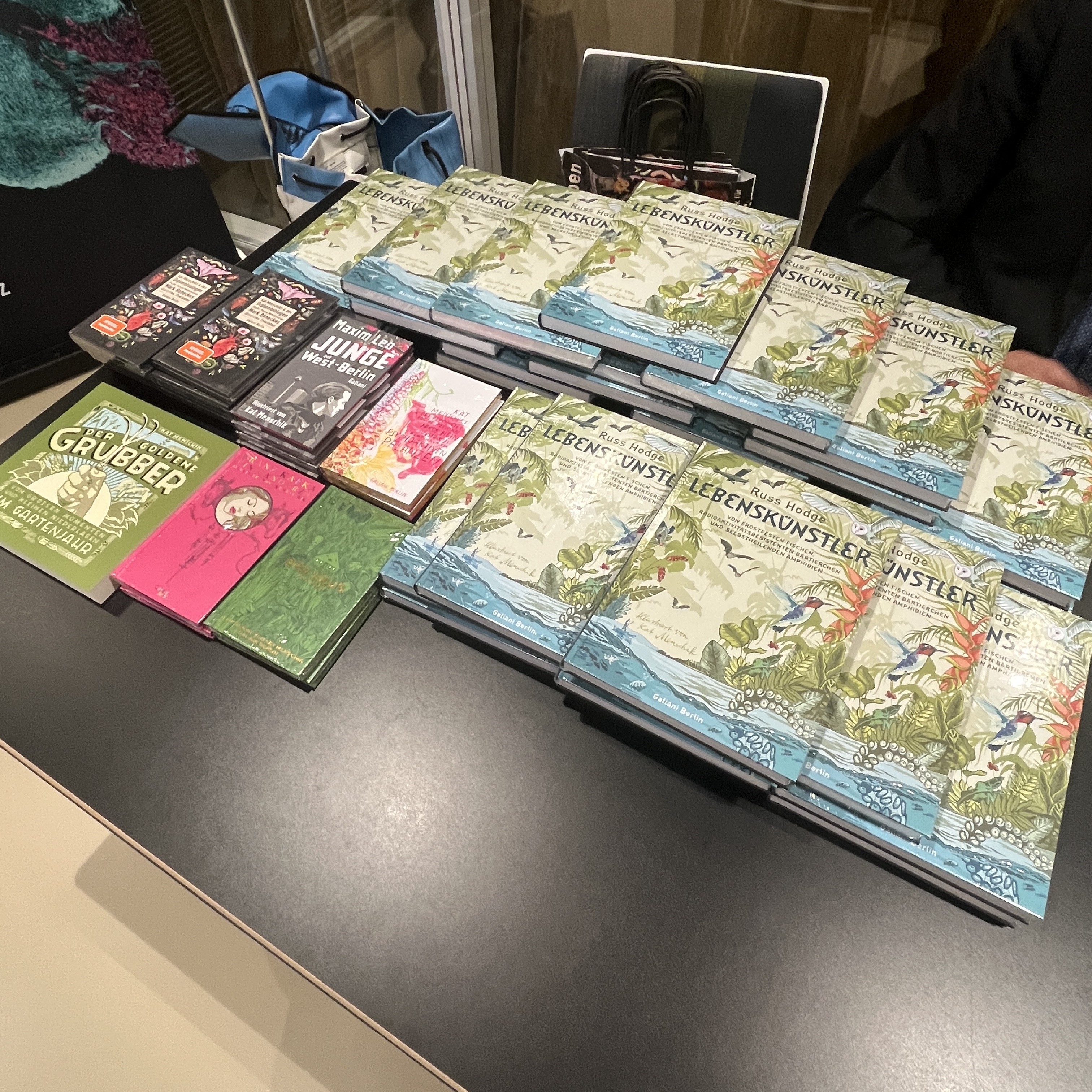
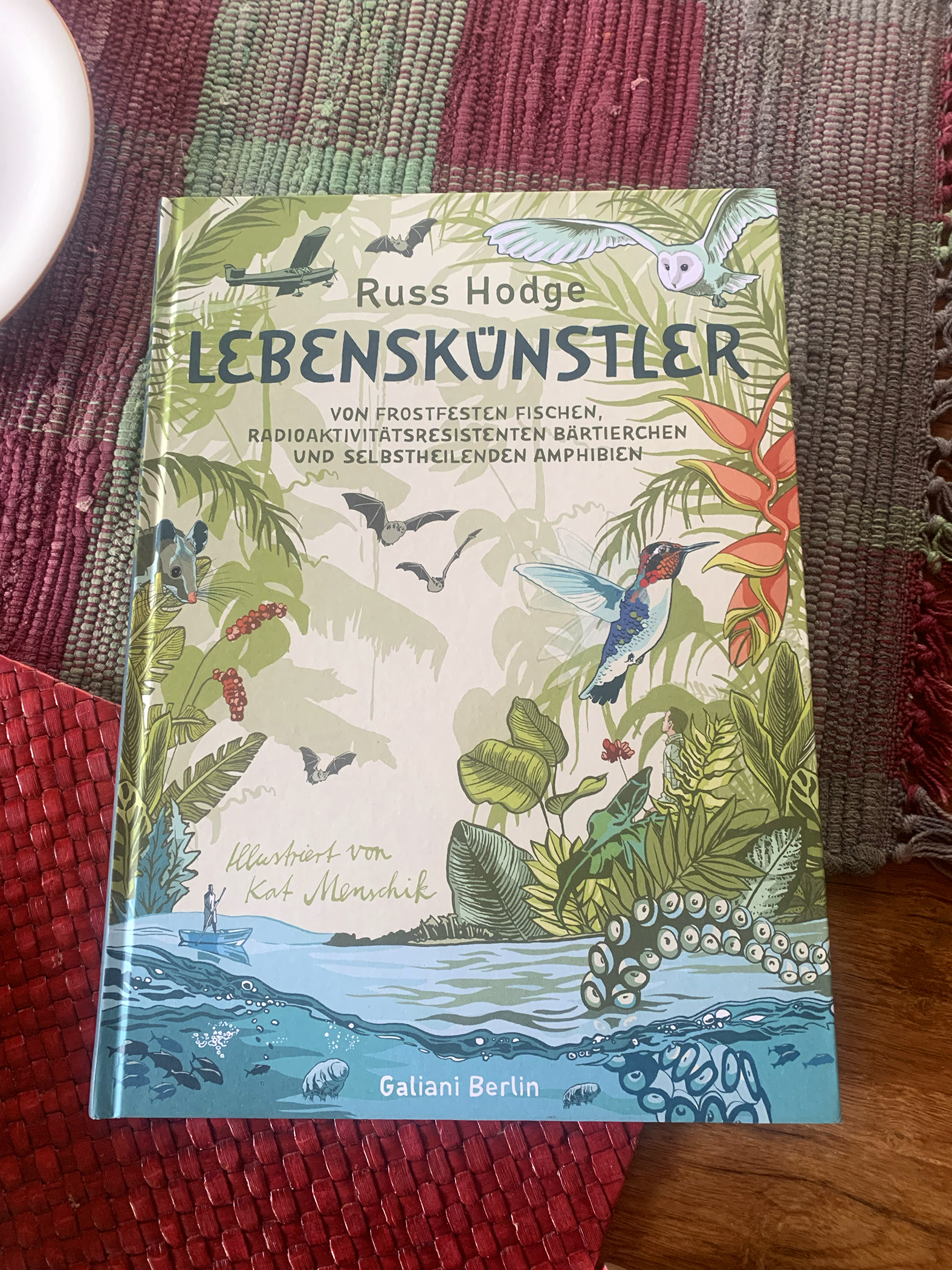
The Galiani Publishing House in Berlin has just published the German edition of my book “REMARKABLE,” illustrated by the wonderful Kat Menschik, and translated by my friend Stefan Widdess. We are promoting it at the Frankfurt Book Fair. The book is now available for order… See the link below.

We are looking for a publisher for the English version! The entire book is finished in English – if you know a publisher who might be interested, please let me know!

Order the book in German from Verlag Galiani.

More “ghosts” in images

In my talk at the Jackson laboratories and my other work on “ghosts” in science communication (1)(2)(3), I refer to the way hidden structures and patterns in our thinking influence not only how we understand meaning, but basic aspects of perception. Here are a couple of new examples, developed for the talk and then something I found in the news this morning.

The first illustrates how we scan, process and interpret grey-scale images. I think generally if we see a black and white image, we’ve been trained to recognize structures and patterns based on everyday things we encounter. I’m sitting on a sofa with greyish/green cushions, and I recognize significant structures such as the cracks between them (very dark lines) and a floral pattern on the fabric, and others that I dismiss – shadows just because the way the light is falling:

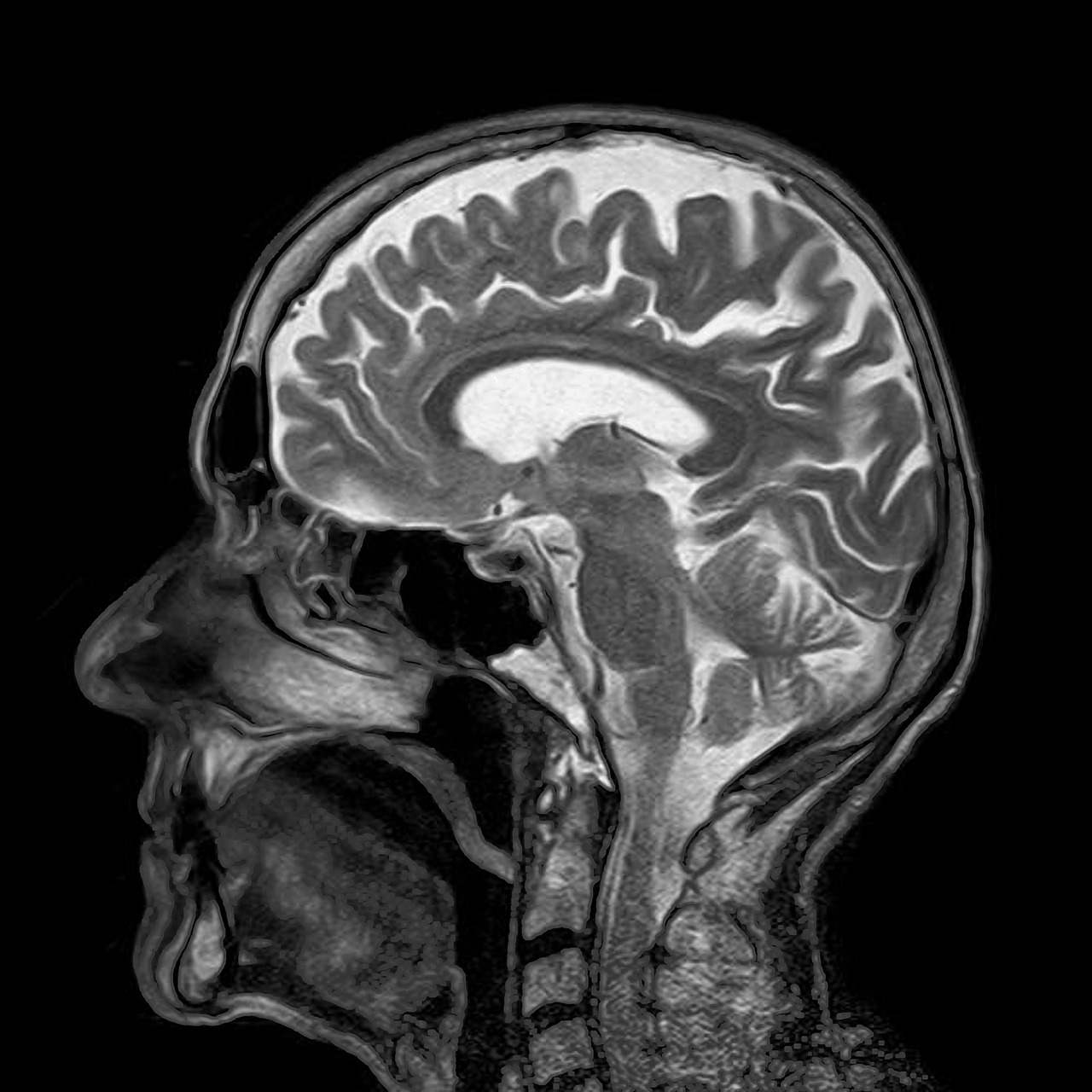
When I look at an MRI scan, I also see patterns:

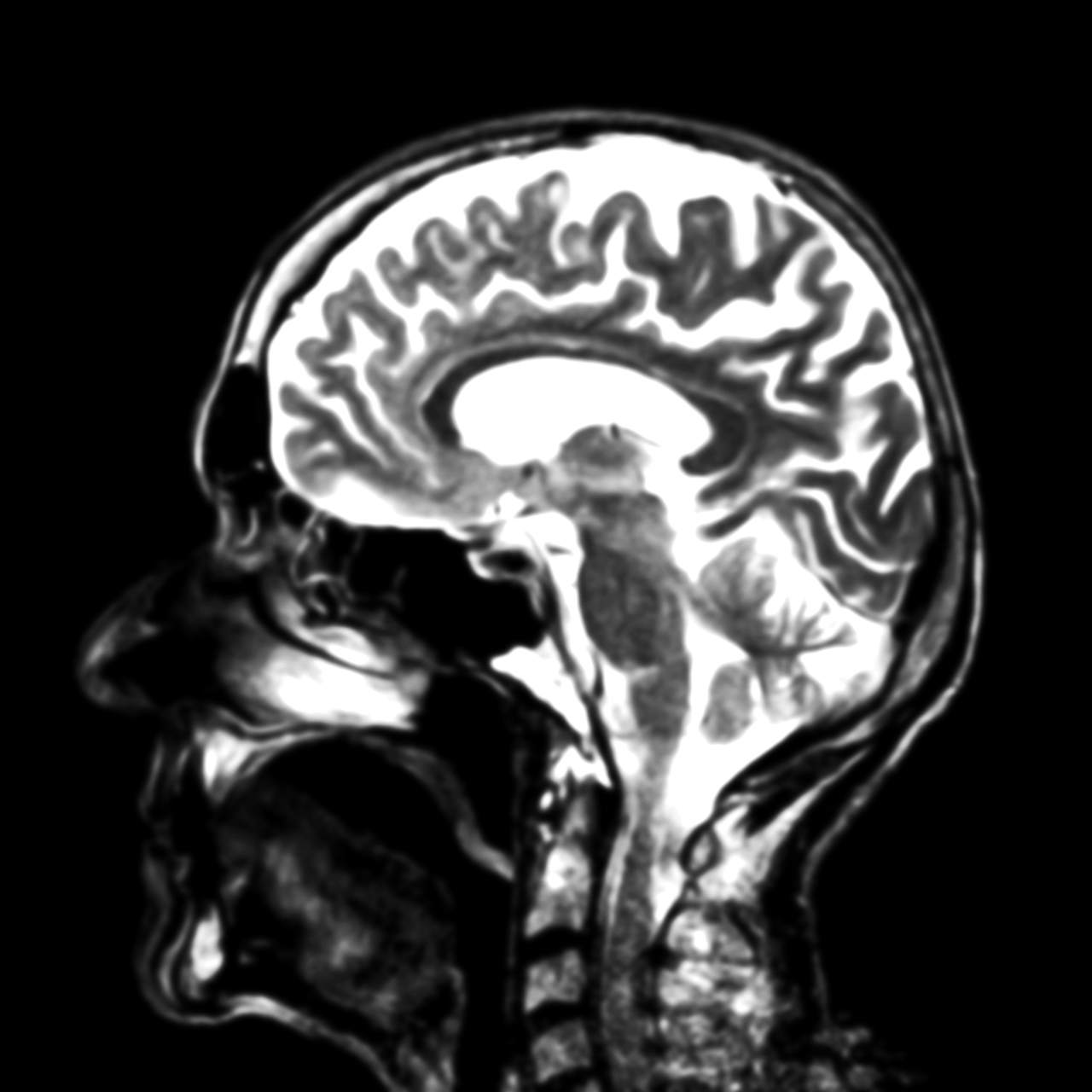
and my brain does something similar… In essence, my brain is simplifying the structure, highlighting some differences and reducing others. It’s filtering the image down to something like this:

BUT the gradations of grey-scale on a sofa don’t mean the same thing as in an MRI scan of the brain. The original image actually contains far more gradations of grey than I can probably perceive…

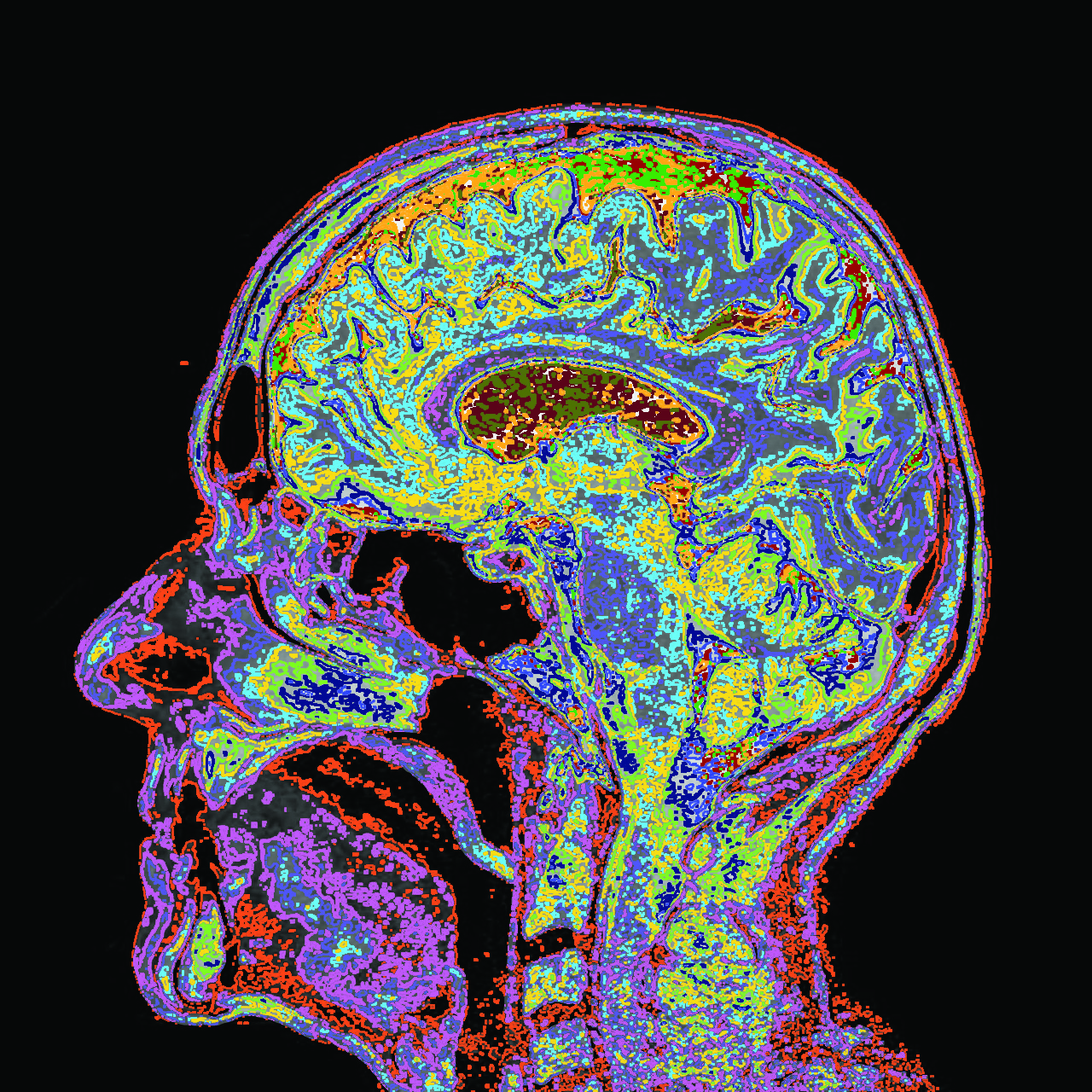
But using Photoshop or another image processing program you can get the computer to mark them, and use false coloring to exaggerate the differences. Doing that to the original image produces this:


It’s not necessarily true that this rendering contains more functional information than the simpler one, but I’d bet it does. How meaningful are these new substructures? That’s for the experts to decide, but you have to notice them in the first place to ask the question.

The “ghosts” in this process are a level of visual processing that our brains often carry out below the surface, recognizing some shades of grey as the “same” and clustering them, ignoring others and filtering them out. There’s simply no guarantee that the way this is happening – trained by all kinds of situations in which we recognize patterns in images – will pick up the critical differences in an MRI image of the brain.

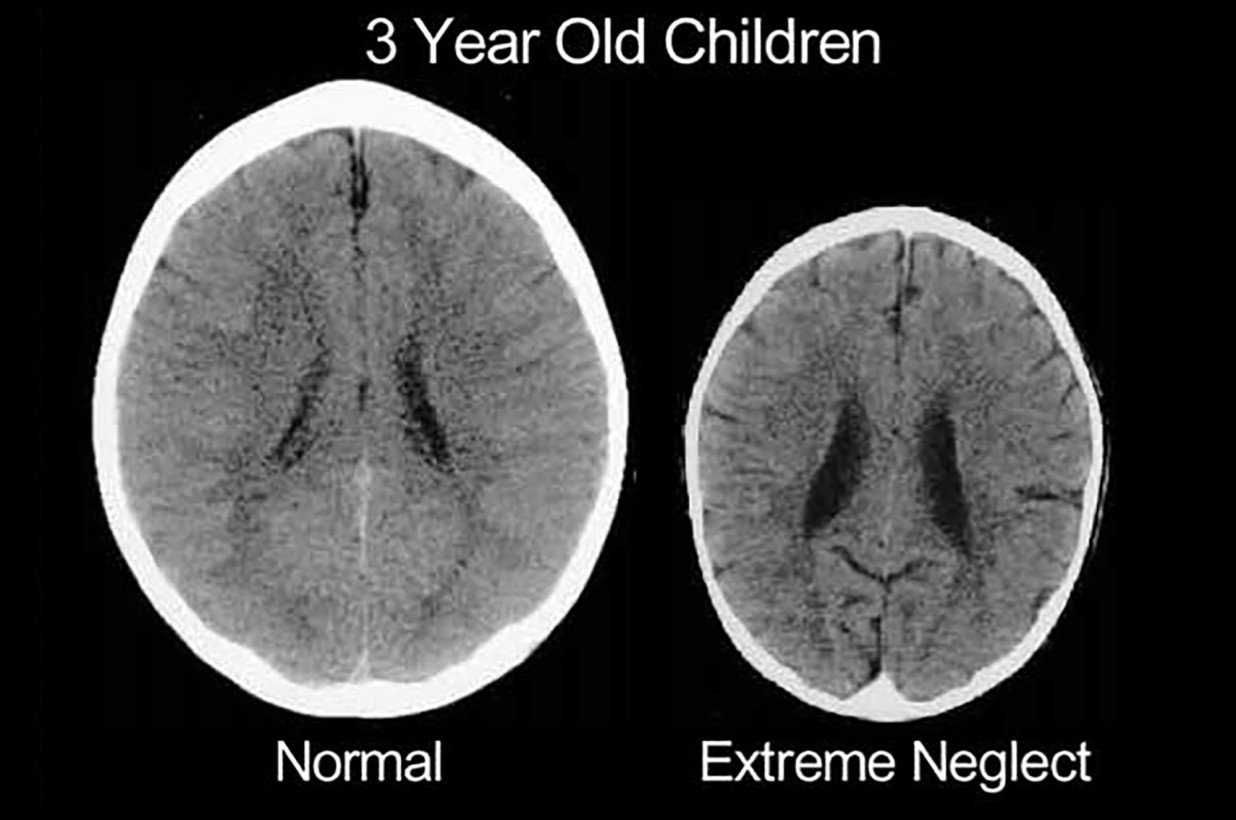
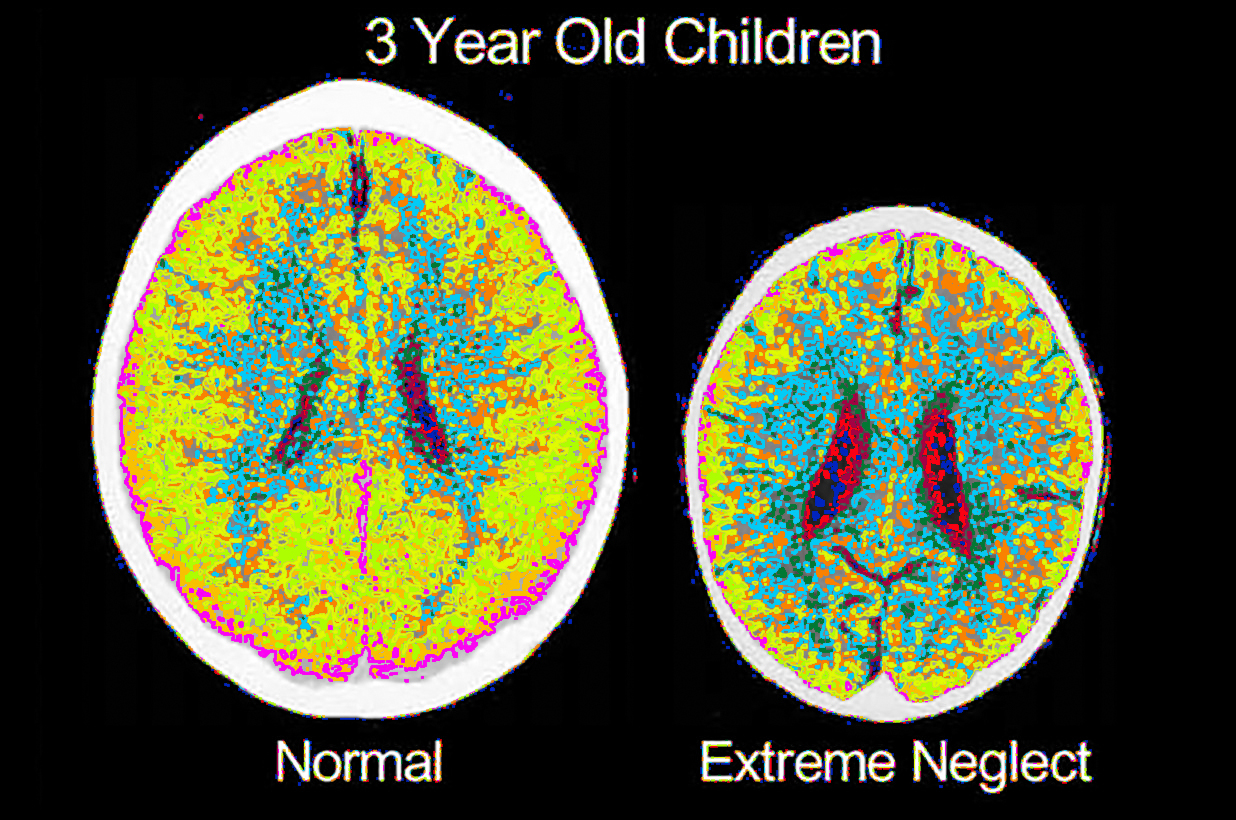
This morning I found a similar image in an article by the NY Post and used it to do the same thing. The piece refers to a study comparing the brains of a “normal, healthy” three-year-old and another who had suffered extreme emotional abuse. I’m not making any claims about the original study here, or the controls and so on, not having read it yet. Nor am I sure that the image they posted represents the original data, with the full resolution and color scale. But still, the difference is remarkable.

Here’s the image posted on the site:


And here’s my colorized version:


There’s certainly more to see. What does it mean? Thoughts are welcome.

Coming soon… The Case of the Short-fingered Musketeer continues!

The Case of the Short-fingered Musketeer… continues!


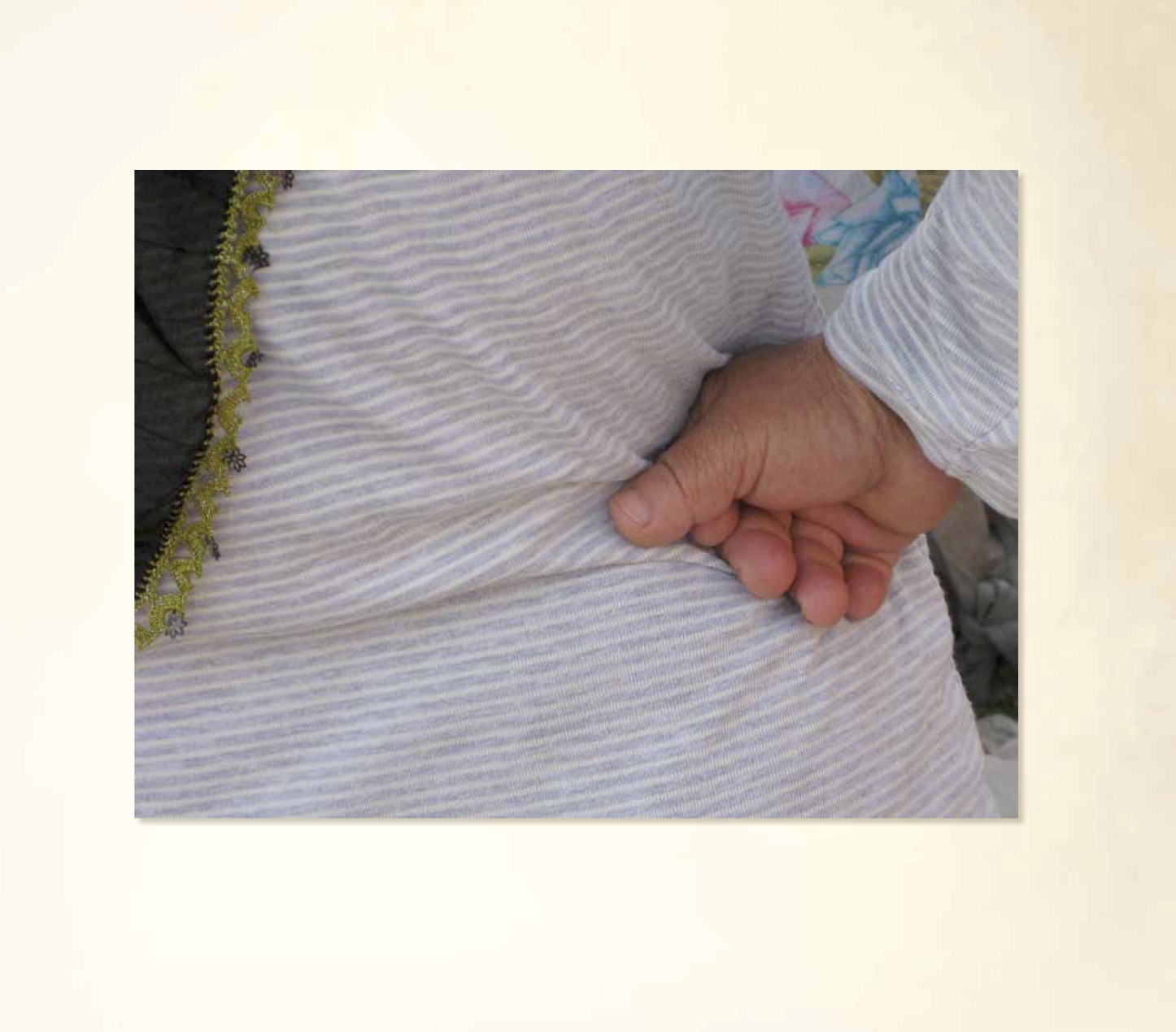
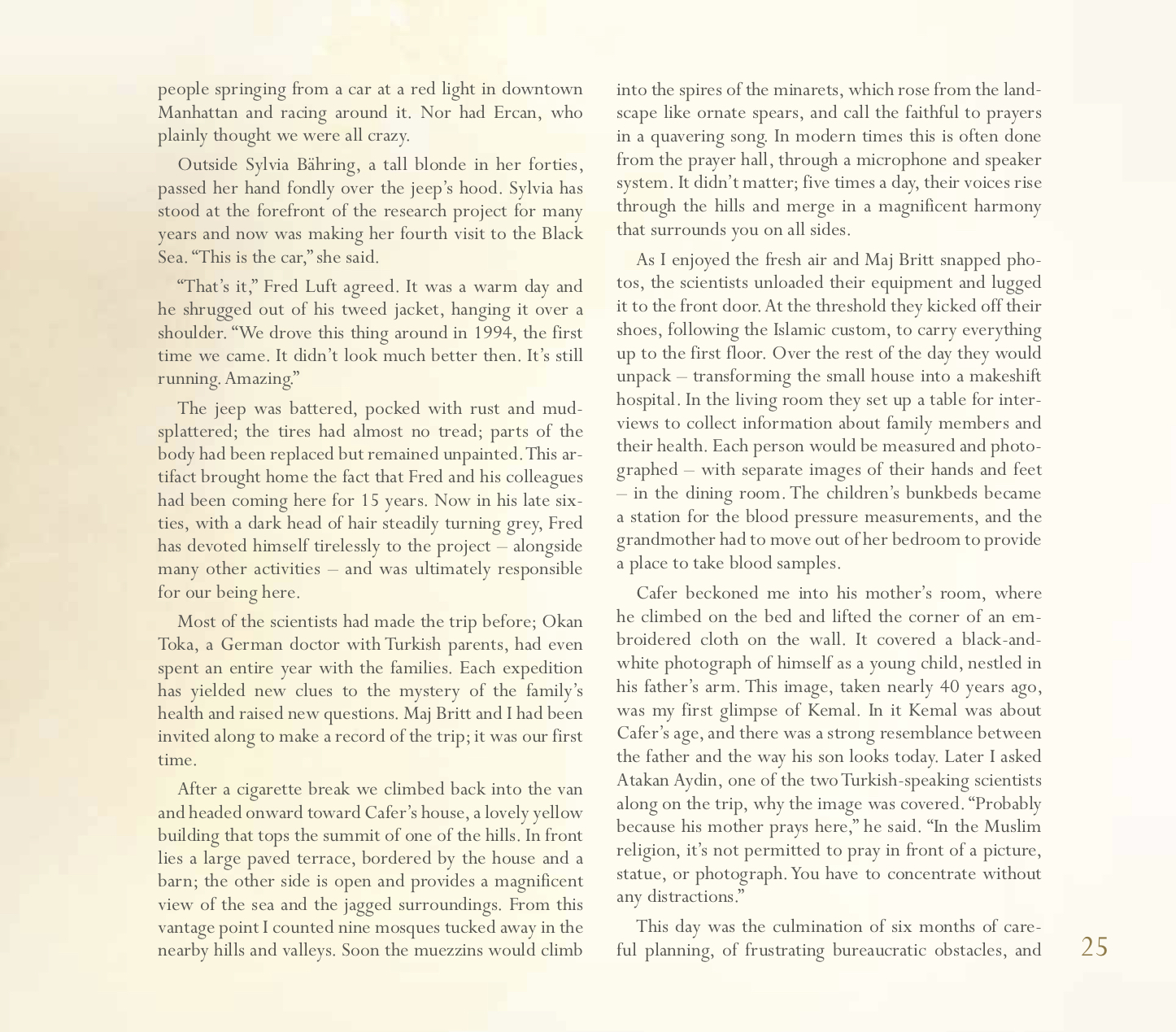
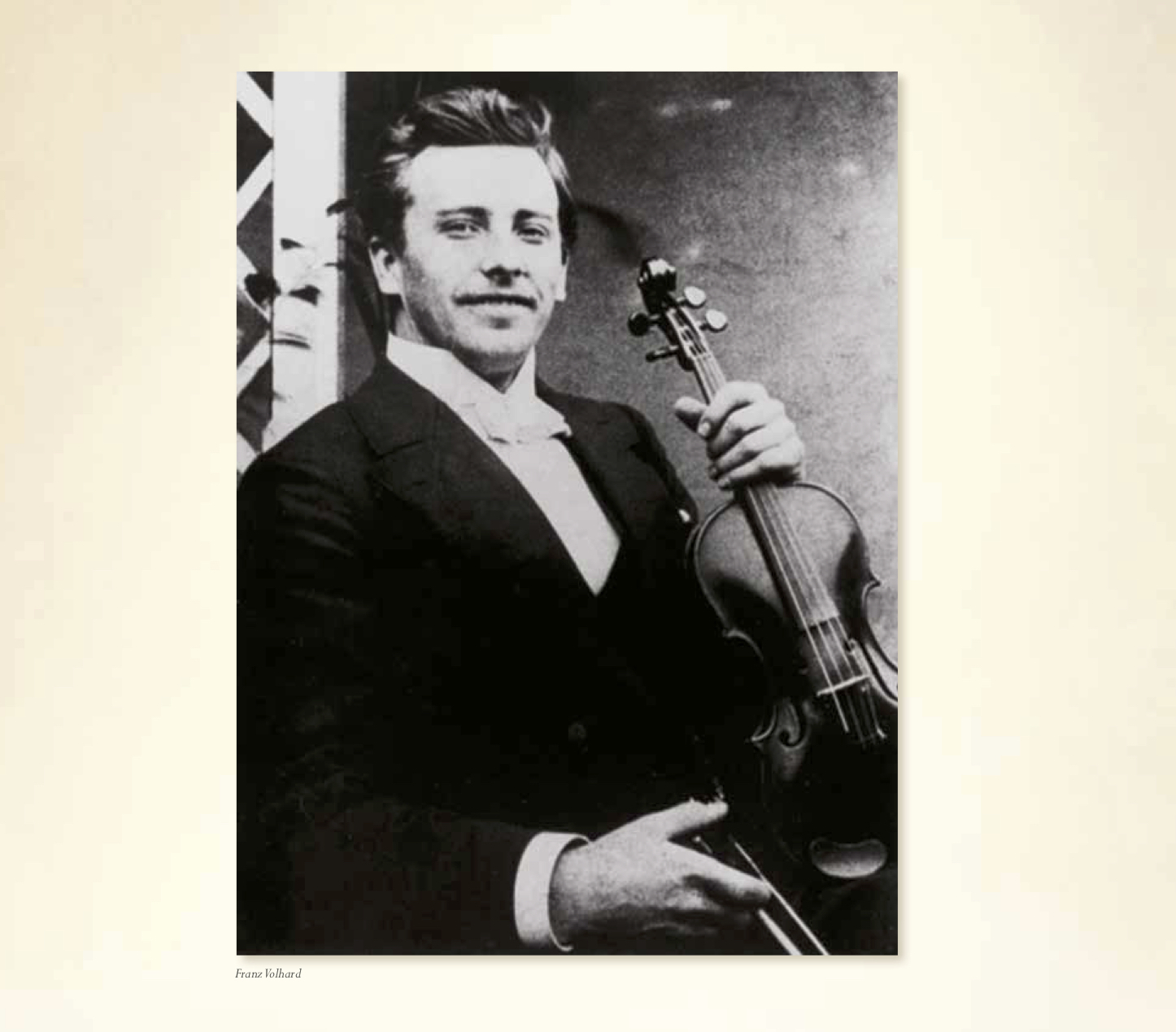
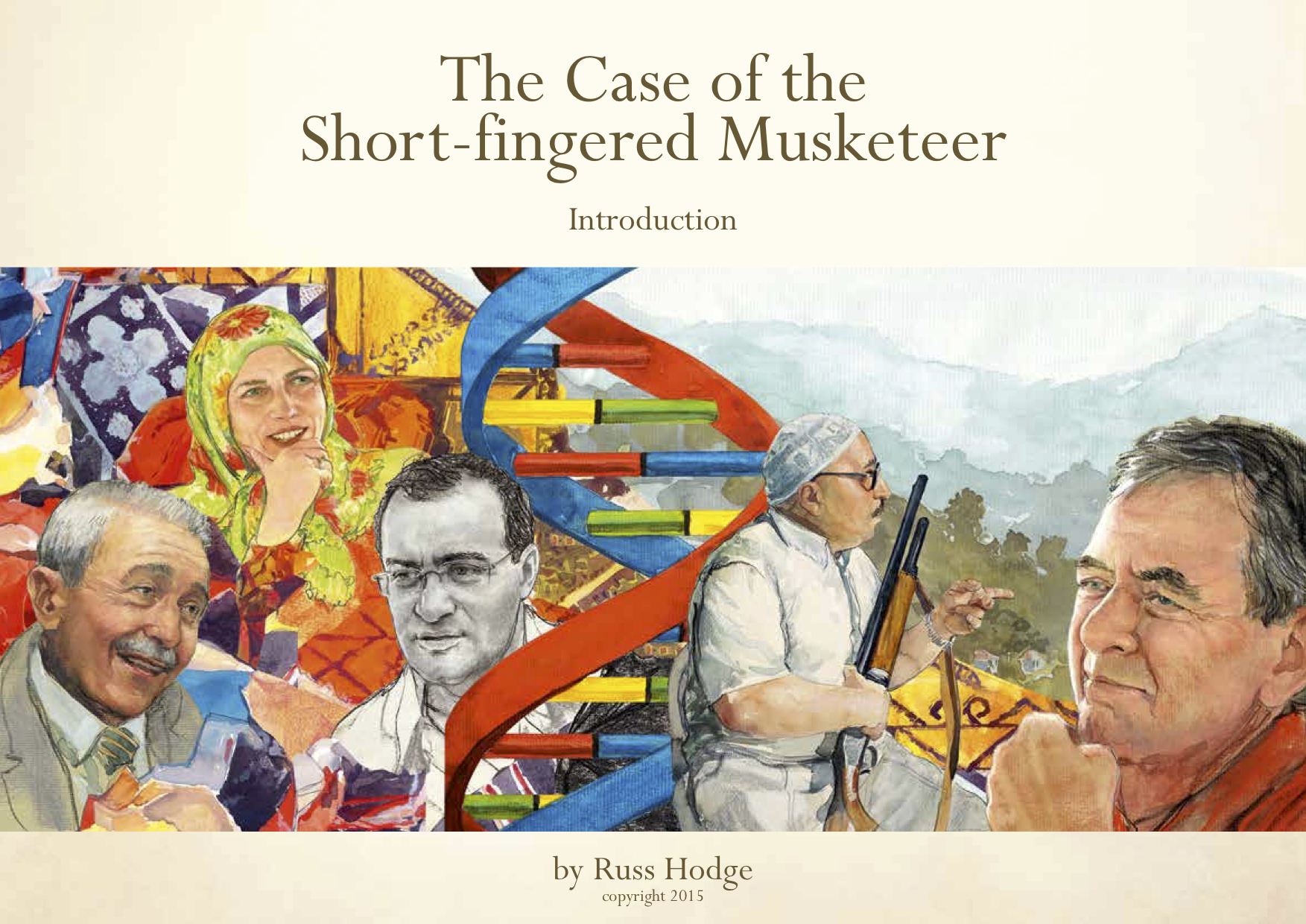
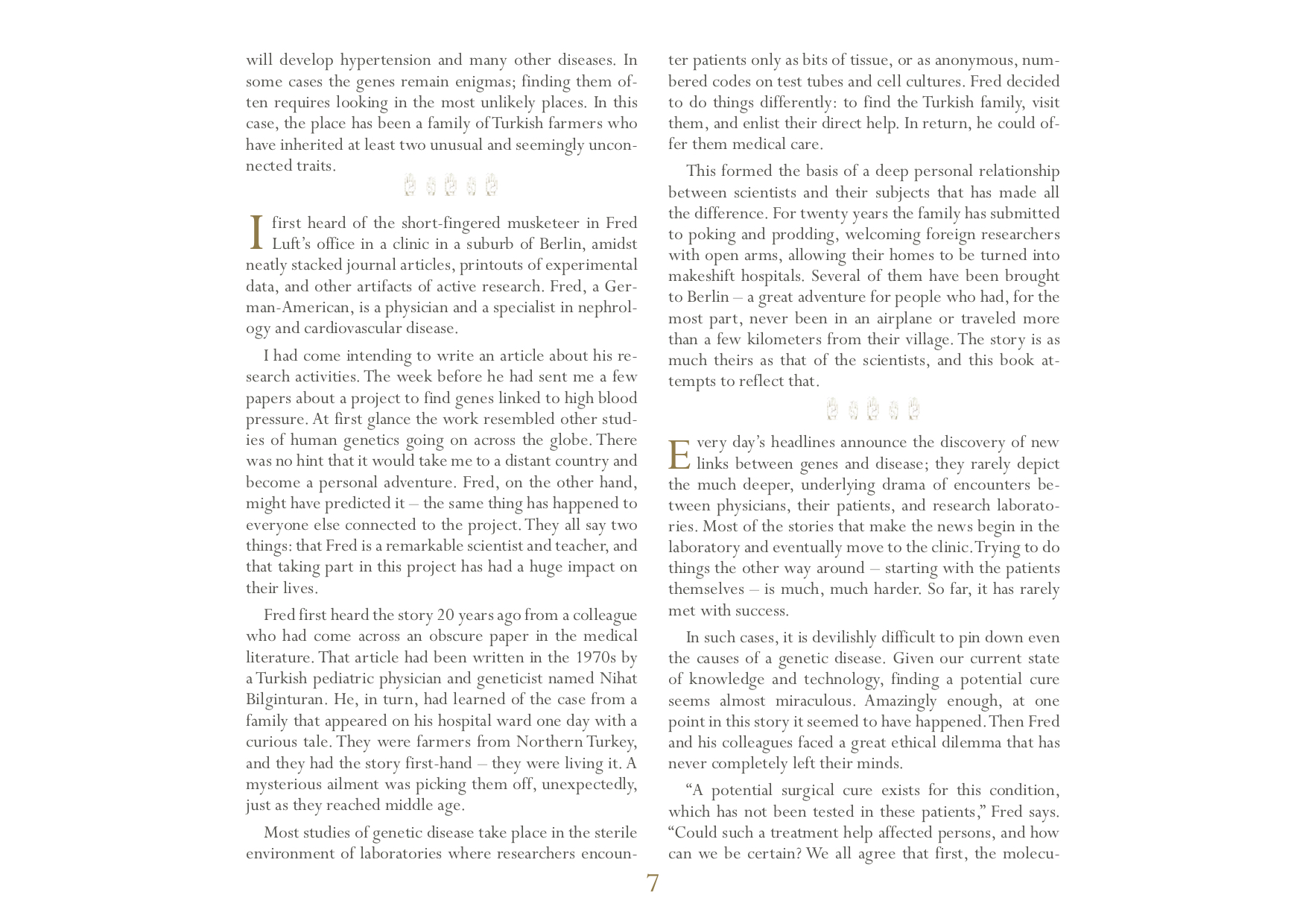
This is the book I wrote in 2012 called “The Case of the Short-fingered Musketeer,” about a long-term project by the laboratory of Friedrich Luft to discover the genetic causes of essential hypertension. The book was written as both a detailed case study of a scientific project and a parable for the amazing progress of what we call “molecular medicine” over the past 20 years. It is also a remarkable account of a unique collaboration between basic researchers, a family with a genetic disease, doctors, clinicians, pharmacologists, and the politics of science. (There was also some art involved, as seen in the magnificent cover painted by my good friend Stephen Johnson, of Lawrence, Kansas.)

In 2012 the story was still unfinished – so it goes in science – but 2015 saw the publication of a new paper that brought the story to a satisfying conclusion. That occasioned a new chapter.

The book was supported and published by the institute Fred, his team and I work for – the Max Delbrück Center for Molecular Medicine of the Helmholtz Association. We are still hopeful that a mainstream publisher will pick up a streamlined version of the book – if you’re interested, please let us know!

Now the group is awaiting word on (hopefully) the acceptance a new paper that takes the story even farther and will certainly require a chapter 22. In optimistic anticipation, and in honor of Fred Luft’s recent 75th birthday, I will begin posting excerpts from the book here over the next days and weeks.

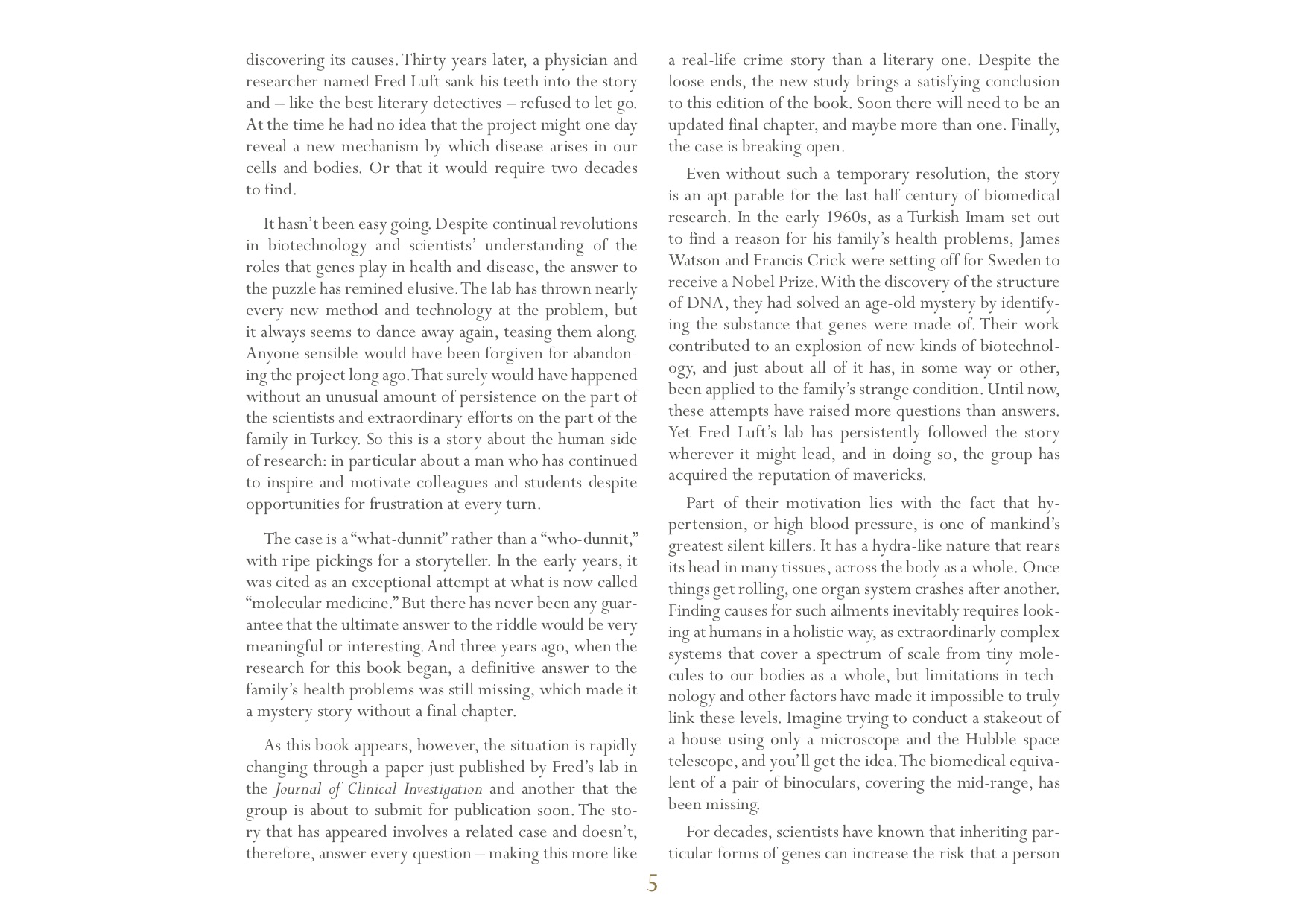
For those who can’t wait, the introduction and final chapter can already be read on-line at the links below.

Introduction

Final chapter

Stay tuned for new developments!

A dialog on ghosts and models in science

This is the first of several pieces in response to questions I have received about my recent lengthy article (too lengthy!) on “Ghosts, models and meaning: rethinking the role of communication in science.” It’s intended to give a quick overview of the main ideas; you’ll find the full article here.

Can you give me a succinct definition of the “ghosts” you’re talking about?

There are a lot of contexts in which science communication somehow fails because an audience doesn’t get the point or understand a message the way it was intended. The naïve view of this is that scientists just know a lot more about a specialized topic than people from other fields or the public. Of course that happens, but I’ve found it’s rarely the biggest issue in communication. And it doesn’t explain why people so often have problems writing for experts in their own field, or have trouble clearly expressing things they know very well.

When I began teaching scientists to write, I constantly came across content-related breakdowns that were hard to understand. This got so frustrating that I finally decided to carry out a systematic analysis of the problems. That took about four years, and “ghosts” emerged as a fundamental concept that’s helpful in understanding a lot of what goes wrong.

Ghosts originate from many things: concepts, frameworks, logical sequences, various patterns of linking ideas, theories, images and so on. What unifies them is that the author has something in mind that is essential to understanding what he means – but it’s missing or very hard to find within the message itself. Often the author is not even aware he’s thinking of something a certain way. Since it’s nowhere to be found in the message, it’s invisible. If the reader doesn’t sense its presence and go looking for it, or has too much trouble digging it out, he will probably misunderstand what the author really meant. All the words might make sense, but there’s some core idea that’s still missing.

I call these things “ghosts” because they are invisible, in that sense, and yet highly disruptive. Of course they occur in all kinds of communication. But ghosts are particularly interesting in science because it has very structured and special ways of assigning meaning to things. What things mean depends on a hidden code that most scientists eventually absorb and imitate, but a failure to recognize its existence causes all kinds of problems. A scientific text will be completely opaque to a lot of people not only because its meaning depends on all of these invisible things – even more because people don’t know where to look for it, or that it’s there at all. It makes science harder to communicate and much harder to learn.

What this boils down to is that science has special ways of assigning meaning to things that really need to be taken into account when you’re planning a message or trying to interpret one. If you don’t, a lot of misunderstandings become almost inevitable, when they could easily have been avoided.


You mention models again and again – why are they so central to misunderstanding science?

Among the most significant and disruptive ghosts in science are various models that are used in formulating a question or hypothesis and interpreting the results. Most studies engage many types and levels of models. In a single paper an author often draws on basic concepts such as the structure, organization and composition of cells, to the components and behavior of biochemical signaling pathways, to complex processes such as gene regulation, to notions like states of health and disease, evolutionary theory and so on. The way scientists describe fairly simple things usually draws on a complex, interlinked universe of models that goes from the smallest level of chemical interactions to mechanisms, organisms, species, and their evolutionary relationships.

Scientists obviously recognize this; as Theodore Dobzhansky said, “Nothing in biology makes sense except in the light of evolution.” But there is a big difference between vaguely acknowledging this and actually working out how the vast theoretical framework of evolution reaches into every single event you’re studying, and reaches into the way you understand the “simplest” things – such as the names of molecules.

And often people don’t realize that even Dobzhansky’s statement is resting on huge, invisible ghosts that he doesn’t explicitly state but are essential to understanding what he means. What I mean is that evolution itself is based on principles of science that are even more fundamental – it follows from them. So if you’re talking about the theory, you’re also engaging this deeper level. That’s really interesting because most of the “debates” over evolution I’ve witnessed are actually arguments about these even larger things. If the parties in the dialogue never articulate that deeper level of the disagreement, it makes very little sense to discuss the types of details that people go round and around about. They’re exchanging a lot of words, but they don’t fundamentally agree on what those words mean. They are arguing about whether species change, split apart or go extinct, but to get anywhere on those issues you have to agree what the term “species” means. It’s not so much that they don’t agree – more that they don’t even realize there is a problem.


What deeper ghosts have to be faced before someone can really understand evolution? 

I think there are two, which are so basic that they distinguish science from other ways of thinking about things and assigning them meaning. I call the first one the principle of local interactions, which follows from a fundamental assumption about physical laws. In science if you claim that something directly causes another thing, you are expected to prove that there is some moment of time and space where the cause and effect come into direct contact with each other, or at least to demonstrate that this is a highly reasonable assumption to make. Scientists extend this concept with a sort of shorthand: the two objects may not really bang into each other, but then they have to be linked by steps such as a transfer of energy that do follow this rule. So to make a scientific claim that a child inherits traits from its parents, you have to find some direct mechanism linking them, such as the DNA in their cells. It is directly passed to the oocyte from DNA from the reproductive cells of the parents, and gets copied into each cell, and then it gets used in the transcription of RNAs and translation into proteins through a lot of single, physical interactions. You’ll never directly see all of those things happening, but the models you use predict they are there.

The second principle applies this type of causality to entities as complex as organisms or entire ecospheres. It shows what happens when a lot of local interactions create systems that are much more complex. At that point the principle declares that the state of a system arises from its previous state through a rule-governed process. From that it follows that future states of the system will arise from the present one, following the same rules. We’re far from knowing all those rules, but scientists assume they are there, and a lot of their work is aimed at creating models that describe them.

Both of these concepts are closely tied to a style of argumentation that integrates Occam’s razor; I’ll talk about that elsewhere.

How are these fundamental principles linked to evolution? Well, you start by observing what is going on in a biological system right now and creating models that project the state into the past and future. You test those models with experiments, and then start extending them farther and farther into the past and future. You make predictions about what will happen if the model is correct in the future, and look for evidence of its activity in the past. If something in an experiment violates those predictions, you have to revise the model. This process of observation, modeling, and challenging models is the source of the Big Bang theory in astrophysics; it’s the basis of our geological understanding of the Earth’s crust, and when Darwin applied it to life he got evolution.

Other belief systems such as religious accounts don’t start from an assumption that models are works in progress that will inevitably be revised; nor do they require that their versions of things constantly be revised to conform to evidence. It leaves people free to believe whatever they like, to maintain idiosyncractic positions in the face of mounting evidence to the contrary. It leads to inconsistencies about the way they think about causes and effects in their daily lives versus how they extend their opinions to the universe. This is pretty egocentric; it leaves no place for self-doubt and encourages no respect for the potential validity of other belief systems. This very easily slides into a type of intellectual authoritarianism which is absolutely counter to the fundamentally democratic nature of science.

You can see these two principles at work in the way we distinguish “scientific models” from every other kind. Anything that violates the principle of local interactions would be considered non-scientific. That’s the case for extrasensory perception – until someone demonstrates that some energy passes from one person’s mind into another’s, you can’t make a scientific claim for its existence, so you have to look closely into whatever model of causality led you to claim it might exist. And the second principle implies that there are no discontinuities – you can’t create something from nothing. Miracles and the fundamentalist account of creation violate both principles.

If you can’t agree on these two things, it makes very little sense to discuss details of evolution that derive from them, because the differences in the very basic assumptions held by people can’t be resolved – you’ve got to agree on things like standards of evidence and causality. If you don’t do that you can’t even agree on the meaning of words. That’s what makes these fundamental principles ghosts in “debates” on evolution, and they are the things you need to clarify before getting involved in one. And, of course, you have to insist that the participants act in a way that is intellectually fair and honest, with integrity.

There are a lot of other debates in science – such as controversies over animal experimentation – in which this doesn’t happen. Reputable organizations make inflammatory remarks and hold untenable positions on points of fact, and refuse to back down when you refute their points. Then you get barroom brawls rather than civil discussions about important topics.


You came up with this concept of “ghosts” while working on texts by students and other scientists. Why are they a particular problem for students?

An active researcher is usually so deeply engaged with his models that they have become a fully natural, shorthand style of thought. It’s like the grammar of a native language, which becomes internalised without a real understanding of its structure. In science this grammar has to do a lot with models. Most projects in research take place in a fairly exact dialog with specific models you are either trying to elaborate on by adding details, or extend to new systems, or refute through new evidence. This makes models very dynamic, and there’s no single reference on the Internet or wherever where you can go and find them. In biology virtually every topic gets reviewed every year or two, which is an expert’s attempt to summarize the most recent findings in a field to keep people in a field more or less on the same page. That’s the group that a lot of papers and talks are addressed to, at least most scientists think that way – and they assume the readers will have more or less the same concepts, models and frameworks in mind. Anything that is widely shared, people often fail to say – they think they don’t need to. And it’s impossible to lay out all the assumptions and frameworks that underlie a paper within it – you can’t define every single term, for example. So these become ghosts that aren’t explicitly mentioned but lie behind the meaning of every paper. The two really huge basic principles I mentioned above are rarely, rarely described in papers.

And even the details of the models more directly addressed by a piece of work – the physical structure of the components of signaling pathways, or all the events within a developmental process – aren’t mentioned very often. Those models are embedded in higher-level models, and the relationships in this hierarchy are not only hard to see – there’s no single way of explaining them. Scientists sometimes work these things out fairly intuitively as they extend the meaning of a specific set of results to other situations and higher levels of organization.

Now imagine a science student who is absorbing tons of information from papers like these. As he reads he’s grappling with understanding a lot of new material, but he’s also actively building a cognitive structure in his head – I call it the “inner laboratory, or cognitive laboratory.” It consists of a huge architecture in which concepts are linked together in a certain structure. The degree to which he understands a new piece of science depends on how that structure is put together, and where he plugs in new information. If the text he’s reading doesn’t explicitly tell him how to do this, there will be a lot of misinterpretations.

How can his professor or the head of his lab tell whether a scientist under his supervision is assembling this architecture in a reasonable way? You catch glimpses of part of it in the way someone designs an experiment, but I think the only method that gives you a very thorough view of it is to have the young scientist write. That process forces him to make the way he links ideas explicit and put them down in a way you can analyse each step. In writing – or other forms of representation, such as drawing images or making concept maps – you articulate a train of thought that someone else can follow, providing a means of interrogating each step. Most texts are pretty revealing about that architecture; if you read them closely you can see gaps, wrong turns, logical errors, and all kinds of links between ideas that a reader can examine very carefully.

The problem is that in most education systems in continental Europe, in which most of the scientists I deal with were educated, writing is not part of the curriculum. Whatever training they have is done in all sorts of ways, and the teaching is usually not content-based. Instructors use all kinds of exercises on general topics, but that learning doesn’t transfer well to real practice. Why not? Because when you write about a general theme, your knowledge is usually arranged very similarly to that of the teacher’s and any general audience. In your specialized field, on the other hand, your knowledge is likely to be very differently arranged, and that’s where the ghosts start to wreak real havoc on communication.


So ghosts aren’t just things that scientists leave out of texts – they’re also phenomena that arise from the reader or audience…?

Absolutely – they arise from differences in the way a speaker and listener or a writer and reader have their knowledge organized. That can happen in any kind of communication, but in science it’s actually possible to pin ghosts down fairly precisely. In political discussions or other types of debates there aren’t really formal rules about the types of arguments that are allowed… But if you know how meaning in science is established, you can point to a specific connection in a text or image and say, “To understand what the scientist means, you have to know this or this other thing.” Again, since neither of you can directly see what’s in the other’s head, a reader may not guess that some of the meaning comes from very high levels of assumptions, or a way of organizing information that you’re not being told. And some have been digested so thoroughly by scientists that they’re no longer really aware that they are there.

Some of the most interesting ghosts appear when you try use someone’s description of a structure or process to draw a scheme or diagram. I recently had to draw an image of how a few molecules bind to DNA because we needed an illustration for a paper. I thought I had it clear in my mind, but I ended up drawing it five times – each version incorporating some new piece of information the scientist told me – before I got it the way she wanted it. You learn an incredible amount that way.

A scientific text is often based on an image of a component or process that a scientist has in his mind. He’s trying to get a point across, and to understand what he means you have to see it the way he sees it – but if he leaves anything out, it’s easy to completely miss the logic. It’s like trying to follow someone’s directions… That works best if the person who’s giving the instructions can “see the route” the way it will appear to you, maybe driving it one time to look for the least ambiguous landmarks, or taking public transportation and watching exactly what signs are the most visible. And thinking it through with the idea, “Now where could this go wrong?”


Another thing you refer to is concept maps – you include several examples in the article. How do they fit in?

Concept mapping is a system invented by a great educator named Joe Novak; it gives you a visual method to describe very complex architectures of information. It’s extremely useful in communication, teaching, and analyzing communication problems. One reason it’s so important is that our minds deal with incredibly complex concepts that are linked together in many ways. Think of trying to play a game of chess without a board – that’s incredibly difficult, but a chess set is a fairly simple system compared to most of those that science deals with. There’s really no way to keep whole systems in your head at the same time. Making a map gives you a chance to see the whole and manipulate it in ways that would be impossible just by thinking about it.

But the real genius of this system appears in communication and its most precise form – education – where a teacher ought to understand what he is really trying to communicate, and how it’s likely to be understood by the students or audience. In most cases you’re hoping to do more than just “transmit” a list of single facts; you’re trying to get across a coherent little network of related ideas, linked in specific ways. If you do that successfully, the audience will leave with a pattern they can reproduce later. It might be a story, a sequence of events, or a metaphor – the main thing is, they have seen how the pieces are related to each other.

A great way to do this is to make a map of the story you’re trying to tell, and then make your best guess about how this information is arranged in the heads of your target audience. What can you realistically expect them to know, and what information and links are likely to be new? If you see the pattern you’re trying to communicate very clearly, and make a reasonable guess about how some type of knowledge you can relate it to is arranged in your audience’s head, you know what you have to change to get them to see things the way you’re hoping. In schools they’re teaching kids to make concept maps early on. Then before a lesson about something like the solar system, the teacher has the kids draw a map of what they think about the sun, moon, planets, and so on. After the lesson the kids make a new map – comparing the two tells you what they’ve really learned.


In your article you point out ghosts that come from schemes like sequences of events or tables…

A lot of scientific models consist of sequences of interactions between the components of a system. Those start somewhere and involve steps arranged in a particular order, and it’s important for the reader to have a view of the steps and that order in his mind. You’d be surprised how often scientists describe these processes in some bizarre order that doesn’t go from A to K, but starts at G, goes to H and I, then goes back to G and works backward to F, E, and D… Again, if you are already familiar with the sequence or pathway this is no problem. But if you don’t, you’re probably expecting the reader to try to assemble the process in some reasonable order. That may be possible through a careful reading of the text, but it takes far more “processing time” than a reader would need if the whole sequence were simply laid out in order in the first place.

Tables are interesting because a lot of experiments are designed with a structure that’s pretty much inherently that of a table. Say you have two experimental systems plus a control, and you apply two procedures to all of them. To make a claim about the results, you have to march through all these cases – basically a table that’s 3×2 or 2×3. Here again, you’d be surprised how many scientists’ descriptions skip over some of the cells of the table, mostly because the results aren’t very informative. Or they tell you, “Procedure A caused a 5-fold increase over Procedure B,” without telling you what happened in the control.

Both of these effects are due to a scientist’s failure to recognize the structure of the information he has in his head and is trying to present… Then he fails to present that structure in the text in a way that’s easy for the reader to rebuild in his own head.


You’ve said that ghosts are one component of a larger model you’re working on that reformulates the relationship between science and communication… What else is there?

A lot of the other points can be captured through an exploration of what I call this “inner” or “cognitive” laboratory of science. The really good scientists I know have a very clear understanding of their own thinking. They know the assumptions that have gone into the models they are using, and are aware of the limitations, where there are gaps and so on. That type of clarity usually translates into good communication, no matter what the audience.

One thing I found during this project that was very surprising was the extent to which writing and communication for all kinds of audiences was connected, and how addressing very diverse audiences could clarify thinking in a way that improved a scientist’s research. When you find a scientist struggling with clarity in a text, it usually means one of two things. Either a topic is not clear in his head at that moment, or it’s not clear in anybody’s head at this moment in science… That second case is very interesting because it means you can find interesting questions just through a very careful reading of a text, realizing that it’s asking you to build a certain structure of ideas. If you have difficulty, that means something. One of the basic strategies I used in working these things out was that problems are meaningful – they’re trying to tell you something about how good science communication works, or how scientific thinking works… usually both.

Speaking to a general public with really no specialized knowledge of a field can be a truly profound exercise for a scientist. It makes him interrogate his own knowledge in alternative ways. He has to come to a much more basic understanding of the patterns in his inner laboratory and apply different metaphors, trying to map that knowledge onto someone else’s patterns. Well, the cognitive laboratory is already metaphorical, based on concepts rather than real objects, and applying new patterns or metaphors to what’s in there is extremely interesting. It can suggest questions you’ve never thought of before. This means that tools that have been developed by linguists and communicators can be used as tools to crack open scientific models.

I’ve actually done this – used those tools to expose an assumption about evolution that everyone was making but wasn’t usually aware of. The assumption had never been tested, so my friend Miguel Andrade decided to take it on as a project, and put a postdoc on it. The results were really interesting, showing that there were a lot of cases where the assumption didn’t hold – and we got a published, peer-reviewed paper out of it. That was three years ago, and in the meantime I’ve been involved in a number of similar projects that have had a similar outcome. A communicator who pursues questions about meaning and language has a different set of tools to understand how ideas are linked in scientific models. You’re freer to apply slightly different metaphors and patterns to ideas; you may be more rigorous in perceiving assumptions; metaphors and other tropes help you see cases in which people are reasoning by analogy rather than strictly adhering to the system at hand.

So these ideas aren’t just a way to help people plan and communication better – although they certainly help in those tasks. In fact they are much more fundamental in scientific thinking. Understanding these relationships between communication and science is a pathway to doing better research, through a better understanding of its cognitive side. I’ve noticed recently, for example, a lot of cases where the way people are thinking of complicated processes is drifting away from the language they use to describe them. The language is conservative and it may be hard to adjust. But that will be essential as the models these fields are using move forward and become so complex that our minds – and our language – may not be truly able to capture them.


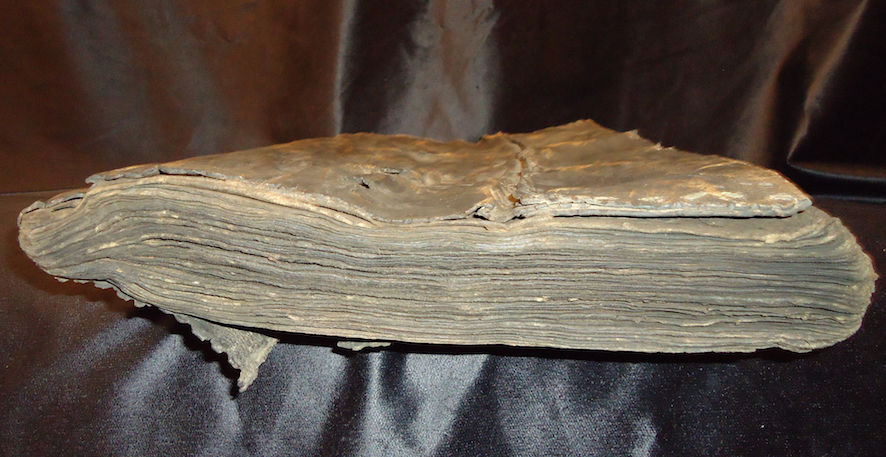
The Bible of Elazığ: a backroom to a parallel universe

Bizarre, serendipitous adventures in science communication

Part one

This incredible story goes back a few years and adheres as closely to truth as memory and my notes permit. I have changed some names, for reasons that will become clear. It began a few months after I had finished a book called The Case of the short-fingered Musketeer, which concerns the heroic efforts by physician/scientist Friedrich Luft and his lab to discover genetic mechanisms underlying essential hypertension. I covered that story in the book, as fully I could. But except to a few close friends, I’ve never recounted the extraordinary events that happened in its aftermath.

To put things into context, the research carried out by Fred and his group involved a family of farmers living in Northern Turkey. They suffered from a genetic disease that was thought to be unique at the time, but over the course of the project Fred’s group uncovered a number of other families around that globe that are affected. People suffering from the hereditary condition called Bilganturan’s syndrome have very short fingers and toes, a short overall stature, and amazingly high blood pressure.

One unusual aspect of the group’s research was that the Turkish family had been actively involved in the project for many years, which made their perspective an important part of the story. When I told Fred I wanted to write a book about their work, he decided to mount a new trip to visit the family on the Black Sea. I tagged along on a week-long expedition, where the scientists collected samples that would eventually lead to the solution of the family’s unique condition. Later we paid a visit to a Nihat Bilganturan in Ankarra, the physician who had written the first paper about the family’s disease in the early 1970s. He was an amazingly colorful figure whose work had taken him to the US, Saudi Arabia and around the world – I’m still hoping that a massive autobiography that he was working on will be published someday.

Those two visits represented my entire experience of Turkey when I set out to write the Musketeer book. That obviously wouldn’t do: so much of the tale revolved around crossing cultural and societal borders, and two of the main characters were young physicians whose Turkish parents had immigrated to Germany in the 1960s. One branch of the family affected by the disease had moved to the Stuttgart region. To have any hope of realistically portraying their thoughts and their lives, I carried out extensive interviews with many of them – usually through translators. But I still needed more.

Living in Berlin brings you into daily contact with many such immigrants and their children, from all walks of life. Whenever I could I began engaging these people in conversations, in hopes of improving my understanding of their situation. One of those chance encounters led to the wild and unexpected adventure I’ll describe here.

* * * * *

For ten years I’ve had a small apartment near the S-Bahn station in Pankow, not one of the glamourous areas of the city. The steady rise in rents is a sign that things are improving, but the cafés and shops in the neighborhood have had a hard go of it. Just as you get to know the regulars, a place changes hands.

The corner near my place used to be occupied by one of those night shops you find all around Berlin. Mostly run by Turks or other immigrants, their main source of income is a flow of pedestrians who stop by for beer or cigarettes, then step outside to smoke and drink. They bring their empty soldiers back inside, collect the refund, then buy the next round. The city hadn’t yet toughened up on indoor smoking, so there was a perpetual cloud emerging from a back room where they had a row of computers that people could use to surf the Internet. It was handy if you needed a late-night e-mail fix, but hard on the lungs – and you certainly didn’t want to watch the surfing habits of the denizens that hung out there.

The place was run by two middle-aged Turkish men who would chat the ear off anyone who expressed an interest in their home country. When they found out about the book I was writing… Let’s just say they began considering themselves key, confidential informants on every possible topic. I had long reached the saturation point by the night somebody broke in and absconded with their computers, upon which the place passed into the hands of a younger generation of German Turks and a new set of informants.

I didn’t see the original owners again until about two years later, when I was at the Friedrichstrasse in Berlin, running late for some appointment. I ran up the steps to the S-bahn and arrived on the platform just as the doors of the train were closing. I jammed my way in, sat down, and tried to catch my breath. When I’d recovered enough to take in my surroundings, I noticed a short, hefty guy with bristly white hair sitting across the aisle, staring at me. I couldn’t place him until he came over to sit down next to me. It was one of the original owners of the shop.

The first thing he said was, “You’re a scientist, aren’t you?”

No, I said, but I certainly knew enough of them.

“We need your help,” he said.

* * * * *

Such moments of serendipity happen in Berlin all the time, and there’s no predicting what will come of them. You meet people by chance, talk about nothing in particular, and then run into them a couple of years later when your lives have entered a new phase.
Ali, as I’ll call him here, was cagey about the topic on his mind. The first step was to exchange cell phone numbers. Maybe we could meet in a day or two down by the Yorckstrasse? It sounded like a small adventure; how could I possibly refuse?

So the next Saturday I took the S-bahn to the station south of Potsdamer Platz. Ali collected me on the platform and led me down the stairs, then on a long walk farther to the south down a boulevard lined with trees. We turned east and walked a hundred meters more where he stopped, opened an unmarked door, and gestured that I should enter. Inside was another world: a Turkish tea shop.

I hadn’t noticed them before, but in certain neighborhoods you’ll find many such doors; at any moment they might open to reveal a cluster of men, reading newspapers and drinking tea and arguing about impenetrable topics. Here there were four or five guests sitting around a table, engaged in the usual activities under the drone of a television set mounted on the wall. It was tuned to one of those strange dramas that had been perpetually running on the TV in the restaurant of our hotel in Turkey: a melange of soap opera and family story in which people would shout at each other; someone would unexpectedly burst into tears, followed by the sudden appearance of a gun. An utterly foreign dramaturgy that was impossible to follow if you didn’t know the language.

As we entered the shop, conversation broke off abruptly and the heads of the men turned to rake me with a suspicious, penetrating stare. Ali said something that seemed to appease them; after a comment or two they turned back to their newspapers. A young man emerged from behind a counter and, without asking, served us black tea in small, glass cups. The tea was steaming hot and had to be taken in small sips. We chatted about something; I don’t remember what, but it was nothing meaningful.

What am I doing here?

After ten or fifteen minutes of this, Ali stood up. “Come,” he said, and gestured toward a door behind the counter. We passed into the back room, a combination between office and storage room, with a desk littered with papers, stacks of boxes, and an ancient leather sofa creased and stained by ages of wear. There was a rust-encrusted bicycle leaning against one wall. Ali moved some stuff off the sofa. “Sit,” he said, and I sat down on the sofa, sinking in deep. Now really wondering what I was doing there.

My host sat down at the desk and shuffled some papers around. He got out his cell phone, scowled at it a while, and punched in some numbers. An excited conversation. He hung up and smiled at me. “You want some more tea? I’ll get us some more tea.” And he left.

Ten minutes later he returned with tea and another Turkish man who hadn’t been outside – tall, thin, balding, with black horn-rimmed glasses. Mehmet, let’s say. We sipped and once again, talked about nothing in particular for a while. The newcomer asked about my work, in a way that suggested I was being cross-examined. To turn the tables, I asked about his work.

“I’m a lawyer,” Mehmet said.

Mysteriouser and mysteriouser.

* * * * *

This was the first of five or six meetings that eventually took place in that tea shop near the Yorckstrasse or another nearby. Each time I had the feeling I was undergoing some sort of test, and each test I passed unlocked a bit more of an incredible story. Later I understood that the people I was meeting had very good reasons for their extreme caution and distrust of strangers. But at the time this all seemed like a bizarre symptom of a cultural code I didn’t understand – especially since they had approached me for help, rather than the other way around.

It was the third meeting, I think, when they asked me if I had any experience with “very old things.”

What kind of old things?

Very old… objects.” Mehmet’s eyes were glued to my face.

“Old” could mean almost anything – historical? archeological? paleontological? I had nothing like professional experience in any of those domains, but if he was talking about something truly ancient, I’d at least gotten my feet wet. As a high school student I’d joined a month-long paleontology trip across the state of Kansas, which culminated in the discovery of a dinosaur near Lake Wilson. Then at the university I’d fulfilled part of my science requirement with classes in archeology. The high point of that period was a year in Bordeaux, where alongside an intensive program to become a French teacher, I’d taken a year-long course in prehistoric art. Most weekends the professor would take us on expeditions to the caves of the Dordogne, where we’d stand under glowing painted figures of animals or follow a herd of mammoths that had been engraved on the walls of the twisted corridors. Once we spent four hours walking through the grotte Rouffignac carrying only lanterns, which was as near as you could get to the experience of a prehistoric sculptor who had followed the same route 30,000 years ago. For some reason those ancient artists rarely depicted humans; when they did, the images were usually tucked away in nearly inaccessible corners of the caves. At one point the guides lowered us students down into a hole on a rope, one-by-one, to bring us face-to-face with a drawing of a human head.

I came out of my reverie, and realized that I was tired of whatever game Ali and Mehmet were luring me into. If they wanted my help, it was time to let me in on what was going on.

“What kind of objects?”

They gave each other a long glance. Finally Ali said, “A cousin of mine, in Turkey… found some things. Very old manuscripts. We would like to know what they are.”

“Where are these things?”

“In Turkey,” Ali said. A pause, and another glance. “But they have pictures.”

He didn’t have them now, he said. But he would call his cousin, who might be able to send some. “Maybe you can come back tomorrow.”

* * * * *

Finally catching a glimpse of the pictures took two more trips to Yorckstrasse and two more visits to the back room, then an invitation to dinner in a Turkish restaurant. There we were joined by a third man whose name I never learned and whose relationship to this strange band of “relatives” – as was the case for Ali and Mehmet – never became completely clear. Later I found out that the term “cousin” was being used in the broadest possible way. And that my new-found acquaintances were playing fast and loose with some of their facts. But they’d succeeded in hooking me with a story and drawing me into an adventure that was just beginning.

Ali finally resolved some issues with the Internet – his “relative” was only willing to provide the images on a secure server for the shortest possible time. The first time we tried to log on – from another shop with Internet access – they had already been deleted. The second time we could scroll through a few of the photos. There was a thick brown book wrapped in some kind of warped leather, and a few shots of inner sheets of parchment containing drawings and line after line of a very odd script that resembled nothing I’d ever seen before.

It was impossible to say anything from images alone, of course. But I had to admit that the thing looked old – amazingly old.

The manuscript was 105 pages long, completely legible, and the images were stunning and incredibly intriguing. There were several crosses, in styles I didn’t recognize. Another image represented a snake, curled in an S-like form followed by the strange script. Its tail was curled around what looked like an infant.

Later they told me that the images had been examined by an expert. If his analysis was to be believed, the book was a Bible, although no one had been able to decipher the text. From the images they believed it to represent a part of the New Testament.

And one of the initial pages with a cross held a notation – written in what the expert claimed was a recognizeable dating system. If their interpretation was correct, the book dated from the year 232 CE.
Unbelievable. Especially given the fact that the oldest extant New Testament manuscript anywhere in the world – except for a few fragments – dated from the third or fourth centuries CE!

What to do? Armed with a few images that they were finally willing to part with, I decided to hit the libraries and talk to scholars from the fields of ancient manuscripts and Biblical history. It was immediately clear that a true Biblical manuscript even remotely that old would be a momentous, Earth-shaking finding.

All of this had dropped into my lap completely by accident, but if there was anything to the story at all, I had to pursue it.

The story continues in Part two, coming soon.

Tips for reducing talk anxiety (part 2a, first feedback from readers)

Wow! The article on performance anxiety is getting a lot of traction; thanks very much for the feedback and I’m hoping for a lot more. (See the full article here or just scroll down if you’ve landed at the blog main page. Click here for a list of other pieces devoted to teaching and training.)

Two readers have provided tips that I include here with a couple of comments:

From Jennifer Kirwan, the head of the Metabolomics Unit at the Berlin Institute of Health, come two pointers:

Two tips I was given years ago when public speaking:

1)      Never ever use a laser pointer or wooden stick. Instead, use powerpoint animations to circle or otherwise highlight the point of interest. Not only does this eliminate the issue of shaky hand syndrome, but it also serves to engage your audience more as frequently people have to struggle to see the laser dot on the screen, especially when it’s moving.

2)      Many people tend to find they blush when faced with public speaking. We were advised if we have this problem to wear clothes that cover our shoulders and avoid low cut clothes. It makes the blushing less obvious and, if you are less worried about people seeing you blush, you’re less likely to start.

Great points. A couple of remarks:
To 1: It’s absolutely true that the spot from a laser pointer can be hard to see – especially under certain lighting conditions and on some slide backgrounds. And a pointer can be terribly distracting in the hands of speakers with that awful habit of drawing really fast circles around the thing they want you to look at. (…which may be an unconscious strategy they’ve adopted to hide trembling – or the effect of a major caffeine overdose). And the pointer is often a lazy person’s way of compensating for a slide that’s crammed with too much information, or whose design is unclear and hard to scan. (And, of course, if the audience is looking at the laser dot, they won’t be looking at you.)
Caveats: Some people (including me) aren’t very fond of PowerPoint. I’m not as fanatical about this as other people (including the peerless Edward Tufte), but they make very good points. It’s crucial to map out content and your message before you choose the template for each slide and the talk in general. When you do, you’ll often find that none of the templates really fits. Most people do it the other way around. They pick some template, or simply start with the default that some other user set up long ago, and try to fit their information into it. This can impose a structure on the message that doesn’t fit it at all, and you may not even be aware of it.
But for anyone who does use PowerPoint, or another system with similar animation features, Jennifer’s advice has some clever added benefits. Picking spots to animate or highlight will force you to plan a rhetorical path through the information on the slide – those points represent the key landmarks in this chapter of your story. Defining that path can help you distinguish important information from unnecessary details, showing you things that can be left out. (General rule: leave out as much as possible, and then a little bit more.) Animations can also help during your presentation. If, God forbid, you do have a blackout, the next highlight will point you back into the story.
Even so, I would always have a pointer on hand: you may need it for other reasons. Someone may pose a question that requires you to return to a slide and focus on something you haven’t anticipated; you may need to point it out for the rest of the audience. Secondly, something can happen that makes you abandon your original plan. If time gets short you may need to skip things
Suppose, for example, the topic of the last speaker overlaps with yours. You  may want to build a bridge between the talks that you hadn’t anticipated: “The previous speaker addressed this question at the level of the transcriptome. At the level of the proteome, however, we didn’t see any upregulation of pathway components – as you can see here, and here.” (Since the focus of your talk is slightly different, you hadn’t highlighted those particular molecules.)
To 2); I really like Jennifer’s second point about using your wardrobe to cover blushing. That makes great sense.
(Although in my personal case, I’d need a different strategy, being the kind of person who rarely bares his shoulders or exposes much cleavage during a talk. Maybe I could wear a bright scarlet suit that made my face look pale, or go to the Solarium and get a mild sunburn beforehand, or blind the audience with my laser pointer, etc. etc. … Sorry, Jennifer, I couldn’t resist.)

The second comment came from my friend and former colleague Alan (aka Rex) Sawyer, and is interesting on several levels: cultural, pharmacological, and rhetorical:

I needed this advice 25 years ago while preparing for my first paid gig as a counter-tenor soloist (Friedenskirche, Handschusheim, Johann Sebastian Bach, BWV 4, “Christ Lag in Todesbanden”). But what broke the ice as I went on stage was that the stagehand had failed to provide a seat for me. The audience laughed good-humouredly, which totally banished my case of nerves as it got the audience on my side. Later I got a top tip to eat three bananas about an hour before going on stage. Bananas contain trace quantities of a natural beta blocker. The effect is subtle, but it really works.
To that I can only say: if you’re already taking beta blockers, consult your physician before eating bananas; otherwise you may be comatose when it comes time to give your talk. Wait several hours before operating any heavy equipment. A laser pointer is probably safe.
And don’t get confused and eat three watermelons by mistake. The effects might resemble those of another pharmaceutical product: reports claim that a substance called citrulline in watermelon acts as a sort of natural Viagra. Although you’d probably have to eat an awful lot of it to experience the effects. And at that point, you might not want to walk onstage to give a talk.
If you like these pieces, you might be interested in the article:
If you’d rather enter the bizarre, twilight world where science collides with humor, check out the Devil’s Dictionary of Scientific Words and Phrases, or the text of a talk I gave in Oslo in 2015, plus everything else in the categories “Hilarious moments in science communication” or satire.