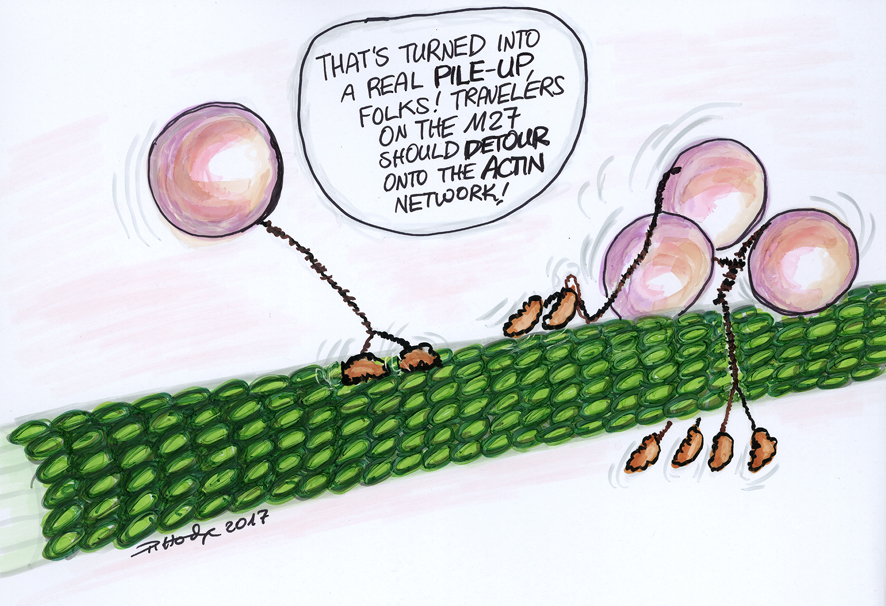
Part 3 of the Bible of Elazig story coming soon! Today’s updates are cartoons about technology transfer and more microtubule madness!
1.
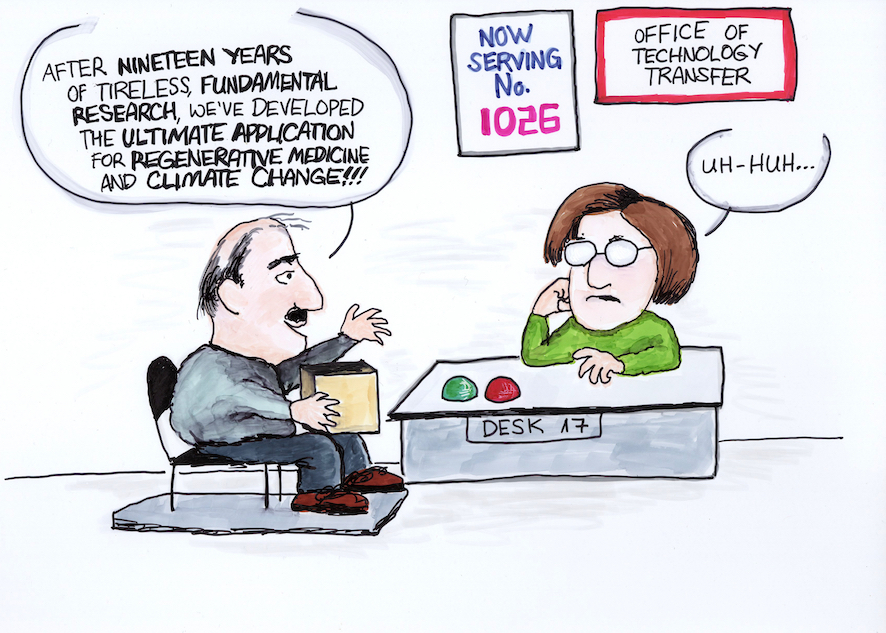

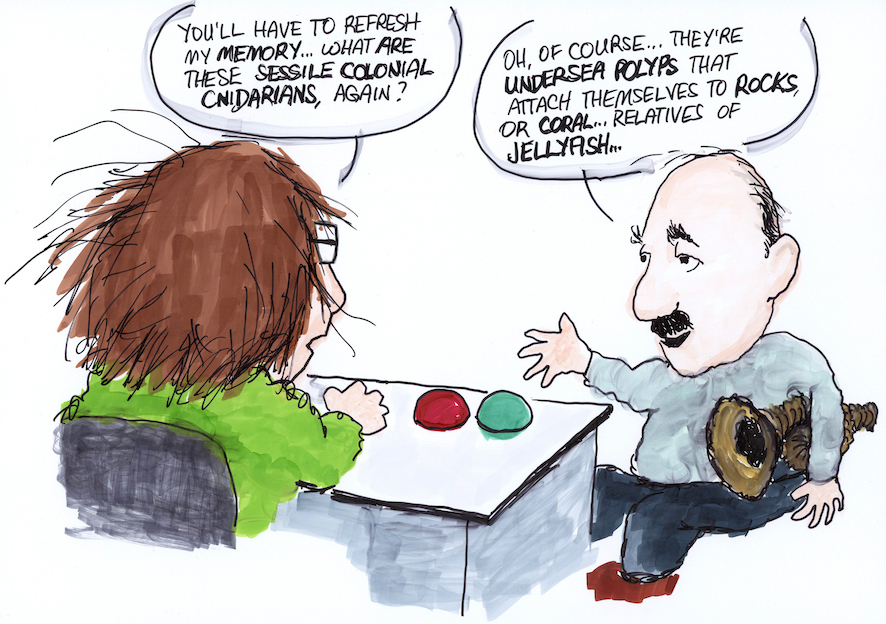


2.
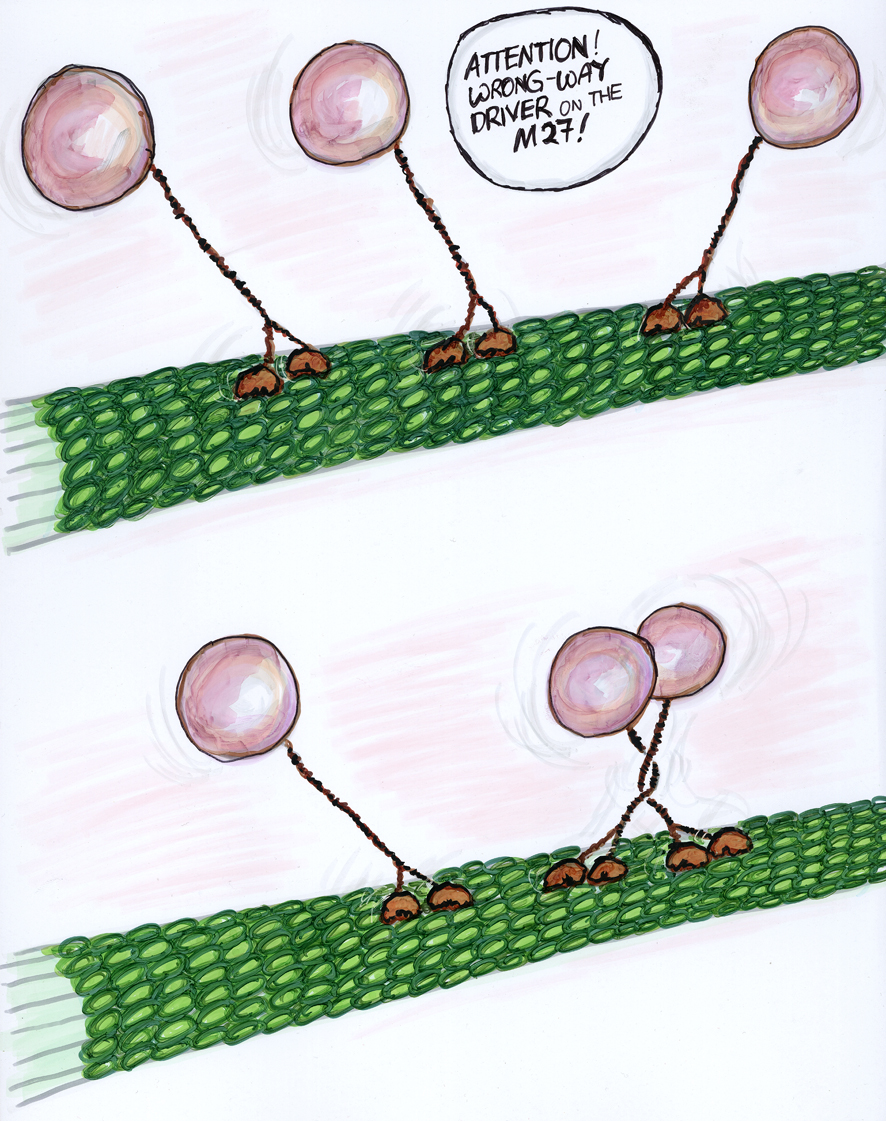
1.
2.
The first part of this story appears in an earlier article on the blog, which you can find here.
Ankara lies in the highlands of Central Turkey, in the center of this enormous country that sprawls along the entire coast of the Black Sea to the north, bordering Georgia, Armenia, and Iran to the east, Syria and Iraq to the south, and Greece to the west. The western coastline borders the Mediterranean; far to the north is the site of the mound of Hisarlik, where archeologist Heinrich Schliemann uncovered the ancient site he claimed to represent the city of Troy of classical antiquity. His discovery convinced many scholars that the tales of Homer were rooted at least partially in real, historical events. While researching another book I had discovered a curious fact about these excavations: one participant had been Rudolf Virchow, the famous Berlin physician whose work became the foundation of modern cancer research.
The boundaries of modern Turkey were fixed during the 19th and 20th centuries as a result of events over the long history of the Ottoman Empire, machinations that followed the First World War, and the subsequent war of independence headed by Mustafa Kemal Atatürk. The result is a huge territory that encompasses a multitude of cultures which have been extraordinarly difficult – some consider impossible – to integrate under a single political system. Istanbul and its inhabitants pursue a modern, Western lifestyle. Central regions are occupied by diverse populations grouped under the collective term “Anatolian”. The southeastern region is home to a vast group of Kurds with close cultural ties to populations in Iran, Iraq and Syria. In many cases the fates of the youth in this region are almost wholly dictated by the patriarchs of their villages, whose main interest appears to be the perpetuation of ancestral lifestyles, and dictate who may get an education and who may marry.
Ankara is home to a beautiful Museum of Anatolian Civilization and Culture which displays the ancient, turbulent history of this vast country. It has been occupied and overrun by virtually every Mideastern and Mediterranean culture since the times of the ancient Babylonians and Sumerians. A walk through its rooms passes exhibits containing 40,000 year-old relics of a prehistoric culture dedicated to the Earth mother, monumental heads of Sumerian kings, friezes recounting the Epic of Gilgamesh, and so on into modern times.
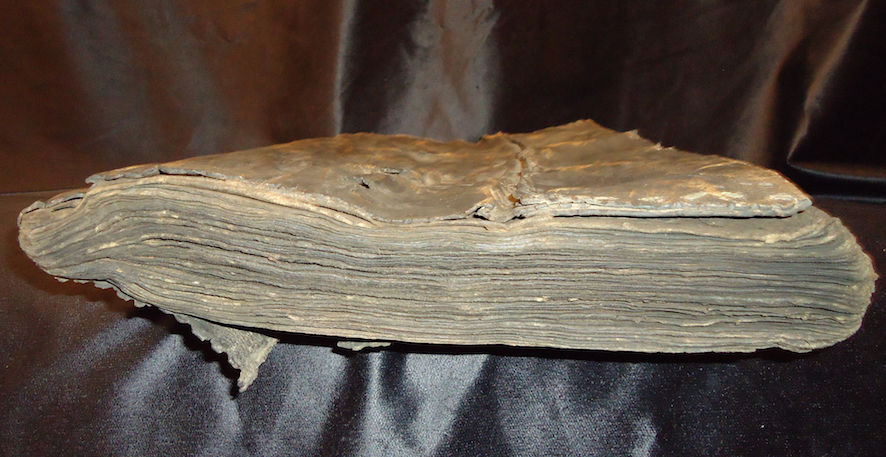
As I began looking into the plausibility of an ancient Bible, I discovered that early Christians had spread through central and eastern Turkey during the first and second centuries, establishing small communities devoted to the new cult of Christ. As far as I knew, the oldest religious manuscripts were written on scrolls of papyrus – but then I discovered that in about the second century CE, the Christians in precisely these regions began producing the first modern books. They wrote on parchment made from the skins of antelopes, goats, and gazelles, which were often bound and often wrapped in leather. So far, everything was consistent with the images I had seen.
Ancient documents, sculptures and other relics continue to be found throughout Turkey all the time, often by modern looters. Many never see the light of day. Some disappear into the hands of private collectors. Others are immediately snapped up by the Turkish government, under laws which give the regime automatic ownership of all artifacts of historical value.
The intent is absolutely valid: to protect objects of cultural importance, ensuring that they will be appropriately handled and become part of the public heritage. But this system presumes that the authorities will protect them and deal with them wisely. There have been many cases where artifacts disappear and end up on the black market anyway; others vanish for decades and reappear under suspicious circumstances. And there are rumors that early Christian documents that do not support Muslim interests have simply been destroyed.
Clearly any involvement with such artifacts puts a modern scholar on shaky legal ground. As my inquiries into the manuscript progressed this made me highly uncomfortable, but I justified my actions the following way: first, the document might well simply be a forgery, in which case the statutes probably wouldn’t apply. Secondly, they did not belong to me, and I had no say in their fates. Third, I would have no part in any attempt to remove them from the country. Fourth, it was completely unclear whether the document had actually been found in Turkey at all. There was reason to think it had been discovered across the border in Syria or Iraq, where wars had devastated all sorts of amazingly valuable artifacts. In that case, a rescue attempt was completely justified.
But the most important consideration on my part was the concept that if this artifact were real, it would be one of the most momentous discoveries in cultural history. Modern scholarship pertaining to the early Christian era stretches back to the efforts of the early Church to align the New Testament with the old and sanitize early accounts of historical events, and there it stops. The modern gospels appear to have been written in the first and second centuries CE, but the oldest existing versions date to the fourth or fifth centuries. Any document older than that – particularly one in an unknown language and script – would surely provide stunning new insights into the events described in the gospels. Its content might differ from others that have been passed down in incredibly significant ways.
Although I was raised in a Protestant church, I am not in any sense a believer in any traditional Christian sense of the word. But whatever this document contained belonged to the entirety of humanity. And whatever happened, whatever my personal feelings, I was determined that its contents should be made available to the world. That could be done through a photographic record of the manuscript.
I began talking to experts and combing through on-line archives of ancient scripts, hoping to identify the alphabet in which the manuscript was written. If that problem could be solved, the text would be readable. Someone had photographed the entire document, producing 105 pages that were still entirely legible.
I was constantly alarmed that something might happen to the manuscript. I knew nothing about the person who possessed the book or the conditions under which it was being kept. My very first effort was to ensure that it wouldn’t be damaged through mishandling or simple exposure to the air. If it was real, it had clearly been unearthed very recently, and unless extreme measures would taken it would rapidly begin to decompose. Once the document came into the possession of experts, it would probably never be touched by hand again, but only handled under the most careful measures required to ensure its long-term preservation.
My contacts in Berlin refused to put me in touch with the owner. I repeatedly pled with them to tell their Turkish relatives to go to a museum or institute with expertise in the conservation of manuscripts and obtain some sort of climate-controlled box where it could be stored. They promised to do so. Later I discovered, to my horror, that none of these requests had been followed.

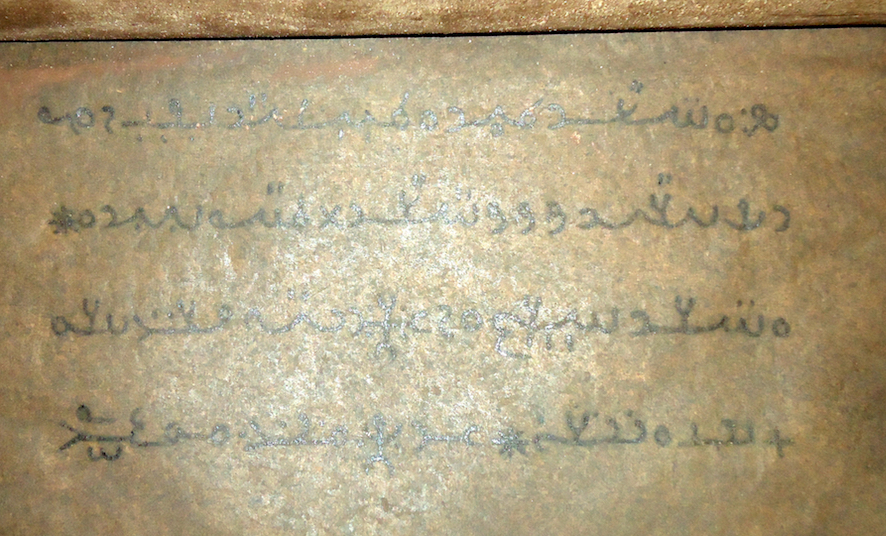
The script itself was magnificent: written in a clear hand apparently from right to left, with four straight lines per page. Beautiful characters slanted into each other and ended in strange half-circles. None of the experts I consulted could help with the script.
One Biblical scholar was highly skeptical – he knew of no written language that combined diacritic dashes and dots with the sort of strange, linked, cursive circles and crosses and s-like forms. “Probably a forgery,” he said. But who would invest such an immense amount of effort to invent such a form of writing from scratch, and eke out over a hundred pages that must say something – if it could never be read at all? Whoever had written it – ancient or modern – was telling some story, in some language. If it was a forgery, it was madness – but there was a method to it. If it was a forgery, why so many pages? Why invent an entirely new script? To make it more difficult to detect the fact that the forger didn’t perfectly master some ancient dialect? Think of the effort required to pull this off – and to keep going, for 105 pages!
I discovered that the third century CE was a time of immense linguistic innovation, in which any language might be written in virtually any alphabet: ancient Aramaic with Greek or Roman characters, ancient Latin in Hebrew letters, Arabic characters used to represent completely different languages…
The beauty of the writing itself was so seductive that I began spending vacation days holed up in the archives of the University of Heidelberg, poring over catalogs of scripts from all possible ancient sources.
The most similar writing systems seemed to be early Arabic alphabets called Nabataean, Jazm, and Musnad, Arabic Kufic, Pehlavi, Old Syriac, or Old South Arabian. Examples can be seen in the following reference: Abulhab, Saad D. “Roots of Modern Arabic Script: From Musnad to Jazm.” Sawt Dahesh. 50-51 (2007-2009), published by CUNY Academic Works and available online here.
The resemblance was never complete, but such early Arabic scripts date from different centuries and different locales. It was plausible, given the time and place in which it was presumably written, that this manuscript might hold the only known example of a particular script. But I kept looking, and even now I keep my eye on discoveries of new scripts and manuscripts – thinking that someday, one of them will leap out and match it.
I can only warn you: don’t go down that rabbit hole. After hours everything blurs into one another and you begin seeing similarities everywhere. One day I was sure I had pinned the script down when I stumbled across some reproductions of “ancient Greek magical papyrii…” The next morning I woke up, took another look, and realized there was virtually no resemblance at all.
During a crazy adventure you shouldn’t be deterred by petty obstacles such as not being able to read a language, or identify the language, or even the alphabet it was written in.
In fact, the uniqueness of the script itself might not pose an insurmountable obstacle. If I could break the system into individual letters, methods from computational linguistics could be applied. It might be pinpoint elements of vocabulary and structure that would identify the language, and at that point someone should be able to read it.
That would be a costly effort, and it would require bringing in someone passionately interested in deciphering the document. It would also require having more than just a sample; I’d need photographs of the entire manuscript. It would also mean bringing in another outside party who would be the first to know its contents, and yet was willing to keep the entire story under wraps until we could establish the authenticity of the book.
That would be a huge risk considering the fantastic potential value of the artifact. If it were real, judging from other historical manuscripts, the value of this book would well over 100 million Euros. And that was a conservative estimate.
Before undertaking anything of the sort, it would be necessary to definitively exclude the possibility that it was a modern forgery.

The story continues in Part three, coming soon.

Part one
This incredible story goes back a few years and adheres as closely to truth as memory and my notes permit. I have changed some names, for reasons that will become clear. It began a few months after I had finished a book called The Case of the short-fingered Musketeer, which concerns the heroic efforts by physician/scientist Friedrich Luft and his lab to discover genetic mechanisms underlying essential hypertension. I covered that story in the book, as fully I could. But except to a few close friends, I’ve never recounted the extraordinary events that happened in its aftermath.
To put things into context, the research carried out by Fred and his group involved a family of farmers living in Northern Turkey. They suffered from a genetic disease that was thought to be unique at the time, but over the course of the project Fred’s group uncovered a number of other families around that globe that are affected. People suffering from the hereditary condition called Bilganturan’s syndrome have very short fingers and toes, a short overall stature, and amazingly high blood pressure.
One unusual aspect of the group’s research was that the Turkish family had been actively involved in the project for many years, which made their perspective an important part of the story. When I told Fred I wanted to write a book about their work, he decided to mount a new trip to visit the family on the Black Sea. I tagged along on a week-long expedition, where the scientists collected samples that would eventually lead to the solution of the family’s unique condition. Later we paid a visit to a Nihat Bilganturan in Ankarra, the physician who had written the first paper about the family’s disease in the early 1970s. He was an amazingly colorful figure whose work had taken him to the US, Saudi Arabia and around the world – I’m still hoping that a massive autobiography that he was working on will be published someday.
Those two visits represented my entire experience of Turkey when I set out to write the Musketeer book. That obviously wouldn’t do: so much of the tale revolved around crossing cultural and societal borders, and two of the main characters were young physicians whose Turkish parents had immigrated to Germany in the 1960s. One branch of the family affected by the disease had moved to the Stuttgart region. To have any hope of realistically portraying their thoughts and their lives, I carried out extensive interviews with many of them – usually through translators. But I still needed more.
Living in Berlin brings you into daily contact with many such immigrants and their children, from all walks of life. Whenever I could I began engaging these people in conversations, in hopes of improving my understanding of their situation. One of those chance encounters led to the wild and unexpected adventure I’ll describe here.
For ten years I’ve had a small apartment near the S-Bahn station in Pankow, not one of the glamourous areas of the city. The steady rise in rents is a sign that things are improving, but the cafés and shops in the neighborhood have had a hard go of it. Just as you get to know the regulars, a place changes hands.
The corner near my place used to be occupied by one of those night shops you find all around Berlin. Mostly run by Turks or other immigrants, their main source of income is a flow of pedestrians who stop by for beer or cigarettes, then step outside to smoke and drink. They bring their empty soldiers back inside, collect the refund, then buy the next round. The city hadn’t yet toughened up on indoor smoking, so there was a perpetual cloud emerging from a back room where they had a row of computers that people could use to surf the Internet. It was handy if you needed a late-night e-mail fix, but hard on the lungs – and you certainly didn’t want to watch the surfing habits of the denizens that hung out there.
The place was run by two middle-aged Turkish men who would chat the ear off anyone who expressed an interest in their home country. When they found out about the book I was writing… Let’s just say they began considering themselves key, confidential informants on every possible topic. I had long reached the saturation point by the night somebody broke in and absconded with their computers, upon which the place passed into the hands of a younger generation of German Turks and a new set of informants.
I didn’t see the original owners again until about two years later, when I was at the Friedrichstrasse in Berlin, running late for some appointment. I ran up the steps to the S-bahn and arrived on the platform just as the doors of the train were closing. I jammed my way in, sat down, and tried to catch my breath. When I’d recovered enough to take in my surroundings, I noticed a short, hefty guy with bristly white hair sitting across the aisle, staring at me. I couldn’t place him until he came over to sit down next to me. It was one of the original owners of the shop.
The first thing he said was, “You’re a scientist, aren’t you?”
No, I said, but I certainly knew enough of them.
“We need your help,” he said.
Such moments of serendipity happen in Berlin all the time, and there’s no predicting what will come of them. You meet people by chance, talk about nothing in particular, and then run into them a couple of years later when your lives have entered a new phase.
Ali, as I’ll call him here, was cagey about the topic on his mind. The first step was to exchange cell phone numbers. Maybe we could meet in a day or two down by the Yorckstrasse? It sounded like a small adventure; how could I possibly refuse?
So the next Saturday I took the S-bahn to the station south of Potsdamer Platz. Ali collected me on the platform and led me down the stairs, then on a long walk farther to the south down a boulevard lined with trees. We turned east and walked a hundred meters more where he stopped, opened an unmarked door, and gestured that I should enter. Inside was another world: a Turkish tea shop.
I hadn’t noticed them before, but in certain neighborhoods you’ll find many such doors; at any moment they might open to reveal a cluster of men, reading newspapers and drinking tea and arguing about impenetrable topics. Here there were four or five guests sitting around a table, engaged in the usual activities under the drone of a television set mounted on the wall. It was tuned to one of those strange dramas that had been perpetually running on the TV in the restaurant of our hotel in Turkey: a melange of soap opera and family story in which people would shout at each other; someone would unexpectedly burst into tears, followed by the sudden appearance of a gun. An utterly foreign dramaturgy that was impossible to follow if you didn’t know the language.
As we entered the shop, conversation broke off abruptly and the heads of the men turned to rake me with a suspicious, penetrating stare. Ali said something that seemed to appease them; after a comment or two they turned back to their newspapers. A young man emerged from behind a counter and, without asking, served us black tea in small, glass cups. The tea was steaming hot and had to be taken in small sips. We chatted about something; I don’t remember what, but it was nothing meaningful.
What am I doing here?
After ten or fifteen minutes of this, Ali stood up. “Come,” he said, and gestured toward a door behind the counter. We passed into the back room, a combination between office and storage room, with a desk littered with papers, stacks of boxes, and an ancient leather sofa creased and stained by ages of wear. There was a rust-encrusted bicycle leaning against one wall. Ali moved some stuff off the sofa. “Sit,” he said, and I sat down on the sofa, sinking in deep. Now really wondering what I was doing there.
My host sat down at the desk and shuffled some papers around. He got out his cell phone, scowled at it a while, and punched in some numbers. An excited conversation. He hung up and smiled at me. “You want some more tea? I’ll get us some more tea.” And he left.
Ten minutes later he returned with tea and another Turkish man who hadn’t been outside – tall, thin, balding, with black horn-rimmed glasses. Mehmet, let’s say. We sipped and once again, talked about nothing in particular for a while. The newcomer asked about my work, in a way that suggested I was being cross-examined. To turn the tables, I asked about his work.
“I’m a lawyer,” Mehmet said.
Mysteriouser and mysteriouser.
This was the first of five or six meetings that eventually took place in that tea shop near the Yorckstrasse or another nearby. Each time I had the feeling I was undergoing some sort of test, and each test I passed unlocked a bit more of an incredible story. Later I understood that the people I was meeting had very good reasons for their extreme caution and distrust of strangers. But at the time this all seemed like a bizarre symptom of a cultural code I didn’t understand – especially since they had approached me for help, rather than the other way around.
It was the third meeting, I think, when they asked me if I had any experience with “very old things.”
What kind of old things?
“Very old… objects.” Mehmet’s eyes were glued to my face.
“Old” could mean almost anything – historical? archeological? paleontological? I had nothing like professional experience in any of those domains, but if he was talking about something truly ancient, I’d at least gotten my feet wet. As a high school student I’d joined a month-long paleontology trip across the state of Kansas, which culminated in the discovery of a dinosaur near Lake Wilson. Then at the university I’d fulfilled part of my science requirement with classes in archeology. The high point of that period was a year in Bordeaux, where alongside an intensive program to become a French teacher, I’d taken a year-long course in prehistoric art. Most weekends the professor would take us on expeditions to the caves of the Dordogne, where we’d stand under glowing painted figures of animals or follow a herd of mammoths that had been engraved on the walls of the twisted corridors. Once we spent four hours walking through the grotte Rouffignac carrying only lanterns, which was as near as you could get to the experience of a prehistoric sculptor who had followed the same route 30,000 years ago. For some reason those ancient artists rarely depicted humans; when they did, the images were usually tucked away in nearly inaccessible corners of the caves. At one point the guides lowered us students down into a hole on a rope, one-by-one, to bring us face-to-face with a drawing of a human head.
I came out of my reverie, and realized that I was tired of whatever game Ali and Mehmet were luring me into. If they wanted my help, it was time to let me in on what was going on.
“What kind of objects?”
They gave each other a long glance. Finally Ali said, “A cousin of mine, in Turkey… found some things. Very old manuscripts. We would like to know what they are.”
“Where are these things?”
“In Turkey,” Ali said. A pause, and another glance. “But they have pictures.”
He didn’t have them now, he said. But he would call his cousin, who might be able to send some. “Maybe you can come back tomorrow.”
Finally catching a glimpse of the pictures took two more trips to Yorckstrasse and two more visits to the back room, then an invitation to dinner in a Turkish restaurant. There we were joined by a third man whose name I never learned and whose relationship to this strange band of “relatives” – as was the case for Ali and Mehmet – never became completely clear. Later I found out that the term “cousin” was being used in the broadest possible way. And that my new-found acquaintances were playing fast and loose with some of their facts. But they’d succeeded in hooking me with a story and drawing me into an adventure that was just beginning.
Ali finally resolved some issues with the Internet – his “relative” was only willing to provide the images on a secure server for the shortest possible time. The first time we tried to log on – from another shop with Internet access – they had already been deleted. The second time we could scroll through a few of the photos. There was a thick brown book wrapped in some kind of warped leather, and a few shots of inner sheets of parchment containing drawings and line after line of a very odd script that resembled nothing I’d ever seen before.
It was impossible to say anything from images alone, of course. But I had to admit that the thing looked old – amazingly old.
The manuscript was 105 pages long, completely legible, and the images were stunning and incredibly intriguing. There were several crosses, in styles I didn’t recognize. Another image represented a snake, curled in an S-like form followed by the strange script. Its tail was curled around what looked like an infant.
Later they told me that the images had been examined by an expert. If his analysis was to be believed, the book was a Bible, although no one had been able to decipher the text. From the images they believed it to represent a part of the New Testament.
And one of the initial pages with a cross held a notation – written in what the expert claimed was a recognizeable dating system. If their interpretation was correct, the book dated from the year 232 CE.
Unbelievable. Especially given the fact that the oldest extant New Testament manuscript anywhere in the world – except for a few fragments – dated from the third or fourth centuries CE!
What to do? Armed with a few images that they were finally willing to part with, I decided to hit the libraries and talk to scholars from the fields of ancient manuscripts and Biblical history. It was immediately clear that a true Biblical manuscript even remotely that old would be a momentous, Earth-shaking finding.
All of this had dropped into my lap completely by accident, but if there was anything to the story at all, I had to pursue it.
The story continues in Part two, coming soon.
all entries in the Devil’s Dictionary copyright 2017 by Russ Hodge.
insectivore a person who rides a motorcycle with his or her mouth open. Contrast with omnivore and chiliconcarnevore.
angiogenesis a process in organisms that is the biological equivalent of attaching new structures to city water and sewage services. Until this occurs, cells and tissues have to use outhouses. Angiogenesis is paid for by the rest of the organism, typically through a municipal tax hike, and often leads new organs and tissues to be shunned by the oldtimers. Compare to antiangiogenesis, which involves shutting down the services to cells that fail to pay their bills, usually after a visit by a process server.
carrying capacity the average total number of plates, glasses, silverware and other service items that can be carried by a member of a species that has been trained to do so, without producing a carambolage or a loud crashing noise. In general, of all the members of the animal kingdom, the octopus has the highest average carrying capacity. It’s the suction cups, you know.
catabolism a biological process akin to the natural process by which societies revert to anarchy. Catabolism takes place when complex entities become so large that its members decide it is unmanagable and ungovernable, at which point they decide to fragment into smaller parts which are equally unmanageable, but at least one knows who is responsible. The products of catabolism are eventually sucked up by whatever neighbor decides to consume them.
chorein a situation in which a harmonious, tranquil state of homeostasis is disrupted by the entrance of a choir.
cnid a fragment, subunit, or portion of a cnidarian, a large family of organisms that consist mostly of jello packed within thin membranes. Cnid is often produced through the interaction of cnidarians with boat propellors, but when jello is shaped through the use of a mold, into forms such as a brain or the Last Supper of Leonardo daVinci, the result is also considered a cnidarian consisting of cnid. Naturally occurring cnidarians live in aqueous environments and often have nettle-like tentacles. They sting like the dickens because they are used to inject toxins into unwitting prey or people who disturb cnidarians by splashing about in the water, although these features of cnidarians are usually omitted from jello molds. Cnid is an uncountable word, so it does not occur in the plural form. To refer to quantities a word is added that is usually measure of volume: “Give me a spoonful of that cnid,” or, “After you have molded graham crackers into a crust, pour on 3 cups of cnid and apply, if desired, a generous amount of whipped cream as a topping.” (Recipe suggested by my mom, Jo Hodge.)
germ layer a stratum composed of bacteria, viruses, dandruff, species of lice and other noxious entities that naturally develops on any surface that you don’t wash as often as you should. Germ layers can be transferred from one organism to another, usually through bowls of peanuts placed on bars.
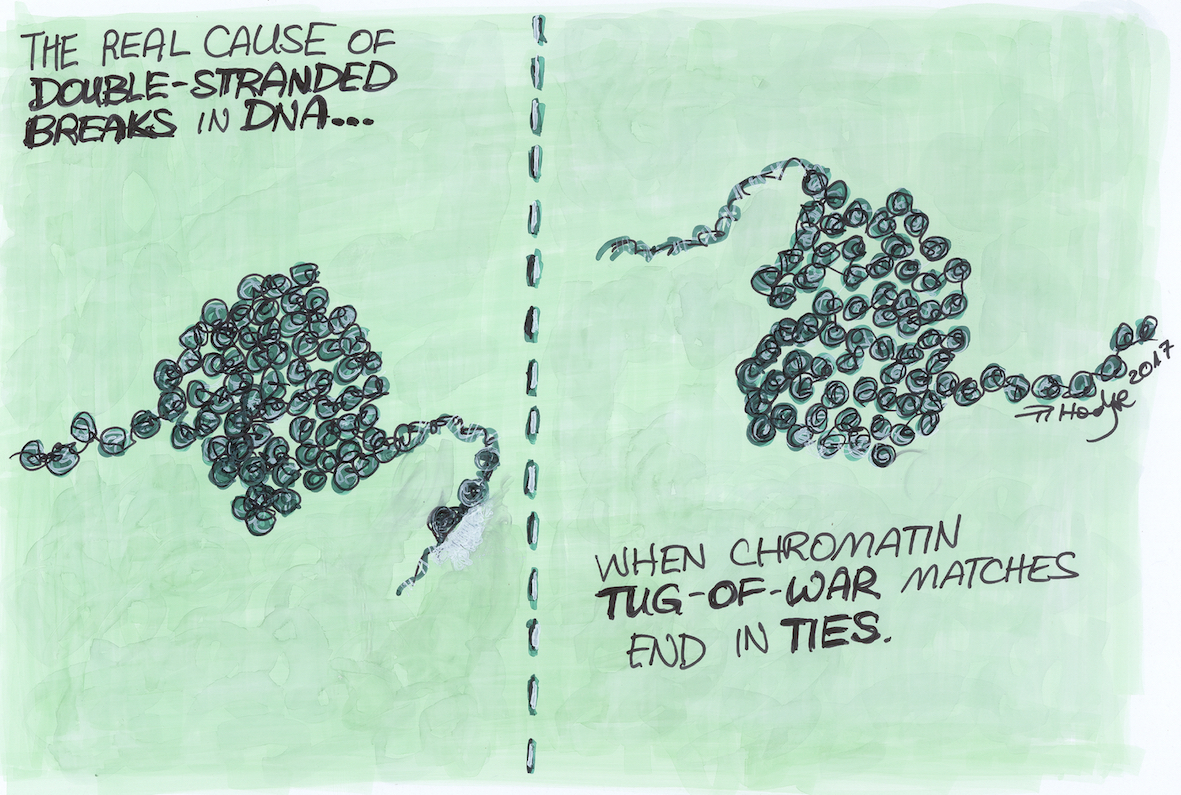
multiple hit hypothesis A scientific model referring to the effects on the biology of an organism that has usually been assaulted in some violent manner by a scientist, for example by exposing it to large doses of radiation to see how many gamma rays are needed to kill it. This introduces double-stranded breaks in DNA in multiple locations, or hits. The result is coitus interruptus among cells that are pleasurably engaged in reproducing their genetic material. A sufficient dose of iodine may permit them to resume this activity; otherwise they typically produce offspring which are either highly creative forms of their parents or monstrous mutants, or both, depending on your point of view.
If you enjoy the Devil’s Dictionary you might also like:
Searching for Oslo: a non-hypothesis-driven approach
Even God’s first paper got rejected
Plus the other pieces in the categories “satire”, “science cabaret,” and “hilarious moments in science communication.” And there are, of course, many serious pieces on the site.
Feel free to pass along the link to your fellow science nerds! And, of course, quote the Devil’s Dictionary – just remember the reference! All material here is copyrighted Russ Hodge.
feel free to use and repost! Just add copyright 2017 by Russ Hodge, and link to www.goodsciencewriting.wordpress.com.


 2.
2.3. 
If you liked these, check out all the other posts in the category Molecular biology cartoons and Satire.
all entries in the Devil’s dictionary are copyright 2017 by Russ Hodge.
abductor pollicis (from the Latin) a person who goes around stealing thumbs. Not to be confused with abductor policies, which are contracts issued by health insurance companies to pay the legal fees of anyone who has been accused of organ theft.
accessoire a technical term for anything that must be removed from the body before undergoing an examination with a magnetic resonance imaging machine. The term has been extended to refer to anything superfluous on the machine itself or anything around the lab that you want to get rid of, which is accomplished by turning on the magnet so that it will be sucked in and transported to an alternate universe.
biota a pair of iotas (also known as smidgens) that have become fused together and pledge from that point on to pursue a strictly monogamous relationship. Biota can be dissolved by antibiotics, but only when prescribed by someone with dual degrees in medicine and theology.
basement membrane a layer of fat molecules which anchors cells to a surface in hopes that they will not fly off during a tornado. If they can’t maintain a grip, they are advised to crawl under cars or heavy organs.
blepheronous any regrettable event involving eyelids.
catheterization the penetration of a cheek, the soft palette, tonsils or throat by a drinking straw which was in a soft drink until the automobile accident, which was caused by a driver texting on a cell phone. At the moment the straw penetrates living tissue it becomes a catheter. In medicine the term has generalized and is now widely applied to any hollow tube inserted by force into a place in the body, either intentionally or by accident, that causes pain and an inappropriate release of fluids that belong there, or an introduction of fluids that do not. In medical practice cell phones often play some role in catheterization as well, but their involvement is not a defining criterion.
disblepheronia a major disease diagnosed in anywhere from 14 to 1 billion people per year, whose mechanisms are poorly understood and for which there is an urgent need for the development of novel, rational, effective, global, inexpensive therapies, which hopefully don’t cause more trouble than the problem they aim to solve. A person suffering from disblepheronia loses the coordination between the blinking of the eyelids, which is often interpreted as winking in inappropriate and offensive situations.
first in a list, the word used to introduce the item that lies between zeroth and secondly. If at a later point in time the author discovers that an item which belongs higher on the list has been omitted, the use of negative numbers is permitted: negative secondly, negative first, negative 0.5, etc.
flavonoid secret substances invented by chemists in laboratories of the Ronald McDonald Corporation that render people addicted to fast food and trigger the onset of diabetes, or simply inflate them to the point that the only vehicle they will fit into is a Humvee, which they purchase as a means of traveling to the next fast food restaurant. Flavonoids have made hamburger joints major contributors to global warming: on one end through the vast quantities of methane produced by cows, and on the other through the fossil fuels used to transport addicts to their next fix.
founder effect also known as the confounder effect. The behavior of the parent, creator or inventor of something (such as a child, a machine or an institute) who continues to meddle with it long after he or she has supposedly left it in the hands of successors. Should not be confused with flounder effect, which refers to schools of fish that have lost their way and just swim aimlessly around until one of them finds the exit. There is, however, a connection: founders often intervene in the activities of their creations after developing the impression that they are floundering.
gap junction a sort of trailer hitch device on the exterior of cells which evolved to permit them to tow around recalcitrant neighbors. If the cell tries to tow a heavy partner and is unable to achieve the force and traction necessary to move it, then the rules of physics apply and the gap junction has an anchoring function. Gap junctions played a crucial role in the development of multicellular organisms because at some point a tissue achieves the critical mass that makes it inert, and it can no longer be dragged from the sofa.
gel a product used to cultivate bacteria in a person’s hair, designed so that they can carry their work with them and don’t have to go to the lab on weekends
glossalgia a thick formation of algae on the tongue, usually transferred there by a finger which has been licked to turn the pages of a moldy lexicon.
Magnetic resonance imaging a tool widely used in medical diagnosis to detect whether you have swallowed something made of metal, or have a metal implant, or are holding up your pants with safety pins, or if the government has implanted a microchip in your brain, or if you are trying to smuggle a cell phone into a hospital by hiding it under your gown. The instrument is also useful for completely erasing the hard disks of computers when, for example, you wish to retract an email that you sent to colleagues without due reflection.
metacarpal having to do with abstract, highly theoretical reflections on the nature of carp or the role of this fish in an ecosystem or the universe as a whole.
mucin a glibberous substance produced by snails which enter the body, generally during the night, and leave trails in the lining of the nose and across other surfaces of bodily membranes. Mucin has antibacterial properties because microorganisms find it equally disgusting.
multigene family a group of individuals related by heredity who have had so many children they are too tired to think up new names and simply end up calling everyone “Gene”. Sometimes seen in the forms multieugene or multieugenia.
multiplexing a psychological trauma which occurs when visitors to a Cineplex are (usually inadvertently) shown multiple 3D films at the same time. This causes collisions of plots in which, for example, space ships buzz around the heads of cartoon characters until they are dismembered by chain-saw wielding psychopaths, and then the fragments are served to visitors in a diner at night, in a submarine, just before the ship is consumed by mutant zombie macrophages from Mars.
myalgia a chronic condition in which something that happened millions of years ago (mya) continues to cause pain, generally in the muscles. Myalgia is commonly found among paleontologists who try to lift dinosaur bones after forgetting that they have become mineralized and weigh more than you’d think.
ooopossum the oocyte of an opossum
polycarpic any process in which several carp, a species of fish, engage in a mutual activity, such as feasting on toes that have been inserted into the water by people sitting on the bank of a river or lake.
rhinoviruses viruses whose natural hosts are rhinoceroses, typically migrating to the highest point of the horn, where they cluster and wait for someone to grind it into powder. When eaten, this powder causes an infection and fever that are sometimes mistaken for a temporary increase in sexual potency.
smudge a subpopulation of a microbiome that is deposited on a surface such as glass, usually by a finger or nose, where it forms an oily colony that is visible to the naked eye.
If you liked the Devil’s Dictionary, you’ll probably also enjoy:
Searching for Oslo: a non-hypothesis-driven approach
Ontogeny recapitulates sobriety: from the Archaeal origins of life to the pinnacle of evolution: a PhD
all entries in the Devil’s Dictionary copyright 2017 by Russ Hodge
glabella the region of a face at the top of the bridge of the nose that separates the eyebrows from each other, on the generic human face. Overall, humans can be divided into two groups: glabella positive (having two distinct eyebrows) and glabella negative (having only one). Polyglabellous refers to those with two or more glabella, and people entirely lacking eyebrows are described as hyperglabellous, unless this is the result of a disease such as glabellitis. The medical literature reports a few cases of paraglabella, in which individuals’ eyebrows have migrated to unusual places on their faces, such as below the eyes (also known as basal glabella), or arranged themselves vertically on either side of the eyes (paranthetical glabella).
directed mutagenesis any method of artificially altering the genes of an organism that involves a musical score and a conductor in a tuxedo.
-dactyly having to do with the fingers. The root has been enhanced to create the following terms:
polydactyly orignally, the ability to play the piano with more than one finger. Nowadays the word is also used for touch typing or the capacity to type text messages with more than just the index finger.
brachydactyly the ability to play the piano or type despite having very short fingers. Performers are permitted to use alternate fingerings, as well as their toes, if the work contains intervals they are unable to reach.
pterodactyly the ability to play the piano while wearing wings, such as when a performer is wearing an angel costume. Also applies to birds that have been taught to play the piano or to send text messages, which happens more often than you think.
aquadactyly moving splayed fingers through a liquid, such as while swimming badly, or stirring your coffee with your fingers when you haven’t been provided with a spoon.
pastadactyly to eat or strain spaghetti without the aid of utensils, using exclusively fingers.
peridactyly pertaining to or residing in the empty space between the fingers. Recent studies indicate that an individual’s peridactylic environment is unique and contains its own microbiome.
psychodachtyly unconscious movements of the fingers which occur while imagining playing the piano, flute, or another instrument.
omnidactylic any process which requires the use of all ten fingers at the same time, such as kneeding dough, washing hair, squeezing breasts, or gestures made upon being startled.
quotadactyliac a person with the annoying habit of using the fingers to form quotation marks in the air when quoting someone or to indicate that a phrase is being used ironically.
autodactyly activities in which the fingers have learned to perform on their own, without the involvement of the brain or consciousness. Scratching an itch, picking lice from a spouse’s hair, or texting on a cell phone are all examples of autodactylic behavior.
single nucleotide polymorphism a case in which a letter generally found at a specific location in the genetic code (or another text) has been replaced by another letter. This can change the phenotype of the organism. In the following text, for example:
“The barn is fallin’ apart”
Replacing the letter “a” with an “e” produces the following text:
“The bern is fellin’ epert”
and changes the speaker from an American to a Scotsman.
Searching for Oslo: a non-hypothesis-driven approach
On the publication of “Remote sensing” by the magazine Occulto
This is a follow-up to the original piece.
Dr. Krishna Kumari Challa wrote: Well, if you are an introvert, your brain goes haywire with the great stimulation given by larger audiences (an introvert’s mind needs less stimulation to have the same level of understanding about a situation). Controlling it is more important, according to psychologists, before thinking about the points given in the blog. Only when the stimulation is controlled you can control other things. That is why introverts try to hide behind something, look at their papers or at the screen instead of the audiences in the initial stages. They try to reduce the stimulation by doing so.
I would be grateful to you if you could give tips on how to reduce this ‘too much stimulation’ issue.
Hi Krishna – an excellent point! My experience with students suggests that there are surely “types”, such as those you call introverts, who dislike being the focus of attention and whose brains experience an exaggerated response that powerfully influences their bodies and behavior in public presentations and similar situations. Usually giving them help requires close observation, then developing an individual plan of practice that addresses specific behavioral symptoms – like those mentioned in the earlier post. This will take time and patience. Here, too, it can be useful to help them focus on the content of their presentation, and this is a theme to be covered in a future post. That said, I’m not a psychologist, and some types of anxiety clearly have very deep roots that need to be addressed therapeutically before any satisfying “cure” is really achieved.
But still there are things that can help: It’s crucial to try to define the parameters of the problem as precisely as possible. Are there any situations in which the person manages to handle their anxiety? Are they equally affected if they give the presentation to two or three close friends, or their lab? Is one of the issues trust: with people they know, does a fear of disapproval or a negative response disappear? If they can handle small groups, then this can become a cornerstone of practice. They need to give the talk as often as possible in such settings in a way that helps them internalize the positive effects and extend the experience to situations with larger audiences.
Personally I learned something about this through music. My first violin teacher, Lewis Hoyt, said that one of his teachers had always told him to imagine the heads in the audience as cabbages! Later he began studying through a new method which took exactly the opposite approach – enjoying the presence of an audience and fully engaging them as human beings in your personal music, work, or story. Over the long term, if one can manage it, this tends to work better than pretending like they aren’t there.
Your point about “control” reminds me of the student I discussed in point 9 of the original article – where the issue was managing all of the ideas bombarding his brain and the flow of the content. A few simple strategies to ensure that you can stay on track (point 8) and won’t get lost go a great way toward reinforcing confidence. The trick is to extend them to behaviors that are really hard to control: blushing, stammering, shaking, etc.
Each speaker needs to build on the strengths she/he has and use them to support areas of weakness. Can you tell a joke? Can you tell a funny little personal story about something that happened during the project? If some weird little accident happens, can you improvise and get people to laugh? There are lots of potential methods to change the atmosphere – disasrming a stressful situation – which can almost instantly relieve a lot of the tension. As a teacher or speaker you may have to dig deep into the rhetorical repertoire to find something that works, but there’s often something there to draw on.
A lot more needs to be said about this; I’ll keep thinking about it, and the comments on the piece have been extremely helpful in pulling out essential points for consideration. I’ll be teaching several courses over the next couple of months and will be able to report more specific examples from actual practice.
If you like these pieces, you might be interested in the article:
If you’d rather enter the bizarre, twilight world where science collides with humor, check out the Devil’s Dictionary of Scientific Words and Phrases, or the text of a talk I gave in Oslo in 2015, plus everything else in the categories “Hilarious moments in science communication” or satire.
And if you haven’t yet seen the most popular post so far from this blog, check out the “God” article: “Even God’s first paper got rejected.“
Wow! The article on performance anxiety is getting a lot of traction; thanks very much for the feedback and I’m hoping for a lot more. (See the full article here or just scroll down if you’ve landed at the blog main page. Click here for a list of other pieces devoted to teaching and training.)
Two readers have provided tips that I include here with a couple of comments:
Two tips I was given years ago when public speaking:
1) Never ever use a laser pointer or wooden stick. Instead, use powerpoint animations to circle or otherwise highlight the point of interest. Not only does this eliminate the issue of shaky hand syndrome, but it also serves to engage your audience more as frequently people have to struggle to see the laser dot on the screen, especially when it’s moving.
2) Many people tend to find they blush when faced with public speaking. We were advised if we have this problem to wear clothes that cover our shoulders and avoid low cut clothes. It makes the blushing less obvious and, if you are less worried about people seeing you blush, you’re less likely to start.
This is part of a series of articles on the blog (a few already published, more in the works) devoted to didactics and the communication of science (and other things). I am currently working on a handbook that includes ideas such as these and explores in depth the myriad problems of presenting content. More pieces to come on that.
The tips given here are related to performance anxiety and represent just a sample of things I’ve learned from my own excellent teachers, from my experience in training lots of scientists and other types of speakers, from my own experiences in public speaking, and from the process by which I completely eliminated my own stage fright when performing as a musician (yes, it’s possible – and that’s when the fun and the real music begin!). In the courses I give we always find a way to adapt these principles to individuals and their problems.
Please help me by contributing your own experiences and tips, so we can build a useful, very practical resource that will help as many students and teachers as possible! I will add your points to the list and mention their sources!
The first step in learning is to identify any barriers that exist – to define the problem as clearly as possible. So it’s crucial to carry out some self-exploration: you need to carefully study your own body in situations of fear, anxiety and stress.
These mental and physical techniques require practice, and they work best if you imagine yourself as concretely as possible in the environment you will face when giving a talk. Visualise the room – ideally, visit it ahead of time, and maybe go to another talk there. Sit toward the back and listen. If you can’t visit the room, then imagine various scenarios: a large classroom, an intimate seminar room, a packed auditorium, an almost empty auditorium.
Next close your eyes and imagine the moment before you are invited to speak. Imagine someone getting up and introducing you; you’re sitting there and will be headed onstage in 30 seconds. Find out if possible whether you will be standing or sitting down; imagine the size of the audience you will be facing, mentally prepare for a moment where the beamer doesn’t work and needs to be fiddled with, if the microphone suddenly doesn’t work, etc. Have some strategy for “vamping” the time, with a joke or some other device that engages the audience. (“While we’re waiting, I’d like to conduct an informal survey about a question of tremendous scientific relevance: Where does that stuff in your belly button come from, anyway?” There’s actually a very interesting study out about this… )
The last points relate to content, which will be the subject of more articles very soon.
ALL of these points require practice – numerous repetitions while mentally imagining the real-life situation as it will feel, as closely as possible. You may always feel anxious before or during a talk; it may never go away. But most people can deal with the symptoms, using strategies like these, and that makes all the difference.
Two final points: First, remember what it’s like to be in the audience when a speaker is really nervous. Everybody is rooting for him or her – they’re on your side! Take comfort in that and try to engage people in the sense that “you’re all in this together”: you’re inviting them to think about an interesting question with you, rather than waiting for them to throw rocks (or shoes) at you.
Secondly, you’ve got to be engaged in the content. Even when you think your story isn’t that great or sexy, or leaves lots of questions up in the air – well, that’s what most science is like, folks! Remember that you’re presenting something that has an inherent interest to a lot of scientists. And negative results are useful as well because they can save your colleagues a lot of time; it will prevent them from following the same old leads, time and time again, without realizing that other labs have tried and failed and been unable to publish their results. Closing off blind alleys is a great service to scientists everywhere – it’s a key step toward progress by forcing people to rethink and revise the basic models they are using.
These are some of the very basics I’ve learned through experience in many performance situations of my own as well as working with a lot of students with different problems over the years. I have learned a lot from the fantastic teachers I have had the privilege of studying with (and continue to do so in the life-long process of learning). I also absorbed a lot from a fantastic book about performance anxiety, whose focus is music but every bit of it is applicable to public speaking, which I highly recommend here:
The Inner Game of Music
Overcome obstacles, improve concentration and reduce nervousness to reach a new level of musical performance
Barry Green with Timothy Gallwey (co-author of the Inner Game of Tennis)
London: Pan Books, 2015.
ISBN: 978-1-4472-9172-5
At Amazon, also available on Kindle
For other articles on science communication teaching, click here.
 Good Science Writing