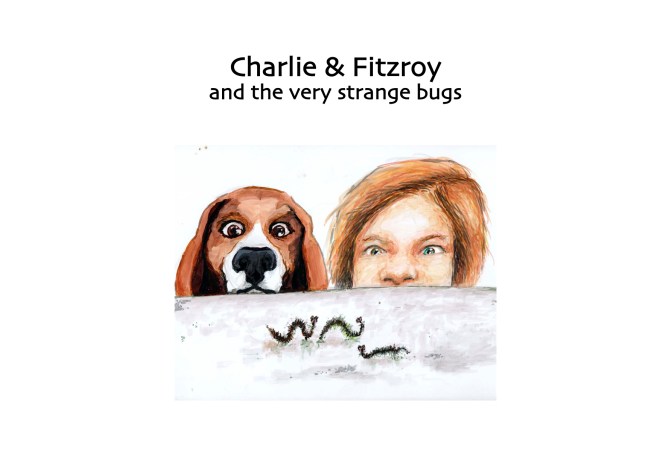
 A book about evolution for children
Just finished my first draft of the book and illustrations. It will need some more work, but if you know anyone in the children’s book publishing business, let me know!
 A book about evolution for children
Just finished my first draft of the book and illustrations. It will need some more work, but if you know anyone in the children’s book publishing business, let me know!
all cartoons on the site free for use by adding “copyright 2018 by Russ Hodge” and a link to the website.
1.

2..



3.


all entries in the Devil’s Dictionary copyright 2018 by Russ Hodge
biped the past tense of bipe, a technical term for biting in species are unable to pronounce it properly because they have no teeth, or in elderly humans who have forgotten to insert their dentures before appearing at the table.
bioprospecting a process by which blood is passed through a filter in search of nuggets of gold or other precious metals. Prospecting for oil in the body is called a lube job. Natural gas can be detected without any special device, by anyone with a normal sense of smell, after it is emitted through the typical orifice.
Browning commotion jiggly-leg syndrome at the scale of molecules.
colon a type of punctuation found within the digestive tract, somewhere between the mouth and the exit, signifying that an efflux which has begun is not yet finished: more is yet to come. Contrast with semicolon; this refers to a region which divides the contents of the large and small intestines into functionally equivalent parts, which may be found in different physical locations depending on the load being transported at the time.
permeable describes a type of hair that can be remolded into the shapes of clouds or classical sculptures through an application of chemical stiffeners by stylists. Compare to semipermeable and nonpermeable, which resist these efforts to varying degrees. The latter two types probably originated as mutations which have increasingly spread through the population over time, due to the difficulty of people with perms finding mates.
Searching for Oslo: a non-hypothesis-driven approach
On the publication of “Remote sensing” by the magazine Occulto


Dear friends,
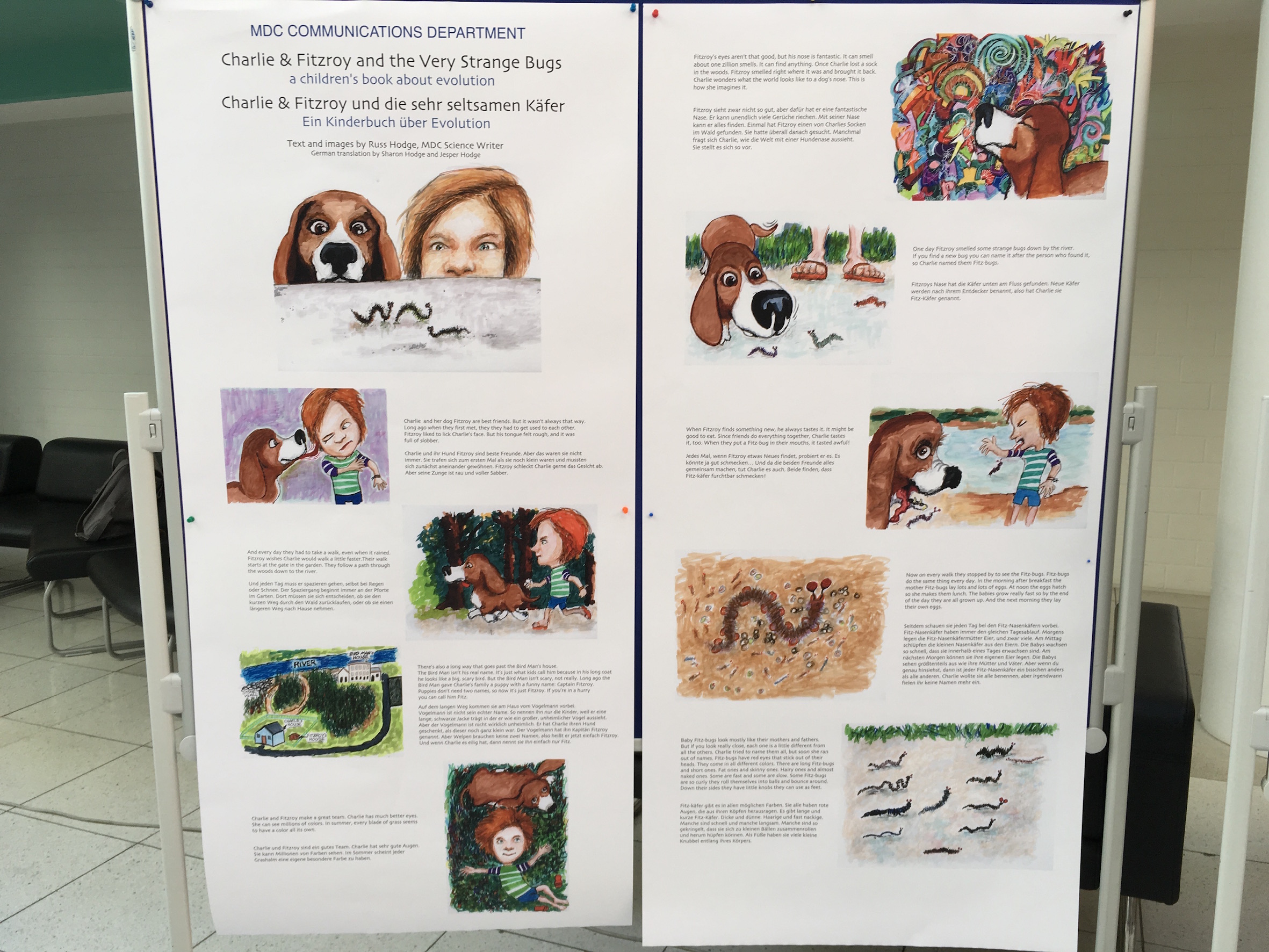
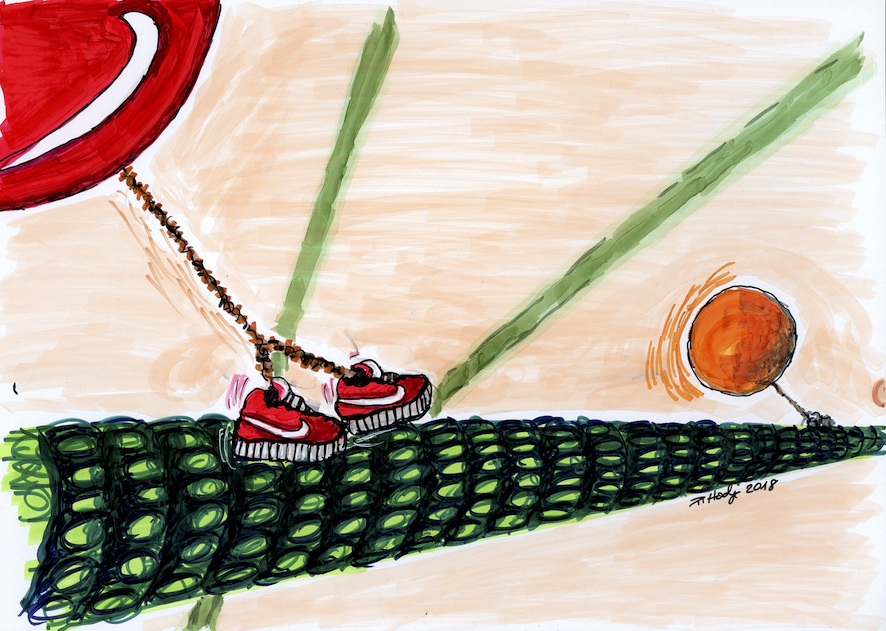
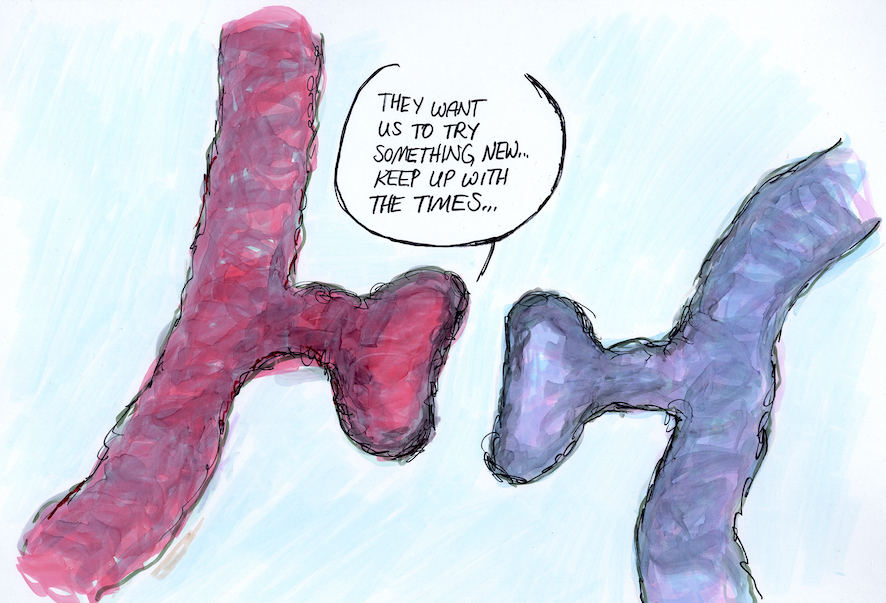
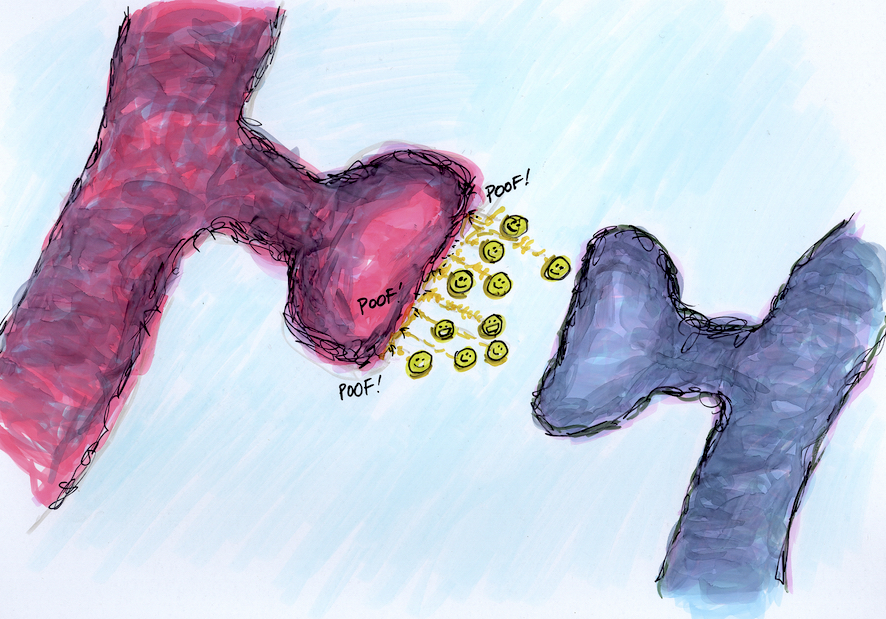
Once again the MDC is participating in the Long Night of Sciences in Berlin, this Saturday, June 9, from 4-9 pm. Please come by and see my stand in the foyer of the MDCC. This year the theme is a new children’s book I have just written on the topic of evolution:
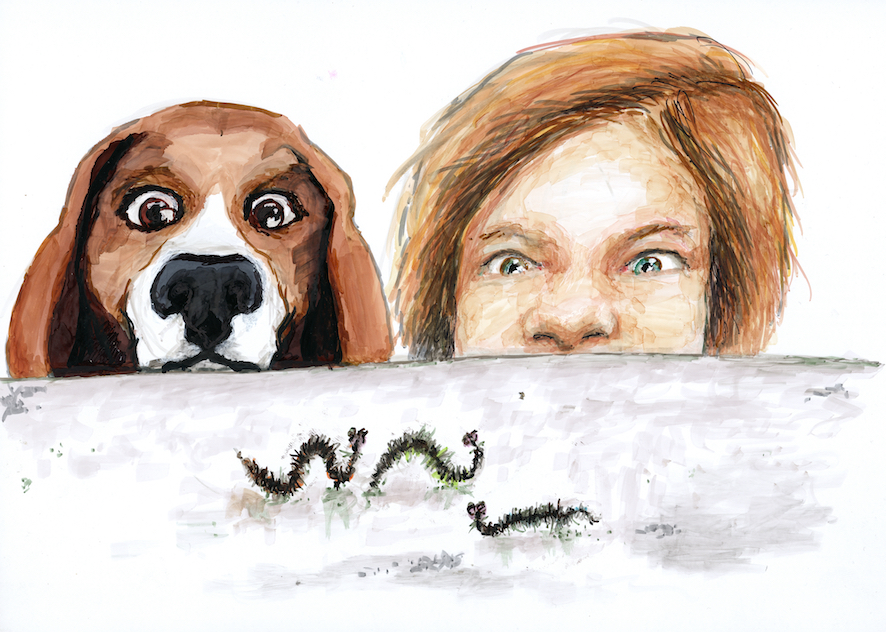
I’d love to get feedback from scientists, teachers, kids, and especially anybody in the publishing business about the next steps in producing this book!
1.
2.

(copyright 2018 by Russ Hodge)

March 10, 2018
To the editor.
Dear Sir(s) and/or Madam(s),
My compliments on the zesty new editorial direction your journal is pursuing at a time when the print media are generally regarded as a horse so dead you could never beat it back to life. Not that a scientist would ever beat a horse, of course, unless there was some therapeutic purpose to it (e.g., cardiac massage). Which in this case would be senseless, because the horse is purely metaphorical – not that my colleagues hold a metaphorical horse in any less regard than a real one. But I digress.
It is bold indeed of you to publish in serial form the epistlary war that has been raging for so many months between Prof. Dr. Marius Linksunteraermer and Dr. Dr. Vincenzo Gambini. I am so caught up in it that I find myself waiting for each edition of your journal in a state of heightened anticipation bordering on erotic arousal (which is really saying something, at my age). There’s nothing better than watching two scientists go at each other tooth and nail, rapier and switchblade, particularly when they are arguing about something of no significance whatsoever.
To summarize: about a year ago you published a paper by Gambini’s lab. Linksunteraermer had no issue with the work or its results, with the exception of the legend to one figure. As customary, you gave Gambini the opportunity to respond and the two letters appeared side-by-side. Naturally Linksunteraermer felt compelled to respond to the response, and naturally Gambini provided a rebuttal. Now, of course, the Djinn had been let out of the bottle and there was no putting him back.
Here the figure and legend as they originally appeared (vol. 139, p. 1206):

Fig 6a. We collected ca. 1 billion pieces of data as summarized above (for the complete list see the Supplemental Data). The results fell into four distinct groups which could be cleanly separated into the quadrants 1, 2, 3 and 4 as indicated. Since printing 1 billion dots would have taken about 6 years, we simplified the diagram by selecting the most representative dot in each cluster (i.e., the one closest to the middle), then rounded it off to the nearest integer for plotting on the chart. The result confirms our hypothesis that four distinct mechanisms are at work in the system. (Note: What appears to be a single point at position 0,0 is actually four median points, one in each quadrant: after rounding rounding off, they overlap.)
What followed is best captured by citing a few passages from the exchange. Linksunteraermer’s first letter expressed polite skepticism that 1 billion data points could be so cleanly sorted into four distinct groups. “There must have been outliers,” he protested.
Gambini provided the following “clarification”: “We could cleanly distinguish the datapoints appearing in quadrant 1 from those in quadrants 2, 3, and 4 because the data point with the highest value for y in quadrant 1 lay higher than any of the y values for the data points in quadrants 3 and 4, although not necessarily higher than the highest y in quadrant 2, nor any of the x values, of course, and the lowest point in quadrant 1 also lay higher than the highest points in quadrants 3 and 4, but not that of quadrant 2; and the lowest y value in 1 also lay higher than the lowest points in quadrants 3 and 4, although it was not necessarily lower than the lowest point in quadrant 2. Taken together, this implies that both the highest and lowest values for y in quadrant 1 were higher than the y values for either the highest or lowest points in quadrants 3 and 4, although the highest value for y in quadrant 1 may have been lower than the highest in quadrant 2 and the lowest higher than its lowest. That accounts for the y value. The values for x behaved exactly the same way, which spares me the task of having to repeat all of that – provided you make the following alterations: exchange the terms ‘highest’ and ‘lowest’ with ‘farthest right’ and ‘farthest left,’ respectively, and wherever the terms ‘quadrant 2’ ‘quadrant 3’ or ‘quadrant 4’ appear in the description above, replace the 2 with a 4, and replace the 3 with 2. Be careful about the order in which you do this so that you don’t change the 3 to a 2 and the 4 to a 3 and then change the resulting 2 to a 4 and 3 to a 2; only one transformation may be applied per quadrant.”
While mere mortals might have been daunted by this answer, Linksunteraermer’s response came a scant week later: “You’ve completely missed the point. My question is, how can you be sure that none of the points plotted in quadrant 1 actually belongs to one of the other experimental groups, which would mean you would have to cluster it with datapoints in quadrants 2, 3, or 4 rather than grouping it with the other points lying within quadrant 1?” To which Gambini replied, “Because by definition a point in quadrant 1 lies to the right of the vertical axis and lies above the horizontal axis (i.e., both x and y have positive values), and any point failing to meet both criteria must lie in one of the other quadrants, depending on whether it is positive or negative, also by definition,” to which Linksunteraermer retorted, “But that doesn’t address the question,” earning the following rather snarky reply from Gambini: “Perhaps you failed to understand the answer,” and from there the discussion deteriorated into an exchange of personal insults, including some rather colorful and highly creative references to anatomical features and their functions in reproductive biology, in some cases across a species barrier, which you faithfully printed. I will refrain from going farther to avoid spoilers, but I ensure anyone who cares to read the letters that they will find entertainment of the highest order.
I have not written this letter as a means of getting drawn into what will surely end in at least one homocide. Wagers are being made on who will survive, throughout the research community. My money’s on Gambini; the intellect responsible for that figure legend and the subsequent explanation will not go down quietly.
No, all of this reminded me that it was time to finish a little project I started a few years ago demonstrating that any attempt to plot data onto an x-y axis, the type that Gambini used, is doomed because of a fundamental flaw of reasoning that renders them all meaningless.
I enclose a copy along with this letter, which I humbly submit to your journal for consideration.
With warmest regards,
Wilford Terris, Prof. emeritus (at large)
by Wilford Terris, Prof. emeritus (at large)
Scientists and normal people, too, are familiar with the practice of plotting information on a system with an x-y axis. The formal designation is the Cartesian coordinate system (or CCS, fig. 1). It is named for half of the French mathematician René (Des)cartes (fig. 2), who invented it but later disowned it, at least partly – apparently the latter half, to judge by its name. He did not, as some claim, cry out on his deathbed that it had been inspired by the Devil; his disappointment was purely financial. The coordinate system became the Microsoft of the 17thcentury and would have made Descartes as rich as Bill Gates, if you imagine Bill in a powdered wig and pointed purple shoes with large buckles, if Descartes had remembered to patent it. As a result of his failure to do so, he never saw a penny (or sous, as the French call it) while others made a killing. By the time he came up with his second major invention, the “mind-brain dichotomy,” he’d learned his lesson and patented it right way. Unfortunately it turned out to have no practical value whatsoever, except as a sort of occupational therapy for philosophers. Descartes became pathologically bitter and died in poverty while teaching in Sweden on a visiting professorship contract in the company of a female robot that was either a life-sized replica of his deceased daughter or a mechanical sex toy.
Fig. 1. Cartesian coordinate system
What made the CCS so popular was that a portable version (called the iCCS) could do just about everything that smartphones are used for today. You could do addition and multiplication on it, and if you were really clever subtraction and division. And what is GoogleMaps, really, other than an x-y axis with a few details filled in? You could use it as a chessboard, and even play the game “Pong” on it by calling out equations such as “y = (x-1)!” to describe the trajectory of the ball. The biggest-seller, of course, was Battleships, which hadn’t made much sense at all before the arrival of a coordinate system. When a few customers complained that you couldn’t watch cat videos on the iCCS, the King had them beheaded, to the delight of all.
Fig. 2 René Descartes, (1596, 1650) inventor of the Cartesian Coordinate System
With the arrival of the Cartesian coordinate system, people began counting things they’d never paid attention to. A cause could now be connected to its effects, supported by actual data. On the x axis you could plot the number of beers a person drank, for example, and on the y axis the number of times they fell down. A situation in which both numbers always rose together or fell together, like the drinking-and-falling effect, was called a correlation (derived from the French word for incest) and was generally assumed to indicate a causal relationship. This led to landmark publications in journals such as Nature with titles such as, “Drinking alcohol makes people drunk.”
Another revolutionary scientific discovery to emerge from the CCS was the concept of being fat. Some people had always been thicker than others, but it didn’t seem to have any practical consequences, so no one particularly noticed. There had been a theory that if a rotund person jumped from a high place, he would bounce upon hitting the ground. Galileo proved this wasn’t true in the first human clinical trial on falling, carried out at the leaning Tower of Pisa. The two colleagues he used as the test subject (250 kg) and the control (50 kg) not only hit the ground at the same time but produced nearly identical blots of a gelatinous composition, considered the origin of the scientific practices of obtaining gels and blots. He concluded that a person’s mass had no practical consequences, in terms of its rate of falling or the degree of flattening upon impact, so science agencies struck research on body mass from their funding agendas, and it wasted away for more than a century.
Then a French physician named Jacques Derrière got tired of his wife asking – for the 1000thor 1,000,000thtime – “Does my butt look wide in this dress?” Before offering any conclusions he thought it might be wise to gather some scientific data. He began measuring the height and weight of everyone he met, plotting one against another on an x-y axis, leading to the first first Body Mass Index, or BMI. The results were interesting. Most people’s measurements fell within a particular zone of the chart. A few points lie far outside this zone, generally people of normal height but with the weight of a grand piano, or a small whale. Since these were frequently the same people who drank lots of alcohol and fell over outside in the street, Derrière called them outliers.
Derrière packed one of them in his wagon and carted him off to the hospital for dissection. After a few pokes with a needle to ensure the putative Scientific Breakthrough was dead, he made his first incision in the gut, looking for balloons or some other mechanism that would make a fellow swell up that way. What he found was a blubber-like tissue that he described, in his landmark paper, this way: “Upon close examination, the patient was determined to be Full of Adipose Tissue, or FAT.”
He extended his plot of BMIs to other species, and the next time his wife thrust her impressive posterior toward him and demanded an answer, he was ready with precise data. “Your butt has the BMI of a small elephant,” he told her, upon which she immediately rewarded him by elevating him to the rank of Martyr to the Cause of Science. His data, thankfully, survived.
The BMI charts from Derrière rapidly became valuable references for experts in disciplines beyond butts, such as the engineers who designed the second elevator ever to be constructed. Elevator design was not yet a science, because there was only dataset, from the first elevator, and to become a proper field of science it is generally considered necessary to have at least two. The results of the first elevator experiment are recorded in the Cartesian coordinate chart below (Fig. 3).
(Image being processed)
Fig. 3. First human trial of an elevator. The x axis represents
an individual’s lifespan (measured in seconds from the moment
of boarding the elevator); the y axis records the weight of each
person on board. Based on this chart, engineers concluded that
there was no association between an individual’s BMI and risk
of death by elevator.
Although later no definitive cause could be established for the premature termination of that experiment, the frayed ends of the rope were suggestive of some sort of separation event. While no one disputes that the effect on 50 passengers who had eagerly volunteered for the maiden voyage of an elevator was rather negative, on the whole the experiment was considered a success: their cabin had ascended nearly 3/4thsof the height of the Eiffel Tower before abruptly reversing directions.
The Assistant Head Engineer, whose social status had not allowed him on board, suspected that the thickness of the rope might have been a factor. He could have benefited from the calculations of the Head Engineer, who had been prominent enough to be given a spot on the historic flight, but his notes were an unreadable scrawl and the Head Engineer himself was no longer available for consultation. Had he provided an accurate estimate of the weight of the passengers into his calculations? Had he realized they might be carrying things in their pockets – loose change, car keys – or have body piercings that would add to the weight? For his new caculations, the Assistant Head Engineer could draw on Derrière’s BMI tables to estimate the total weight that a rope would have to hold. At the last moment he remembered to add the weight of the cabin, which was about a ton. This gave a figure that could be plugged into an equation to yield the guage of the rope that would be needed:
more weight = thicker rope
The purpose of this piece is not to cause panic; if that had been my intent I would have started with alarming statistics about how many millions of people die in elevator accidents every year, then claim that there is currently no way to diagnose an individual’s risk of dying in an elevator accident based on molecular markers. And the number of deaths just keeps accumulating. (Indeed, how could it get smaller? You can’t subtract any from the bottom of the pile.) There are no effective treatments, because the first symptoms (a sensation of falling, usually accompanied by loud vocalizations) appear just moments before death. By that time it’s too late to unpack the parachutes.
Later experiments showed that parachutes don’t work in a falling elevator anyway, due a localized disturbance in the laws of physics that Newton called the “temporary exception for a parachute in an elevator.” So there is an urgent need for further research to design novel rational therapies for a condition that causes morbidity and mortality not only for the victims, but also for anyone who happens to be standing at the bottom of an elevator shaft at the wrong moment.
Today’s engineers draw on the Body Mass Index and a plethora of other Cartesian coordinate systems in the design of practical equipment such as elevators. Modern elevator science has progressed far beyond the state of affairs which reigned at the second clinical trial of an elevator, for which it was surprisingly hard to find volunteers. In the end they substituted cows, replacing the Body Mass Index with a Bovine Mass Index, in one of the first historical examples of replacing humans with animal subjects. That experiment was a success; all of the cows reached the top alive. What happened when they stampeded out of the cabin and found themselves on the rather small viewing platform at the top of the Eiffel Tower is another matter, but is irrelevant to the study’s results.
As I mentioned, I do not wish to cause panic. But let us imagine, purely hypothetically, that someone were to discover some inherent, fundamental flaw in the Cartesian coordinate system. Wouldn’t this call into question the structural integrity of every real-world device designed using a CCS? Every elevator, bridge, floor, cieling, zipper, button, gas mileage, the location of every street and town? Even the Earth itself wouldn’t be in the position we had assumed it to be. What about the social institutions, government, and the premises on which society is founded? Yes, CCSs have been used in creating these institutions as well. Thinks of the consequences? What would happen if the weaknesses in every CCS caused them all to fail at the same time, perhaps through the activity of a virus that has been lying dormant inside a glacier, and is suddenly revived through global warming? This would be likely to happen at a time we can’t predict, because all of our estimates depend on the very type of CCS that is hastening toward a collapse?
Problems with the Cartesian coordinate system have been known for many years, but papers demonstrating them rarely reach the pages of journals. The central dogma of the CCS is the foundation of the entire system of impact points by which editors and the other Plutocrats of science justify their power; any challenge to the model calls their authority into question. But evidence from outside the mainstream has now accumulated to the point that it is finally spewing through the cracks, while the status quo no longer has enough fingers to plug all the leaks. There is a major paradigm shift in the making. It is usually heralded by portents: a plague of locusts, a weird person who might be a zombie, inexplicable changes in your partner’s mood, your cell phone battery draining faster than it should… If you notice these or similar signs, take appropriate measures. You can never go wrong laying in a nice assortment of canned foods, but firearms are not advised. A paradigm shift cannot be countered by conventional weapons.
(coming soon, stay tuned!)
If you liked this article, you will probably like:
The Evolution of Pizza: Novel Insights into the Fourth Domain of Life
all entries in the Devil’s Dictionary copyright 2017 by Russ Hodge
–age is a short suffix that can be added to most nouns and a few other speciages of wordages if you can get them to hold still long enough to attach it. Its original usage stemmed from attaching the word “itch” to something that caused one. “I wouldn’t give you five cents for that beddage (bed-itch),” someone might say, implying that a mattress was full of lice. Other spellings were incorporated early on: “radish” comes from “red-itch,” as some who ate the vegetable developed a rash. Later British noblemen began to add “-age” to words under the mistaken impression it derived from a similar French suffix (“personne” becomes “personnage”), and that using it would suggest they spoke French, which would people think they were more intelligent, higher-class, and cooler than they actually were. They used the suffix to make simple things seem more complex and sophisticated than they actually were. A “dosage” was something a physician gave you; a “dose” was something acquired in a less respectable social setting, and the reason for your visit to the doctor in the first place. A nobleman referred to his social equals as his “peerage”, aiming to imply that they deserved respect; the unintentional irony was that more literally, you were saying he was “lousy” (full of lice). This use of “-age” to make things sound more intelligent or technical has persisted to modern times. “Usage” is often favored over “use”, although they mean the same thing. And you’d never listen to a relative go on and on about the amount he pays for gas, which is nothing more than griping and his own dumb fault for buying the car; “mileage” sounds more technical and scientific, and can start a discussion that lasts for hours.
altruism a disputed term used by some psychologists to describe a temporary, dissociative cognitive state marked by mental confusion and unnatural behavior. The most distinctive symptom is that a person suffering from altruism places the well-being of others above his own, even when this involves risky and even self-destructive behavior. This extends to individuals beyond his or her own children in what has sometimes been described as “an overgeneralization of the mothering instinct.”
Altruism seems so contradictory to evolutionary principles that some refuse to believe it exists and try to explain every altruistic act as ultimately selfish. The problem troubled Darwin to the point that he put off publishing the theory of evolution for more than two decades, spending more than half of that time in a painstaking study of barnacles. This aquatic creature is commonly used as an animal model of human altruism because in some sub-species, males have given up their bodies altogether in service of females, now existing as little more than a sac of sperm, a sort of parasite inside the female body. Darwin finally resolved the conflict by realizing that short-term altruistic behavior might have a function like bird plumage, by attracting potential mates. It might fool someone into thinking you were “nice”, at least long enough to invite home for a few rounds of reproductive exercise. Most bouts of altruism wear off quickly, within a few hours, but the original performance might have been so impressive it could years for a mate to realize it was a temporary aberration, and the victim is normally just as selfish as everyone else.
Diagnosis is tricky and altruism can only be definitively detected through EEG recordings and a brain scan. These measurements reveal a depressed activity in areas of the brain related to basic instincts of self-preservation and higher cognitive functions, akin to the brain’s response to canniboids. The longest duration for a uninterrupted altruistic state recorded in medical history is four hours, although the patient was sedated for most of that time.
heterochrony the inability toremember whether to set your clock ahead or back at the beginning and end of Daylight Savings’ Time, and then to draw the proper conclusion about whether you have gained or lost an hour. As for what happens at the International Date Line… Forget it. Severe cases of heterochrony are often accompanied by a conspiracy theory mentality which holds that the hour isn’t really gone you lose an hour no matter which way you turn the clock, the result of a governmental conspiracy to steal an hour from citizens twice a year, during which it has unique access to your bank account and has an hour to invest your savings in highly speculative stocks, or work the slots at an on-line casino. There is little risk because it will just add any losses to the amount due in calculating your income tax. You never notice that anything has happened because the extra hour never officially existed – they keep shuffling it back and forth across time zones – and although your money is gone, this does not appear on your bank balance. And why should it? There was never actually any physical money in the account anyway. They keep it stored in ATMs.
A woman with the condition is called a heterochrone; the male form is heterochronus, their offspring are labeled heterochromognomes. Compare with homochrony, which has nothing to do with Daylight Savings Time.
homochrony the ability to march or clap, although not necessarily simultaneously, at a regular pace coordinated with the rhythm of any marching or clapping going on around you. Animals either do this instinctively or don’t care; in humans early training helps. The technical term for people who never acquire this skill (famous case: Ronald Reagan) is “ain’t got no rhythm.” Those who do got rhythm can refine it to the point of being able to march in formation while twirling a baton or playing a musical instrument, despite wearing a bizarre band costume that resembles the attire of the British colonial forces that occupied India.
to proportionate (verb) an aggressive social behavior in which a person proactively volunteers to cut the pie, or the chicken, or divide the loot, in a thinly disguised move to get the most. After things have been divvied up, the distribution is said to be “proportionate” (adjective) if the portions people receive correspond to the amounts they deserve, calculated through a complex formula that takes a person’s body mass index into account and variables such as whether your spouse feels that your BMI falls into an acceptable range, whether he or she is presently at the table, and the H (holiday) factor, where the normal physiological regulators of eating are repressed. If a proportionatee disagrees with the amount he has been proportioned, he may petition a civil court, at which point he has the opportunity to present evidence that his piece of pie was too small. The court may order the plaintiff and defendant to enter a binding process to decide on “reproportionation,” to whose terms both parties must agree. If they are unable to come to terms, the case is heard again and decided by the judge.
book lice a parasite created through genetic engineering techniques by introducing termite genes into head lice. Originally developed for their potential as a form of organic recycling, librarians got their hands on the bugs and began cultivating them in S1 laboratories in the library basement. Staff harvest the colonies for their eggs, which are spotted onto the pages of books before they are loaned out. The eggs are timed to hatch precisely one day after the date due, at which point the lice crawl out of the book and take up residence in nearby volumes on the patron’s shelf or any available textile, which is why you should never read a library book in bed and should always return it on time. The eggs are highly sensitive to changes in the environment of the book; improper handling, such as dog-earring a page, often triggers early hatching. Book lice are to library patrons what the dye packs they hide in currency are to would-be bank robbers.
host has two distinct meanings in science. The first is a deragatory term by which unicellular organisms refer to multicellular life. For bacteria, “host” has about the connotation of a motel whose rooms have no bath, no cable service, and whose swimming pool is exactly the size of a Jeep, namely one that missed the exit ramp on the Interstate, flew over the guardrail, and plopped into the pool, where it was such a tight fit that it could no longer be extracted. A pathogen goes off on a trip for a while and takes copious notes, so that when it comes back it can compare its holiday experience with those of the neighbors. Bacteria can’t access the Internet, so they distribute their reports biochemically, sometimes at the level of genes. Over time individual human bodies are ranked in terms of comfort and the level of services they provide. Very few people are awarded a five-star rating, and when it happens the pleasure is short-lived. They become vacation hotspots that are overrun by all sorts of pathogens, inevitably killing the host, but by that time a trendier new place has usually been found.
The second usage of hostin scientific contexts is positive: as a term of respect that one scientist may bestow on another after being invited to give a talk at the colleague’s institute. “Host” is reserved for someone who covers all of your travel expenses, naturally first-class, takes the visitor to excellent restaurants, where the prices on the wine list are explicitly ignored, and puts you up in a four-room suite at a hotel with all the amenities, such as an all-night bar well stocked with attractive, lonely conversation partners. Upon request a host will assign you a bodyguard to escort you to the bar, stay discretely on hand to jump into any fights that may arise, and then get you get back to your room in one piece, unless you indicate otherwise using a secret sign agreed upon in advance, possibly but not necessarily indicating that you have managed to hook up in the bar. If the hosting scientist fails to meet any one of these criteria, you return home and insert a reference to the trip whenever possible in casual conversations, and write an exhaustive account of the visit on websites such as LinkedIn, but conspicuosly neglecting to refer to your colleague as the host. Being at least as smart as pathogens, other scientists get the idea, and will make up wild excuses to avoid having to give talks at institutes rated with four stars or below.
hatch As a verb, hatch refers to the process by which an organism emerges from the receptacle in which it has undergone the stages of embryogenesis, whether an egg or a womb, often freeing itself by pecking an opening with its beak. So birds hatch from eggs and children hatch from the womb, unless the child is an amphibian or a reptile.
As a noun, hatch refers to a flap-like tissue that covers the throat which remains closed until it is stimulated by a liquid of high alcoholic content. This triggers a reflex by a hinge-like muscle at the back of the flap, causing it to open and permitting the alcohol to go “down the hatch”. From there it is routed to special cavities throughout the body that are dedicated to the processing of alcohol. There are several of these tubular structures, located in regions such as in the legs, where gave rise to the expression, “He has a hollow leg.” (The technical term is overflow lumen.) When alcohol enters such a lumen, it causes a sensation that the drinker reports as, “That really hit the spot.”
hindgut a region of the intestine which lies below the hindbrain, when the body is in an upright position, and is connected to it via a large bundle of nerves that bypass the spine. This conduit permits the gut to monitor brain activity and take over some of its functions, such as communication, in an emegency. When a person is incapacitated, for example through the excessive consumption of alcohol, or decapitated entirely, the hindgut steps in and sends unequivocal signals of distress to those nearby. It has two modes of doing so – generally trying one and waiting for a response before trying the other. If neither on its own provokes other people in the bar to take caregiving measures – such as calling an Ueber driver – the hindgut activates both signaling systems simultaneously.
In type 1 signaling, the hindgut jerks swiftly upwards and delivers a focused “punch” to the stomach, which forces its contents upwards in the form of projectile vomiting. In type 2 it presses downwards, clenching the lower intestines in a vise-like grip that forces any pockets of noxious gas to seek the nearest exit, generally accompanied by a loud acoustic signal. Such noxious gases are usually plentiful because the body naturally produces them as it metabolizes fermented substances.
flocculate the process by which a floc is produced from a microfloc. What happens before that, no one knows, but microflocs can’t just arise from nothing, so it is reasonable to infer the existence of nanoflocs. Anyone who cares about what comprises nanoflocs – there’s something wrong with you.
ooopossum the oocyte of a possum.
If you liked the Devil’s Dictionary, you’ll probably also enjoy:
Searching for Oslo: a non-hypothesis-driven approach
On the publication of “Remote sensing” by the magazine Occulto




This is the first of several pieces in response to questions I have received about my recent lengthy article (too lengthy!) on “Ghosts, models and meaning: rethinking the role of communication in science.” It’s intended to give a quick overview of the main ideas; you’ll find the full article here.
There are a lot of contexts in which science communication somehow fails because an audience doesn’t get the point or understand a message the way it was intended. The naïve view of this is that scientists just know a lot more about a specialized topic than people from other fields or the public. Of course that happens, but I’ve found it’s rarely the biggest issue in communication. And it doesn’t explain why people so often have problems writing for experts in their own field, or have trouble clearly expressing things they know very well.
When I began teaching scientists to write, I constantly came across content-related breakdowns that were hard to understand. This got so frustrating that I finally decided to carry out a systematic analysis of the problems. That took about four years, and “ghosts” emerged as a fundamental concept that’s helpful in understanding a lot of what goes wrong.
Ghosts originate from many things: concepts, frameworks, logical sequences, various patterns of linking ideas, theories, images and so on. What unifies them is that the author has something in mind that is essential to understanding what he means – but it’s missing or very hard to find within the message itself. Often the author is not even aware he’s thinking of something a certain way. Since it’s nowhere to be found in the message, it’s invisible. If the reader doesn’t sense its presence and go looking for it, or has too much trouble digging it out, he will probably misunderstand what the author really meant. All the words might make sense, but there’s some core idea that’s still missing.
I call these things “ghosts” because they are invisible, in that sense, and yet highly disruptive. Of course they occur in all kinds of communication. But ghosts are particularly interesting in science because it has very structured and special ways of assigning meaning to things. What things mean depends on a hidden code that most scientists eventually absorb and imitate, but a failure to recognize its existence causes all kinds of problems. A scientific text will be completely opaque to a lot of people not only because its meaning depends on all of these invisible things – even more because people don’t know where to look for it, or that it’s there at all. It makes science harder to communicate and much harder to learn.
What this boils down to is that science has special ways of assigning meaning to things that really need to be taken into account when you’re planning a message or trying to interpret one. If you don’t, a lot of misunderstandings become almost inevitable, when they could easily have been avoided.
Among the most significant and disruptive ghosts in science are various models that are used in formulating a question or hypothesis and interpreting the results. Most studies engage many types and levels of models. In a single paper an author often draws on basic concepts such as the structure, organization and composition of cells, to the components and behavior of biochemical signaling pathways, to complex processes such as gene regulation, to notions like states of health and disease, evolutionary theory and so on. The way scientists describe fairly simple things usually draws on a complex, interlinked universe of models that goes from the smallest level of chemical interactions to mechanisms, organisms, species, and their evolutionary relationships.
Scientists obviously recognize this; as Theodore Dobzhansky said, “Nothing in biology makes sense except in the light of evolution.” But there is a big difference between vaguely acknowledging this and actually working out how the vast theoretical framework of evolution reaches into every single event you’re studying, and reaches into the way you understand the “simplest” things – such as the names of molecules.
And often people don’t realize that even Dobzhansky’s statement is resting on huge, invisible ghosts that he doesn’t explicitly state but are essential to understanding what he means. What I mean is that evolution itself is based on principles of science that are even more fundamental – it follows from them. So if you’re talking about the theory, you’re also engaging this deeper level. That’s really interesting because most of the “debates” over evolution I’ve witnessed are actually arguments about these even larger things. If the parties in the dialogue never articulate that deeper level of the disagreement, it makes very little sense to discuss the types of details that people go round and around about. They’re exchanging a lot of words, but they don’t fundamentally agree on what those words mean. They are arguing about whether species change, split apart or go extinct, but to get anywhere on those issues you have to agree what the term “species” means. It’s not so much that they don’t agree – more that they don’t even realize there is a problem.
I think there are two, which are so basic that they distinguish science from other ways of thinking about things and assigning them meaning. I call the first one the principle of local interactions, which follows from a fundamental assumption about physical laws. In science if you claim that something directly causes another thing, you are expected to prove that there is some moment of time and space where the cause and effect come into direct contact with each other, or at least to demonstrate that this is a highly reasonable assumption to make. Scientists extend this concept with a sort of shorthand: the two objects may not really bang into each other, but then they have to be linked by steps such as a transfer of energy that do follow this rule. So to make a scientific claim that a child inherits traits from its parents, you have to find some direct mechanism linking them, such as the DNA in their cells. It is directly passed to the oocyte from DNA from the reproductive cells of the parents, and gets copied into each cell, and then it gets used in the transcription of RNAs and translation into proteins through a lot of single, physical interactions. You’ll never directly see all of those things happening, but the models you use predict they are there.
The second principle applies this type of causality to entities as complex as organisms or entire ecospheres. It shows what happens when a lot of local interactions create systems that are much more complex. At that point the principle declares that the state of a system arises from its previous state through a rule-governed process. From that it follows that future states of the system will arise from the present one, following the same rules. We’re far from knowing all those rules, but scientists assume they are there, and a lot of their work is aimed at creating models that describe them.
Both of these concepts are closely tied to a style of argumentation that integrates Occam’s razor; I’ll talk about that elsewhere.
How are these fundamental principles linked to evolution? Well, you start by observing what is going on in a biological system right now and creating models that project the state into the past and future. You test those models with experiments, and then start extending them farther and farther into the past and future. You make predictions about what will happen if the model is correct in the future, and look for evidence of its activity in the past. If something in an experiment violates those predictions, you have to revise the model. This process of observation, modeling, and challenging models is the source of the Big Bang theory in astrophysics; it’s the basis of our geological understanding of the Earth’s crust, and when Darwin applied it to life he got evolution.
Other belief systems such as religious accounts don’t start from an assumption that models are works in progress that will inevitably be revised; nor do they require that their versions of things constantly be revised to conform to evidence. It leaves people free to believe whatever they like, to maintain idiosyncractic positions in the face of mounting evidence to the contrary. It leads to inconsistencies about the way they think about causes and effects in their daily lives versus how they extend their opinions to the universe. This is pretty egocentric; it leaves no place for self-doubt and encourages no respect for the potential validity of other belief systems. This very easily slides into a type of intellectual authoritarianism which is absolutely counter to the fundamentally democratic nature of science.
You can see these two principles at work in the way we distinguish “scientific models” from every other kind. Anything that violates the principle of local interactions would be considered non-scientific. That’s the case for extrasensory perception – until someone demonstrates that some energy passes from one person’s mind into another’s, you can’t make a scientific claim for its existence, so you have to look closely into whatever model of causality led you to claim it might exist. And the second principle implies that there are no discontinuities – you can’t create something from nothing. Miracles and the fundamentalist account of creation violate both principles.
If you can’t agree on these two things, it makes very little sense to discuss details of evolution that derive from them, because the differences in the very basic assumptions held by people can’t be resolved – you’ve got to agree on things like standards of evidence and causality. If you don’t do that you can’t even agree on the meaning of words. That’s what makes these fundamental principles ghosts in “debates” on evolution, and they are the things you need to clarify before getting involved in one. And, of course, you have to insist that the participants act in a way that is intellectually fair and honest, with integrity.
There are a lot of other debates in science – such as controversies over animal experimentation – in which this doesn’t happen. Reputable organizations make inflammatory remarks and hold untenable positions on points of fact, and refuse to back down when you refute their points. Then you get barroom brawls rather than civil discussions about important topics.
An active researcher is usually so deeply engaged with his models that they have become a fully natural, shorthand style of thought. It’s like the grammar of a native language, which becomes internalised without a real understanding of its structure. In science this grammar has to do a lot with models. Most projects in research take place in a fairly exact dialog with specific models you are either trying to elaborate on by adding details, or extend to new systems, or refute through new evidence. This makes models very dynamic, and there’s no single reference on the Internet or wherever where you can go and find them. In biology virtually every topic gets reviewed every year or two, which is an expert’s attempt to summarize the most recent findings in a field to keep people in a field more or less on the same page. That’s the group that a lot of papers and talks are addressed to, at least most scientists think that way – and they assume the readers will have more or less the same concepts, models and frameworks in mind. Anything that is widely shared, people often fail to say – they think they don’t need to. And it’s impossible to lay out all the assumptions and frameworks that underlie a paper within it – you can’t define every single term, for example. So these become ghosts that aren’t explicitly mentioned but lie behind the meaning of every paper. The two really huge basic principles I mentioned above are rarely, rarely described in papers.
And even the details of the models more directly addressed by a piece of work – the physical structure of the components of signaling pathways, or all the events within a developmental process – aren’t mentioned very often. Those models are embedded in higher-level models, and the relationships in this hierarchy are not only hard to see – there’s no single way of explaining them. Scientists sometimes work these things out fairly intuitively as they extend the meaning of a specific set of results to other situations and higher levels of organization.
Now imagine a science student who is absorbing tons of information from papers like these. As he reads he’s grappling with understanding a lot of new material, but he’s also actively building a cognitive structure in his head – I call it the “inner laboratory, or cognitive laboratory.” It consists of a huge architecture in which concepts are linked together in a certain structure. The degree to which he understands a new piece of science depends on how that structure is put together, and where he plugs in new information. If the text he’s reading doesn’t explicitly tell him how to do this, there will be a lot of misinterpretations.
How can his professor or the head of his lab tell whether a scientist under his supervision is assembling this architecture in a reasonable way? You catch glimpses of part of it in the way someone designs an experiment, but I think the only method that gives you a very thorough view of it is to have the young scientist write. That process forces him to make the way he links ideas explicit and put them down in a way you can analyse each step. In writing – or other forms of representation, such as drawing images or making concept maps – you articulate a train of thought that someone else can follow, providing a means of interrogating each step. Most texts are pretty revealing about that architecture; if you read them closely you can see gaps, wrong turns, logical errors, and all kinds of links between ideas that a reader can examine very carefully.
The problem is that in most education systems in continental Europe, in which most of the scientists I deal with were educated, writing is not part of the curriculum. Whatever training they have is done in all sorts of ways, and the teaching is usually not content-based. Instructors use all kinds of exercises on general topics, but that learning doesn’t transfer well to real practice. Why not? Because when you write about a general theme, your knowledge is usually arranged very similarly to that of the teacher’s and any general audience. In your specialized field, on the other hand, your knowledge is likely to be very differently arranged, and that’s where the ghosts start to wreak real havoc on communication.
Absolutely – they arise from differences in the way a speaker and listener or a writer and reader have their knowledge organized. That can happen in any kind of communication, but in science it’s actually possible to pin ghosts down fairly precisely. In political discussions or other types of debates there aren’t really formal rules about the types of arguments that are allowed… But if you know how meaning in science is established, you can point to a specific connection in a text or image and say, “To understand what the scientist means, you have to know this or this other thing.” Again, since neither of you can directly see what’s in the other’s head, a reader may not guess that some of the meaning comes from very high levels of assumptions, or a way of organizing information that you’re not being told. And some have been digested so thoroughly by scientists that they’re no longer really aware that they are there.
Some of the most interesting ghosts appear when you try use someone’s description of a structure or process to draw a scheme or diagram. I recently had to draw an image of how a few molecules bind to DNA because we needed an illustration for a paper. I thought I had it clear in my mind, but I ended up drawing it five times – each version incorporating some new piece of information the scientist told me – before I got it the way she wanted it. You learn an incredible amount that way.
A scientific text is often based on an image of a component or process that a scientist has in his mind. He’s trying to get a point across, and to understand what he means you have to see it the way he sees it – but if he leaves anything out, it’s easy to completely miss the logic. It’s like trying to follow someone’s directions… That works best if the person who’s giving the instructions can “see the route” the way it will appear to you, maybe driving it one time to look for the least ambiguous landmarks, or taking public transportation and watching exactly what signs are the most visible. And thinking it through with the idea, “Now where could this go wrong?”
Concept mapping is a system invented by a great educator named Joe Novak; it gives you a visual method to describe very complex architectures of information. It’s extremely useful in communication, teaching, and analyzing communication problems. One reason it’s so important is that our minds deal with incredibly complex concepts that are linked together in many ways. Think of trying to play a game of chess without a board – that’s incredibly difficult, but a chess set is a fairly simple system compared to most of those that science deals with. There’s really no way to keep whole systems in your head at the same time. Making a map gives you a chance to see the whole and manipulate it in ways that would be impossible just by thinking about it.
But the real genius of this system appears in communication and its most precise form – education – where a teacher ought to understand what he is really trying to communicate, and how it’s likely to be understood by the students or audience. In most cases you’re hoping to do more than just “transmit” a list of single facts; you’re trying to get across a coherent little network of related ideas, linked in specific ways. If you do that successfully, the audience will leave with a pattern they can reproduce later. It might be a story, a sequence of events, or a metaphor – the main thing is, they have seen how the pieces are related to each other.
A great way to do this is to make a map of the story you’re trying to tell, and then make your best guess about how this information is arranged in the heads of your target audience. What can you realistically expect them to know, and what information and links are likely to be new? If you see the pattern you’re trying to communicate very clearly, and make a reasonable guess about how some type of knowledge you can relate it to is arranged in your audience’s head, you know what you have to change to get them to see things the way you’re hoping. In schools they’re teaching kids to make concept maps early on. Then before a lesson about something like the solar system, the teacher has the kids draw a map of what they think about the sun, moon, planets, and so on. After the lesson the kids make a new map – comparing the two tells you what they’ve really learned.
A lot of scientific models consist of sequences of interactions between the components of a system. Those start somewhere and involve steps arranged in a particular order, and it’s important for the reader to have a view of the steps and that order in his mind. You’d be surprised how often scientists describe these processes in some bizarre order that doesn’t go from A to K, but starts at G, goes to H and I, then goes back to G and works backward to F, E, and D… Again, if you are already familiar with the sequence or pathway this is no problem. But if you don’t, you’re probably expecting the reader to try to assemble the process in some reasonable order. That may be possible through a careful reading of the text, but it takes far more “processing time” than a reader would need if the whole sequence were simply laid out in order in the first place.
Tables are interesting because a lot of experiments are designed with a structure that’s pretty much inherently that of a table. Say you have two experimental systems plus a control, and you apply two procedures to all of them. To make a claim about the results, you have to march through all these cases – basically a table that’s 3×2 or 2×3. Here again, you’d be surprised how many scientists’ descriptions skip over some of the cells of the table, mostly because the results aren’t very informative. Or they tell you, “Procedure A caused a 5-fold increase over Procedure B,” without telling you what happened in the control.
Both of these effects are due to a scientist’s failure to recognize the structure of the information he has in his head and is trying to present… Then he fails to present that structure in the text in a way that’s easy for the reader to rebuild in his own head.
A lot of the other points can be captured through an exploration of what I call this “inner” or “cognitive” laboratory of science. The really good scientists I know have a very clear understanding of their own thinking. They know the assumptions that have gone into the models they are using, and are aware of the limitations, where there are gaps and so on. That type of clarity usually translates into good communication, no matter what the audience.
One thing I found during this project that was very surprising was the extent to which writing and communication for all kinds of audiences was connected, and how addressing very diverse audiences could clarify thinking in a way that improved a scientist’s research. When you find a scientist struggling with clarity in a text, it usually means one of two things. Either a topic is not clear in his head at that moment, or it’s not clear in anybody’s head at this moment in science… That second case is very interesting because it means you can find interesting questions just through a very careful reading of a text, realizing that it’s asking you to build a certain structure of ideas. If you have difficulty, that means something. One of the basic strategies I used in working these things out was that problems are meaningful – they’re trying to tell you something about how good science communication works, or how scientific thinking works… usually both.
Speaking to a general public with really no specialized knowledge of a field can be a truly profound exercise for a scientist. It makes him interrogate his own knowledge in alternative ways. He has to come to a much more basic understanding of the patterns in his inner laboratory and apply different metaphors, trying to map that knowledge onto someone else’s patterns. Well, the cognitive laboratory is already metaphorical, based on concepts rather than real objects, and applying new patterns or metaphors to what’s in there is extremely interesting. It can suggest questions you’ve never thought of before. This means that tools that have been developed by linguists and communicators can be used as tools to crack open scientific models.
I’ve actually done this – used those tools to expose an assumption about evolution that everyone was making but wasn’t usually aware of. The assumption had never been tested, so my friend Miguel Andrade decided to take it on as a project, and put a postdoc on it. The results were really interesting, showing that there were a lot of cases where the assumption didn’t hold – and we got a published, peer-reviewed paper out of it. That was three years ago, and in the meantime I’ve been involved in a number of similar projects that have had a similar outcome. A communicator who pursues questions about meaning and language has a different set of tools to understand how ideas are linked in scientific models. You’re freer to apply slightly different metaphors and patterns to ideas; you may be more rigorous in perceiving assumptions; metaphors and other tropes help you see cases in which people are reasoning by analogy rather than strictly adhering to the system at hand.
So these ideas aren’t just a way to help people plan and communication better – although they certainly help in those tasks. In fact they are much more fundamental in scientific thinking. Understanding these relationships between communication and science is a pathway to doing better research, through a better understanding of its cognitive side. I’ve noticed recently, for example, a lot of cases where the way people are thinking of complicated processes is drifting away from the language they use to describe them. The language is conservative and it may be hard to adjust. But that will be essential as the models these fields are using move forward and become so complex that our minds – and our language – may not be truly able to capture them.
 Good Science Writing