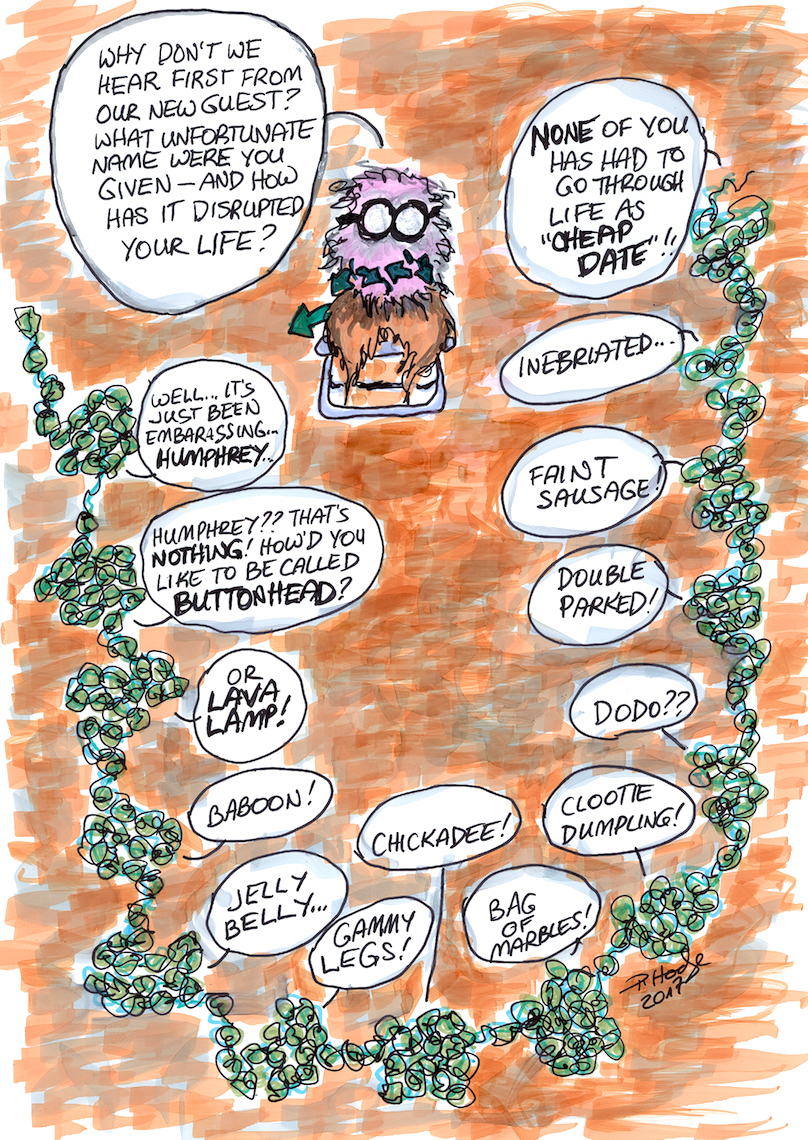
Today’s topics: A self-help group for fly genes with weird names… and more orneriness from proteins…
1.

2.
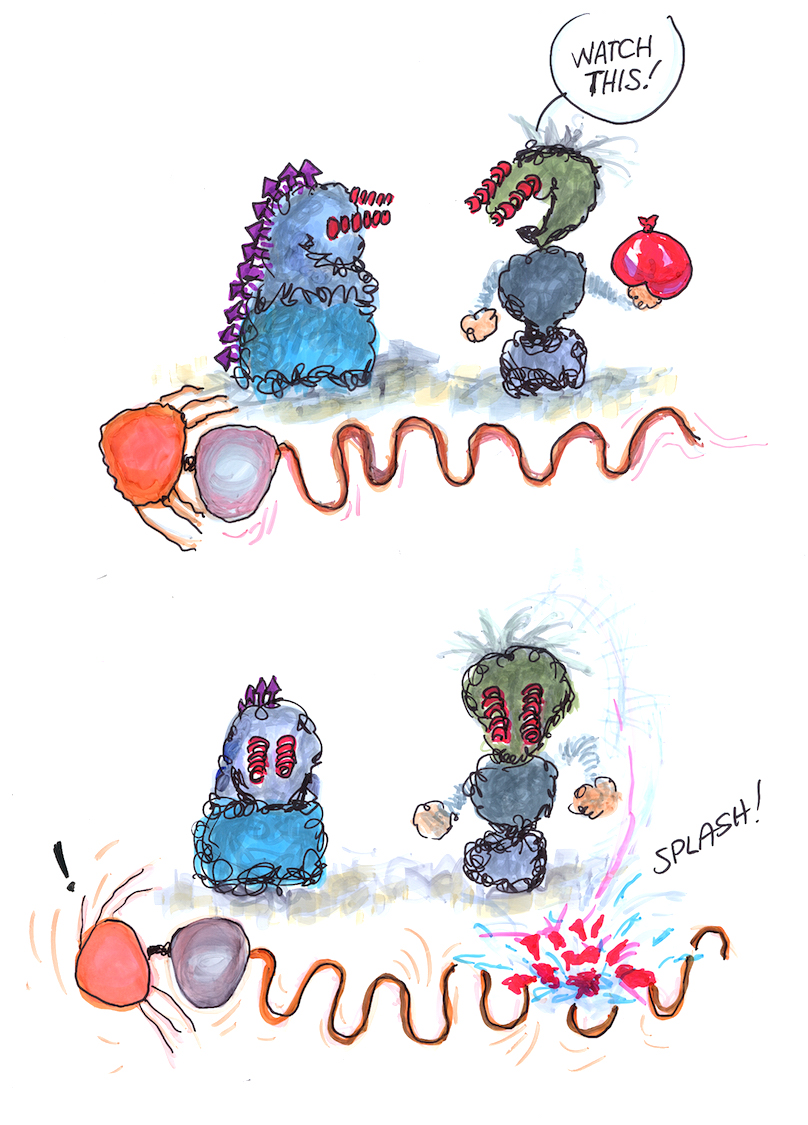
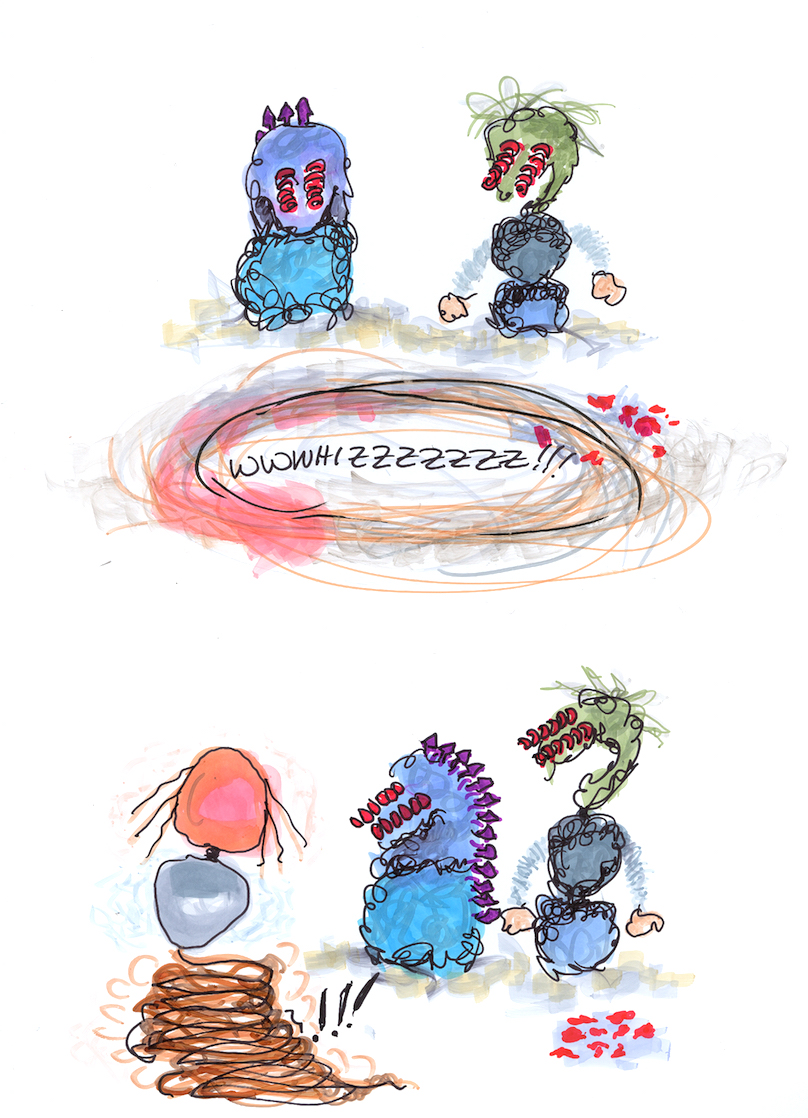
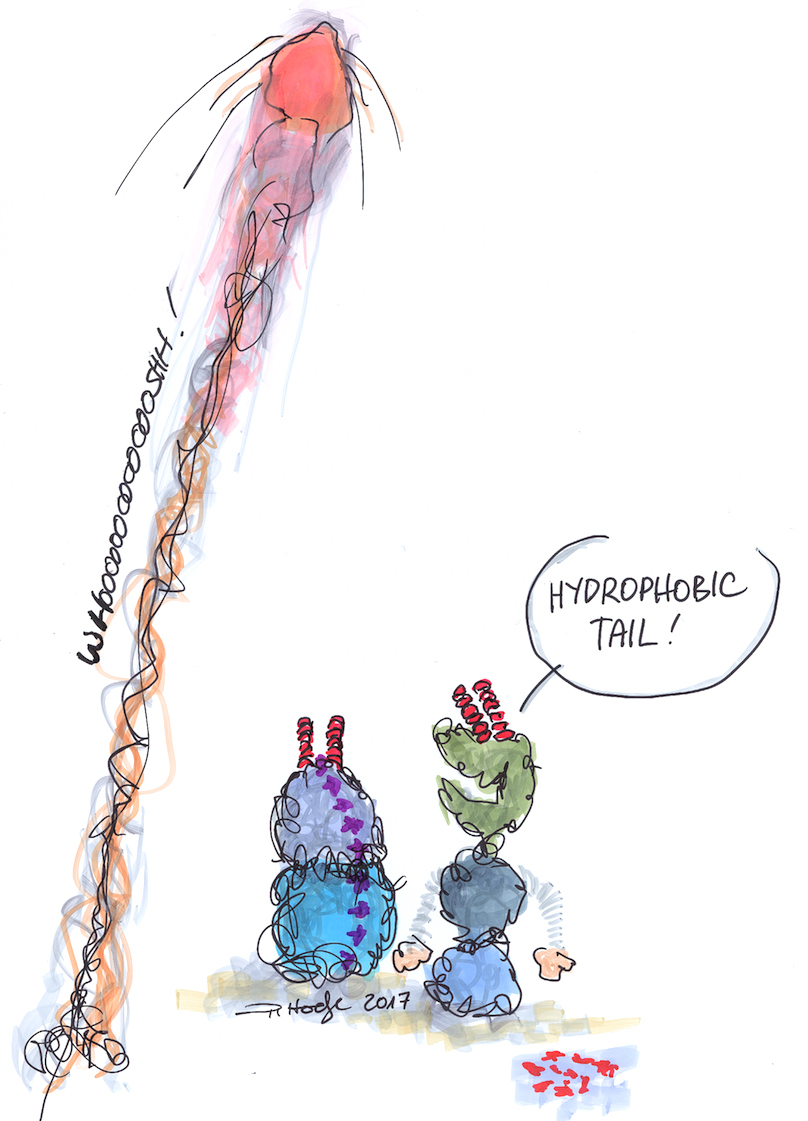
…and for those interested, scroll down for the latest journal cover featuring you-know-who…
Not-so-serious articles with a scientific theme
1.
2.
…and for those interested, scroll down for the latest journal cover featuring you-know-who…

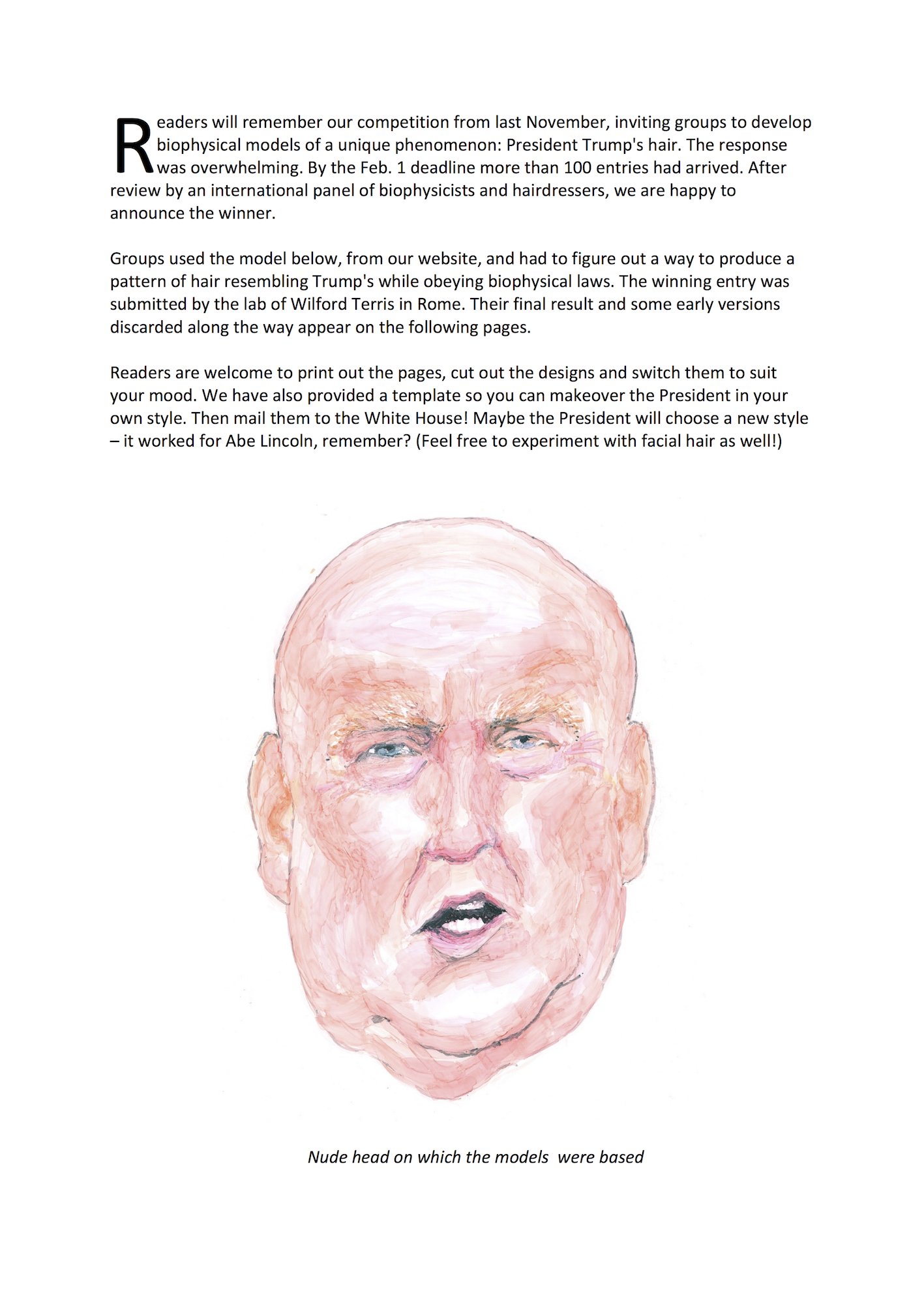
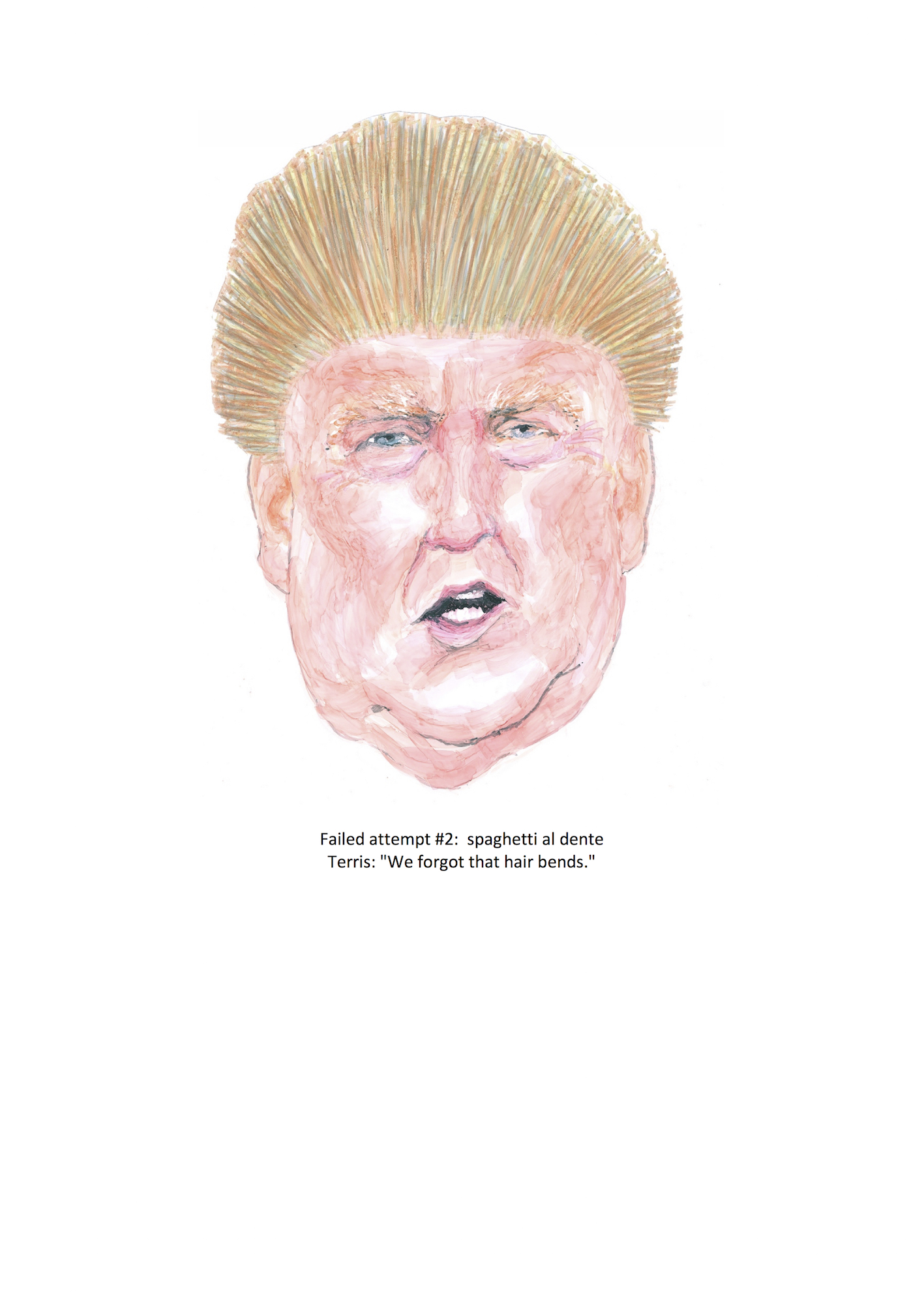
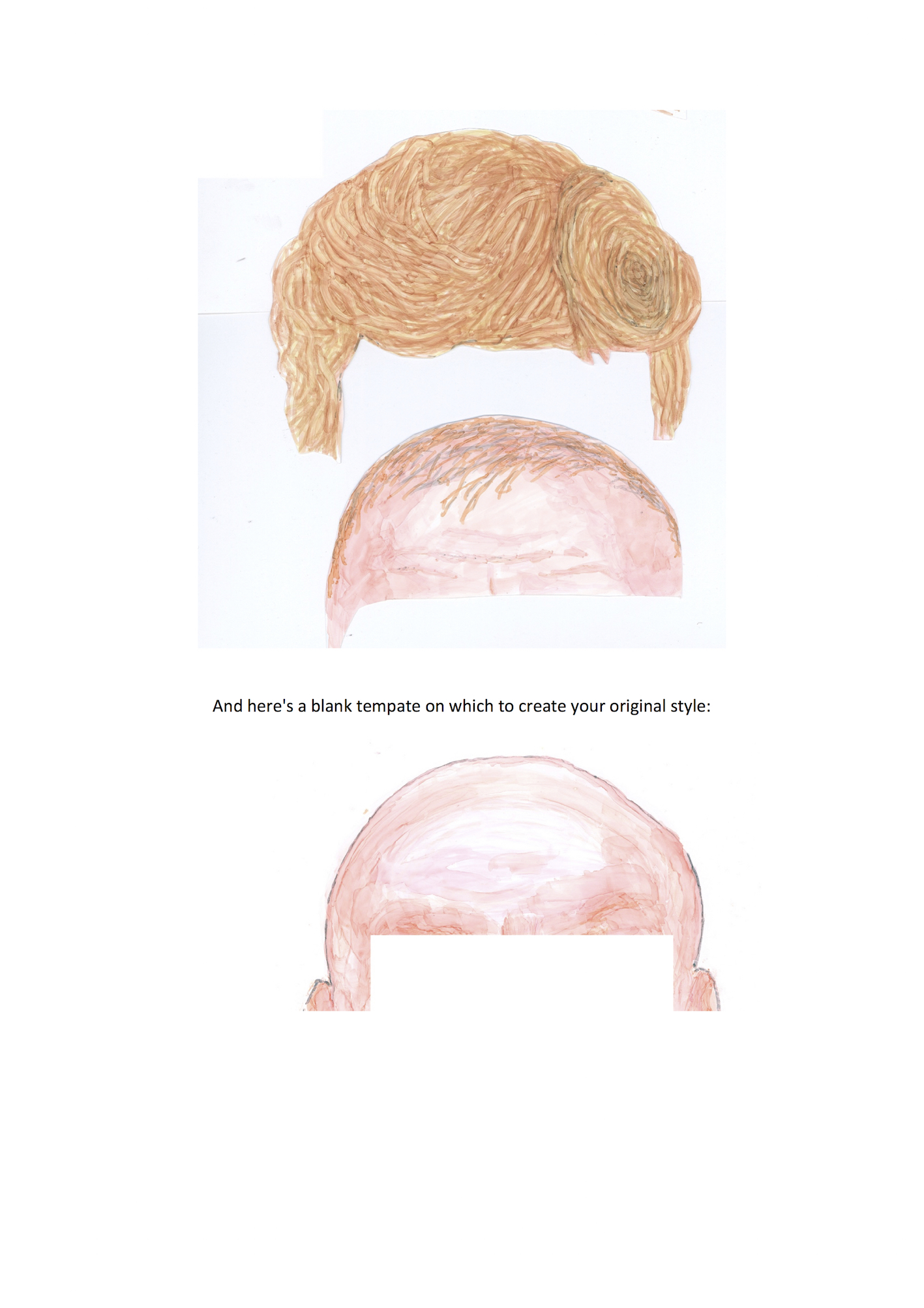
Now check inside – there’s a model that you can cut out and create your own personalised hairstyle for Mr. T! Then send it to the White House – who knows, maybe he’ll be inspired to change his hair… It worked for Abe Lincoln, right? Then if he’d only change his style of leadership…



all entries in the Devil’s Dictionary of Scientific Words and Phrases are
copyrighted 2017 by Russ Hodge
archaea a unicellular organism known as an extremophile, generally meaning that it thrives in places the rest of us would find uncomfortable, such as hot thermal vents on the ocean floor, where they are thought to have evolved about 3.5 billion years ago, or in the tanks of Jacuzzis in hotels, the cloud palaces of Venus, or the belly button of a man who refused, for reasons that are unclear, to take a shower or otherwise bathe for many years. It is also unclear how the Archaea got into the belly button, although 3.5 billion years is probably enough time to crawl there from the ocean floor if you have a clear destination in mind and don’t make a lot of pit stops along the way. Some scientists believe that archeae invaded primitive bacteria and established a symbiotic relationship, leading to the evolution of the modern eukaryotes, although it is hard to see what they got out of the deal, unless they regarded the bacteria as hotel resorts where they could get cheap Jacuzzis.
Regarding the belly button, I cite from the original article: “Of special note are three phylotypes of Archaea [we found in the belly button], a domain of life often found in extreme environments and not previously reported from human skin [1], [27], multiple phylotypes of which we isolated from two independent samples (see online Supporting Information S1). Two of these three phylotypes were from an individual who self-reported not having showered or bathed for several years.” Reference: Jiri Hulcr, Andrew M. Latimer, Jessica B. Henley, Nina R. Rountree, Noah Fierer, Andrea Lucky, Margaret D. Lowman, Robert R. Dunn. A Jungle in There: Bacteria in Belly Buttons are Highly Diverse, but Predictable. Plos One: Nov. 7, 2012. http://dx.doi.org/10.1371/journal.pone.0047712
gold standard an amount of pure gold equivalent to the value of an impact point. In ancient times, alchemists were actually awarded gold for their achievements (i.e., the degree to which their strange experiments came close to making it). In modern times, the gold standard was replaced with paper currency (journal articles), and is basically worthless in objective terms.
planarium a strange model organism that never dies, but simply shrivels up for a while when food is scarce and then fattens again, and sometimes reproduces, when food is plentiful, resembling the way humans attempt to control their phenotype through various diets. When you attack a planarium with a knife and cut it into up to 256 pieces, each subunit is capable of reproducing an entire organism. The 257th piece is used as food. It is unclear why this hasn’t left the Earth piled in heaps upon heaps of planaria. The best explanation is that there are lots of planaria shriveled up in various locations, waiting for their chance to puff up and achieve world domination.
null hypothesis a theory claiming that everything is nothing, or nothing is anything, or that nothingness pervades the universe, or would do so if the universe existed, but according to the null hypothesis it doesn’t, so what would there be to be filled with an infinite amount of nothingness? And does a system containing only nothingness obey the Second Law of Thermodynamics? Can the same volume hold different degrees of nothingness, which differ only in the density of nothingness against a background of nothingness, and if so can the nothingness in a system increase over time, or decrease, depending on how you see these things, to the point that eventually all the nothingness will be gone, and there will be nothing left at all, not even any nothingness?
If you like the Devil’s Dictionary, you will probably enjoy these older posts:
Searching for Oslo: a non-hypothesis-driven approach
Ontogeny recapitulates sobriety: from the Archaeal origins of life to the pinnacle of evolution: a PhD
Plus the other pieces in the categories “satire”, “science cabaret,” and “hilarious moments in science communication.” And there are, of course, many serious pieces on the site.
Feel free to pass along the link to your fellow science nerds! And, of course, quote the Devil’s Dictionary – just remember the reference! All material here is copyrighted Russ Hodge.
At last more cartoons, posted from our vacation in Malta. And stay tuned on Monday for something really special…
As usual, feel free to repost, citing copyright 2017 by Russ Hodge, http://www.goodsciencewriting.wordpress.com
1.

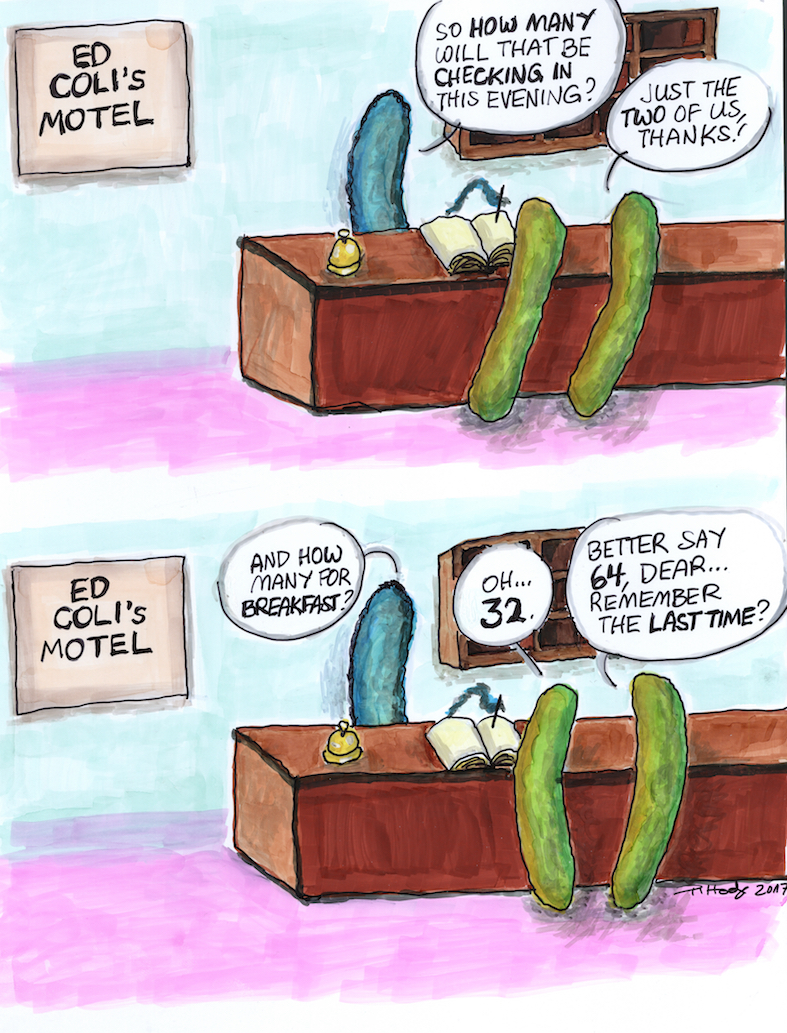
2. 
3.
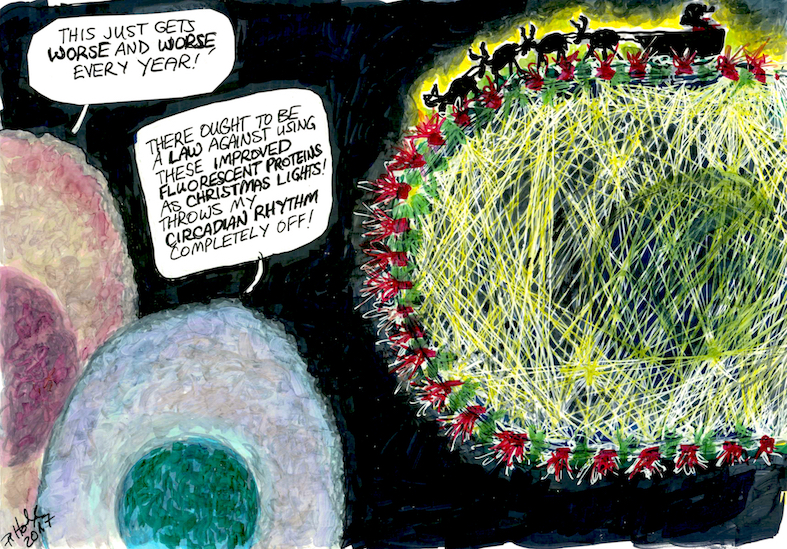
New cartoons from the world of molecular biology. Today’s entries: Late-night TV ads for CRISPR/Cas gene editing technology, and how molecules get access to DNA!
Feel free to repost and use, same procedure as always.
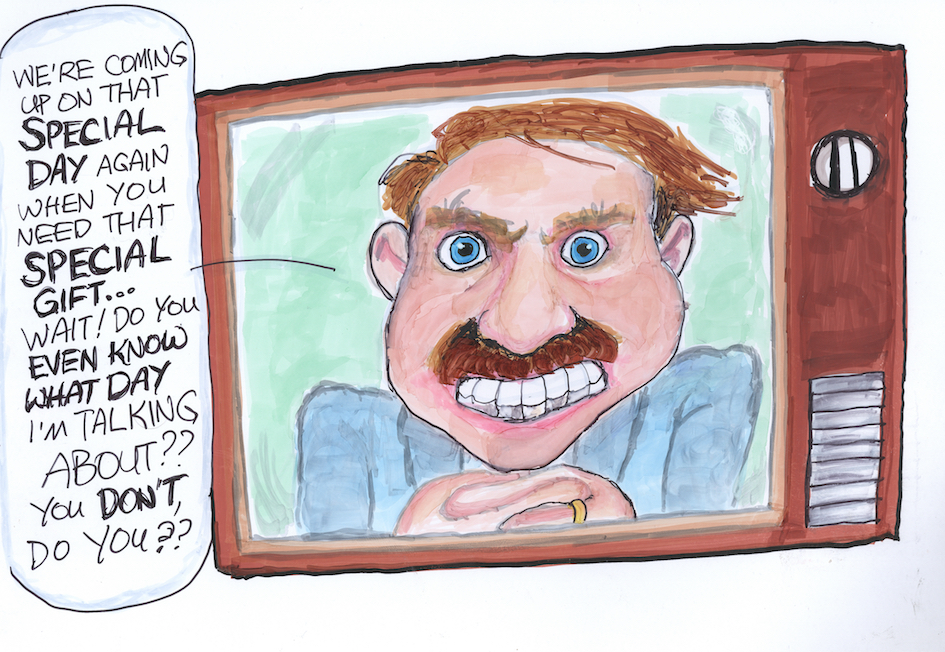
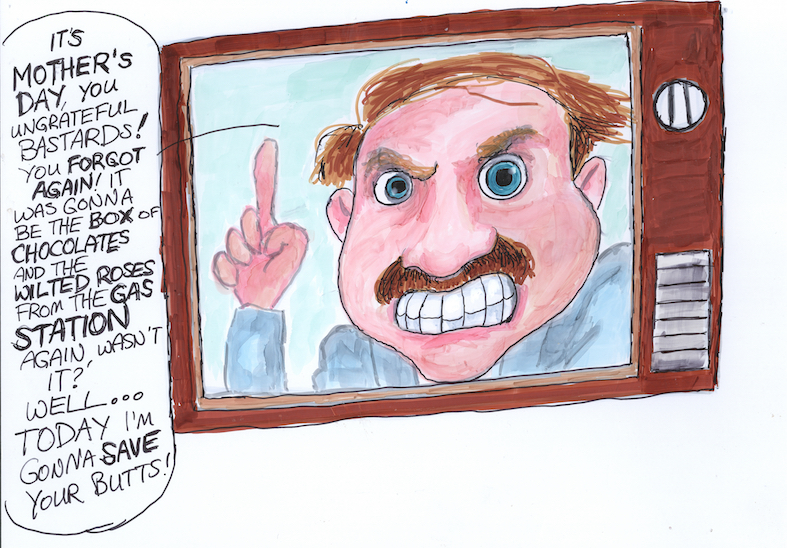


2.
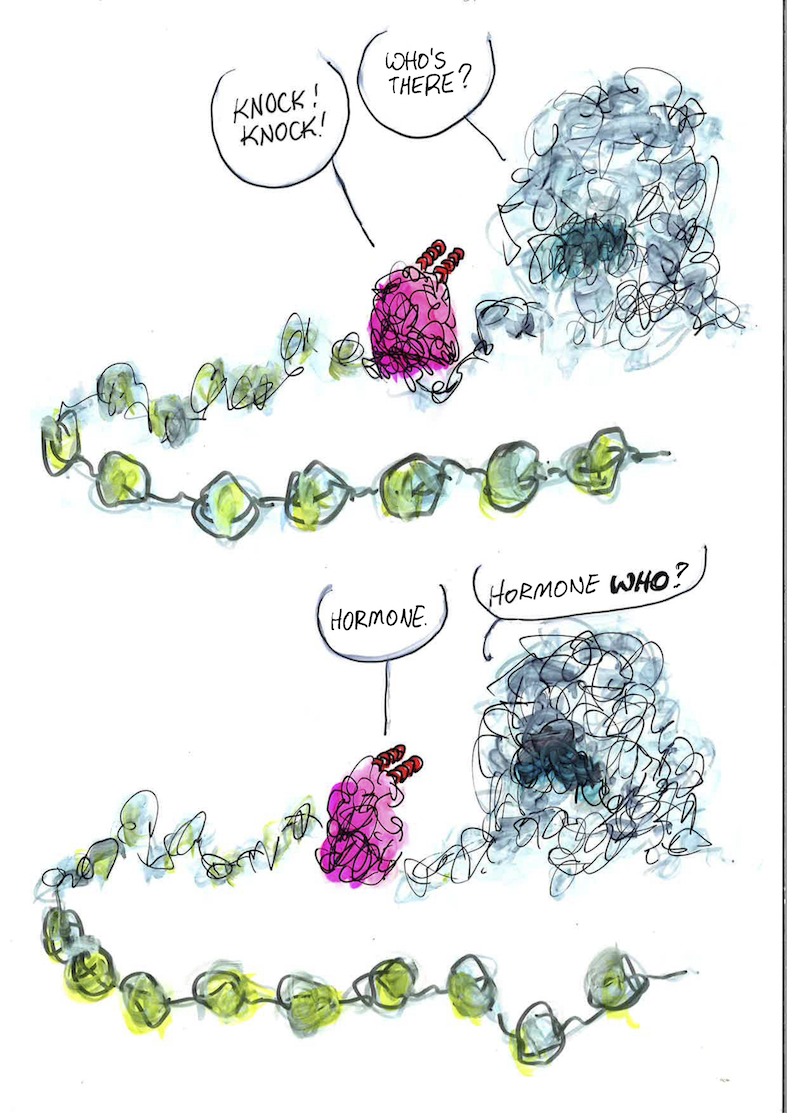
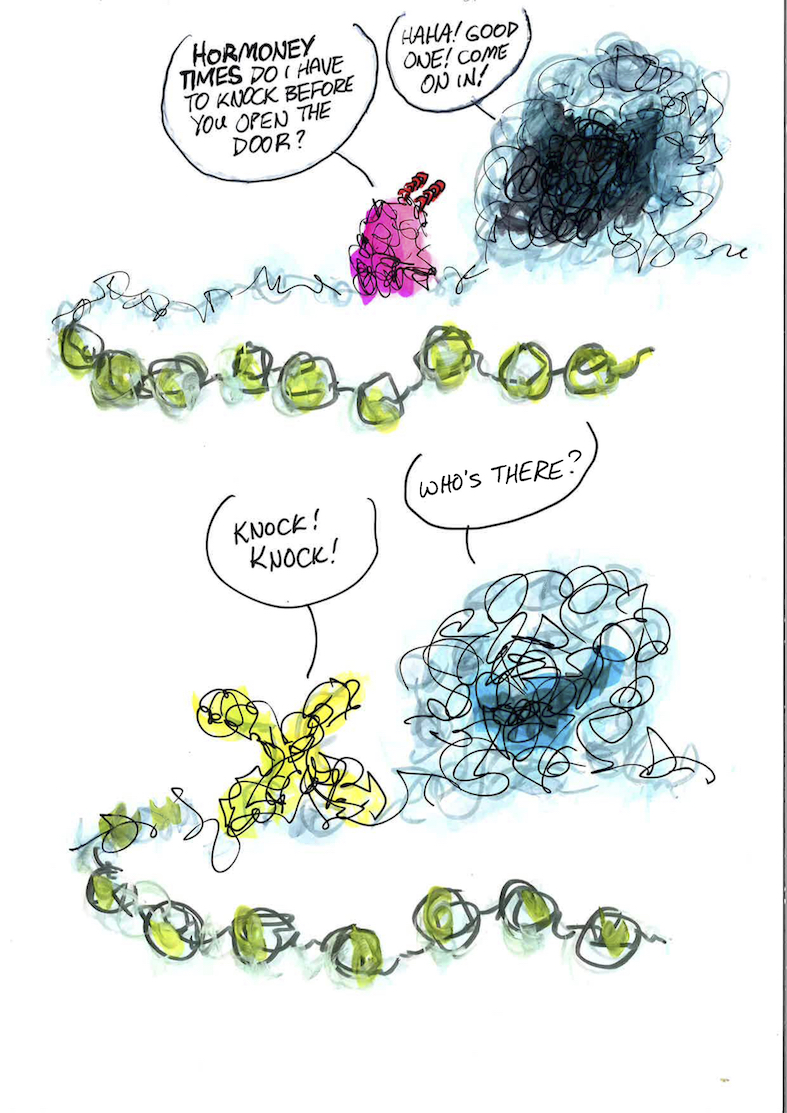


The next installment in my “Trump science” series. Feel free to repost, citing “copyright 2017 by Russ Hodge” and http://www.goodsciencewriting.wordpress.com.
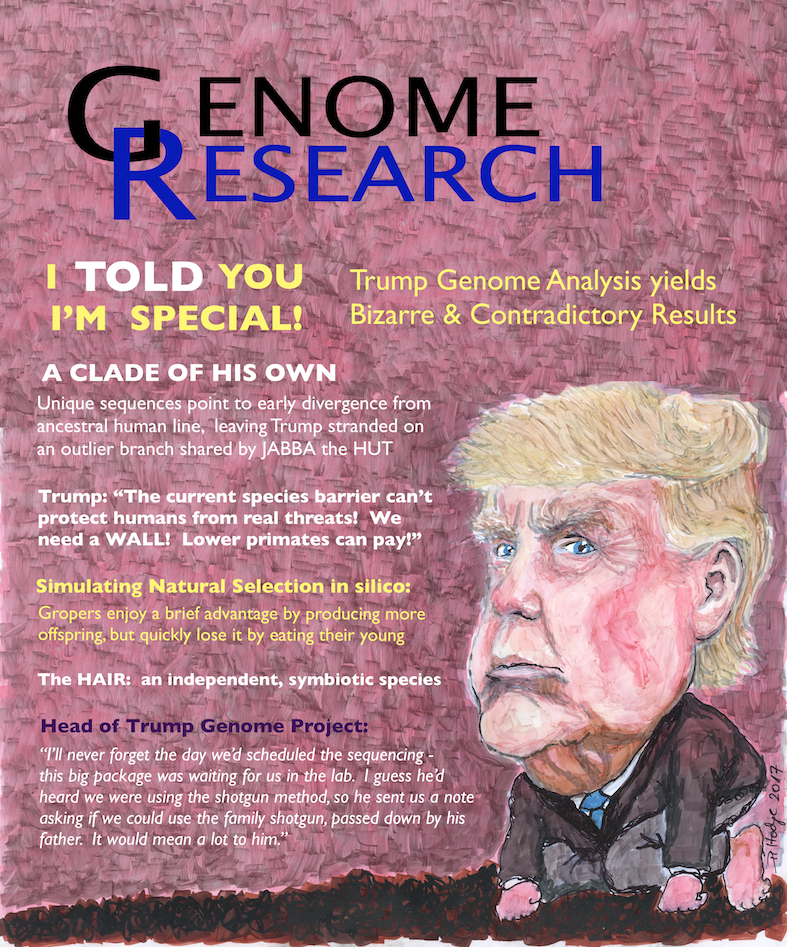
Sorry, I just could not resist.
Please repost – maybe, just maybe, we can head him off at the pass!

in situ an experiment that can be done sitting down, preferably in the comfort of your own home, without having to get up, allowing you to do science while remaining within reach of the TV remote and alcoholic beverages, although it is permissible to have other people bring you things. An example of an in situ experiment is to extract organic material from your belly button for use in a metagenomics experiment. Another is to stare fixedly at a computer screen for as long as possible without blinking, repeating this several times, and then taking an on-line eyesight test to determine the degree to which your eyesight has worsened. At that point you can order new glasses via the Internet and have them delivered to your door.
fontanelle a gap in the skull of newborn humans that was originally used for whistling and snorkeling. It could also be used to add or remove parts of the brain as a means of enhancing the learning process. Nowadays the fontanelle has changed dimensions to the point that it is almost exactly the size of a USB port, in anticipation of the day in the near future when knowledge will be transferred via flash drives.
proboscis a tissue extending from the front of the face which probably evolved as a mechanism to probe the space ahead, a bit like a blind person’s cane, or the front bumper on your car. If you walked slowly enough and hit an obstacle, you would first detect the impact via the proboscis, which was soft enough to absorb an impact providing you weren’t traveling faster than about 10 cm per second, which would trigger a reflex that instinctively brakes the rest of the body before it suffered so much damage that insurance companies needed to get involved.
icthyology the study of the religions and belief systems of fish.
fluke a case in which the tail of a whale appears spontaneously, unexpectedly, and inexplicably in the middle of any laboratory experiment or procedure or some other place where you do not typically expect to find one, for example in a test tube full of ribosomes, or in a yeast culture, or on a highway in Kansas, or in your sock drawer.
flagellum a whip-like structure that arose in early prokaryotes as a mechanism by which they could express displeasure by beating on their neighbors. Because early microbes had not yet discovered the principles of Newtonian physics, they were perplexed when this activity caused an equal and opposite reaction: beating your neighbors also pushed you away from them, which was usually desirable, at least until they learned to behave, and had the added benefit of bringing you into contact with more types of organisms that you could beat. In the long term this caused the environment to adjust to your basic desires, rather than the other way around.
The advent of multicellular organisms had two major effects on the structure and functions of flagella: 1) it meant that neighboring cells began to exclusively beat each other, because they were stuck together, leading to a relationship resembling marriage, and 2) flagella initially caused problems of orientation, because in essence the organism had lots of rowers, each of whom rowed in whatever direction he or she pleased. The development of mechanisms that coordinated the beating behavior of flagella in multiple cells had a survival advantage: if rowing carried you away from a source of food, you could steer back toward it. This led to the evolution of social hierarchies, such as dictatorships, in populations of cells, giving one cell the decision-making power over other cells in determining the direction that they should row. From that point it was just a hop, skip, and a jump to the modern human brain.
funghi a foodstuff that originally evolved as an organelle of Pizza Rustica, but then underwent a sort of metastatic process through which fungi wandered off the plate, into the forest, and adapted in ways that permitted growth in moist soil. This had health benefits for pizza eaters, because to get the best tasting funghi they had to get off the sofa and go for walks outside.
parsimony a basic principle in science which involves trying to keep things simple. This can only be achieved in a scientist’s early years, before life gets cluttered by events such as matrimony. At that point parsimony becomes very difficult, and in the alimony phase it is completely impossible.
If you like the Devil’s Dictionary, you will probably enjoy these older posts:
Searching for Oslo: a non-hypothesis-driven approach
Ontogeny recapitulates sobriety: from the Archaeal origins of life to the pinnacle of evolution: a PhD
Plus the other pieces in the categories “satire”, “science cabaret,” and “hilarious moments in science communication.” And there are, of course, many serious pieces on the site.
Feel free to pass along the link to your fellow science nerds! And, of course, quote the Devil’s Dictionary – just remember the reference! All material here is copyrighted Russ Hodge.
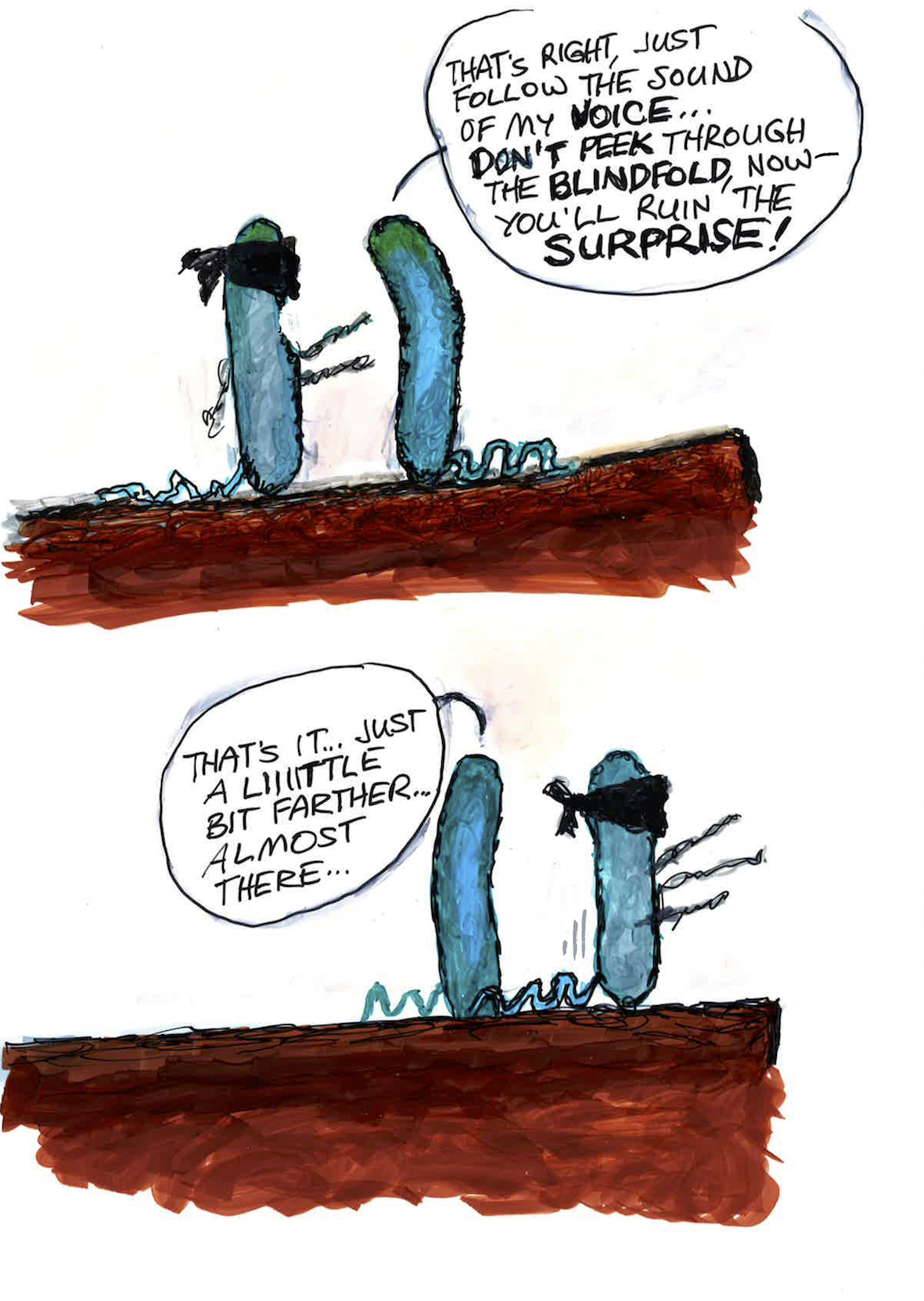
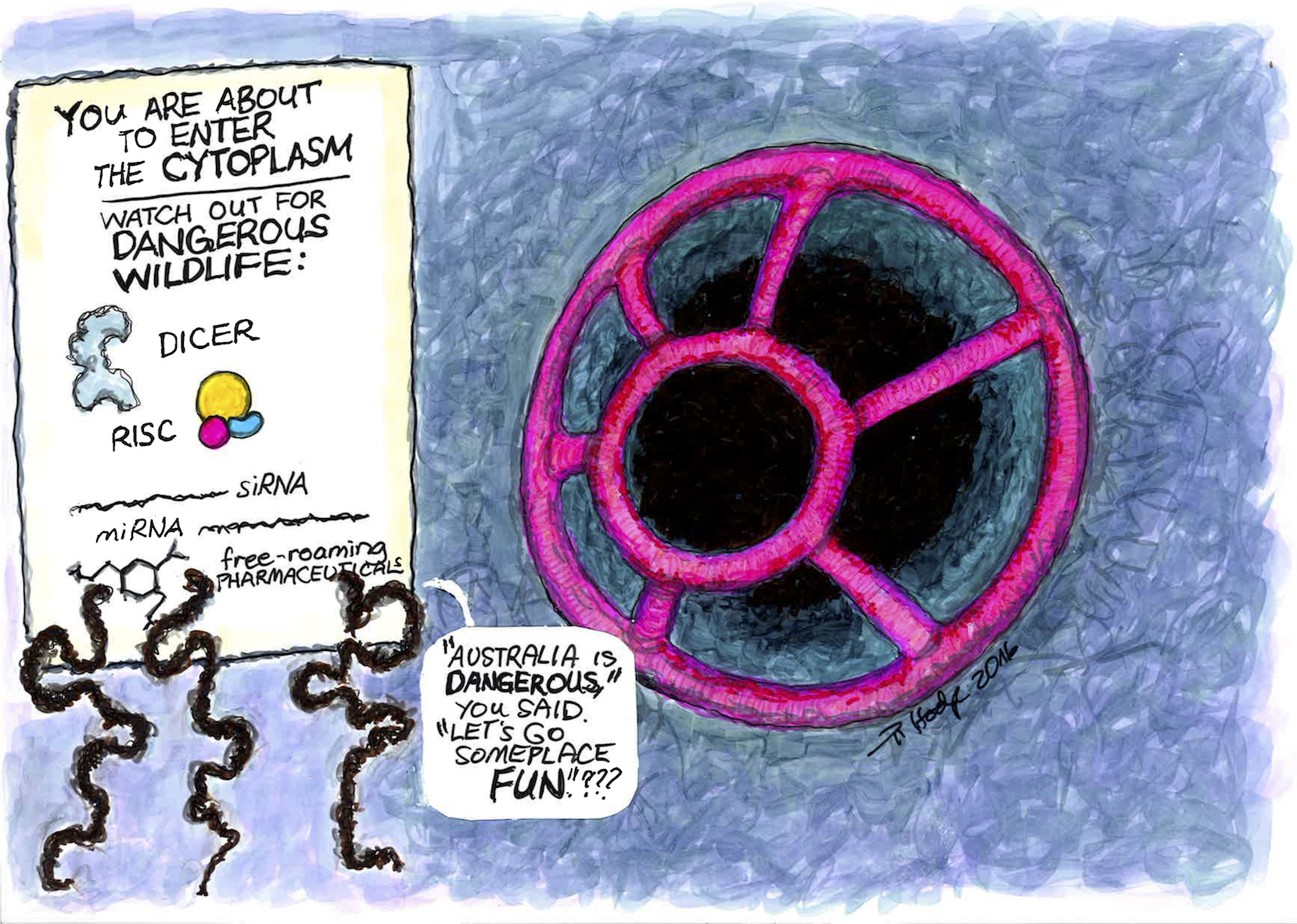
Finally the first of many cartoons for the New Year… As usual, feel free to use and repost, just cite copyright Russ Hodge and link to this website!
1.


2.

 Good Science Writing