Photos from the Science cabaret at the DAI in Heidelberg, Jan. 23, 2015

Photos taken by Mehrnoosh Rayner

DSCN3761
Getting warmed up. That thing on my face isn’t food – just a microphone. Felt like a little UFO hovering around my mouth the whole evening.

DSCN3763
Half-way in and nobody dead yet. So far so good.

DSCN3786
With Jochen Wittbrodt, developmental biologist extraordinaire, and Ken Holmes, founding father of synchrotron radiation in structural biology extraordinaire.

Best of PubMed – another Christmas Special!

Just in time for Christmas – finally another edition of the Best of PubMed! For those of you unfamiliar with these articles, these are references to publications (mostly from the Biomedical literature) listed at www.pubmed.org. If you want to follow up on an article, cut and paste the “PubMed ID” number into the search field at the PubMed website. Happy reading and happy holidays!

Check out past “Best of PubMed” entries on a range of themes – from Halloween to the World Series to the dangers of shooting out your eye with a BB gun – here on the blog. More to come soon!

Do reindeer and children know something that we don’t? Pediatric inpatients’ belief in Santa Claus.
Cyr C.
CMAJ. 2002 Dec 10;167(12):1325-7. No abstract available.
PMID: 12473618

The tooth fairy, Santa Claus, and the hard core drinking driver.
Chamberlain E, Solomon R.
Inj Prev. 2001 Dec;7(4):272-5. No abstract available.
PMID: 11770650 Free PMC Article

[Why is Santa Claus bowed?].
Leirisalo-Repo M.
Duodecim. 1998;114(23):2481-6. Finnish. No abstract available.
PMID: 11757148

Christmas, santa claus, sugarplums and the grinch.
Lau DC.
Can J Diabetes. 2011 Dec;35(5):484-5. doi: 10.1016/S1499-2671(11)80001-8. No abstract available.
PMID: 24854970

All I want for coagulation.
Nunn KP, Bridgett MR, Walters MR, Walker I.
Scott Med J. 2011 Nov;56(4):183-7. doi: 10.1258/smj.2011.011154. Review.
PMID: 22089036

“Here comes Santa Claus”: what is the evidence?
Highfield ME.
Adv Emerg Nurs J. 2011 Oct-Dec;33(4):354-8. doi: 10.1097/TME.0b013e318234ead3.
PMID: 22075686

“Yes, Virginia, there is a Santa Claus”.
Angelica JC.
J Pastoral Care Counsel. 2011 Spring-Summer;65(1-2):10.1-2. No abstract available.
PMID: 21928502

Safer toys coming, but not with Santa Claus.
Thibedeau H.
CMAJ. 2009 Sep 15;181(6-7):E111-2. doi: 10.1503/cmaj.109-3003. No abstract available.
PMID: 19752130 Free PMC Article

Visiting Santa: a supplemental view.
Trinkaus J.
Psychol Rep. 2008 Dec;103(3):691-4.
PMID: 19320200

Hemoglobin’s moving around (to the tune of “Santa Claus is Coming to Town”).
Ahern K.
Biochem Mol Biol Educ. 2007 Nov;35(6):478. doi: 10.1002/bmb.118. No abstract available.
PMID: 21591150

Song: Glucagon is coming around (to the tune of “santa claus is coming to town”)*.
Ahern K.
Biochem Mol Biol Educ. 2006 Jan;34(1):36. doi: 10.1002/bmb.2006.49403401036. No abstract available.
PMID: 21638631

Germs and angels: the role of testimony in young children’s ontology.
Harris PL, Pasquini ES, Duke S, Asscher JJ, Pons F.
Dev Sci. 2006 Jan;9(1):76-96.

Santa Claus and staff retention.
Olivi PM.
Radiol Manage. 2005 Sep-Oct;27(5):10-1. No abstract available.
PMID: 16294580

Oliver Twist and Santa Claus.
Gannon F.
EMBO Rep. 2004 May;5(5):431. No abstract available.
PMID: 15184969

[Is Santa Claus still needed?].
Tamminen T.
Duodecim. 2003;119(23):2317-22. Finnish. No abstract available.
PMID: 14768260

Images in cardiovascular medicine. Santa Claus in the echo lab.
Kobza R, Duru F, Jenni R.
Circulation. 2003 Dec 23;108(25):3164. No abstract available.
PMID: 14691023

Neurogenetics: three wishes to Santa Claus.
Coutinho P.
Arch Neurol. 2000 Jan;57(1):59. No abstract available.
PMID: 10634444

[Santa Claus as a consultant. “Then we together will rejoice, children’s eyes will shine with joy”].
Puumalainen AM, Vapalahti M.
Duodecim. 1997;113(23):2467-70. Finnish. No abstract available.
PMID: 10892154

[Santa Claus is perceived as reliable and friendly: results of the Danish Christmas 2013 survey.]
Amin FM, West AS, Jørgensen CS, Simonsen SA, Lindberg U, Tranum-Jensen J, Hougaard A.
Ugeskr Laeger. 2013 Dec 2;175(49):3021-3023. Danish.
PMID: 24629466

Syntrophin proteins as Santa Claus: role(s) in cell signal transduction.
Bhat HF, Adams ME, Khanday FA.
Cell Mol Life Sci. 2013 Jul;70(14):2533-54. doi: 10.1007/s00018-012-1233-9. Epub 2012 Dec 21. Review.
PMID: 23263165

What does God know? Supernatural agents’ access to socially strategic and non-strategic information.
Purzycki BG, Finkel DN, Shaver J, Wales N, Cohen AB, Sosis R.
Cogn Sci. 2012 Jul;36(5):846-69. doi: 10.1111/j.1551-6709.2012.01242.x. Epub 2012 Mar 29.
PMID: 22462490

Santa Claus: good or bad for children?
Nelms BC.
J Pediatr Health Care. 1996 Nov-Dec;10(6):243-4. No abstract available.
PMID: 9052114

Perhaps there is a Santa Claus.
Van Eldik DT.
J Fla Med Assoc. 1994 Dec;81(12):795-6. No abstract available.
PMID: 7861106

Encounter with reality: children’s reactions on discovering the Santa Claus myth.
Anderson CJ, Prentice NM.
Child Psychiatry Hum Dev. 1994 Winter;25(2):67-84.
PMID: 7842832

Do you believe in Santa Claus?
Atkinson J.
Nurs Stand. 1988 Dec 31;3(13-14):20-1. No abstract available.
PMID: 3068551

Epidemiology of reindeer parasites.
Halvorsen O.
Parasitol Today. 1986 Dec;2(12):334-9.
PMID: 15462756

A letter to Santa Claus.
Shusterman C.
Am Laund Dig. 1985 Dec 15;50(12):14-6. No abstract available.
PMID: 10275266

In the absence of Santa Claus.
Tebben MP.
Public Health Rep. 1985 Jul;100(4):355. No abstract available.
PMID: 19313171

Picture Reports: Influenza virus, Santa Claus, or a mouse playing tennis?
Getty B.
Br Med J (Clin Res Ed). 1984 Dec 22;289(6460):1744. No abstract available.
PMID: 20742372 Free PMC Article

Children’s belief in santa claus: a developmental study of fantasy and causality.
Prentice NM, Schmechel LK, Manosevitz M.
J Am Acad Child Psychiatry. 1979 Autumn;18(4):658-67.

Imaginary figures of early childhood: santa claus, easter bunny, and the tooth fairy.
Prentice NM, Manosevitz M, Hubbs L.
Am J Orthopsychiatry. 1978 Oct;48(4):618-28.

Santa Claus will probably be coming.
Ammer DS.
Hosp Purch Manage. 1977 Dec;2(12):2-3. No abstract available.
PMID: 10305079

A note on the absence of a Santa Claus in any known ecosystem: a rejoinder to Willems.
Baer DM.
J Appl Behav Anal. 1974 Spring;7(1):167-9. No abstract available.
PMID: 16795462 Free PMC Article

The d.a. Who was Santa Claus?
Peyraud AP.
CAL. 1972 Dec;36(6):26-30. No abstract available.
PMID: 4510978

Another note to Santa Claus.
Cummins S, Garms N, Zusne L.
Percept Mot Skills. 1971 Apr;32(2):510. No abstract available.
PMID: 4932683

Meet Dr. Cloonan Santa Claus 365 days a year.
Penny PL.
CAL. 1970 Dec;33(6):15-9. No abstract available.
PMID: 5277587

Santa Claus drawings by Negro and white children.
Coyle FA Jr, Eisenman R.
J Soc Psychol. 1970 Apr;80(2):201-5. No abstract available.
PMID: 4924834

Barefoot in the hospital park or yes Virginia, there is a Mrs. Santa Claus known as the administrator’s wife.
Spencer V.
Hosp Manage. 1967 Dec;104(6):33-7. No abstract available.
PMID: 6063631

Charlie’s Santa Claus.
Stollard ML.
Nurs Times. 1965 Dec 24;61(52):1762. No abstract available.
PMID: 5849676

[The sweet Christmas rash.]
Gyldenløve M, Nepper-Christensen S, Thyssen JP, Faurschou A.
Ugeskr Laeger. 2013 Dec 2;175(49):3025-3026. Danish.
PMID: 24629468

The Christmas tree foreheadplasty: a novel technique used in combination with a bandeau for fronto-orbital remodelling in craniosynostosis.
Britto JA, Gwanmesia I, Leshem D.
Childs Nerv Syst. 2012 Sep;28(9):1375-80. doi: 10.1007/s00381-012-1806-9.
PMID: 22872251

The need for gas-specific “Christmas tree” connections.
Atlas G, Lee M.
J Patient Saf. 2012 Jun;8(2):88. doi: 10.1097/PTS.0b013e31824a4af4. No abstract available.
PMID: 22610127

[A woman with Christmas in sight].
Fickweiler W, de Vries MM, Postma G.
Ned Tijdschr Geneeskd. 2011;155(51):A4242. Dutch.
PMID: 22200154

SIRT1 regulates the ribosomal DNA locus: epigenetic candles twinkle longevity in the Christmas tree.
Salminen A, Kaarniranta K.
Biochem Biophys Res Commun. 2009 Jan 2;378(1):6-9. doi: 10.1016/j.bbrc.2008.11.023. Epub 2008 Nov 21. Review.
PMID: 19010308

The importance of elves.
Nurs Spectr (Wash D C). 1996 Dec 16;6(26):3.
Hess RG Jr.
PMID: 9433318

The gnome of Dulwich.
Goodwin P.
Nurs Times. 1971 Sep 2;67(35):1096.
PMID: 5565702

[Santa Claus is perceived as reliable and friendly: results of the Danish Christmas 2013 survey.]
[Article in Danish]
Amin FM1, West AS, Jørgensen CS, Simonsen SA, Lindberg U, Tranum-Jensen J, Hougaard A.
Ugeskr Laeger. 2013 Dec 2;175(49):3021-3023.

Abstract
INTRODUCTION:
Several studies have indicated that the population in general perceives doctors as reliable. In the present study perceptions of reliability and kindness attributed to another socially significant archetype, Santa Claus, have been comparatively examined in relation to the doctor.
MATERIALS AND METHODS:
In all, 52 randomly chosen participants were shown a film, where a narrator dressed either as Santa Claus or as a doctor tells an identical story. Structured interviews were then used to assess the subjects’ perceptions of reliability and kindness in relation to the narrator’s appearance.
RESULTS:
We found a strong inclination for Santa Claus being perceived as friendlier than the doctor (p = 0.053). However, there was no significant difference in the perception of reliability between Santa Claus and the doctor (p = 0.524).
CONCLUSION:
The positive associations attributed to Santa Claus probably cause that he is perceived friendlier than the doctor who may be associated with more serious and unpleasant memories of illness and suffering. Surprisingly, and despite him being an imaginary person, Santa Claus was assessed as being as reliable as the doctor.

What does God know? Supernatural agents’ access to socially strategic and non-strategic information.
Purzycki BG1, Finkel DN, Shaver J, Wales N, Cohen AB, Sosis R.
Cogn Sci. 2012 Jul;36(5):846-69. doi: 10.1111/j.1551-6709.2012.01242.x. Epub 2012 Mar 29.

Abstract
Current evolutionary and cognitive theories of religion posit that supernatural agent concepts emerge from cognitive systems such as theory of mind and social cognition. Some argue that these concepts evolved to maintain social order by minimizing antisocial behavior. If these theories are correct, then people should process information about supernatural agents’ socially strategic knowledge more quickly than non-strategic knowledge. Furthermore, agents’ knowledge of immoral and uncooperative social behaviors should be especially accessible to people. To examine these hypotheses, we measured response-times to questions about the knowledge attributed to four different agents–God, Santa Claus, a fictional surveillance government, and omniscient but non-interfering aliens–that vary in their omniscience, moral concern, ability to punish, and how supernatural they are. As anticipated, participants respond more quickly to questions about agents’ socially strategic knowledge than non-strategic knowledge, but only when agents are able to punish.

Christmas, santa claus, sugarplums and the grinch.
Lau DC.
Can J Diabetes. 2011 Dec;35(5):484-5. doi: 10.1016/S1499-2671(11)80001-8.
PMID: 24854970

All I want for coagulation.
Nunn KP1, Bridgett MR, Walters MR, Walker I.
Scott Med J. 2011 Nov;56(4):183-7. doi: 10.1258/smj.2011.011154.

Abstract
Evidence-based medicine underpins modern practice of medicine. This paper describes a fictional consultation between Santa Claus and a doctor regarding deep vein thrombosis (DVT) prophylaxis, giving a review of the evidence for DVT prophylaxis in travellers while exposing the difficulty in applying evidence to atypical clinical encounters. Medline and the Cochrane Library were searched, and guidelines reviewed. Keywords used were DVT, thromboembolism, deep vein thrombosis and air travel-related venous thromboembolism. All relevant studies found, have been included in this review, with additional studies identified from the references in these articles. In conclusion, compression stockings, with or without a one-off dose of either aspirin or heparin, are the most evidence-based approaches for prophylaxis in someone with established risk factors for DVT prior to a long-haul flight. Simple exercises should also be encouraged.

“Here comes Santa Claus”: what is the evidence?
Highfield ME1.
Adv Emerg Nurs J. 2011 Oct-Dec;33(4):354-8. doi: 10.1097/TME.0b013e318234ead3.

Abstract
The purpose of this article is to examine the strength of evidence regarding our holiday Santa Claus (SC) practices and the opportunities for new descriptive, correlation, or experimental research on SC. Although existing evidence generally supports SC, in the end we may conclude, “the most real things in the world are those that neither children nor men can see” (Church, as cited in Newseum, n.d.).

Save the date! Science cabaret on Jan. 23, 2015, DAI Heidelberg

If you’ll be in or near Heidelberg (for example, somewhere in the Milky Way galaxy) at 8pm on Jan. 23, don’t miss my first Heidelberg performance of the Science cabaret – “The revenge of the mammoths.” An hour of stand-up comedy on the topic of the collision between science and society.

Details in German here.

Here’s the announcement in English:

Science is zooming by in the fast lane at 250 km/h, leaving most of us stuck behind a truck. Are we headed for a massive traffic jam? Or will the “zipper system” finally work? Russ Hodge, native Kansan (his parents’ fault), long-time resident of Germany (his wife’s fault), and science writer (his own fault) takes us to the edge of today’s research (and occasionally way over the edge) in a talk loaded with fascinating information. For example, the human genome is 4% Neanderthal, 14% Genghis Khan, and 48% Jim, a sheep farmer from Ohio. Random and useless facts are woven together with practical information about the Republican plan for surviving the Zombie Apocalypse, building your own anti-tornado device, and how to launch a successful Biotech start-up using only the contents of your belly-button. We’ll explore the evolution of horror films, how to distinguish true Conspiracy Theories from crazy stuff on blogs, and the search for Amelia Earhart’s DNA in the species that most likely ate her.

The talk will be held in Kansas English, refined and distilled for European consumption.

The dinner party: Learning to explain your research to a general audience can make you a better scientist

Nobel Prize winners customarily deliver two talks about their work during the official award ceremonies in Stockholm. One is a scientific statement about the research for which they have won the award and their perspective on its importance to their field. The second is the “banquet speech,” aimed at a more general audience. These banquet speeches are often remarkable examples of scientific communication and are the best refutation of the idea that it takes convoluted language to express complex ideas. Clarity is, in fact, a much harder art to master.

After interviewing a number of these exceptional people, I have become convinced that the connection between excellent science and clear communication is no accident. What links them is a style of thought that always manages to “see the forest for the trees:” the choice of just the right experiment, at just the right time, which suggests an important new model or clarifies an existing one, resolves some important debate within a field or establishes an entirely new direction for research.

Contrast this with another type of “banquet speech,” a dinner party at which someone asks you about your work. Well, what you did today was try for about the 50th time to get an experiment to work. As you fumble for an explanation, you realize that the person you’re talking to has never heard of the things you’re working on and lacks a real understanding of basic concepts like genes, signaling pathways, and transcription factors. You’re lucky if they’ve heard of the type of cell you’re working on, and why on Earth would somebody care about the biology of a worm?

You’ve been at your project so long that it’s often hard even to see the tree, let alone the forest, for all the leaves. At some point you notice that the person who asked the question has a glazed look on his face and is drinking a lot of wine.

Is there an easy solution? And if it’s true that excellent science and good communication go hand in hand, can you become a better scientist by improving your communication skills? After many years of helping researchers develop their writing and presentations, I think the answer is a resounding “yes”. While communications courses are often lumped into a broader category of “soft skills,” they ought to be regarded as central components of a scientific education. In some countries that is the case, but other educational systems – particularly in mainland Europe – scientists receive little or no help in learning “a skill that is inherent to every field,” to cite writer and educator William Zinsser.

Very few of us have the kind of mind that quickly and naturally sorts information into a clear structure and – on the first try – translates our thoughts into the linear form of language, in a way that allows a reader or listener to reconstruct complex ideas. (An amazing exception is Barack Obama; look at the word-for-word transcripts of his Presidential debates and compare both the conceptual structure and syntax of his answers with those of other candidates.) But even professional writers don’t normally have to get everything fine the first time. It’s usually fine to start with a rather scrambled draft and recover or introduce structure in revisions.

Even when you’re finished, however, there is no guarantee that your text will be suitable as a “dinner speech;” this requires something more. Explaining your science at a dinner party requires a certain style of thinking that is a sort of worst-case scenario for other communicative situations. It can be made easier by preparing properly for the task – a process that is equally important and useful when communicating with experts. That process is crucial both to successful communication and successful science.

* * * * *

Most biomedical research is devoted to working out the exacting details of some biological process. Experiments generally aim to answer a very specific question, but both the question and any answer you might receive only make sense in the context of an intricate set of assumptions and models. Most projects aim to validate a particular hypothesis, or extend an existing model to a new situation, or refute it. You may be applying a new technology to quantify something that couldn’t be measured before, or using a new tool to explore a set of data. Whatever your project, it acquires its meaning through a particular type of dialogue with what scientists already know as they try to expand current knowledge to fit a new situation, or venture into unexplored territory.

Students absorb a number of models during the course of their studies, usually becoming so familiar with a framework of ideas that certain patterns become habitual, stylized, practically subconscious, and thus “invisible”. For example, the connection between DNA, RNA and proteins is so common that scientists use the same name to identify three different types of molecules, in different species, and switch comfortably back and forth between them as they discuss their functions in model organisms and humans. Along the way they often completely lose a listener who does not have the relationships of these molecules firmly in mind.

Subconscious models and structures may create obstacles as you do science because a scientist might not fully comprehend the architecture of assumptions on which an experiment is based in the first place. This might make it difficult to understand results that run counter to expectations. Does the problem lie with an experimental setup, or the way a model has shaped a hypothesis, the model itself, or some far more general assumption? It may be impossible to decide without a very clear understanding of the relationship between a question and much more general structures of thought.

Even the most fundamental links between ideas in a field may be unclear to non-scientists and hinder communication at a very basic level. When this is likely to happen, the underlying frameworks need to be exposed and articulated. This suggests a strategy for communication that can work with a range of target audiences. Below I will describe one means by which we achieve this in science writing and presentation courses.

The first step is to force students to articulate a precise scientific question as clearly as possible. Take, for example, the following: “What small molecules could disrupt the binding of a protein to a transcription factor, and what chemical/structural features permit them to do so?”

As a grammatical sentence, this can be decoded, to a certain degree, by any native speaker – but its meaning to a scientist depends on both knowing particular facts and relating them to a much broader base of knowledge. The two go hand in hand. Defining a “transcription factor” requires placing a type of protein into the context of a larger story about cell structure and behavior. “Binding” and “structural features” have to do with the chemical subunits of molecules, the three-dimensional arrangement of atoms in these subunits, and how this architecture influences a protein’s activity.

To give a sense of the meaning of this question to a non-specialist, a researcher needs to relate it to a hierarchy of more general questions, models, and “stories” that scientists agree on. There will be several possible approaches, because any given question is usually embedded in different types of schemes. For example, the interaction between two molecules is part of a “chemical” story about the features that allow them to bind. Another type of story has to do with biological functions. Transcription factors usually are usually the penultimate steps along “biochemical signaling pathways.” These information routes through the cell usually start with a stimulus at the cell surface, trigger a signal that is passed from one molecule to the next, and then alter the transcription factor so that it moves to the cell nucleus. There it docks onto DNA and changes the pattern of active and silent genes. All of these pieces of information need elaboration – the scientist’s job in a communication exercise! – and below is an example of how it can be done.

Either type of story can be converted into a hierarchical “tree” that starts with the specific form of the question and links it to higher-level themes. Each step in the list below represents a way of connecting the specific question to a more general question or a larger story:

• What chemical/structural features determine whether a specific protein can bind to a specific transcription factor?

• What proteins can bind to this transcription factor, how do they change its behavior, and what genes does it go on to activate?

• How do molecular signals or environmental factors change gene expression patterns?

• How do cells respond to changes in their surroundings during development, the onset of a disease, stress, or some other situation?

• What are the basic components of our bodies and how do they influence our lives and our health?

This process of moving from the specific to the very general provides a structure for extending the meaning of findings both “horizontally” (to other molecules and processes with similar structures and functions), and “vertically” (to more basic principles of living systems). It also provides a system that can be used when dealing with a particular target audience. Everyone is probably interested in the last question, which involves very basic aspects of life and our bodies. This provides a level at which you can “meet” the listener and guide him or her into the story in a structured way, as a sort of dialogue headed for more specific questions and answers.

After stating that you’re trying to study life by understanding its basic components – molecules – you can point out that our bodies begin as single cells that differentiate. This usually happens through a process by which cells receive molecular signals from their surroundings. Those signals begin at the cell surface and are passed along from molecule to molecule inside the cell, until they reach a transcription factor. The role of this protein is to activate new sets of genes, changing the components of cells, and thus giving different types of cells new structures and functions. The aim of your work is to understand what characteristics allow a molecule to activate the transcription factor. Why is this interesting? Well, one reason is just to learn basic things about cell functions and fates. And of course diseases often disrupt signaling pathways, and your work may help explain why this happens – as well as suggest points at which therapies can intervene.

This description simply moves upward through the tree, from the general to the specific, and it provides a structure for the story. The information will need to be enhanced, broken down into “digestible” bits, and compared to things that the audience is familiar with, using metaphors and other tools. But at least you have told a story that is logical and gets to the point – what you have actually done, and its relevance.

Where you start in the hierarchy depends on your best guess about the level of prior knowledge of your audience. If you have overestimated what they know, and start with a point that is too specific, you will lose listeners right away. When talking to biologists, on the other hand, you can assume that they already understand basic concepts like signaling pathways and their effects. They may not, however, be familiar with the specific pathway you are interested in, the molecules that are involved, or its particular biological functions. At this point you can start close to the end, with the second question in the list above.

I’ve often heard students “throw in the towel” when they try to explain their work to non-specialists: “To understand what I’m doing, you’d have to have a complete course in molecular biology.” Again, using the example of a transcription factor, it’s probably enough to discuss how a molecule is related to the activation of different sets of genes, that this changes populations of molecules in a cell, and those in turn change a cell’s form and functions. You don’t really need to explore what happens next – alternative splicing, or the many other levels of post-transcriptional regulation – to get the point across.

If you’re talking to biologists, going too far in the other direction and explaining a point like, “Cells respond to environmental stimuli” would seem silly. Saying something far too general such as, “I’m trying to cure cancer,” when what you’re really doing is studying a particular transcription factor, would be equally ridiculous. Of course your work may have implications for a disease – note all of those sentences that typically come at the end of the discussion section of a paper: “So this study suggests new potential targets in the development of rational therapies in the treatment of cancer.” But it doesn’t explain the real scientific relevance of what you have done.

* * * * *

Communication is most effective when you regard it as a dialogue rather than a one-way transmission of information. The hierarchical tree suggests a dialogue structure in which you begin with a question that your target audience might really ask, or at least be interested in, and then guide them to the particular point you want to make. It also helps you make logical decisions about what information is necessary – and especially what isn’t! – in making a particular point.

There are many more elements in successful communication – including the use of powerful images and metaphors that capture the essence of a particular biological entity or process. Metaphors are crucial as scientists learn about their field and try to convey complex ideas to their colleagues. But the first step in convincing scientists to develop their communication skills depends on showing them that even the “dinner party talk” can improve their science.

The link lies in connecting the general to the specific, in relating a piece of work to a hierarchy of models and stories in which it is embedded, and here is the connection between doing better science and communicating it well. It is an essential strategy in the courses I am developing. It is always wise to clearly articulate the models and mental structures upon which a particular piece of work is based; these relationships tell you how far a particular result can be extended to other molecules, processes, or biological functions. They are equally useful in developing strategies to communicate science to just about anyone. Nobel laureates understand this very well, and we can all learn something from their example.

Aliens with three balls? Curious Conspicuous Clay Ovoids? Extraterrestrial golf? You decide…

Have you noticed how anything that happens on Mars, or in outer space, or even at a really high altitude, such as the top row of bookshelves in the library, is ecstatically portrayed by the media as evidence of extraterrestrial life? Don’t get me wrong, I’m all for extraterrestrial life. I’ve been actively looking for it since I was a child. The closest I’ve ever come is the discovery of an Unidentified Swimming Object (USO) in a bowl of soup purchased in the Gare du Nord in Paris, France, but further investigation suggested a terrestrial origin, that it had evolved from the green fungus on the horse steak (Plat du Jour), crawled over the rim of the bowl, and rapidly adapted to an aquatic environment. Take-home message: never order the 14,- Euro ménu in the Gare du Nord – unless you care to repeat this experiment.

Two weeks ago we saw the surfacing of a new trend whereby the media (and apparently a few scientists) interpret the discovery of anything spherical in space, or from space, as evidence of extraterrestrial life. This is not entirely unreasonable. After all, the Death Star was spherical, wasn’t it? I’m not completely clear about the species assignment of Darth Vader or Carrie Fischer – they certainly look human rather than alien (except for Carrie’s hair, or Darth Vader’s brain after being partially lobotomized by a light saber), but since they came from a Galaxy Far, Far Away they were certainly extraterrestrials, by definition…

Of course, there are a few spherical objects in space that aren’t necessarily evidence of E.T.s (the moon, stars, planets without atmospheres) – but whenever a new sphere pops up, you have to ask yourself the question. If it happens once, surely a certain degree of skepticism is called for. But twice in one week?? And then a third time??? Science requires an open mind… Let’s review the evidence.

Case number 1: Water on a really fast hat

This week astronomers discovered a spectral signature of water on HAT-P-11b, a “Neptune-sized planet” (in other words, a really, really large ball) orbiting a sun in the constellation Cygnus. In my opinion they could have found a simpler name for the planet, one that was more aesthetically pleasing, like “Giovanni”, or “Mergatroid”, but then, I’m not an astronomer. Not that biologists are any better; they probably would have called the planet Seven-up, Bruno or Oskar, or Big Momma Stem Cell, or something equally strange.

I particularly like the title of one of the media reports on this story: “Hot Wet Alien World discovered in constellation Cygnus.” Talk about blatant attempts to draw hits to your website… If a person types “hot wet alien” into the Google search box – which surely happens all the time – guess what pops up first?

Interestingly, none of the reports (including the abstract of the article in Nature) tell us precisely which star this planet is orbiting, perhaps to keep us from flying out there and taking a look ourselves. A word of caution if you’re contemplating a road trip. What looks like a nice, tidy constellation from here on Earth is actually spread out over some considerable distances. One of the stars in Cygnus is about 11.4 light years from us, and another is 3200 light years away. So don’t leave home without a full tank of gas, or plasma or whatever, and a whole bunch of NASA freeze-dried ice cream.

The authors of the paper cagily tell us that the planet lies at a distance of about 120 light years from Earth, so if you’re willing to do a bit of research, you can probably figure out the identity of the culprit star. They also say that the planet orbits its sun about every five days. And that it’s atmosphere is “surprisingly clear.”

I don’t find this atmospheric clarity surprising at all on a planet four times the size of the Earth, whizzing around its sun in a year that lasts only five days. At that speed you’d need to hang onto your HAT-P-11b. This planet is really moving. If you’ve ever ridden down the German Autobahn at 250 kph in a convertible with the top down, you’ll know that any fog inside the car tends to dissipate rather quickly. It’s also rather hard to breathe. You do, on the other hand, accumulate a lot of smashed bugs, which suggests that any aliens on HAT-P-11b are probably hunkered down on land, holding on for dear life, and have evolved seatbelts, or at least the sort of glue by which Earthly barnacles attach themselves to ships.

The E.T. aspect of this story wasn’t played up as much as in the past, when the merest whiff of water outside our solar system has consistently caused a sort of media feeding frenzy, or at least a bar crawl. You may recall the story I reported on here, in which a certain Prof. Vogt claimed that life was “certain to exist” on a planet called Gliese 581g. His reasoning went something like this: the planet lay in the so-called “habitable sphere” (yes, another ball) around its star, which made it likely to have water, which led to Vogt’s extraordinary and somewhat inscrutable statement during a press briefing:

“Personally, given the ubiquity and propensity of life to flourish wherever it can, I would say, my own personal feeling is that the chances of life on this planet are 100 percent. I have almost no doubt about it.”

We’ll just pause here for a moment so that you can puzzle over the intricacies of that statement. As you do, keep in mind the fact that two weeks later, Michael Mayor and his exoplanet-mythbusting team from Switzerland suggested that Gliese 581g might not exist at all – it could merely have been a glitch in “noisy” spectroscopic data, or someone who forgot to clean his eyeglasses. I couldn’t find a response from Prof. Vogt. In fact, I haven’t heard much mention of him at all recently.

Case number 2: A ball on Mars.

This one is really impressive; check out the image. That pesky rover Curiosity keeps taking pictures of odd things as it rolls across the surface of Mars. Remember the space rat it photographed in May, last year? NASA says it was just a rock – of course they’d say that, otherwise they’d have to tell us the truth about Area 51 and Steve Jobs and a lot of reverse-engineered alien technology, such as the iPhone 6. This week Curiosity photographed a perfect little sphere, just sitting out there on a rock, minding its own business. The official explanation proposes that it was carved out by water, but there are winds on Mars, and it surely would have rolled away by now.

I actually have a hypothesis about this: I think it’s a golf ball, most likely hit by one of two people: Alan Shepard or Tiger Woods. I have this on good authority from my father, Ed Hodge, who has turned the discovery of lost golf balls into an art, if not a science, and a lucrative source of retirement income.
If this artifact on Mars is Shepard’s golf ball, it was launched from the surface of the moon on Feb. 6, 1971. On that date astronaut Alan Shepard climbed out of the lunar capsule of Apollo 14 with a golf club and two golf balls. One news report says he had smuggled them aboard in his “space suit.” Where in a suit could you hide a long, pole-shaped object and two balls? Here we’ll take another brief pause so that you can consider that one…

Just remember that security measures were a bit more lax in 1971. Today you’d never get them past airport security, let alone onto a Saturn V rocket. People have been known to try to smuggle 62 poisonous snakes through security, but a golf club? And two balls?

Anyway, is it conceivable that one of Shepard’s two balls (yes, I am referring to the golf balls, for those of you with perverse imaginations) reached escape velocity and, through a combination of careful aim, dumb luck and Newtonian physics reached this precise spot on Mars, to land 43 years later right in the path of Curiosity? To answer this question we need to consider a couple of factors (actually a lot more, but let’s keep things simple).

First: escape velocity on the moon is 2.4 km per second. Could Alan Shepard have hit a golf ball that fast? On Earth, they say, most golfers achieve a swing that is 160 km per hour. That works out to about 0.044 km/sec. In his prime, Tiger Woods achieved a swing of about 0.056 km/sec, and he didn’t have to smuggle anything onto the course in his pants to do it (well, actually…). Anyway, most of Tiger Woods’ tournaments have taken place on Earth, at least those that we know about, whose escape velocity is 11.2 km/sec. Tiger Woods would have to hit the ball 200 times faster to send it out of Earth’s atmosphere toward Mars, and there are all kinds of other things to take into consideration, such as resistance posed by the atmosphere and its ability to evade all sorts of obstacles: birds, airplanes, innocent bystanders (remember President Gerald Ford?) and the 500,000 pieces of space junk floating in Earth orbit.

Alan Shepard, on the other hand, would only have had to hit the ball 60 times harder to send it on its way to Mars. Consider that his swing was unencumbered by any wind resistance on the lunar surface. It was, however, perhaps encumbered by his bulky space suit, which would probably be like playing golf in one of those Sumo wrestler costumes. The one time I put one of those on I was almost smothered by a Portuguese woman who was 5’2” tall and weighed 85 pounds, but then we had gravity to contend with. Taking all of these factors into consideration, I think the evidence tips things in favor of Shepard.

One should perhaps note here that the average speed of a bullet leaving a .44 Magnum, as can be observed in the classic movies of Clint Eastwood, is approximately .40 – .475 km per second, which means that Alan would only have had to hit the ball about six times the speed of Clint’s bullet in order to propel the thing out of lunar gravity and toward its current location. Is this more likely than an alien leaving little round spheres on Mars, perhaps in the form of rodent droppings? You decide.

Case number 3. Conspicuous clay ovoids.

I love space programs, despite the fact that they are funded at a level of about a million times that of cancer research, but it turns out you can find Martians without ever leaving Earth at all. The third story about aliens is another tale of cracking open a meteorite and finding – no, not the Higgs boson, although I don’t think this can be definitively ruled out – something that (sort of) (maybe) might (possibly) resemble a cell.

I am speaking, of course, of the “conspicuous clay ovoid” discovered this week in a meteorite named Nakhla (a much cooler name than HAT-P-11b). Nakhla was ejected from the surface of Mars (there is no evidence that a golf club was involved), flew off into space, and collided with Egypt. It also collided with a dog, which was vaporized instantly, leaving no traces, not even dog DNA. I especially like the logic by which this event is reported on the website of NASA’s Jet Propulsion Laboratory:

“This dog story did lead directly to the recovery of several fragments of the Nakhla meteorite. The meteorites are very real, so there’s no reason to doubt the dog story.”

Decades later, scientists in Greece and the UK began slicing Nakhla up into tiny slivers, oblivious to the fact that they might be cutting up tiny little Martians, and in the process they came upon a mysterious little sphere that they call a “conspicuous biomorphic ovoid structure.” Biomorphic means “resembling or suggesting the forms of living organisms,” and “ovoid” is defined as “shaped like an egg,” which gives anyone reading the article all sorts of reasons to think of aliens, and makes you wonder about the wisdom of slicing up meteorites. I mean, the thing might hatch.

The news widely reported this as evidence of a “cell structure,” “more evidence of the possibility of life on Mars,” or even that “Mars is still habitable.” All very promising, until you carefully read the paper, which provides a more sobering view.

The first citation from the paper starts out promising, but fades out toward the end: “One reason why we carried out this investigation into the origin of the ovoid structure in Nakhla is because the conspicuous rounded shape of the structure is somewhat reminiscent of a terrestrial cellular microorganism… Despite the conspicuous shape and structure, the ovoid is very large, and martian microorganisms are expected to be chemotrophic and therefore probably very small (<1 μm) in size.”

If you’re patient enough to read all the way to the end, or at least past the first 140 characters, a skill which seems to evade most journalists, the biological hypothesis receives a pretty good dousing: “The consideration of possible biotic scenarios for the origin of the ovoid structure in Nakhla currently lacks any sort of compelling evidence. Therefore, based on the available data that we have obtained on the nature of this conspicuous ovoid structure in Nakhla, we conclude that the most reasonable explanation for its origin is that it formed through abiotic processes.” Abiotic meaning that this is not the ball of an E.T.

Alas, alas, having balls is not sufficient evidence for all of this week’s wonderful speculation about E.T.s. But please keep looking, guys. There are a lot more spheres out there in space to investigate. Probably more rodents as well. Maybe even a Yeti. (After all, if you find a Yeti in Norway, as I have suggested in another piece, it must have come from somewhere.) Or at least a pyramid carved in the shape of a face. After all, Nakhla was aimed at Egypt, and aimed specifically at a dog. Sort of a Martian meteorite drone. We know that rodents on Earth don’t particularly like dogs; why should they be any different on Mars?

Naturally, these three reports could be simply a random set of bizarre coincidences whose occurrence within a single week defies logic and all kinds of probabilities which are difficult to estimate without knowing what dark matter is, or the current whereabouts of the elusive Higgs boson. But I take my responsibilities as a science writer seriously. Somebody has to connect the dots. Or in this case, the balls.

More early music

Here are more excerpts from concerts in June and July in which I performed with my early music ensemble, Syntagma. These recordings were made with the Anglistenchor in Heidelberg. More to come soon, including instrumental suites from the concerts.
Have mercy upon me, O God (William Byrd)
Actus Tragicus, Sonatina (J.S. Bach)
Actus Tragicus, Gottes Zeit
Actus Tragicus, Glorie
An interview about the two concerts

What WON’T humans look like in 100,000 years?

(Getting evolution wrong, once again)

Recently the Mother Nature Network (not to be interpreted as the Mother of the Nature scientific publications, as far as I can tell) posted an article by Michael Graham Richard entitled “What will humans look like in 100,000 years?” (You can find it here.) The result is another case of an interesting question that gets convoluted by some rather strange assumptions about how evolution works.

The image that is presented represents the work of “artist and researcher Nickolay Lamm … with help from Dr. Alan Kwan,” a PhD in computational genomics. Richard’s article doesn’t state whether the piece is based on an actual scientific publication or not. I couldn’t find either name on PubMed, which means that the paper on the topic hasn’t been published yet, or has been rejected many times, or is in some nebulous state in between. Maybe they’ll have a better chance of finding a journal in 100,000 years, when their hypothesis can finally be tested.

I was immediately alarmed by the fact that the man and woman in the picture are Caucasians. If current demographic trends continue, I doubt there will be many “Caucasians” left in 100,000 years, if there are any at all. Lamm gets around this with the statement, “we shouldn’t read too much into the fact that the man and woman are Caucasian because those were just the best models he could find.” All right, we’ll give him a pass on that one.

The head of the man of the future is a bit more triangular than that of most people nowadays. This is explained by the “Heads are a bit bigger to accommodate larger brains,” the article explains. Well, to me, the shape of the man’s head has changed, but the woman’s hasn’t really. Will only men have larger brains? Will they be born that way? Will women need larger hips to bear them?

It’s true that that the female model they used to begin with has an unusual face to begin with: her eyes are set higher than normal in the face, if you go by classical rules of drawing that tell you to place them equidistant from the top of the head and the bottom of the chin. So it may look like her forehead has stretched upwards – maybe, though, her eyes have just migrated down to a more normal position in the face.

And is it true that we will really need larger brains? Won’t I have an iPhone able to store petabytes of data, or some kind of chip located at the base of my brain that can immediately access Wikipedia and Facebook (everyone will be friends with everyone in 100,000 years, all 100 billion of us)? Not to mention direct, on-line streaming. These gadgets would allow us to “outsource” most of the information we currently have to store in our brains. So a good argument can be made that our brains might shrink – it’s already happening, to judge from a lot of daily experiences I have with other humans.

The biggest difference in Lamm’s humans of the distant future is the size of the eyes, which have grown to make people look like cartoon characters. “Manga-style eyes,” to quote the article. It states, “Lamm speculates that this would be a result of human colonization of the solar system, with people living father away from the sun where there is less light.” He goes on to say that these conditions might promote the development of a sideways blink (that would be cool) and thicker eyelids to offer protection from cosmic rays on the fringes of our solar system.

To insinuate these features into the population at large and influence its evolution, the original mutants would have to live on Neptune or Pluto or wherever for a loooong time, probably thousands of generations, and have oodles of very fertile kids who would then come back and mate (very successfully) with the founder population on Earth. Of course, other people might be living on Venus, or Mercury, where there’s a lot MORE light, so presumably they’d have smaller eyes. Or maybe their eyes will develop built-in sunglasses, where our lenses get darker when exposed to bright sources of light. Sort of like the eyeglasses we wore back in the 70’s, which were supposed to turn grey in the light. At some point they usually got stuck in “grey mode,” which meant that all of our family pictures look like Mafia reunions.

Lamm even adds yellow rings to the eyes, “special lenses that act kind of like Google Glass does today, but in a much more powerful way.” Constant access to the Internet (right there on your eyeballs) will reduce the amount of information we need to access in our brains; we won’t need to store anything that’s instantly available on-line. This is another argument for the smaller-brain trend.

Of course, evolutionary innovations in eyeballs will pose some social challenges: it will be hard, for example, to keep people from cheating during tests. And you’ll be able to watch movies on your contact lenses while doing other things, such as driving, unless society has solved the problem of automobiles. Maybe you’ll have to remove the lenses during these activities, or switch them off, but that will probably be illegal. The business lobby will be tracking the motion of your eyeballs and people will be recording what you’re seeing for marketing research, and they’ll have a huge lobby to pass profitable laws.

I was in Oslo recently, which experiences long periods of decreased daylight in the winter months. That’s the kind of place where you’d expect to see the birth of huge eyes, if they arise by chance and somehow lead their owners to have a lot more kids. I didn’t notice any of these cartoon people walking around. But maybe it was just too dark to really notice. Next time I’ll keep my eyes open.

Letting science communication (and a cat) out of the box

This is the introduction to a talk I gave in Oslo last Friday, Sept. 12, 2014, at a conference on science communications. A video of the complete talk, including the more serious part, can be seen at this link. It’s the last two film segments on the page.

Thank you Unni for that very kind introduction. It was all true, even the parts that sounded like some weird movie that you would probably never recommend to your friends. My name is Russ Hodge and it’s a great pleasure to speak at this wonderful event. I’ve been to Oslo many times and always enjoy the trip to your beautiful city. I come here every year the first week of December to teach a course on presentations skills to molecular biologists. I don’t know how successful it is, but nobody has ever died during it, or even been seriously injured, and they keep inviting me back, so you may draw your own conclusions.

I couldn’t remember exactly how many times I have been to Oslo, so last night I sat down and tried to figure it out. I came the first time in 2007, and have come one time every year since, so I could apply this formula:

2014 –  2007 = 7

I use the same formula when somebody asks me how old I am. Here, of course, the calculation doesn’t work out; you have to add another trip to include both 2007 and 2008. Subtraction can be sneaky that way.

Now this is a biological problem (the migratory patterns of a human being, me), and I used a calculator on my computer to solve it. That makes it an example of bioinformatics. Everyone says bioinformatics is really hard, but I didn’t find it that bad at all. Of course it depends on the methods you use. For example, bioinformaticians sometimes use Markov models or Monte Carlo simulations, but those would have been a whole lot harder, especially since I don’t know what they are. So I just used basic subtraction. (By the way, I have to do the same thing when somebody asks me how old I am.)

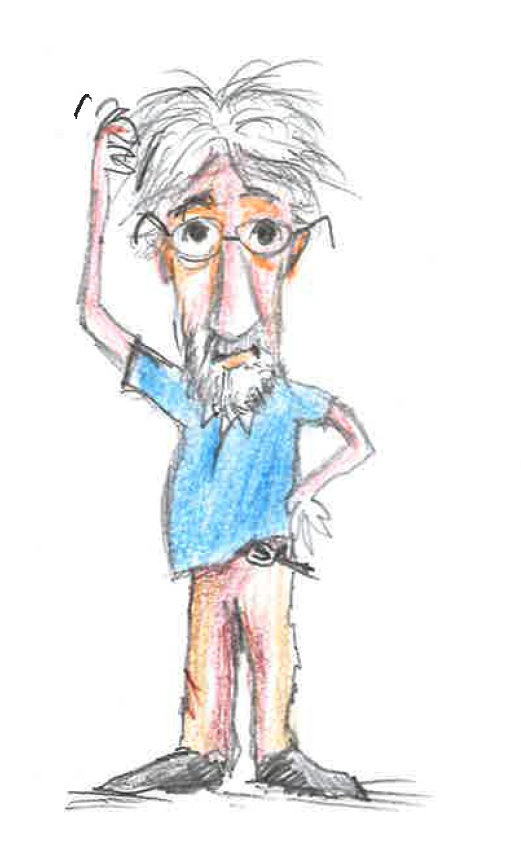
Untitled30

Russ, puzzling over a problem in bioinformatics

Of course these results don’t have any statistical validity, so I added this:

(2014 –  2007) + 1 = 8    (p < 0.05)

I know even less about statistics than bioinformatics, but I do know that statisticans always put a p in there somewhere, and it’s always greater or lesser than some other number, so there you go. If you want to know more about this, we’ll be hearing later from a biostatistician, Jo Røslien, and I’m sure he’ll be glad to explain it to you.

Eight trips to Oslo, wow. There aren’t many places in the world I’ve been eight times. I’ve probably been home a few more times than that. If you ask my wife, she might not agree, but then, she’s not a bioinformatician.

When you’ve been to a place eight times you’re practically a native. That’s how I feel about Oslo. Of course, I don’t speak a single word of Norwegian, which makes me a strange sort of native. Sort of a foreign native. Still, Oslo has some surprises even for a native. For example, when I arrived yesterday, Oslo looked DIFFERENT. Was there more than one Oslo? Had I flown to the wrong one? It took me a while to figure out the problem, but I finally did: all my other trips have been in DECEMBER. I don’t know if you’ve noticed this, but it’s DARK in December. I arrive in Norway, get off the plane, and I just automatically say, “Would somebody please turn on the lights?”

In science, the hardest part of finding an answer is sometimes clearly identifying the problem, and that was certainly true in this case. Once I knew that Oslo was too bright, there was a simple solution – just put on some sunglasses.

So once again, thank you for inviting me to Oslo, where I feel like a native, but a special kind of native, who only comes out in the dark and has poor communication skills. Maybe a native Norwegian bioinformatician. Or a native Norwegian vampire. Or a native Norwegian bioinformatician vampire. If you have any of those in Norway, that’s exactly how I feel.

* * * *

Science communication is serious business, and I do have some serious things to say about it, and I promise I will. But one of the most important things I have to say about it is that we ought to have more FUN at it. I’ve been a professional science communicator for 17 years. It’s a great job, but sometimes it’s hard. You run up against a lot of walls. If you could see them coming, you could avoid them, but they’re sneaky, and they’re mostly invisible. You’re writing an article, or you’re talking to someone, and boom, you run against an invisible wall, and you go flying on your ass. Over and over again.

I’m going to talk quite a bit about invisible walls today. These walls are in the minds of scientists, and in the minds of science communicators, and in the minds of the people we’re trying to talk to. I’m going to talk about ways to make invisible walls visible, and what that means for science and science communication.

But first let me say that if you see somebody run along, and he bangs into an invisible wall and falls down, and then he gets up and starts running and it happens all over again, you’re probably going to laugh. It’s not so funny when it happens to yourself… Well, why not? Why not laugh at ourselves a little bit? So I decided to start a CRUSADE to make science communication more FUN.

Now the crusades of history involved huge armies of religious people setting out to take over a foreign country. I’m not religious, and my crusade is very small; in fact, there are no followers except for a few people who read my blog and may be seriously disturbed. But a lot of great ideas start small. That’s also true of bad ideas, I know. The trick is to tell the difference. How? Only time will tell. I’m still at the very beginning of my crusade, the early planning phase, sort of the grant application phase. For example, I haven’t picked which country this crusade will invade. Maybe Norway? We’ll see.

So today I’m going to talk about invisible walls, and making science communication fun, and hopefully say something useful along the way. We’ll see.

* * * *

Sometimes I think science communication is difficult because we’ve gotten ourselves into a box and we need to get out. This inspired the title of my talk, LETTING SCIENCE COMMUNICATION OUT OF THE BOX, in case you’ve forgotten. There’s also a CAT in the title, which you may also have forgotten, but that’s okay, I’ve just reminded you.

I’m sure most of you realize I’m alluding to a famous experiment proposed by the physicist Erwin Schrödinger. In fact, one of the speakers this afternoon, Chris Vøløy, is involved in a project called Schrödinger’s cat. Actually his project is called “Schrødingers katt” , which is Norwegian, so I might be translating it wrong. For all I know, in Norwegian this might mean “Einstein’s parrot.” Chris, are you here? Did I get this right?

Schrödinger’s cat is a THOUGHT experiment, which means the cat is an imaginary cat. Now if a biologist were to do an experiment with an imaginary animal, he’d face a challenge getting his paper published, but in physics you can get away with these things.

Nobody has ever done Schrödinger’s experiment, or if they have, they won’t tell you about it, because it would violate all kinds of regulations about the ethical treatment of animals. Okay, it’s a metaphorical cat, but even metaphorical animals deserve some respect.

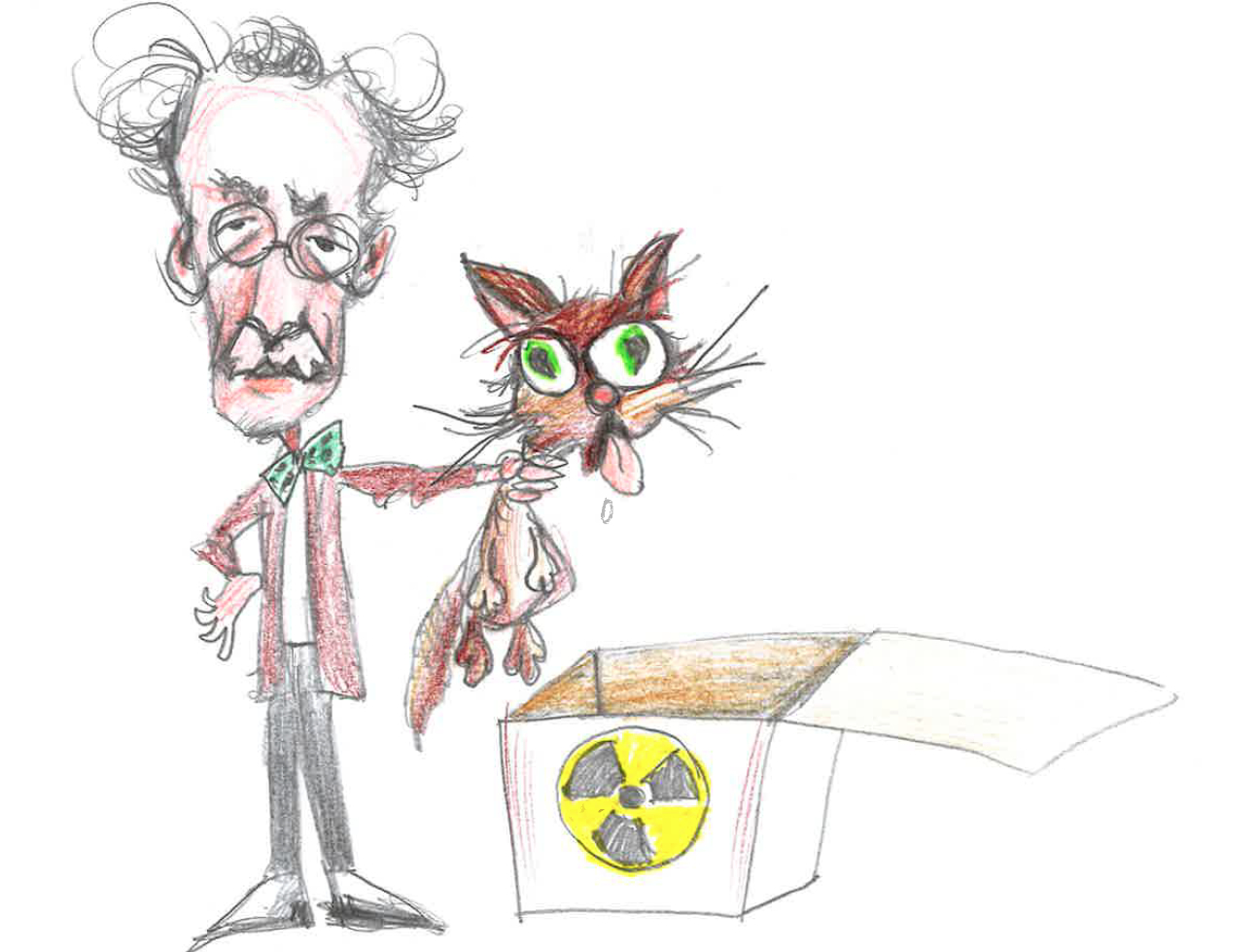
Untitled32

Erwin Schrödinger and his cat

Schrödinger’s experiment also violates all kinds of rules of common sense (for example, the difficulty of getting a cat into a box). Again, in a thought experiment that doesn’t matter. For example, in a thought experiment I could be the King of Norway. Or the Queen of Norway.

Anyway, Schrödinger’s experiment with the cat is interesting for science communication because it’s unethical, illegal, probably impossible, and on top of that, NOBODY UNDERSTANDS WHAT IT MEANS. Well, it meant that Erwin Schrödinger didn’t like cats very much. But other than that nobody really understands it. And yet 79 years later here we are still talking about it. If that’s not successful science communication, I don’t know what is.

Basically the experiment involves locking up a cat in a steel box with one atom of a radioactive substance that would decay after a certain period. Now it’s a bit irritating that Schrödinger leaves some details of the experiment vague, and others he explains in great detail. For example, he doesn’t mention what type of atom you should pick, or how you capture only one atom, or how you know you’ve got the right one. Another detail he doesn’t explain is whether in this experiment, he is the King of Norway or not.

But he does go into detail about the placement of the atom in a Geiger counter. Once everything is in place, if the atom decays, “the counter tube discharges and through a relay releases a hammer that shatters a small flask of hydrocyanic acid.” In case you don’t know, that’s a particularly nasty type of poison. Anyway, you’re not supposed to look into the box. The question is this: At some point, the half-life of the radioactive substance, there is a 50 percent chance that the cat will be alive. Schrödinger doesn’t tell us what the probability is that the cat will be dead, but there’s a formula for this somewhere; you can find it on the Internet.

With all of this Schrödinger wanted to make a specific point. Schrödinger says that until somebody opens the box, the cat is in an indeterminate state. It’s not really alive and not really dead. Actually he puts it a different way, and if you ask me, it’s a pretty disgusting. He says, “The living and dead cat (pardon the expression) [will be] mixed or smeared out in equal parts.”

This is why I said it’s important to choose the right radioactive substance. If you have a substance that decays in one hour, that’s fine. But suppose you pick a substance that takes longer to decay, a lot longer. Maybe weeks or years. I don’t know if you’ve ever kept a cat in a box for a really long time, but I’m telling you, it smells bad. It smells bad whether the cat is dead or alive, but those are different kinds of bad smells. You’ll definitely know. And even if you don’t, the cat will know.

Now as I said, this is a thought experiment, so we don’t have to care that much about the methods, or the results, or the discussion. Today Schrödinger would never get this published, except on a blog, or in The Journal of Impossible, Ridiculous, and Pretty Disgusting Thought Experiments. Well, maybe not. I know the editors of that journal personally and they might not even publish it.

In fact, there is a group of people in California who are actually doing this experiment, or at least an experiment that’s pretty close. I’m sure you’ve heard of them. I’m talking about those companies that offer cryopreservation. You pay the company a lot of money and when you die, they will wrap you up in tin foil and freeze you. The idea is that in 100 or 200 years, or 1000 years, or a million years, scientists will be able to cure the disease that killed you. They’ll even be able to cure it after you’re dead, which is pretty wonderful.

This is supposing, of course, that in one million years the company will still exist, and that California will still exist, rather than sinking in an earthquake, and that in one million years there has never been a power blackout in California. Right. In a state that elected Arnold Schwarzenneger governor. Good luck. In fact, there have already been blackouts. You have to hope the company has some big batteries somewhere, with a lifetime somewhat longer than the battery on your laptop.

Anyway, if the electricity has stayed on all the time, and if somebody remembers the human popsicles stored in the freezer in the basement, and if science learns to cure cancer and Alzheimer’s disease and develops some sort of nanotechnology to repair the damage that being frozen for a million years causes to a human body, maybe those people will be revived. You can pop them into the microwave. But first remove the aluminum foil. You shouldn’t put aluminum foil into a microwave. I’ve tried, and the results are not pretty.

The frozen people will probably wake up in some sort of Star Trek universe, where there’s all kinds of new technology they have to learn. The iPhone one million point five. People who use Macs will have an advantage. I’m sure we’ll still have Macs in a million years. But we won’t have PCs. PCs will have become extinct, like dinosaurs, maybe because of an asteroid strike.

Well, until all that happens, those people in California are in a state like that of Schrödinger’s cat. Except for the part about being mixed or smeared out. That’s might happen if the electricity goes out. But if everything goes well for a million years, we hope they’ll be reasonably intact. It’s hard to say. They’ll probably be fatter – water swells a bit when it turns to ice – but they’ll have been transformed from a state of death to a state of life. So yes, I guess you can say that currently, those people are in an indeterminate state like Schrödinger’s imaginary cat.

The search for the VRAC

The Jentsch lab and the FMP Screening Unit identify a long-sought channel that helps cells reduce their volume

Some important scientific questions resist a solution for years, until a new technology appears that seems to put an answer within reach. Success depends on creativity – finding a way to translate an old question into a form that can be handled by the new method – but also on timing. And a bit of luck never hurts.
About four years ago Thomas Jentsch thought that the time had come for an all-out assault on a question that had teased biologists for decades. The campus had been acquiring instruments that might be the key to the solution. But the clock was ticking; other labs had the technology, too, and were interested in the same question: How do cells reduce their volume?

All types of cells undergo alternating phases of expansion and shrinkage as they divide, specialize, migrate, and cope with changes in their surroundings. In a liquid environment without any barriers, particles move from areas of high concentration to low. This applies also to water “particles”, which tend to diffuse until they have reached the same concentration everywhere. Water will flow from regions of high concentration (where it is diluted by a low concentration of osmolytes like ions, the constituents of salt, or other particles) to areas of low water concentration (where it is diluted by a high concentration of salt or other particles). So if cells are exposed to a hypoosmolar solution (which contains fewer osmolytes), water will flow into the cell, which now contains more osmolytes than its extracellular environment. But because the cell is enclosed by a membrane, the particles within it cannot simply be diluted to reach an equilibrium with extracellular concentrations. Instead, osmotic pressure will build up inside.

The same accumulation of internal water can occur when the number of internal particles increases through a breakdown of organic molecules, like glycogen to sugar, and cells may expand until the membrane is stretched to its limits. In order to keep from bursting, the cell needs to lose particles such as chloride or potassium ions, or organic osmolytes such as the amino acid taurine.

The loss of these particles decreases their internal concentration, which eventually becomes lower than in the external medium. This leads to a reversal of water flow, cell shrinkage and a recovery of the previous, normal cell volume and shape – called regulatory volume decrease. This volume decrease was known to be associated by a loss of negatively charged chloride ions (anions) from the cell through a channel.

Many aspects of the transport of chloride and other ions are well understood thanks to years of research on the part of Thomas’ lab and many others. This type of work has exposed hundreds of types of ion channels in cell membranes. These pore-like structures are composed of proteins woven through the membrane in a way that allows them to open and close. Channels are highly specialized to admit specific ions or other particles in response to changes in electrical charge, pressure, or other conditions. Their behavior is usually regulated by intricate biochemical networks. Most ion channels are so essential that any flaw in their components or their regulation can cause serious diseases – Thomas’ lab has established many such connections.

Much less was known about the outward passage of anions like chloride and other particles as cells shrink. Scientists postulated the existence of a specialized channel and had even given it a name: the volume-regulated anion channel, or VRAC. “VRAC was a hot topic,” Thomas says. “Hundreds of papers were being written about it and it was the subject of major international conferences.”

Despite all the interest, and the fact that the biophysical properties of the channel and some of its important functions were known, no one was able to actually find the channel protein. Occasionally a lab claimed to have identified a protein that belonged to it, but one by one, these candidates were discredited. While a number of drugs interfered with the channel’s behavior, they also disrupted other cellular processes. Without identifying a specific protein, scientists could understand neither these effects, nor the way swelling triggered changes in the channel’s behavior.

Part of the interest – aside from the fact that the channel served an important basic function in all types of cells – arose from observations that it, too, seemed to be linked to serious diseases. In any case, Thomas doubted that VRAC could hide much longer. The sequencing of the genomes of humans and other organisms had led to the development of technologies that permitted scientists to scan the DNA sequence for molecules with specific functions. Recent papers by other groups hinted that they were using these methods to search for the channel.

“Identifying the VRAC would finally give us a handle on some of these questions,” Thomas says. “Basically, it would open up an entirely new field.”

* * * * *

Until fairly recently, the study of gene functions almost always required an arduous, molecule-by-molecule approach. The earliest methods involved forward genetics: a scientist found an organism with a specific variant of a feature or a defect, then studied patterns of inheritance to establish that a single gene was involved. You might not identify it for years, or decades, but at least you knew it existed.

Modern biochemistry made it possible to do reverse genetics, through which scientists interfered with a specific gene and then studied the consequences for an organism. Most of these approaches depended on physically removing or altering genes, and thus eliminating the proteins they encoded.

The 1990s brought a powerful new alternative based on introducing artificial molecules called small interfering RNAs (siRNAs) into cells. siRNAs are composed of nucleotides, like other RNAs and DNA. This means that strands with complementary sequences will dock onto each other, which is the reason for the double-stranded helix structure of DNA. RNAs are usually single-stranded, but if an siRNA docks onto a complementary mRNA it produces a short, double-stranded region. Cells normally take notice and dismantle the molecule before it is used to make proteins. So artificially introducing siRNAs into cells has become a new, effective way of “knocking down” particular molecules by interrupting the flow of information from gene to RNA to protein.

Since the first applications of siRNAs in plants and simple model organisms, researchers have adapted them for use in human cells. The completion of the human genome revealed the entire set of mRNAs encoded in it, and scientists working in companies began constructing vast “libraries” of siRNAs to target them all. Theoretically this could be used to block the production of every human protein, one-by-one. Along the way, you would probably hit a molecule required for a particular function – such as the VRAC – and shut it down.

Humans have over 22,000 genes, meaning that the project would require at least that many experiments – actually the number would be much higher. There is no way to predict with certainty that a particular siRNA will work reasonably well within a cell. The way to get around this was to develop multiple siRNAs for each target and then challenge cells with two or three different versions; one of them would usually work.

But 22,000 experiments – let alone two or three times that number – could not be performed by hand. Robots and automation would be required at each step: to prepare samples, perform experiments and collect the data, and sophisticated software to analyze the results.

In the genome age, the technology and software needed for genome-wide siRNA screens began coming together, leading to several successful projects that have produced fascinating new insights into the functions of genes.

Several years ago the FMP created a Screening Unit, now jointly operated with the MDC, and acquired high-throughput, automated equipment to manage such large-scale projects. Headed by Jens von Kries, the facility has made significant contributions to a number of campus projects, many drawing on the tens of thousands of compounds that the unit has collected from researchers, pharmaceutical companies, and other sources. A typical use of this vast library is to challenge cells with substance after substance, hoping to disrupt a specific process in cells – with the aim of further developing the “hit” into a research tool, possibly even a drug. Chemists associated with the Unit then step in to tinker with a successful substance to strengthen its effects, make it less toxic for cells, or lend it other desirable properties.

The Screening Unit had also acquired a library of siRNAs that targets every known gene and then, through grants including a successful application from Thomas to the European Research Council (ERC), also a machine called FLIPR that was needed for following the time course of hundreds of experiments in parallel. So the necessary tools were on hand to search for VRAC components. “But first an extremely reliable experimental procedure had to be developed to detect the opening of the VRAC channel upon cell swelling,” Thomas says. “Any test that will be carried out tens or hundreds of thousands of times has to deliver clear, dependable results.”

Postdoc Tobias Stauber and PhD student Felizia Voss took the first steps toward developing a robust experimental protocol. This required almost two years, and as Thomas says, “There was no guarantee that we would find VRAC, even with this whole-genome approach, and certainly no guarantee that we would find it first.” Failure would have been particularly hard on Felizia, who was devoting her entire time to the project, and other PhD students who had become involved. Positive results would provide an impressive story for their dissertations; no one wanted to consider the alternative.

Tobias and Felizia began by growing cultures of human embryonic kidney cells – a favorite model for genetic research because the cells readily take up foreign molecules such as siRNAs. First they equipped cells with a yellow fluorescent “reporter” protein that would reveal whether cells changed their concentration of anions upon swelling. The cells were placed in a diluted medium in the presence of the ion iodide, which entered the cells through the opened VRAC channel and quenched the fluorescence. Although VRAC opening leads to a net loss of cellular chloride and volume regulation, the addition of external iodide, which is not present in the interior of the cell, leads to a net influx of iodide – channels are like “holes” that allow movement in both directions. The basic idea was that an siRNA that blocked the production of VRAC within the cell would abolish, or at least reduce, the loss of fluorescence upon exposure to a diluted medium containing iodide.

“This entire approach depended on an assumption that simply might not turn out to be correct,” Thomas says. “If a single specific molecule were required for VRAC, we might find it in the experiments. But if several molecules formed VRAC together, and each of them could be functionally replaced by another one, we might never find it with this approach. In fact, we discovered that VRAC has five components, and only one is absolutely required – we were lucky that only four of the subunits can replace each other.”

The scientists optimized the transfection of siRNAs and other aspects of the experiments, such as the number of cells, and established appropriate controls. Once this had been accomplished, it was time to scale up the experiment for a genome-wide search for VRAC components, trying to eliminate one essential component of the channel.

Now Katina Lazarow, a postdoc with the Screening Unit, stepped in to adapt the procedure to the instrumentation. Each step of the pipeline of experimentation and analysis had to be adapted to the specific question the scientists were trying to answer. This required many months of intense work – often through the weekends. The actual screen would also take about two months of work, once again including weekends.

* * * * *

Such a large experiment required automation for the preparation of cell cultures, introducing a different siRNA into each one, then capturing images that would show whether the intervention had any effect on VRAC. These steps were performed in a specialized piece of machinery called the FLIPR, acquired second-hand with funds from Thomas’ grant and the Screening Unit.

The machine has become an important addition to the Screening Unit because it allows scientists to prepare experiments in all 384 “wells” of a assay plate in parallel, and follow changes in fluorescence over time, also in all the wells in parallel. The scientists needed to follow the exact time course of a decrease in fluorescence, because it is a measure of the flow of anions through VRAC.

Applied to the whole genome, this produced more than 130,000 fluorescence curves to analyze – a step that obviously required bioinformatic analysis. Miguel Andrade’s group at the MDC took on the task.

“We specified the parameters necessary to distinguish possible VRAC components from all the other proteins that didn’t affect the transport of chloride ions out of the cell,” Thomas says. “In the end we were left with a list of about 200 proteins that might be involved.”

More analysis and experiments were required to whittle the list down to just a few – hopefully just one – candidate. Part of this could be done by a computational analysis of the proteins’ sequences. The main goal was to find molecules with patterns indicating they were likely inserted into membranes. But other types of molecules might be worth investigating as well. A biochemical signal – passed along by a specific protein – might be required to operate the channel, even if that protein wasn’t a direct component of VRAC. Blocking it might shut down the channel just as well as eliminating one of the membrane proteins. The data collected in the experiments may eventually shed light on these processes. “We now have a treasure trove of data that remain to be analyzed; first we were concentrating on candidates for channel components,” Thomas says.

Felizia, Tobias and Thomas took on the list of candidate membrane proteins and began sorting through everything that was known about the functions of the candidates, from other experiments. The aim was to distinguish promising proteins from those that were less so – “And you had to be careful not to discard any molecule that might turn out to be the real one!” Thomas says.

After this analytical effort, over 80 proteins remained for one-by-one investigation through more experiments. Using the same experimental protocol, they challenged the cells with new siRNAs directed against those same 80 genes. The scientists dug in for another period of hard work.

This time, disruptions of only one molecule – a protein called LRRC8A – continued to interfere with VRAC. “So far we had only covered one aspect of VRAC function, the cells’ uptake of iodide,” Thomas says. “Now we wanted to explore another aspect – to measure its effects on electrical currents. We did this using a method called patch-clamp.” Two PhD students from Thomas’ lab, Florian Ulrich and Jonas Münch, joined the team and worked for about a year on the analysis of VRAC. They discovered that the knock-down of LRRC8A also reduced chloride currents. This meant that LRRC8A was either a direct component of the channel, or it exercised a firm control on VRAC functions. Thomas’ lab began the next round of experiments to find out.

* * * * *

“Proving that LRRC8A protein was a direct component of the channel required a number of steps,” Thomas says. “Upon a closer look we saw that it fulfilled a number of important criteria. First, it was expressed by many types of cells in the body, all of which need to regulate their volume and are thought to express VRAC. And a study of its sequence showed that it had regions that would be embedded in membranes – but was it really present in the plasma membrane that encloses cells?” The scientists generated antibodies that attached themselves to LRRC8A and observed under the microscope that LRRC8A indeed moved to its expected position at the outer membrane.

So far, so good – but was LRRC8A the channel itself? The scientists overproduced the protein in cells and measured currents activated by swelling. “Of course we had hoped that this would boost swelling-activated currents way beyond those in normal cells,” Florian says. “But were dismayed to see that rather than increasing currents, overproducing LRRC8A actually decreased currents!”

Thomas had an explanation for this behavior: “Channels are often composed of multiple proteins woven together in the membrane,” he says. “LRRC8A might form a channel together in a complex with other proteins, and if we had too much of LRRC8A, it may assemble with these other proteins at the wrong ratio, leading to complexes that cannot pass currents.”

What might those proteins be? Obvious candidates were molecules that were very closely related to LRRC8A. The cells of humans and other animals have many such “homologs”: far back in evolutionary history, in ancestral organisms, biochemical mistakes occasionally produced multiple copies of many genes. In the species in which they originally occurred, the copies would be redundant. That meant they could be lost again, which often happened as the genes naturally underwent mutations.
In some cases, however, spontaneous mutations enabled the copies to develop new functions. So the human genome contains four other versions of LRRC8 (labeled LRRC8B through E) that may function in a similar fashion.

“Databases containing information from other experiments showed that these molecules, too, are widely expressed in various types of cells,” Thomas says. “When we began to study these molecules individually, by introducing them into cultured cells, we noticed something interesting. Most of them remain inside the cell, in the cytoplasm. But if we introduced them along with LRRC8A, they move to the membrane.”

This indicated that LRRC8A binds to these related LRRC8 proteins, and that certain combinations of LRRC8s might be required to create the channel. Another round of experiments removed and restored various combinations of the proteins. Since siRNAs usually achieve only a partial blockage of a given protein, and might affect other molecules than the intended target, it was necessary to turn to another method. Here the scientists used a new technique called CRISPR-Cas, which interferes with genes directly at the level of DNA rather than its messenger RNA products. CRISPR-Cas allows scientists to make a physical cut in the genome and eliminate a specific gene. The results replicated the findings of the siRNA experiments and importantly showed other LRRC8s were involved in VRAC, but always in combination with LRRC8A.

The scientists found that each of the other LRRC8 proteins, B-E, could be deleted alone without abolishing VRAC currents. But when B-E were eliminated together, VRAC currents were gone just as if LRRC8A itself had been removed. “This showed that LRRC8A needs at least one of the other subunits to form a channel, but that LRRC8B through E are redundant – in other words, they can replace each other,” Felizia says. “And we even generated a cell line lacking all the forms A through E. Currents could only be restored when expressing A with at least one of the other family members.”

Importantly, different combinations of proteins yielded channels with different biophysical properties. “These are intrinsic channel properties,” Tobias says, “which demonstrates that LRRC8 proteins are not just involved in the signaling system that opens the channel upon cell swelling, but are an integral part of the channel itself.” This observation solved another enigma in the field – VRAC currents seemed to vary in different cells and tissues. “Our work now explains the variability of currents because different cells in the body make different amounts of these proteins. The different combinations may serve cell-specific functions.”

The project also provided hints toward answering another interesting question about channels involved in cell shrinkage. “The loss of volume involves expelling small organic molecules such as taurine,” Thomas says. “There was a controversy among experts – some claimed that these molecules exited via the VRAC, whereas others thought they might use yet another channel.”

Further experiments revealed that VRAC accomplishes both functions. The lab used to a radioactive form of taurine whose export from the cell could be tracked. Darius Lutter of Thomas’ group adapted a test that would measure its efflux, and the scientists found that taurine’s behavior aligned with the presence or absence of various LRRC8 molecules and VRAC behavior.

“All in all, these experiments reveal that the channel is directly constructed from combinations of LRRC8A and other LRRC8 forms,” Thomas says. “They give us the first clear route to explore the mechanisms by which cells shrink and shed particles in response to swelling. Those functions are crucial in the context of all types of cells, and this work provides the basis for understanding how they become defective in a number of serious diseases.”

Even with the well-coordinated collaboration and intensive efforts on the part of Thomas’ labs and the Screening Unit, the group’s search for the VRAC took four years. But the race would only officially be won if his team was first to publish on the subject. The scientists quickly wrote up a paper on the project and submitted it to a major journal.

All the way along, Thomas had been worried that other groups might be working on the problem; after four years, getting scooped would be a hard blow. Those concerns turned out to be justified. On the very same day that the article appeared in Science, another lab published a paper in the journal Cell that identified LRRC8A as a component of VRAC. That work did not, however, demonstrate that the “A” form had to be combined with another LRRC8 to create the channel.

“Our work puts the whole field of cell volume regulation on firm ground,” Thomas says. “The signals that connect an increase of cell volume to the opening of the VRAC are enigmatic, and we now have a handle to investigate them. We have suspected that defects in VRAC are involved in a number of diseases, and now we can develop mouse models to confirm those roles and look for other functions of the channel.”

Reference:
Voss FK, Ullrich F, Münch J, Lazarow K, Lutter D, Mah N, Andrade-Navarro MA, von Kries JP, Stauber T, Jentsch. Identification of LRRC8 heteromers as an essential component of the volume-regulated anion channel VRAC. TJ.Science. 2014 May 9;344(6184):634-8. doi: 10.1126/science.1252826. Epub 2014 Apr 10.

More evolutionary monkeyshines

Is it ignorance? Early-onset senility? A misinformation campaign secretly funded by fundamentalist religious organizations? Or are most science journalists actually monkeys who have been chained to desks and trained to write blogs, in exchange for food?

You’d think that after 150 years of research and education, people who write about evolution would have acquired a dim understanding of it. On the other hand, you don’t need any qualifications at all to write about anything under the sun these days. I refer to a press tizzy triggered by a recent publication in Nature Communications. The subject was the fascinating field of monkey faces. You can find the paper here.

The paper demonstrates three things, which can be recovered from the abstract, if you take the time to read it:

• Scientists can model the faces of closely related species of primates on the computer.
• An analysis of markings on their faces show that over time, the faces of closely related species of monkeys have become more and more different.
• This could have had an evolutionary function by helping a member of one species identify members of its own species to mate with, which was more liable to produce fertile offspring than mating with members of another species.

What the popular press made of this was quite different. Here are some outtakes:

“The reason we all look different has been revealed by scientists – it is to avoid inter-breeding. Primates were found to have developed different facial appearances so that their group was easily recognizable as being different from closely related and local species.”

And:

“Have you ever wondered why humans don’t all look the same? After all, we share a number of similarities on the inside, but on the outside we all have unique features. The answer, according to scientists at the University of Exeter and New York University, is that some animals developed this was (sic) to deliberately avoid interbreeding.”

Oh my, where to start? First of all, we have a confusion of inbreeding with interbreeding. Both are things you probably want to avoid, but it doesn’t hurt to keep them straight.

Inbreeding refers to mating between very closely related members of the same species – humans have laws against that; it falls under the category incest. The citations above focus on differences between the faces of humans – ergo inbreeding – which this paper tells us nothing at all about. If it did, the findings would imply that your brother or sister ought to look a lot different than you, presumably so that you wouldn’t be attracted to them and choose them as a mate.

The paper’s authors are actually talking about interbreeding between different species. It’s more like an explanation for why we look different from Neanderthals, or gorillas. If at some point humans, gorillas, and Neanderthals ran into each other all the time, maybe they visited the same pubs, you’d need to keep them straight. Otherwise at closing go home with a member of another species.

That might make for an interesting one-night stand, but any offspring produced by these encounters probably wouldn’t be fertile. Hybrids might go on to live long and happy lives, but since they couldn’t reproduce, they wouldn’t pass along their genes. So you’d never know – unless they wrote blogs about their experiences. Maybe they have. I haven’t checked.

Now an even worse mistake, from the point of evolution, is to assume that people, or monkeys, or anything else evolved some feature in order to achieve something. In fact, the opposite is true. A feature already has to be around for natural selection to work on it. If monkey faces look different, and natural selection gets its hands on them, then they might end up looking more different. You can’t actually prove that this is why their faces evolved this way, but at least it’s a plausible story.

The best way to understand this might be by looking at another paper published in Nature, concerning the discovery of variant of a gene called EPAS1 that helps Tibetans live at extremely high altitudes. What didn’t happen was some sort of committee meeting among early inhabitants of Tibet, where they sat around and said, “Hey, we ought to evolve in order to live up there in the high mountains.” Instead, a gene variant evolved that allowed some people to live much more comfortably at high altitudes. So they moved up the hill, got jobs as Sherpas and Yeti-hunters, and left everybody else down at the base camp.

And actually the new paper shows that Tibetans probably acquired this form of EPAS1 by mating with an earlier population of modern humans called Denisovans, who apparently belonged to a different sub-species. I guess they didn’t look different enough; after enough beer, or in the dim lighting of a bar, some interspecies mating took place. In this case the kids were fertile, at least some of them, and they did well at high altitudes. So the best place to find their descendants is a high mountain somewhere. They don’t have to live there, but they can. It would cut down on unwanted visitors and cell phone calls.

But this sort of “secret intentionality” is found all over the place in discussions of evolution – even in articles which are otherwise relatively good. In this one, for example, a writer summarized a new findings about feathers on Archaeopteryx, a dinosaur from the Jurassic period:

“The function of the Archaeopteryx’s feathers, the Jurassic specimen, on their hind limbs has left researchers scratching their heads. Scientists constantly debate about the use of the Archaeopteryx’s feathers, but it seems that finally they are yielding some possible answers.

“Paleontologists from the Ludwig-Maximilians-Universität (LMU) aim to put an end to the dispute with regard to a well preserved specimen. The findings reveal that the first Archaeopteryx feathers were not evolved for flight, but for display.”

Once again, “were not evolved for flight, but for display…” Saying that feathers evolved for something is getting things backwards again. It would be better to write something like: “Feathers evolved in Archaeopteryx before it could fly. Once they appeared, they may first have influenced choices of mates, leading to adaptations in response to sexual selection. Whatever selective pressures acted on feathers, the result was structures that permitted flight. Once Archaeopteryx had that capacity, feathers surely underwent further changes as a result of new selective events.”

Reference:
William L. Allen, Martin Stevens & James P. Higham. Character displacement of Cercopithecini primate visual signals. Nature Communications 5, Article number: 4266 doi:10.1038/ncomms5266.