The Devil’s dictionary, Nov. 16 update

See the complete Devil’s Dictionary of Scientific Words and Phrases here.


note: all entries in the Devil’s dictionary are copyright 2016 by Russ Hodge.

break  as in, to break something  the first stage of reverse engineering, which is a technical skill that forms the basis of pirating software, technology, or the secret recipe for Colonel Sander’s Fried Chicken, which one of my aunts claimed to have reverse engineered and shortly thereafter was never heard from again. Reverse engineering is based on the principle that a technology can be replicated by breaking it into its functional parts, making counterfeits of them, and then assembling the new pieces in the same way as the original. Ideally this is accomplished following the same steps as disassembly but in the reverse order, although minor detours are commonplace, especially if you didn’t take very good notes. Reverse engineering always results in one screw too many or one too few. This has to do with the law of conservation of mass and energy, which dictates that a thing can’t simply disappear without some transfer of mass or energy; otherwise this creates a wormhole or some violation of the space-time continuum and may destroy the entire universe. Thus the extra screw is to make up for the one that was missing the last time.

Break is used for both physical and metaphysical objects, but typically not for whole living organisms; you won’t find “break a cell,” for example, although you can crack them, and it’s also fun to blow them up with the microinjector. If you do find the word “break” in an expression such as “break a horse” (one can’t “break a mule”), or “break a predoc,” or “break yo momma,” the meaning is metaphorical – it is the spirit of the bull, or the momma, or the PhD student that is being broken in some abstract manner. Break can be used with body parts, usually those that are more solid: “break an arm,” and “break some heads,” but some softer parts are included as exceptions: “break your heart,” “broke his brain,” “frequently breaks wind during committee meetings.”

In common usage break bears many negative connotations – dismemberment, disease, death – but also many positive ones (coffee break, break a leg, marriage break). The majority of engineers, but not biologists, claim a broken object originally set them on the path to a scientific career. The parents were out, something broke, it had to be fixed before the parents returned. With furniture it could be done, and maybe the electronics – not so much the pets.

fact  an observation about the identity, quality, or characteristics of something that two people can agree on despite differences in their moods, religious beliefs, gender, or political persuasions, or the number of goats that live in their houses, suggesting that the observation has objective value. Certain things can never be facts, even if their validity is extensively documented and can be measured: the age or degree of fatness of a spouse, the birthplace of a President, or the amount of taxes a person ought to pay. In the United States, since about 2008, there have been no facts at all.

reductio ad absurdum  explaining a system or concept to a level simple enough that a human with an average level of education can understand it without the help of a computer. Thus reductio ab absurdum is the guiding principle in writing articles for newspapers or blogs. If even then it is too complex to be understood, run the text through Google Translate using the “pirate speak” setting.

reproduction  any process that permits something to make a replica of itself, nearly always leading to the creation of something of poorer quality than the original – including photocopying, faxing, sexual intercourse, teaching, gossip, and memory. Repeated rounds of reproduction usually distort the outcome to the point that it is unrecognizeable.

open source  a code phrase which you use to inform someone higher in your institutional hierarchy that his fly is open. In recent years it has been used metaphorically to refer to efforts that involve community action and a free exchange of information, the way that the entire community at the party is aware that the department chairman’s fly is open, and in the open source philosophy it would be unethical to withold that information, so you share it freely with everyone, along with any speculations you wish to share freely about the reason it is open. The open source philosophy predicts that at some point in this process, the chairman will inevitably become aware that his fly is open. If only by the fact that all eyes are pointedly averted from it.


If you liked the Devil’s Dictionary, you’ll probably also enjoy:

On the publication of “Remote Sensing” by the magazine Occulto


New cartoons – October 11

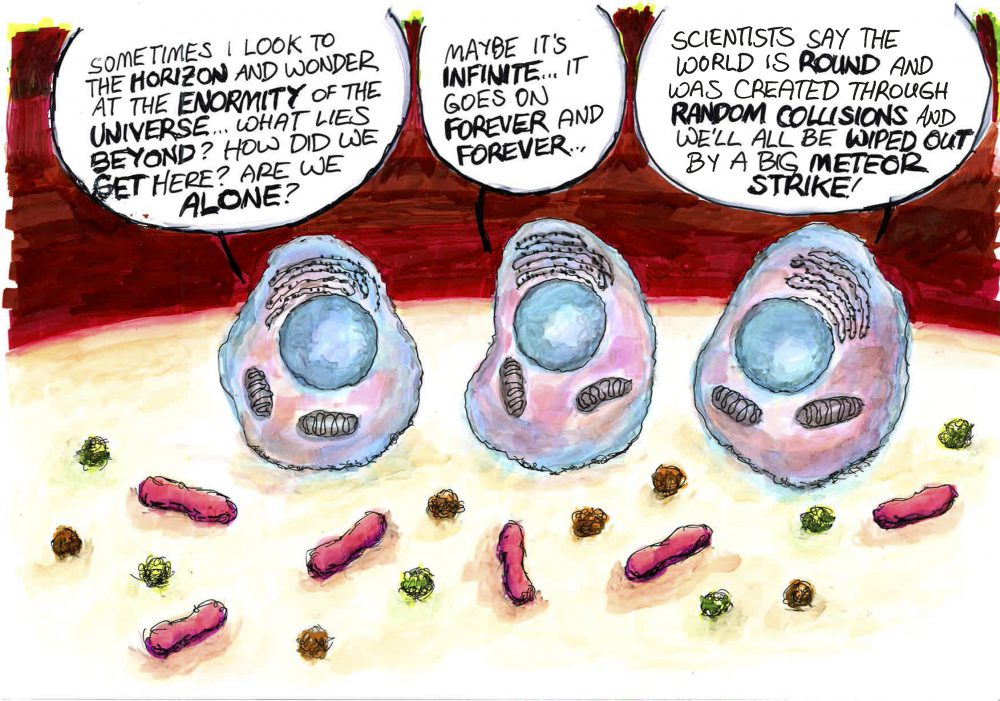
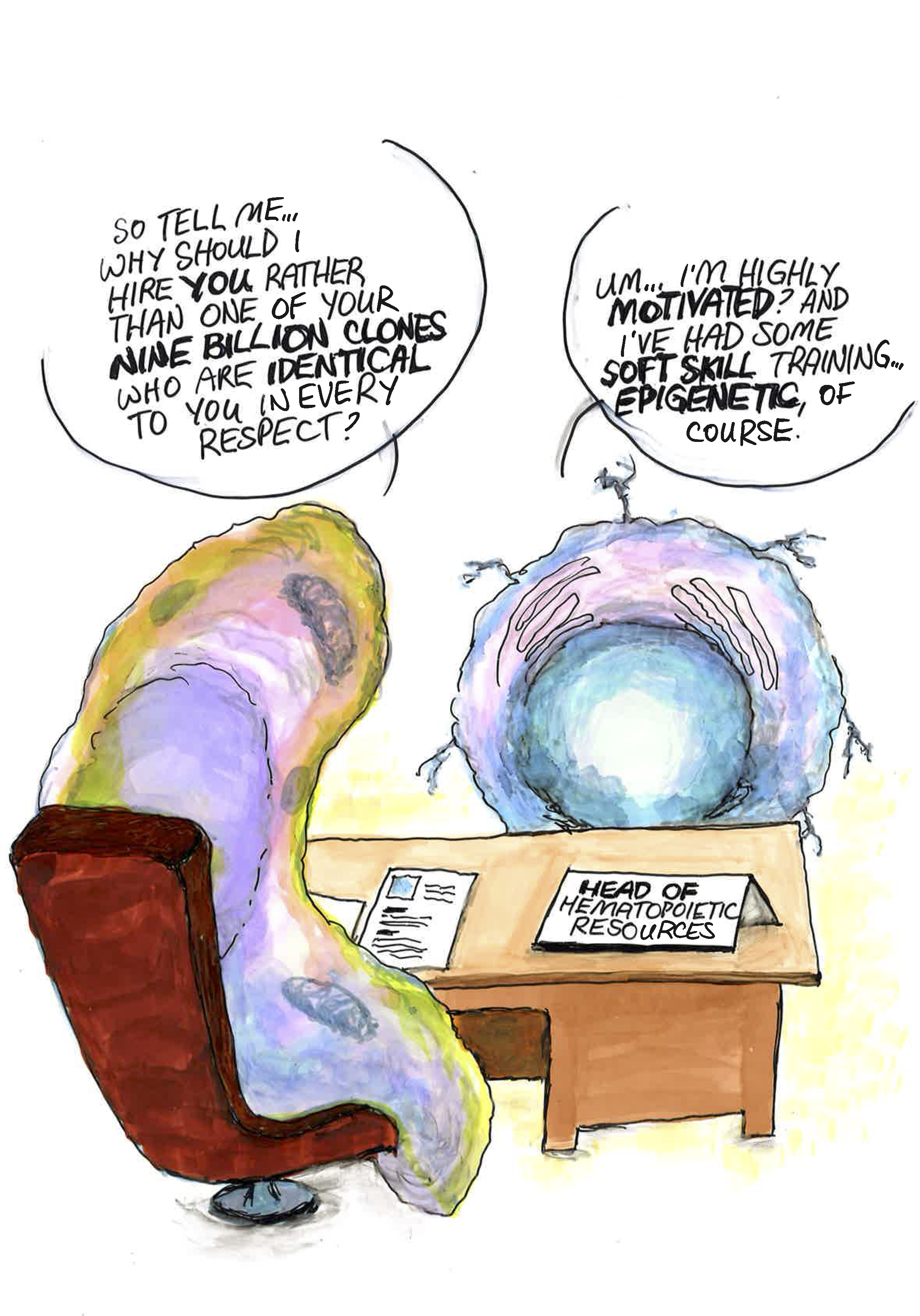
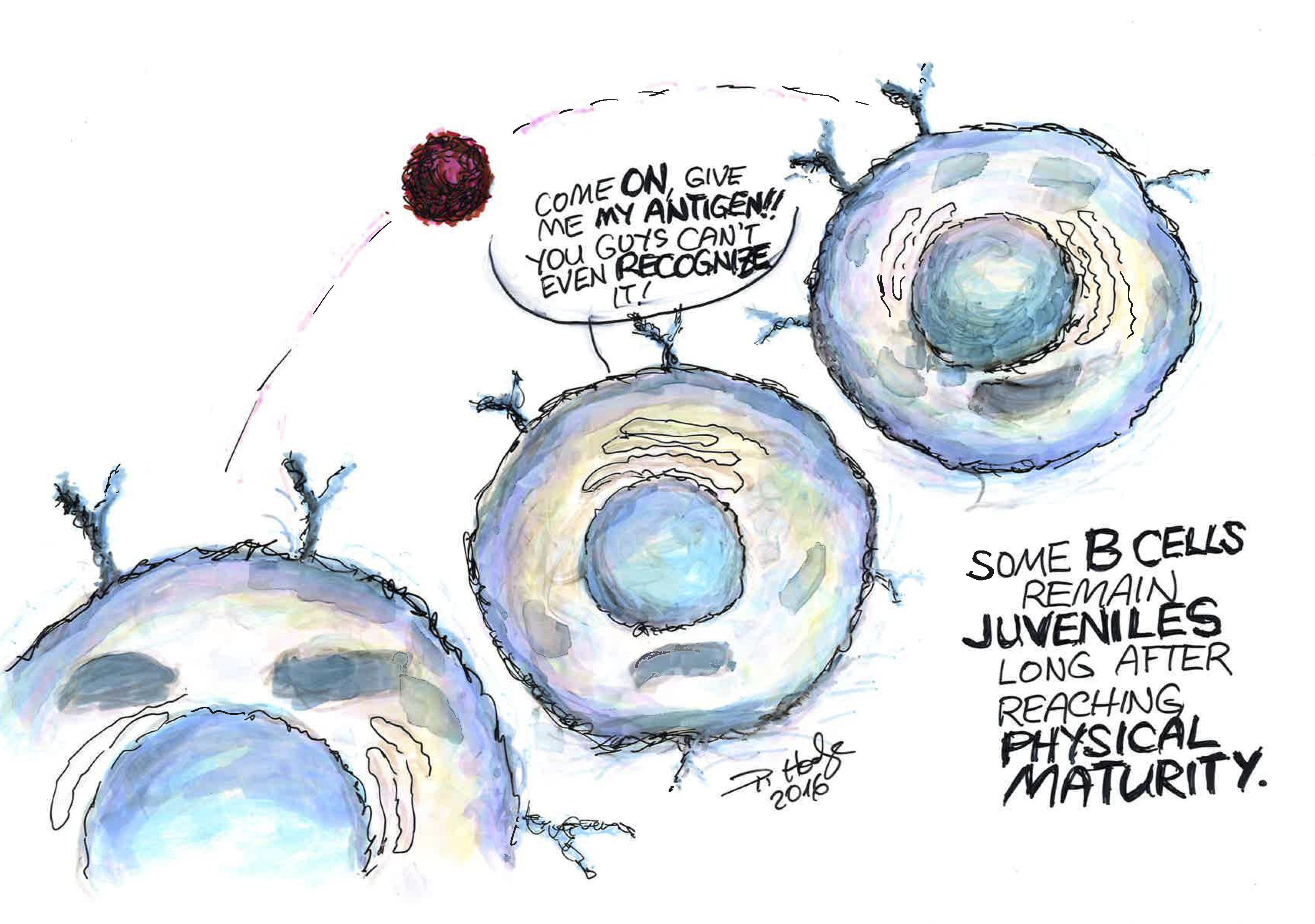
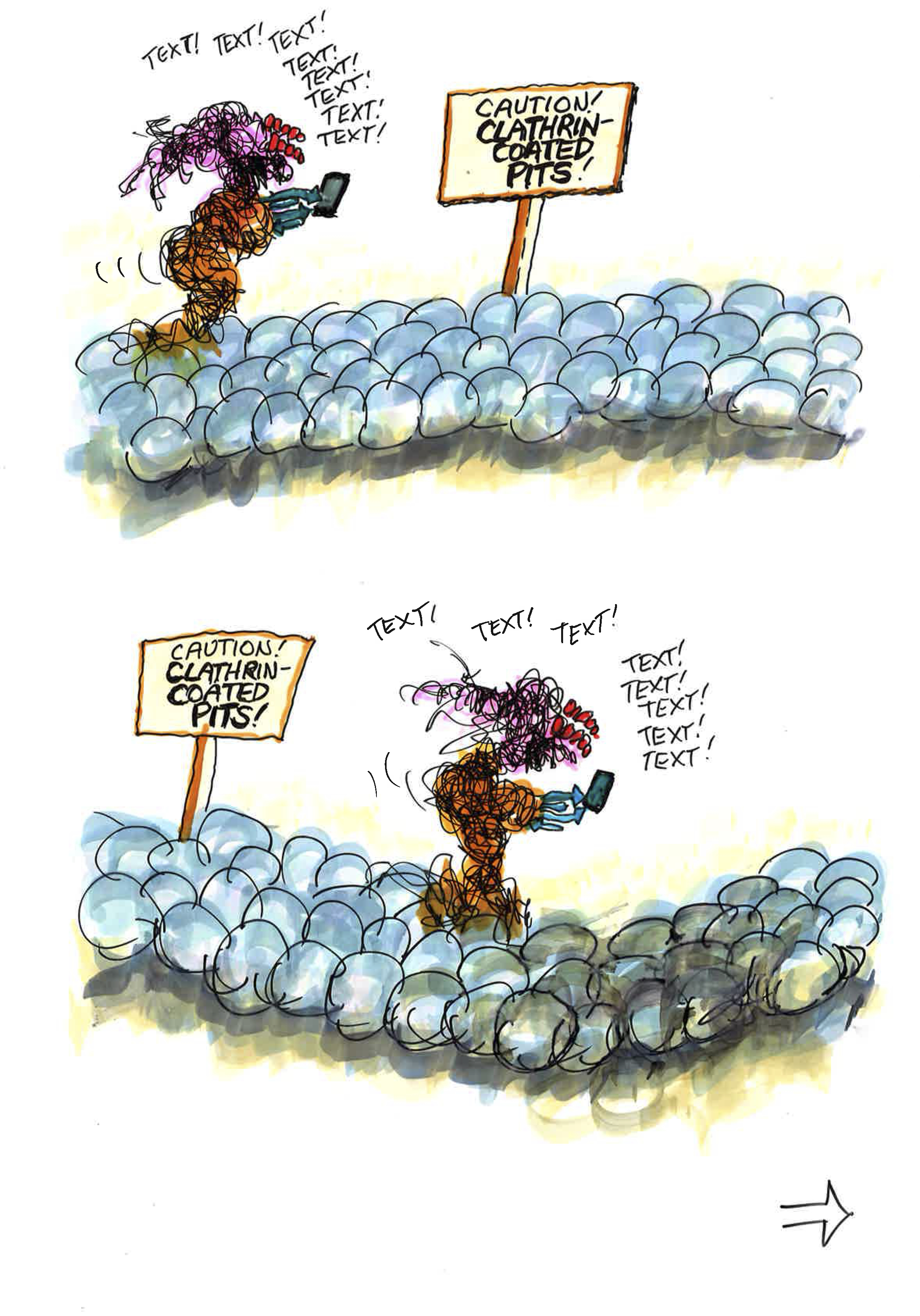
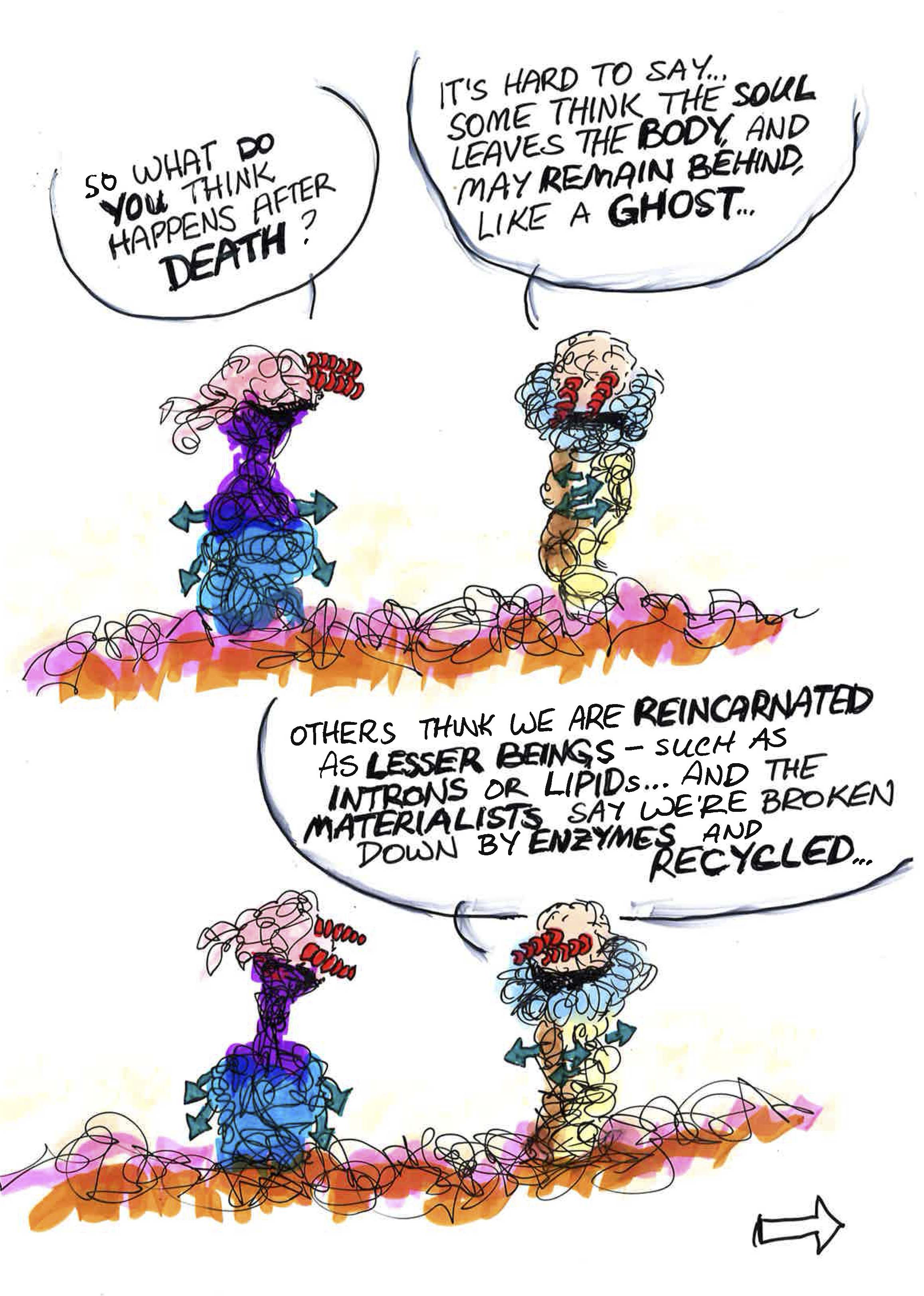
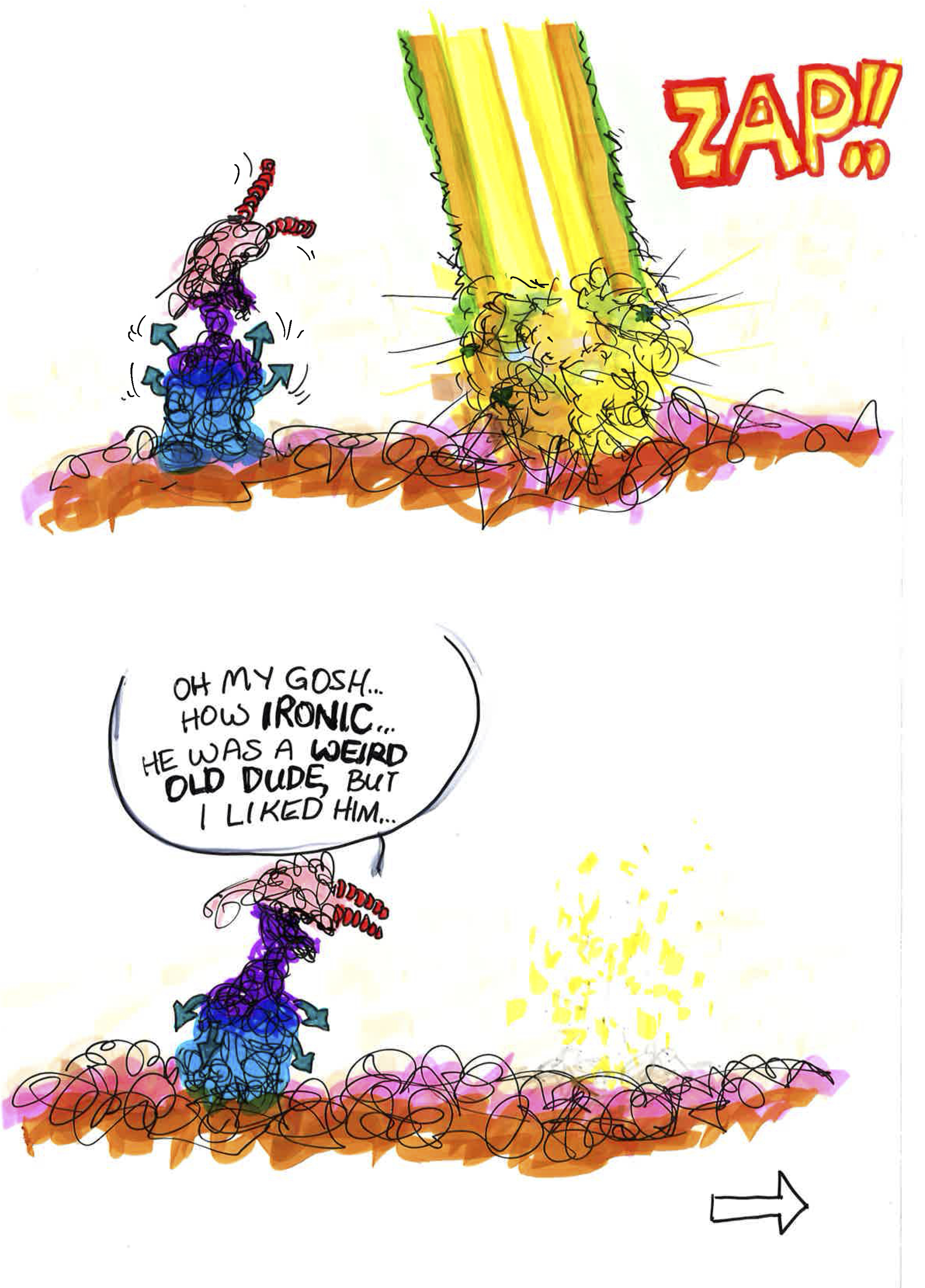
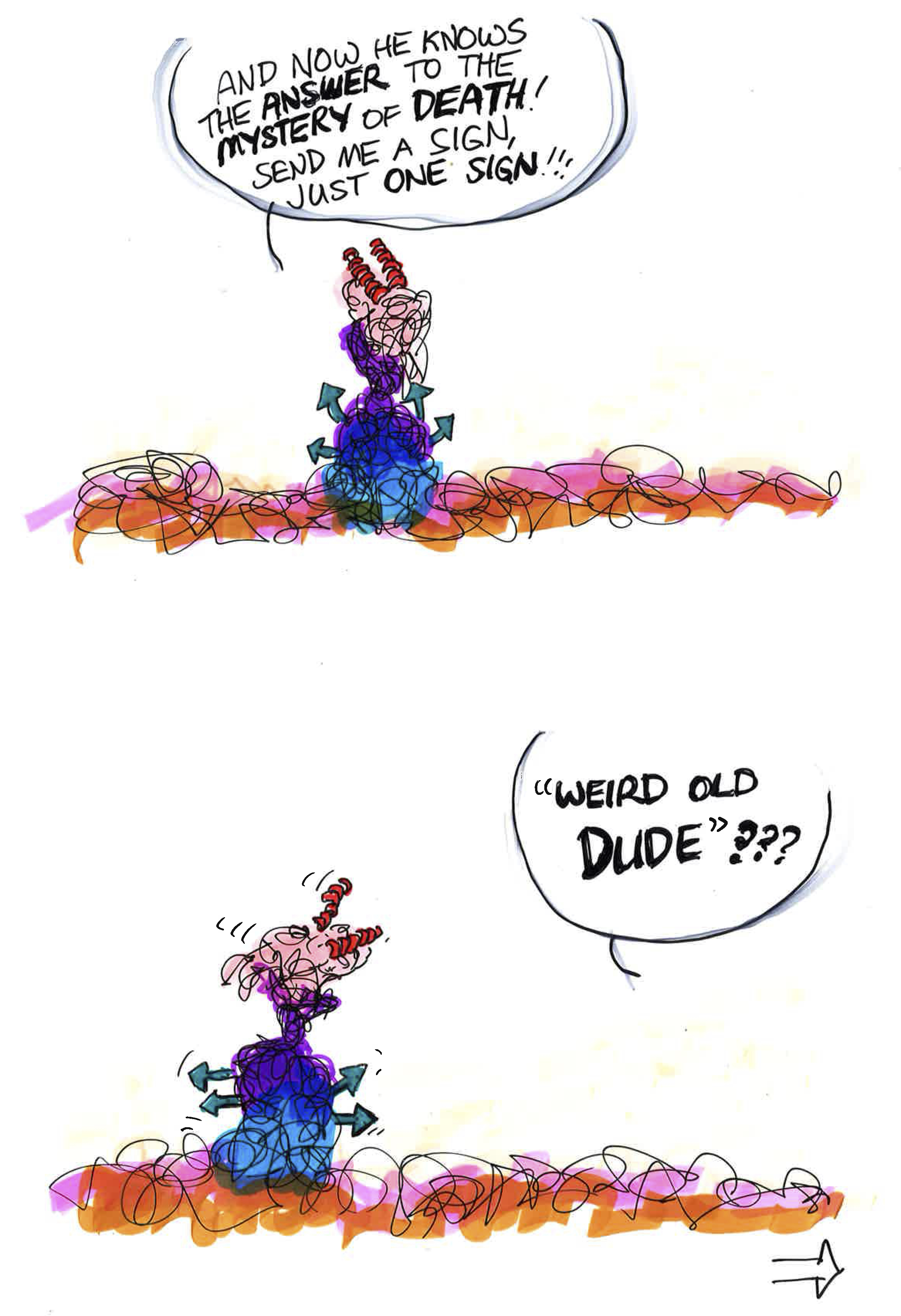
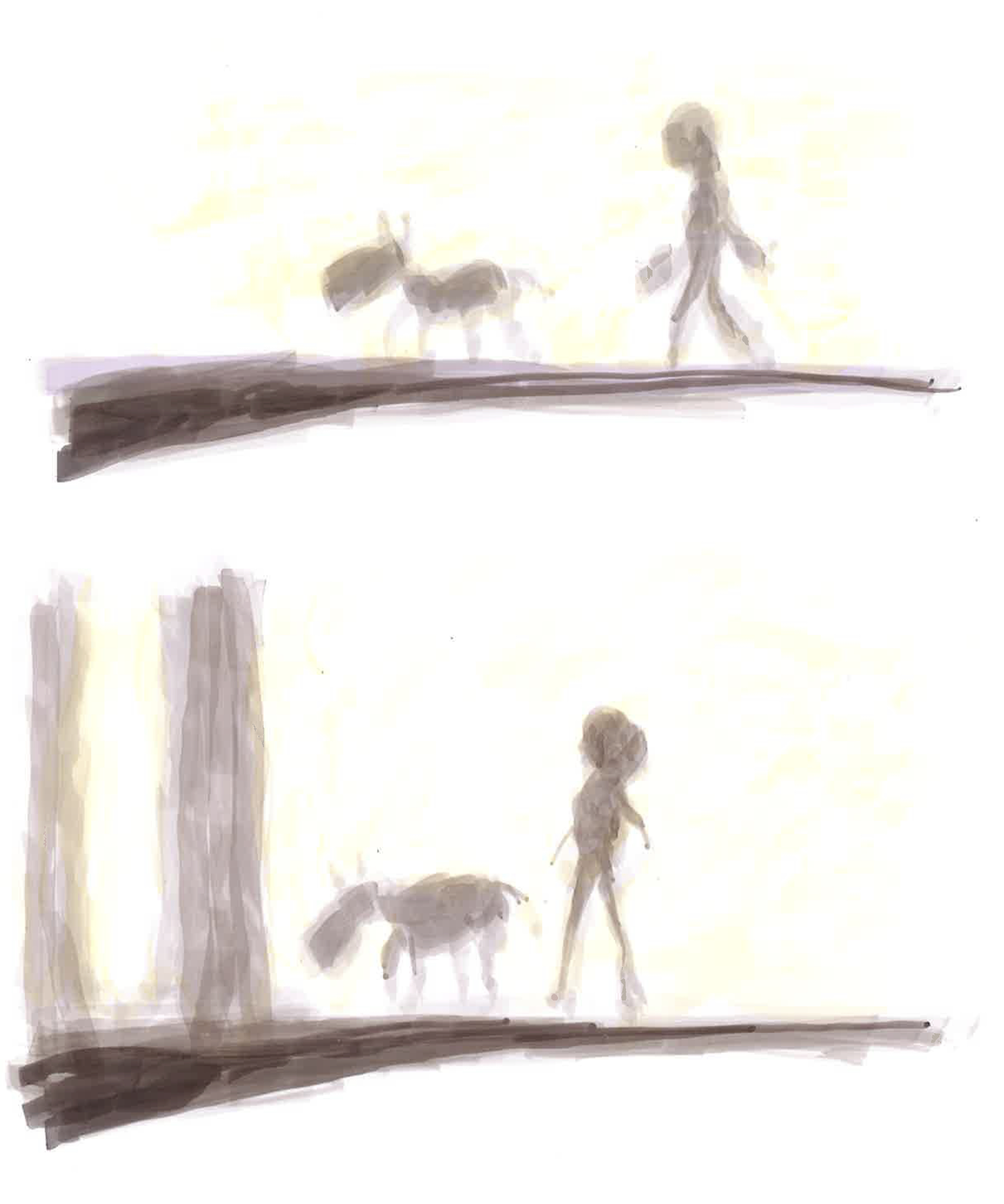
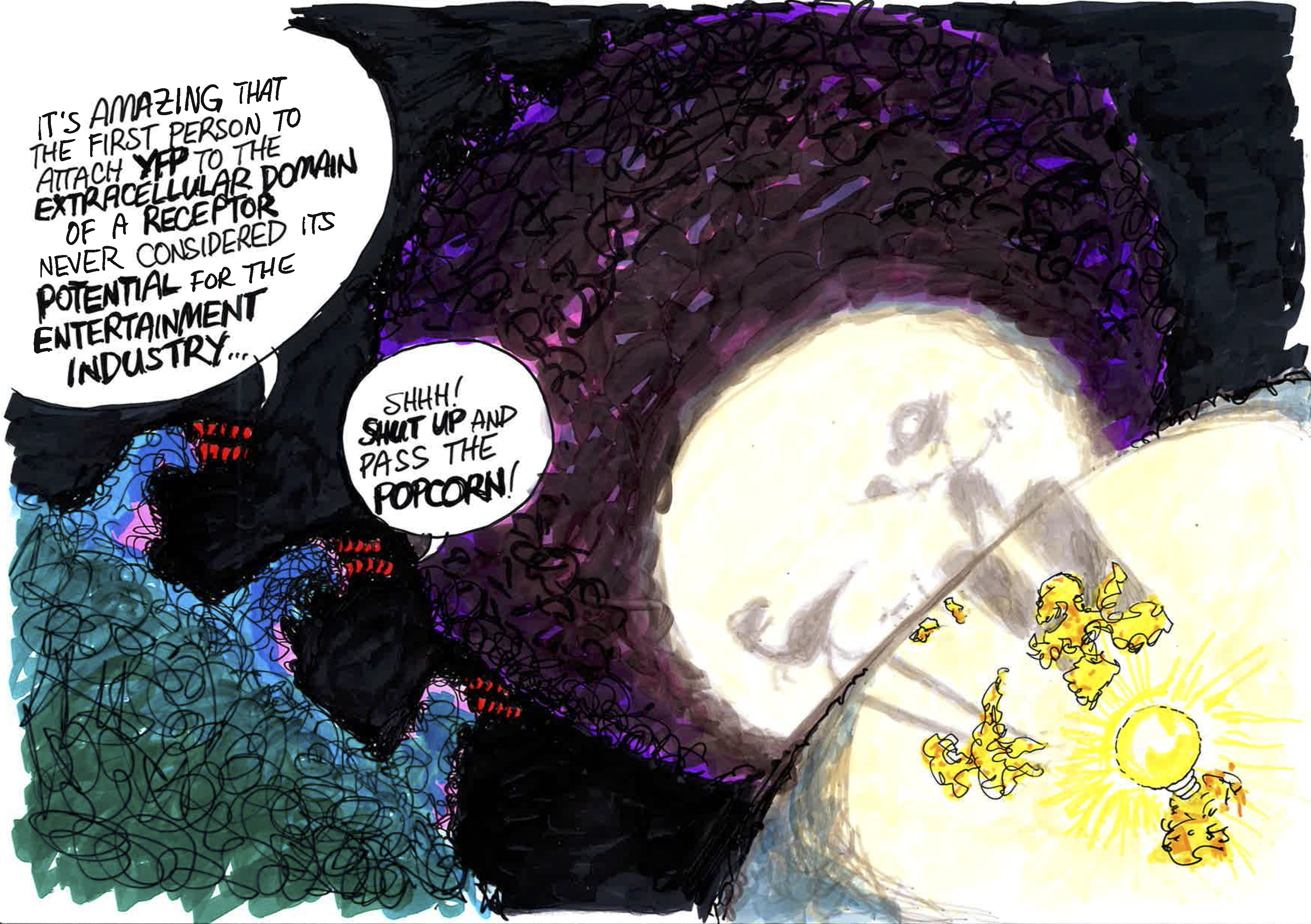
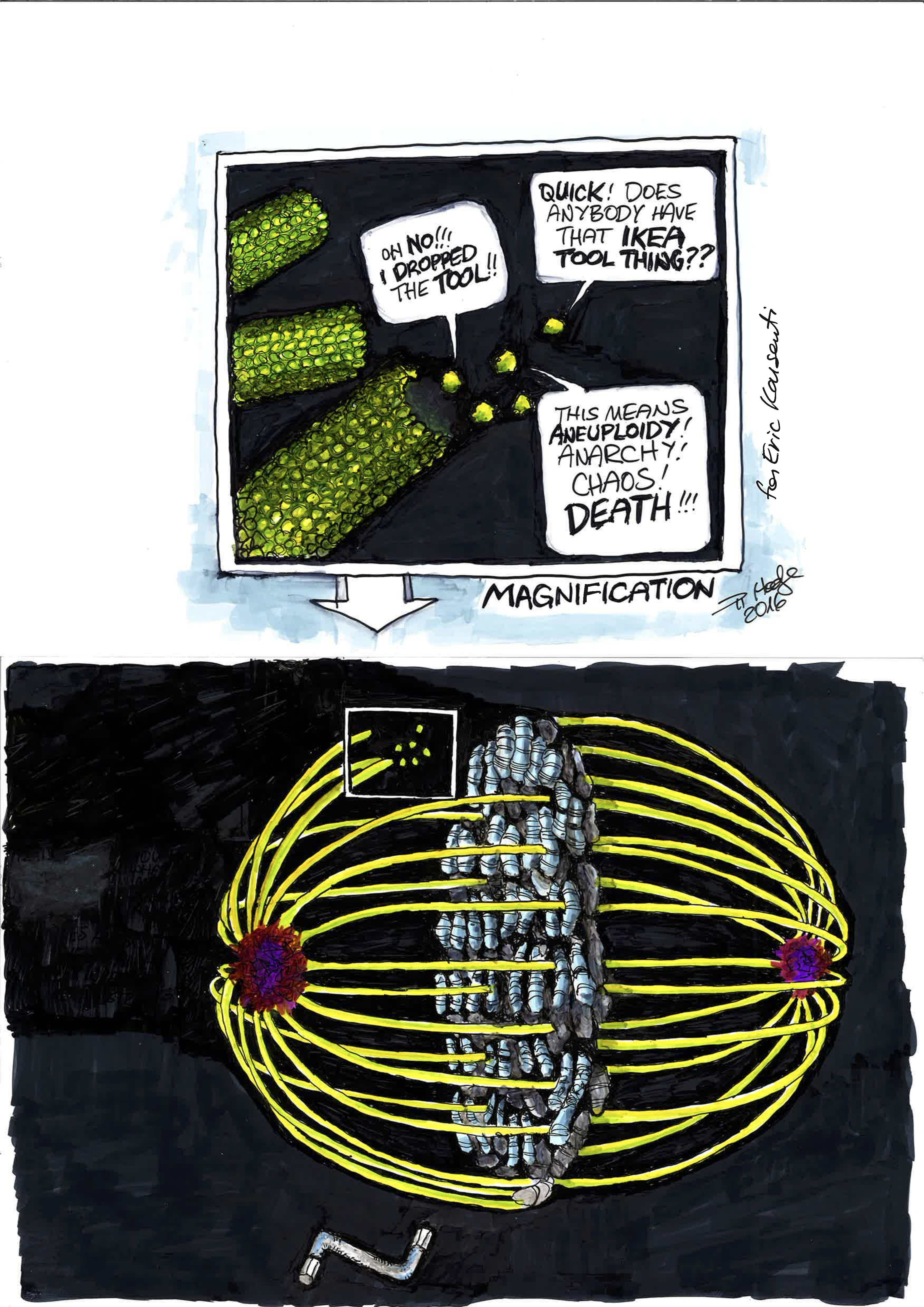
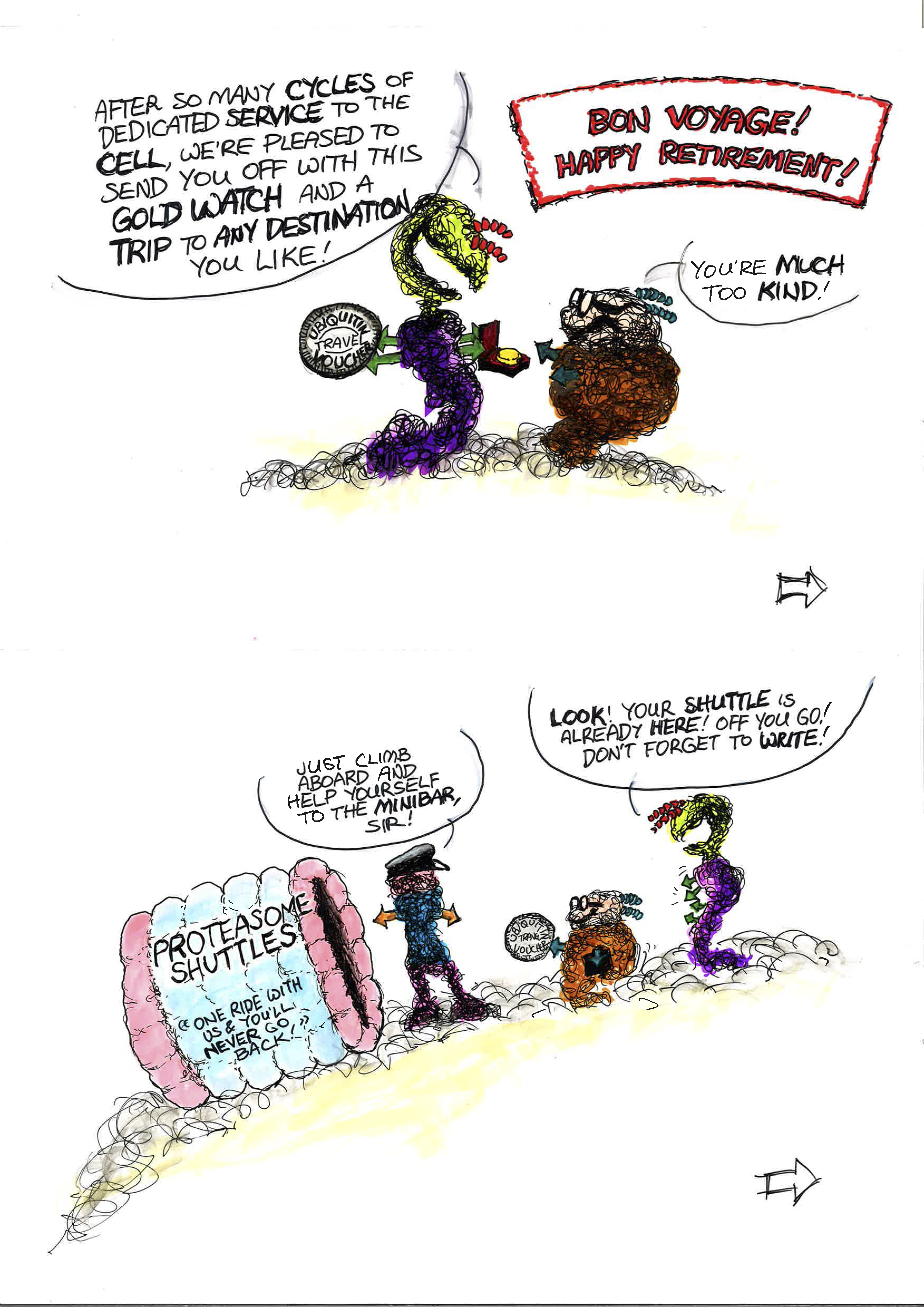
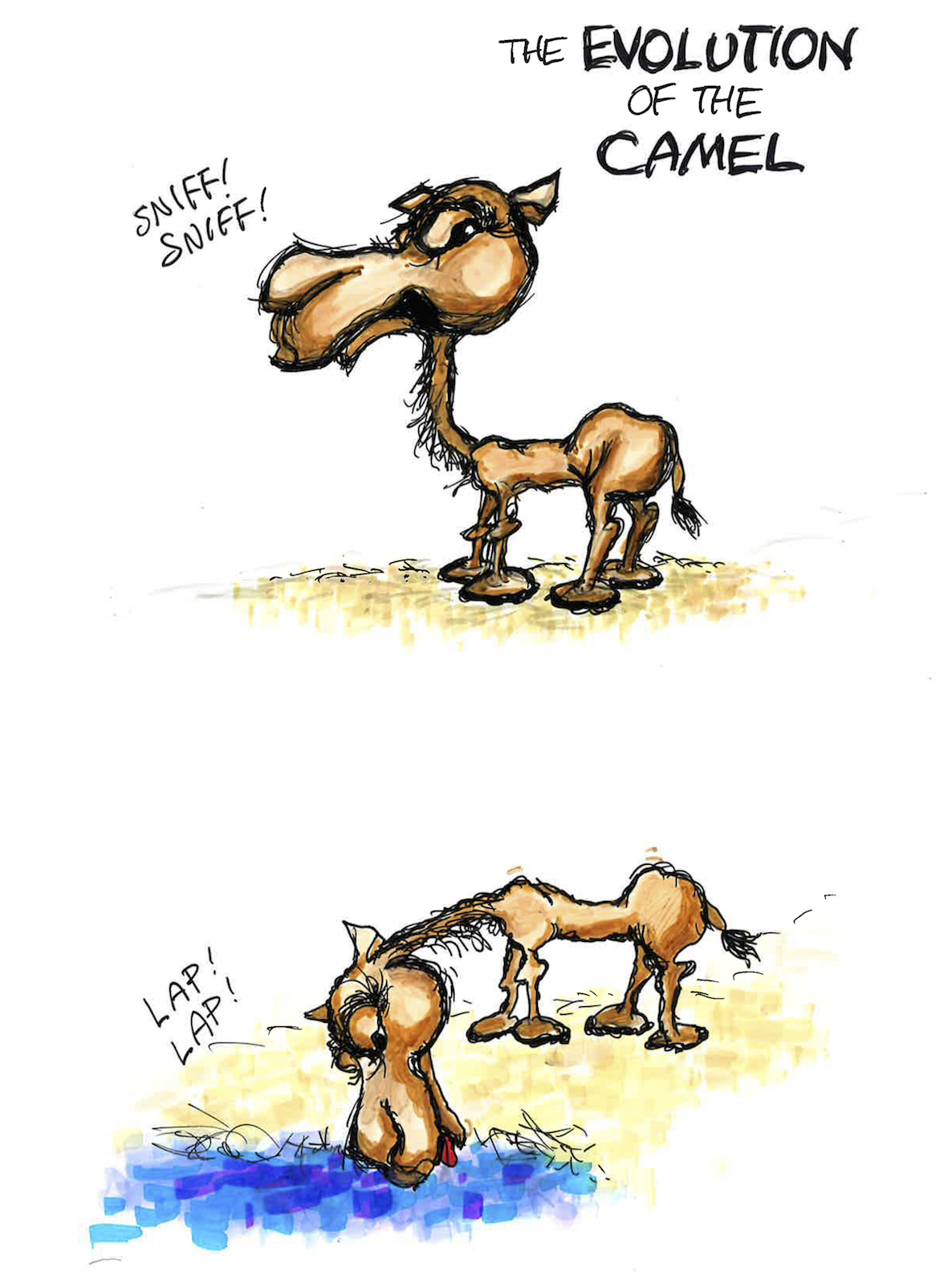
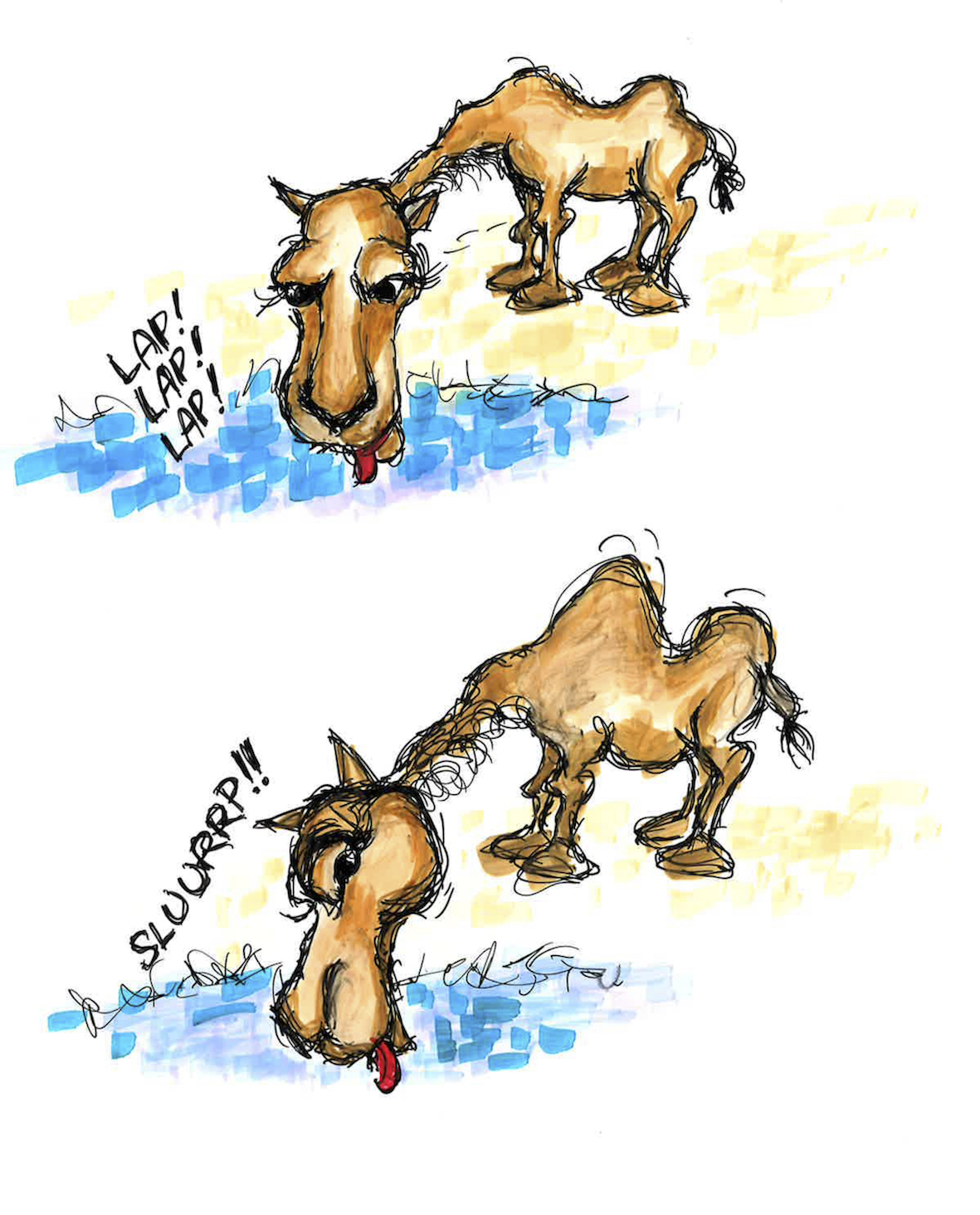
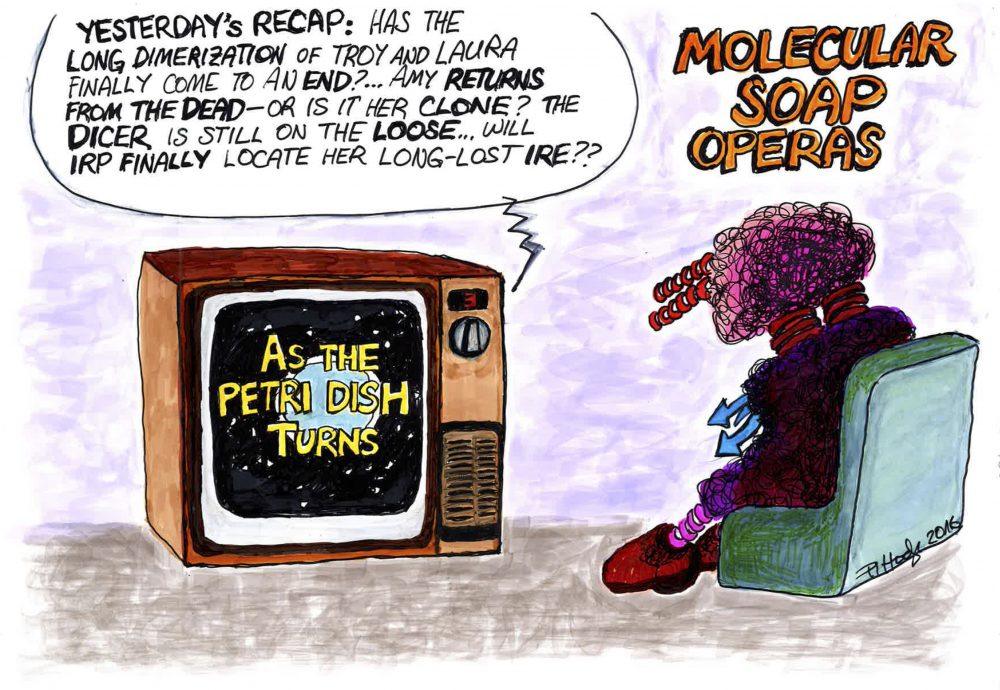
Today’s features include the mitotic spindle – drawn for my good friend Eric Karsenti, retirement parties for proteins, and existential questions upon the fusion of sperm and egg.

As always, feel free to repost and send to friends, citing “copyright 2016 by Russ Hodge, http://www.goodsciencewriting.wordpress.com.”

0235_001


0236_001

0237_001

0239_001

It’s not over until the fat lady sings

An algorithm to end your paper with a bang, not a whimper

You’ve just finished the Best Paper Ever Written, but something’s missing: that perfect last sentence that will make your readers jump from their seats and shout, “Encore! Encore!” They shouldn’t leave before the soprano hits her highest note. What’s the secret? Here’s an algorithm – distilled from thousands of high-impact papers – that practically guarantees success.

Method:  Two readers, working independently, read the same paper and wrote down the last sentence. In a second step they met to drink very strong coffee and compare data. Surprisingly, the results were sometimes in disagreement. Whoever made the mistake had to buy the coffee. Subsequently, the same steps were repeated on 20,000 more papers, over a period of time that seemed infinite but was likely somewhat shorter. At regular intervals coffee was withheld and whiskey was administered, as a means of ameliorating neurological symptoms and reducing the likelihood of  cardiac incidents. When 20,000 sentences had been collected, a systematic comparison was undertaken. Initially this produced no results, due to the inability of the researchers to detect patterns or even stand up most of the time. After six months in a rehabilitation center, their cognitive abilities had returned somewhat and the data was submitted to a second round of analysis. This yielded a model and a powerful algorithm that generates the final sentence for any paper, in a high-throughput way, with very minimal input from the author.


Results:  Most high-impact papers end in this sentence (n = 13,521; p < 0.05):

This suggests that our work will surely open new avenues in the diagnosis of individuals suffering from cancer.

Astoundingly, this is true even for papers that don’t mention cancer at all and fail to provide evidence of any connection to cancer. Of course it’s almost impossible to rule out a connection; with a little creativity, anything can be connected to anything, including Kevin Bacon. We all know that the best way to demonstrate that something is connected to cancer is to claim, in print, that it is not: within days somebody will find some sort of link.

In nearly all the other papers, authors changed a few words to include their own content but kept the structure of the model sentence. This provided a template for the algorithm:

This  1   that   our  2  will    3      4    new  5   in the    6   of  7   suffering from   8 .

The algorithm can be used by anyone capable of following simple instructions: From each column below, choose the word that best fits your research, then put it in the corresponding slot in the following model sentence:


1 2 3 4 5 6 7 8
suggests work likely open avenues diagnosis individuals cancer
implies discovery surely lead to approaches treatment patients Alzheimer’s disease
proves findings definitely trigger insights quality of life domestic animals old age
indicates results obviously stimulate fields sanity children excessive verbosity
demonstrates project clearly boost disciplines health chickens domestic

abuse

urges secret videos inevitably excite ion channels sexual gratification teenagers hormone

imbalances

concludes conclusions conclusively bring to a conclusion dead ends mortality senior citizens terminal old age
proclaims proclamations permanenty provoke pathways proselytization popes priapism
proclaims pronouncements omnisciently ignite mule paths removal of nutcases promiscuity
confirms excretions necessarily inflame intestinal canals presence of physicians lack of sleep
fantasizes random musings perfectly hurl gastrointestinal tracts longevity of political prisoners STDs
states considerations considerably push Autobahns socialization of condemned prisoners prion diseases
foresees algorithm astutely impassion windows education of students hallucinations
hints ideas definitively grope with hiking paths conceptual development of torreadors a case of the giggles
threatens witticisms assuredly throw open corridors disposal of stray pets poor hygeine
instructs teachings succinctly emit fish hatcheries recovery of vicious animals messiness
promulgates lessons exhaustively exude routes death of viruses body odor
presupposes commandments heavily reduce considerations occupational therapy of queens/ other titles of royalty poor self-esteem
attests theories limitlessly disgust red carpets domestic situation of insects split personality disorders
promotes hypotheses infinitely digest trap doors visa status of rocks the attention of a two-year-old
dispells treatises obnoxiously fling aside drive-throughs marital status of irrationally happy people public intoxication
concurs dissertation quirkily discard escalators enjoyment of saftey inspectors idiosyncracies
occludes paper dramatically continue litter boxes eyes of television

sets

writer’s block
announces grant application significantly enhance start-ups pockets of alien life forms library fines
broadcasts YouTube video meaningfully display cat videos retirement parties of professors projectile

vomiting

tweets workshop stultifyingly expose body parts electrical sockets of blind dates fatal hiccups
predicts examinations clearly sharpen views lenses of myopic people new bifocals

In rare cases, the most fitting words for your project will all be found in one row:

This  concludes  that   our  conclusions  will  conclusively  bring to a conclusion  new dead ends  in the  mortality  of  senior citizens  suffering from  terminal old age.

But in most cases you will need to mix items from different rows, producing sentences like this:

This proclaims that our project will omnisciently inflame gravel roads in the recovery of royalty suffering from poor self-esteem.

or

This hints that our witticisms will succinctly enhance new escalators in the recovery of chickens with poor hygeine.

etc.

The power of the algorithm lies in the number of possible combinations it can produce: namely, 258. Somewhere in this galaxy of sentences must be one that adequately describes your project. If not, you should probably change topics.

Discussion

The sentence produced by this algorithm should be put at the end of the “Discussion” section. “Discussion” was coined by combining the words “Discus” and “concussion”, reflecting the fact that a good paper should have an impact. A good discussion compresses the paper’s data into a heavy object, if possible with a good aerodynamic shape, and hurls it high into the atmosphere. A high-impact paper will return with such force that anyone struck by it will require medical attention. To avoid being struck yourself, which is embarrassing, never throw your discussion straight up. This suggests that our work will surely open new avenues in the diagnosis of individuals suffering from cancer.

All material on this website copyright 2016 by Russ Hodge

The Devil’s dictionary, Oct. 9 update

See the complete Devil’s Dictionary of Scientific Words and Phrases here.

3707_001


offal  something inside an animal that is removed so that it can be eaten by another animal, thus returning to the inside where it belongs. An example is the Scotish dish haggis, made by thrusting a hand into the mouth of a sheep so forcefully that it passes all the way through and emerges from the other end, then grasping the tail and executing a sudden jerk in the headwards direction until the sheep is turned inside out, with its intestines on the exterior. After seasoning, the animal is roasted or baked until it shows no further signs of resistance. The first time an Englishman saw this practice he called it “awful”, to the great pleasure of the Scots, whose esteem for anything (such as the EU) rises in direct proportion to the degree of displeasure it causes the English. The Scots proudly began calling their dish “awful” haggis, but their pronunciation made it sound like “offal” to the English, who readopted it as a term to refer to “any innards that only a barbarian would eat.”

Organs that have been extracted for the purpose of transplantation are not normally considered offal, unless they are eaten by mistake. Vomit is considered offal by cats, but not humans, except in the case of projectile vomiting, which in the most severe cases includes bits of organs.

An example of the word’s proper use can be found in the sentence: “How awful is a wall of falafal full of offal.”

efflux  something that comes out of a body, usually involuntarily. Removed from its natural environment and placed, for example, on the sidewalk, or on your dinner plate, efflux usually generates a sense of disgust and nausea, because you realize that there is more of the stuff in your body. This usually leads to reflux. From a legal standpoint, efflux has the same status as garbage: once you’ve put it out on the street, it becomes public property. Dogs may come by and roll in it. DNA samples may be taken from it without a warrent. You can no longer patent it. Anyone is free to come by in a pick-up truck, take it away, and display it on their lawn, or sell it on e-bay, or use it as the basis of a start-up company.

influx  to pick up some efflux and insert it into your body, usually via the mouth, which frequently triggers reflux. If the material originally came from your own body, this is not considered cannibalism.

reflux  to eject a disgusting substance from your body for a second time by, for example, vomiting. The first time it came out it was efflux. After studying the contents of, for example, the vomit you decided it contained something your body needed, such as a kidney, and tried to return it to its natural environment (influx). The second rejection is the reflux. By this point most people figure out that the body is rejecting the substance and give up. But the literature reports a few cases of triflux, quintiflux, and a pathological condition called millifluxitis.


All entries in the Devil’s Dictionary are copyrighted 2016, by Russ Hodge, and may be freely used by citing the author and this website.


If you liked the Devil’s Dictionary, you’ll probably also enjoy:

On the publication of Remote Sensing


The Devil’s dictionary, Sept. 26 update!

See the complete Devil’s Dictionary of Scientific Words and Phrases here.

3707_001


sonogram  the standard unit for measuring the weight of a sound. Contrary to popular belief, loud sounds are not heavier than soft ones. Weight is determined by pitch: the lowest pipe on an organ, for example, produces a bassogram, which when converted to standard measurements is approximately the weight of an adult whale. By contrast, a sopranogram weighs about as much as a hummingbird.

maternal lineage  anything – physical or metaphysical – that binds a daughter to her mother, including the umbilical cord, a leash with a collar, the choice of an inappropriate partner, or various sticky substances found in the refrigerator.

preservation  any artificial procedure that extends the shelf life of organic material beyond its natural expiration date, usually to ensure that there will be a supply of food in the future. Various methods are used, including freezing. Humans are often cryopreserved, for example, so that someday they can be cured of diseases, or eaten, depending on the state of society when the electrical grid breaks down.

GFP  Good Freaking Pie

optimize  to improve the performance of a procedure or machine that has produced inconclusive or fuzzy results by putting on your eyeglasses.

ramification  what happens to a door during the springtime if you put a ewe on one side and a male sheep on the other.


If you liked the Devil’s Dictionary, you’ll probably also enjoy:

Letting science communication (and a cat) out of the box