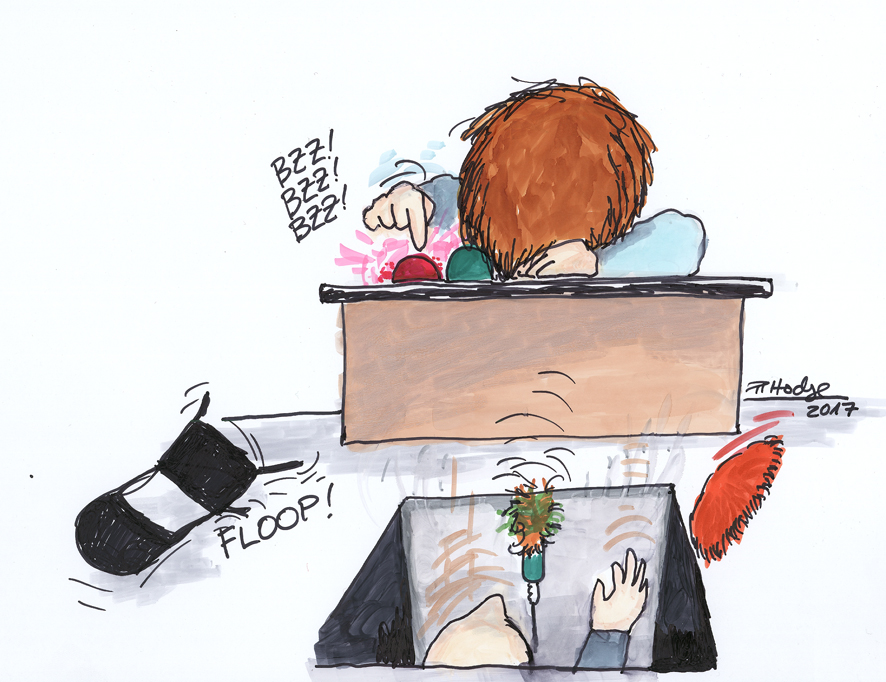
Celebrating blog post #201 with new cartoons…

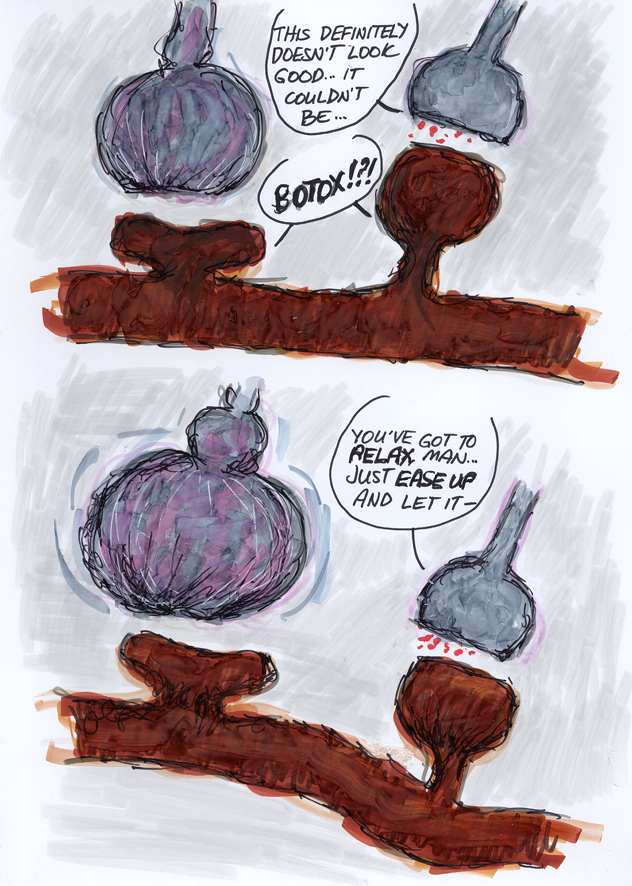
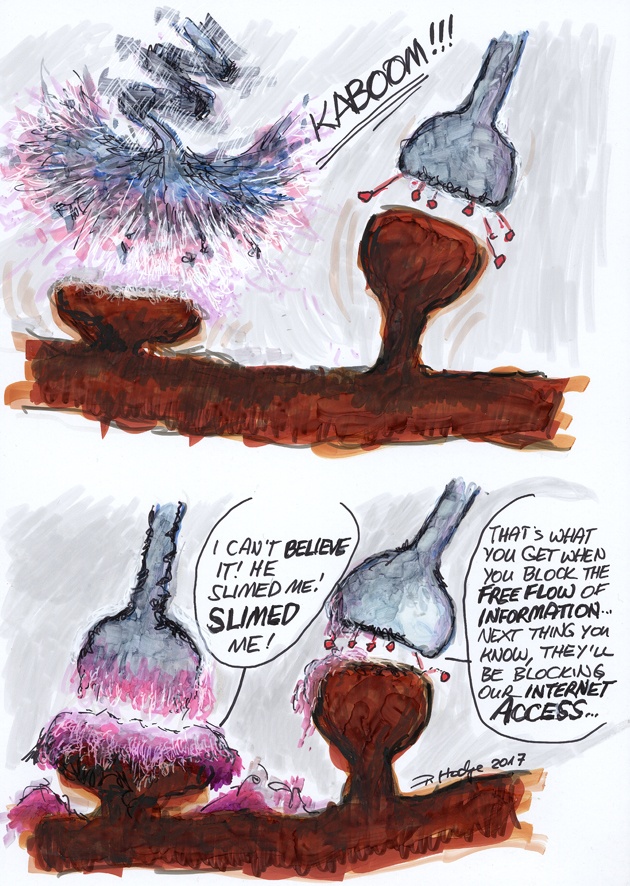
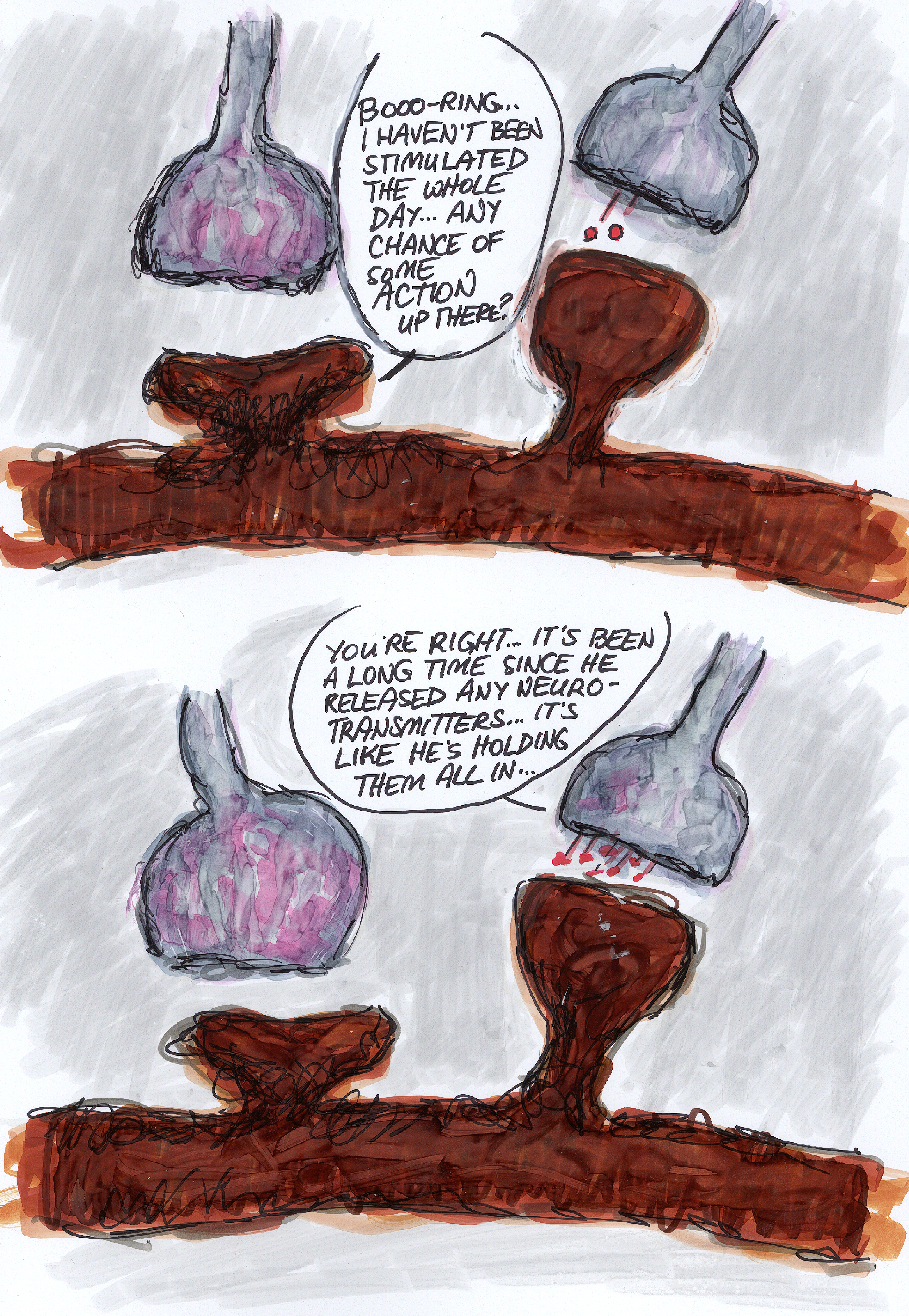
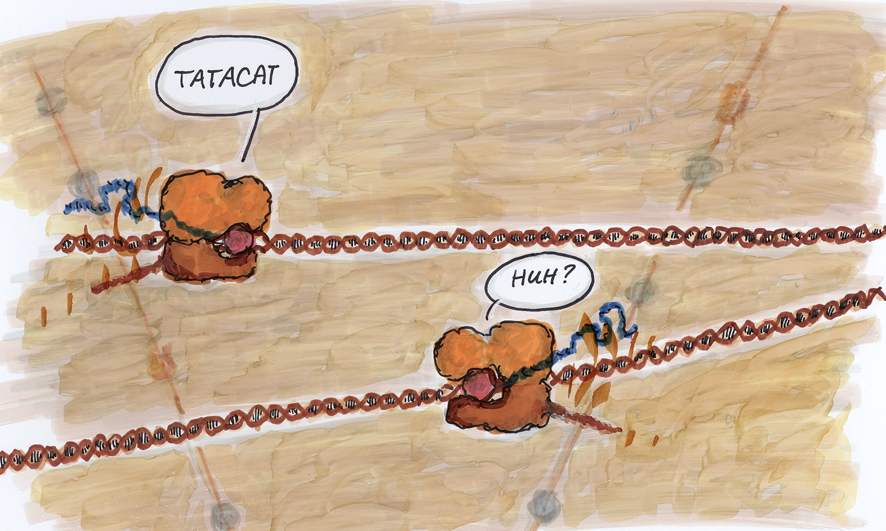
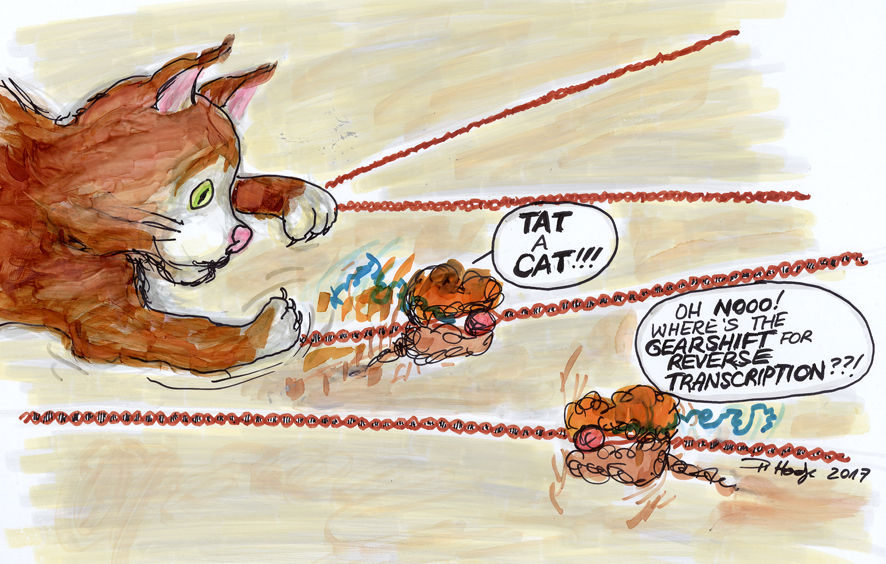
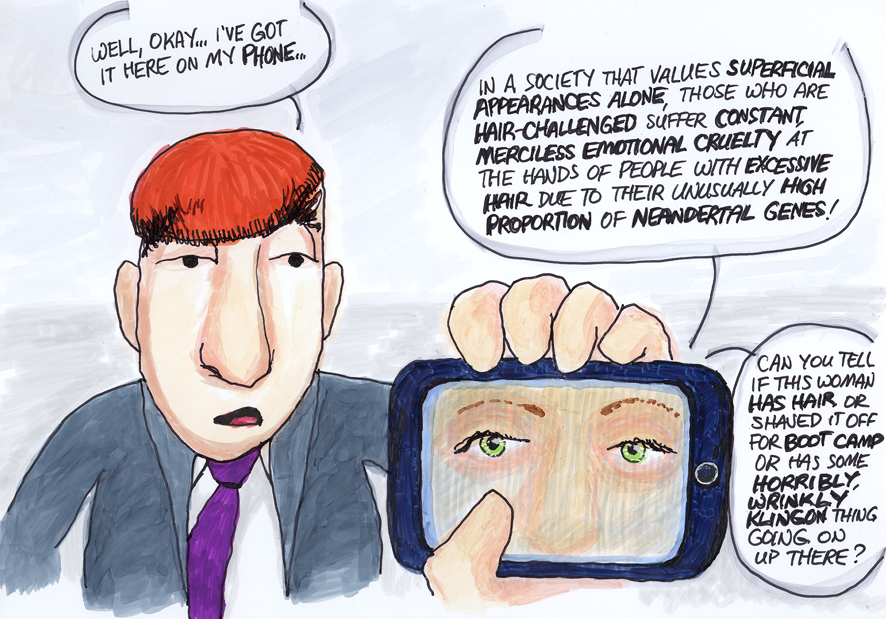
Today’s topics: the synaptic dialogues continue, transcriptional humor, and a nuclear pore or two…

If you see any biology nerds lurking around,
or know one, or accidentally hit one with a pie,
please tell them about the site!

Feel free to use any images you like,
just cite copyright 2017 by Russ Hodge,
http://www.goodsciencewriting.wordpress.com

  1. The Synaptic dialogues continue…!

  2. And a little transcriptional humor…

3.  Nuclear pores & such

Time for another new entry in the Devil’s dictionary!

Today’s words:  Richter scale, olfactory, olafantory, osmosis, and imbibe

See the complete Devil’s Dictionary of Scientific Words and Phrases here.

3707_001

all entries in the Devil’s Dictionary copyright 2017 by Russ Hodge.


Richter scale  (named after Russia pianist Stanislav Richter)  a sequence of eight specific tones somewhere near the bass end of a concert grand piano. When played in the proper order at a precise rhythm, the scale produces long, overlapping sound waves which propegate through the Earth and intersect at a point 1240.8 km from the piano. There they intersect to cause a harmonic dissonance whose frequency is complementary to a structure commonly found in fault lines, leading to seismic disturbances. The first use of the term dates from a 1958 performance by Richter in Sofia. The titles of the works he played have been lost, but at one point he ventured into the bass and applied a bit more sostenuto to a passage than was his habit. A few minutes later a series of tremors completely wiped out a distant village. Conspiracy theorists hold that Richter was a part of a Soviet experiment to weaponize the concert grand piano, but there is little evidence to support this. In 1998 mathematicians at MIT submitted a paper to the journal Nature claiming that they had solved the scale, but their results were immediately classified.

olfactory  originally derived from “Olaf’s factory,” operated by a Medieval cheesemaker from Norway, whose cheese stank so badly that Olaf and the members of his family progressively lost their sense of smell, in response to which they made the cheese even stronger. Ultimately the stench rising from the factory reached an intensity that had the effect of a physical force, creatig high-pressure atmospheric conditions that altered the weather and affected many aspects of regional ecosystems. Local species, including lots of humans and the entire native elephant population of Norway, had to adapt or flee the area to avoid symptoms such as nausea, temporary insanity, and blackouts while operating heavy machinery. There were also beneficial effects: sinus conditions be cleared up even through a very brief exposure to the smell, and people who had been pronounced dead were sometimes revived for a few days.

Whenever a westerly wind became strong enough, the smell drifted over the border into Sweden, prompting a number of retaliatory military incursions, all of which were repelled by the smell long before coming close enough to the factory to destroy it. Today the cheese is classified as a weapon of mass destruction, in a category shared by biological agents, nerve gases, and nuclear weapons, and has been banned under various international treaties.

In biology the term has paradoxically been coined to encompass all the mechanisms of smell: beginning when external molecules called olafactors force their way into the bodily cavities of an olafactee, usually after bypassing the gasket-like structures that protect the nose and mouth. Really smelly molecules such as garlic, which have a pointy prow on one side, can also enter by piercing the eyes, ears, pores and that other bodily opening I am too polite to name here. From that point they progress along tube-like passages until they reach a gas chromatograph installed in the brain. The brain, which has just as much difficulty interpreting gas chromatography data as anyone else, enters a state of disarray that it interprets as smell. Olafactors are ranked on a five-point scale: 1) pleasant, 2) tolerable, 3) bad 4) indescribably bad, and 5) fatal.

olafantory  pertaining to olafants: a hybrid made by fusing the genome of an elephant with that of an ant. After the creation of the first olafant, which was the result of a mix-up in the laboratory, scientists discovered that the structure of their chromosomes makes this fairly easy to do. So far, olafants have not been found in nature, for reasons that are not completely clear, which means they can only be produced artificially through genetic engineering techniques. This was exciting the first few times, because it was hard to predict what would grow out of your cell culture. But olafants turned out to be quite pesky creatures, and enthusiasm quickly waned to the point that it has become hard to find them, except on-line.

osmosis  does not derive from the ancient term osmo (which means “smell” or “thrust”, or both in the case of very strong smells), as has been commonly assumed. Recent philatological studies indicate that the term is actually coined from the name Mosis, a mythological figure from the time of the ancient Hebrews, an illegitimate child who, immediately after birth, for reasons that are not totally clear, was sent on a voyage downriver in a very small vessel of some sort, perhaps to serve in the capacity of a spy, but after being kidnaped along the way by a sect he succombed to one of the worst cases of Stockholm syndrome on record. Over time Mosis became brainwashed to the point that he he was elected President of the cult, winning the electoral but not the popular vote, at which point he became genuinely unhinged and unleashed seven different weapons of mass destruction on the city of his origins, including a flood that most modern historians attribute to the bombing of the Aswan dam. Where the Hebrews got the bombs is unclear – perhaps from the Chinese, or from Atlantis. There is no evidence that they were nuclear in nature.

Amosis means the opposite of osmosis and is named for Mosis’ brother Amos, whose function in the stories was as a sort of control group for his sibling, an Abbott to Mosis’ Costello. Whenever Mosis claimed that God was speaking directly to him, for example, Amos would say things like, “Are you sure it’s not just a malfunction of your parietal lobe? Have you been taking your meds?”

For centuries the term wandered around Europe on a sort of extended backpacking trip, trying to find itself, until it finally acquired its modern meaning for biology or physics. The French were the first to tame it, as part of a great influx of vocabulary that was necessary upon the arrival of the Baroque period. The original term was au mosé and was restricted to perfume, which was rediscovered in the Baroque period. Scholars knew that something like it had existed in ancient Egypt and believed, for some reason, it had been one of the seven weapons of mass destruction unleashed by Mosis, a type of chemical warfare. This interpretation might have arisen because women were using lots and lots of perfume which is understandable given the fact that no one bathed during the period between 1130 and 1730.

At the time the cloud that accompanied someone wearing perfume was wall-like and would thrust you backwards, unless you were trapped and couldn’t escape. At that point the perfume molecules would penetrate the outer layer of skin and begin an assault on individual cells. Cell membranes offered a first line of defense, but eventually a point known as the perfume pressure limit (ppl) was reached. This triggered an opening of membrane channels called schnozzoporins, which allow perfume molecules to pass through the membrane in exchange for water. At some point all the water is replaced and the system is saturated. Astoundingly, most of the body’s metabolic processes function nearly as well when supplied by perfume as with water, depending on what brand is used.

In its current meaning in physics and biology, the term osmosis refers to just the downriver portion of the Mosis story. So osmosis in a cell, for example, is any process in which an object embarks on a journey downstream, is hindered by some obstacle such as a kidnaping by bandits along the route, who are subsequently subdued in some heroic way, permitting the protagonist to reach the other side. In the case of the mythical Mosis the barrier was a social and political one, but in biology the term usually refers to a physical barrier that something needs to pass through. For example, as it is expelled from the body, urine must overcome the obstacle of air to reach its destination, through a special form of osmosis known as pissing.

liquid chronotography  any system that uses water or another liquid, such as root beer or blood, as a basis for measuring time. Methods of torture that involve a regular dripping sound, for example, are examples of liquid chronotography. Not to be confused with liquid chromatography, which means painting with water colors.

imbibe  to drink, but in a polite and refined way, without slurps, burps, or other forms of musical accompaniment. Exbibe is to move fluid in the opposite direction: to eject it from the mouth as spit, or projectile vomiting, but only if the act is hidden by a handkerchief, or cleverly concealed in some other way, and only when it is not intended as a political statement. The analogous terms for solids are ingest and exgest. There the root gest originally derives from the word gesture, whose meaning dates back to a time when cannibalism was still common and considered a sport like geocaching. At that time offering a person your hand – a gesture – was a form of greeting taken to mean, “Please take a bite.” At some point a bright cannibal realized this could be prevented by wearing a metal ring, which would break teeth before any flesh was penetrated. This is the origin of the practice of kissing the rings of popes and other royalty.


The Bible of Elazığ (5)

Part five

(For the beginning of this story, see the earlier posts at part 1, part 2, part 3, and part 4.)

Carbon 14 dating is based on the priniciple that an animal’s tissue contains carbon dioxide from the plants it has eaten. CO2 is radioactive because the carbon arises through an interaction of cosmic rays with atoms in the high Earth atmosphere; it then settles to the surface and is absorbed by plants during the process of photosynthesis. When an animal dies, it stops eating and absorbing CO2, and its radioactivity begins a process of decay. About half of the value is lost approximately every 5,730 years. So measuring the amount of CO2 and its level of radioactivity in a sample permits scientists to date a tissue – providing the animal that absorbed it died within about the past 50,000 years.

Modern dating has to take another factor into account. Until the 1960s, when the practice was banned, a number of nuclear weapon tests were carried out above ground. This nearly doubled the amount of radioactive carbon in the atmosphere, and the tissues of every animal that has died since bear the signature of this event.

* * * * *

I hadn’t been able to stop thinking about the Bible during my family’s vacation – maybe the results of the dating would be waiting when we returned. But there was nothing from the Center for Archeometry in the mailbox.

I took a couple of calls from the Turkish family and met once more with the group in Berlin, but had nothing to report. “They said in the best case it would be a few weeks,” I said, and promised to check in as soon as I had the results. The nerves of everyone involved were frazzled, which I could well understand.

Finally, two weeks later, the letter arrived in Berlin. I wanted to tear open the envelope, but peeled open the flap carefully and removed several printed pages. The Center had included a cover letter which didn’t summarize the results. For that I’d have to look at the data, which was included. Instead the letter merely stated that the smaller sample – the one I’d taken from the inner pages – was too small for reliable measurements, so they’d had to use the fragment I’d obtained from the cover.

I opened the report and scanned the data, which consisted of a number of tables; at first I couldn’t make any sense of it. Finally I found a sentence in the text that resolved all of the numbers and figures: “Noted is the clear presence of a radioactive peak that definitively places the date of the material after the 1960s; the best estimate that can be made from the data suggests that it stems from the period between 1996 and 2003.”

In other words, as ancient as it looked to the untrained eye, the Bible was a modern forgery.

* * * * *

I had been thinking about the fragmentary sample during our vacation. What if that bit hadn’t really come from the Bible? The cloth that the old man had spread across the table had been clean, I was fairly sure of that, but from the way they’d handled the book – could something have been transferred to it? Could the fragment that had been lying there when they lifted it, which I carefully packed and took abroad, have come from somewhere besides the cover? Had it gotten stuck to the outside by accident?

Out of concern for preserving an object that was probably a forgery, I’d eliminated any chance of obtaining a definitive answer. This was nothing more than idle speculation, but the possibility would haunt me for years. Another trip to Turkey was plainly out of the question.

Especially after I called the family in Berlin, and after I placed one more call to Abdullah in Turkey, to deliver the dismal news.

“Are you sure?” he asked, at least three times.

There was no question, I told him; the sample that had been tested was modern.

“Okay,” he said, in a tone of voice that very clearly indicated his displeasure.

That was the last I would hear from any of them.

* * * * *

A few years have gone by. From time to time I have opened the files of the photographs of the book, and I have kept my eye on the news for reports of discoveries of any ancient manuscripts in Turkey. A year or so after all of this happened, a friend whom I had told the story sent me a clipping of a report of a Bible that had been found there. It purportedly dated from the year 1000 BCE or so, and was in good condition; its value was estimated in the tens of millions of Euros.

I had a story to tell, but I remained haunted by questions – not only about my carelessness in taking a sample about the book. Some of what had happened didn’t make any sense. If the family had known from the beginning that they were dealing with a forgery, why would they ever have let us come to take samples in the first place? They surely would have known that scientific testing would have exposed the fraud.

Perhaps they didn’t know – maybe someone else had made the Bible and the other documents they’d seen. Maybe they’d acted in good faith, having found the manuscripts in more or less the way they had described. But if so, what forger would have spent the months that were surely necessary to create an object that was a work of art in its own right – complete with a fastidious but completely fabricated, ancient script, possibly telling some sort of story in some ancient language – unless he’d been sure of selling the thing for a profit? Why such a long, laborious effort? Surely 50 pages of material and script would have sufficed?

From what I have learned in the meantime, such objects normally appear on the black market and are initially sold for a meager price to a gullible buyer who is willing to take the risk that they are forgeries. Then they work their way up the food chain of the underground antiquities market, until they reach a price where someone insists on authentication. At that point the game is up – but at least the transactions have introduced layers between the artist and the buyer.

But coming to any satisfying answer requires an assumption that those involved were acting on good faith, and the slipperiness of some of the stories we were told indicates otherwise.

Once in a while, when I’ve told this story to friends, they’ve suggested it would make great material for a novel. But recently there have been too many fictional tales of ancient Biblical manuscripts; I remember being terribly impressed by Irving Wallace’s The Word, when I was in high school, and of course there is the entire loopy (while highly crafted) Dan Brown genre that has passed through today’s culture like an infection.

No, the interesting thing about this story was that it was true. And that there was more to it: somewhere, most likely in Turkey, is or was an artist who is making these objects. But that was a story that would clearly be dangerous to pursue – at this stage in my life, no thanks, not me. Maybe there will come an ambitious young journalist ready to take it on someday.

Not the last of my thoughts have centered on my own involvement in this: did I act responsibly and ethically? I’m not sure. Given that the object turned out to be a forgery, no harm was done; I can’t say how things would have developed if the dating had turned out differently, and assigned a date to the Bible that more closely reflected the family’s claim.

I still believe that if such an artifact ever does appear, and it proves to be authentic, its contents belong to the world. That requires the sort of protection that can only be assured if academics get involved, but it also requires that governments and institutions handle ancient documents in good faith.

If I had to do it over again, I would have insisted on an expert in ancient manuscripts making the trip to Turkey with us. Those I had previously contacted were too skeptical to get involved, which probably should have told me something. I certainly would have planned a few more days time for the photographs, and would have obtained a larger sample that would have provided an unambiguous date for the manuscript.

If, if, if.

* * * * *

I don’t know why now seemed the right time to publish this story. But a few days after the third installment appeared, I received the following message from a biologist in Turkey, which I am reprinting with his permission:

Dear Dr. Hodge,

I am a Turkish biologist from Inonu Univ, Malatya, the neighboring city of Elazig. Same pictures were shown to myself about 4-5 months ago. The guy told me that it is 105 pages old book written on gazelle leather. The pictures were looking as old as the ones you have posted here. There was a non symmetrical cross with dots around more like a four legged sea star. I sent pictures to Sotheby’s where I sold a piece of rug when I was doing my PhD in IIT(Chicago). Their experts found that it is a product of forgery and has no value whatsoever. Later I learned that these pictures are everywhere in the smartphones of spooky people (so I deleted them. wish I did not and have some here for you). The book is mass produced and put under harsh conditions (such as acid bath and exposing to intense radiation) so that its has a wear out look.

Now sipping my çay (turkish hot tea)!, I hope you have not been swindled. Best wishes,

Hikmet Geçkil, PhD

Thank you, Hikmet, for bringing this story to an end after all.

THE EVOLUTION OF PIZZA: Novel insights into the fourth domain of life

Russ Hodge1*, Pablo Mier Munoz2, and Miguel Andrade2


  1. Max Delbrück Center for Molecular Medicine of the Helmholtz Association, 13125 Berlin, Germany
  2. Faculty of Biology and Center for Computational Sciences in Mainz (CSM), Johannes Gutenberg University Mainz, 55128 Mainz, Germany

* Corresponding author: Russ Hodge, hodge@mdc-berlin.de

Conflict of interests: This project has received no funding from the pizza industry or its competitors, and there are no other conflicts of interest.


INTRODUCTION

Pizza has long held a stigma in biological research that dates back to Linneaus, who was intimately familiar with its properties as an aphrodisiac but failed to recognize it as a living organism. As a result, species of pizza found no place within his elaborate system of classification, and have consequently been entirely omitted in the clade systems developed by evolutionary biologists. Add to this the nigh impossibility of maintaining pizza in laboratories, from which it tends to spontaneously disappear through mechanisms that are poorly understood, and the result is that pizza has been forgotten in the deep freeze as the life sciences have moved forward in great strides.

The physiology of pizza makes it difficult to classify; on the one hand its structure bears striking similarities to a single cell, vastly scaled up, if you think of the crust as a membrane, and from that perspective the ingredients resemble organelles. Yet it also has properties we normally associate with highly developed multicellular organisms. One could also consider it a sort of complex ecosphere containing many subspecies. Data from an evolutionary study should show us which of these models is most appropriate, but the data will have to be new. The fact that pizzas never evolved a skeletal or exoskeletal system has led to a paucity of fossil remains which otherwise would surely have generated interest among the paleobiology community and provided insights into the descent of modern species.

The synthesis of Darwin’s theory of evolution with findings from genetics has led to modern, computational approaches that compare the features of modern organisms to reconstruct those of their common ancestors. Here we apply this basic principle of “common descent” to construct the first evolutionary tree of pizza.  We should note a potential confounding factor: Modern varieties have clearly been shaped by human domestication and selection, and a small number of mutant strains have spontaneously appeared in recent years, probably due to exposure to microwave radiation. While these factors confound the picture to some degree, the method does, in fact, permit a means of resolving questions about pizza biology that have long resisted analysis.

The resulting diagram introduces considerable clarity into the path by which current species of pizza arose from a single common ancestor, through stages that became the founders of major branches, and finally to modern forms. It permits us to hypothesize the existence of ancestral forms that have homologs in the varieties that exist today. Finally, it provides insights into fundamental biological processes that are unique to pizza, supporting a claim that these species represent a fourth domain of life which is distinct from archaea, bacteria, and eukarya, but which has clearly interacted with them in ways that have shaped its evolution.

We find evidence that pizza has managed to co-opt fundamental biological processes from the other domains of life and mix them in a way that hints at hitherto unexplored evolutionary mechanisms. Pizza appears to have snatched genes from various sources on its way to becoming an independent organism, then undergone a phase in which it became wholly dependent on human domestication, leading to a simplification of its biology. Our study suggests that the appearance of pizza in complex ecospheres containing other life forms influences them on several levels – from the neurological to the behavioral to the social, altering patterns of predation and other types of interspecies interactions.


METHODS AND RESULTS

We visited approximately 100 different Italian restaurants in a sample of no less than five European countries over a period of 4 years (extrapolated from social media statistics of the authors: FourSquareTM, GoogleTM Location History, etc.) to gather the names and ingredients present in a total of 58 different pizzas (Supp.File1). While we did not taste them all, we can attest that none are venomous and their organoleptic qualities can therefore be successfully transmitted mouth-to-mouth to the next generation of diners.

The ingredients were clustered in 9 groups according to their origin and use in cuisine (Table 1). Tomato sauce and mozzarella form their own groups, as they are not considered ingredients but inherent components of the pizza (Combet et al., 2014). The pineapple was set apart in a group by itself as an obvious aberration, due to the fact that it is universally recognized as a dysfunctional mutation that arises from a hybridization event (somewhat like the mule) and cannot produce viable offspring.

Table 1. Ingredients considered per group.

Class Ingredients
Tomato sauce Tomato sauce
Mozzarella Mozzarella
Extra sauce Cream, truffle cream
Extra cheese Gorgonzola, parmesan, ricotta cheese, fontina cheese, scamorza, stracchino, asiago
Meat / eggs Beef, salami, raw ham, ham, bacon, sausage, bresaola, egg
Fish / seafood Tuna, anchovies, seafood
Pineapple Pineapple
Condiments / herbs Pepper/green peppers, oregano, rosemary, parsley, genoese pesto, garlic, olive oil
Vegetables Artichoke, zucchini, asparagus, spinach, peas, eggplant, assorted vegetables, sliced tomato, courgette flower, onions, olives, mushrooms, rucola/rocket, potato, french fries, corn, polenta, radicchio

It is notable that not a single pizza contains more than three ingredients from the same group, which hints that this might lead to some sort of synthetic lethality, or a genetic event along the lines of the acquisition of excess chromosomes.

The pizzas were scored by counting the number of ingredients they contained per group. Exceptions are the tomato sauce and the mozzarella, which were counted as three ingredients each due to their importance in the general composition of the pizza. The data was analyzed using the R programming language and Rstudio, to cluster the pizzas based on their ingredients. The result was plotted in a clustered heatmap using the pheatmap R package (Kolde, 2015).

Tomato sauce and mozzarella are the key components in the pizza and serve as classifiers (Figure 1). Ingredients from the meat/eggs and/or vegetables groups are often used as the toppings to go together with the main components of the pizzas.

Figure 1. Clustering of the 58 types of pizzas analyzed based on their ingredient composition.

DISCUSSION

Here we present the first rigorous investigation of the origins and evolution of pizza, a form of life that has been shamefully neglected by science even as it has been shamelessly devoured by scientists. While the reasons are unclear, one cannot rule out some sort of large-scale conspiracy on the part of commercial entities. It would not be in their interest to recognize pizza as a life form; such recognition would likely trigger a cascade of intrusive regulatory measures that would curtail society’s wholly utilitarian approach to pizza’s handling and use. Ethical issues, too, have had an influence: in many societies, pizza is treated as an inanimate object, like a rock (only softer), and no consideration whatsoever is given to the possibility that it might possess some sort of limited awareness, possibly even experiencing feelings of distress or pain.

In modern times, pizza species have become entirely dependent on human cultivation, just like many plants, domesticated animals, and model organisms that are studied in laboratories. The biology of pizzas has become simplified through this dependency. Modern forms have, almost certainly, lost genes that were originally crucial to their ancestors’ survival. As a result, pizzas are no longer competent for survival in the wild. Although it should not be considered a parasite, pizza’s dependency on humans has likely sent it along an evolutionary path resembling that of pathogens and viruses.

Under normal processes of natural selection, one would expect organisms that are tastiest to their predators to be eaten more, and this would subject certain types of pizza to to intense negative selection. This would also be the case for pizza, particularly since it has no intrinsic means of locomotion that would allow it to escape from its human predators.

But domestication has reversed this trend, positively selecting for the forms that are most likely to be eaten.

Nutritional and Health Implications for Non-Pizza Species

Pizza is a fixture of worldwide ecosystems and global food chains, nourishing species as diverse as college students, police, bowling teams, and other categories of humans—and also dogs, cats, hamsters, pigs, rats, cockroaches, crocodiles, fish, etc. The decaying remains of pizza crusts that have fallen down cracks in sofas provide a rich environment for microbial life, including bacteria such as legionella, Yersinia pestis and Mycobacterium leprae, which might otherwise be in danger of extinction. In this way, pizza plays a central role in global biodiversity; one might even regard it as the glue that holds everything together. But this notion is somewhat speculative.

Technical obstacles have made it difficult to maintain pizza in laboratory cultures, creating a sort of black hole of knowledge with regards to its biology. This is alarming in light of the numerous epidemiological studies tying pizza to serious health problems including obesity, addiction, attention deficit disorders, frostbite, burnt tongues, and deaths related to placing aluminum foil in microwave ovens.

Excessive consumption retards human cognitive development, pushing adolescence far into the college years, a situation which can only be reversed by adding vegetables to the diet. Predatory consumption of pizza has led to a major reduction of human motility; delivery services have completely eliminated the hunter-gatherer activity that used to be required to obtain it.

Summary of Pizza’s Biological Features

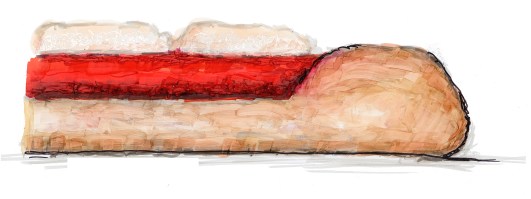
By applying well-established methods of phylogenetic analysis to the features of pizza (namely, the ingredients found in 58 extant species) we derived the first systematic evolutionary account of its descent from an ancestral form. The results point firmly to a last common ancestor, providing insights into fundamental aspects of its biochemistry, development, and the selective forces that have shaped its evolution into diverse types. Our observations of pizza in situ suggest that its basic biology draws on unique features which are hard to reconcile with those of traditional biological models. A key finding is that the ancestral pizza exhibited very little elaboration of specialized structures. It consisted of only three tissues: dough, tomato sauce, and mozzarella. Each of these tossues exhibits a high degree of molecular complexity, while having stable biophysical properties that are crucial to maintaining the integrity of the organism over time.

 pizzaoverview

Figure 2.  Artist’s reconstruction of the last common ancestor of all current species of pizza

  1. The Pizza Lifecycle

The pizza lifecycle is marked by the three phases embryogenesis, maturation, and decline.

Entry into a phase is determined by environmental factors: embryogenesis takes place at room temperature; maturation begins when the temperature dramatically rises to about 220 degrees Celsius and usually lasts 10-12 minutes. Returning to normal room temperature introduces a brief period of homeostasis after which pizza enters the phase of decline.

Laboratory experiments have shown that pizzas which have completed embryogenesis can be preserved through cryopreservation, which induces a state of dormancy or hibernation. They can be maintained this way for a year or two without any apparent damage. The decline phase can be prolonged by a day or two through cooling, after which a brief exposure to heat is used to revive the pizza. This may cause it to repeat the last stages of maturation and then enters the decline phase, which is now accelerated.

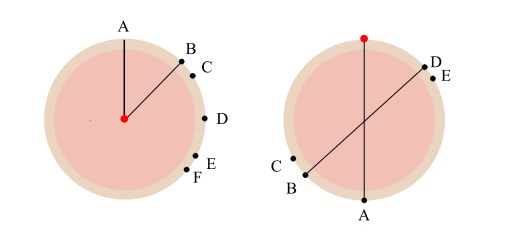
At the beginning of the decline phase, most pizzas separate into segments in a process we have termed alternative slicing. The result is a series of cracks or furrows that extend from one side through a mid-point and end exactly opposite around the circumference. Multiple slices develop, leading to wedge-shaped units—most often an even number (between 4 and 12) of segments. It is unclear whether this process begins at the middle and radiates outwards, or starts at an edge, traverses the middle, and arrives at the other side. The mechanisms required for these two processes would necessarily be fundamentally different. Either way, a number of fascinating questions arise: As each split begins, what molecular signal does it follow to stay on course rather than veer away? What determines the total number of divisions that will occur? How does one side of the pizza “know” what is happening on the other side, so that the proportions of the slices remain equal? We are exploring these questions through the “Virtual Pizza,” which we developed for use in computer simulations.

The biological functions of these subdivisions are unclear. We hypothesize that they have been sustained through a unique sort of evolutionary mechanism that does not directly benefit the pizza itself, for example by promoting its survival, but rather by ensuring a harmonious environment around it.  A failure of the pizza to divide would cause its predators to fight over the whole. Even if only a very small fraction of these conflicts were fatal, over long periods of time this would offer a slight advantage to animals that fed off the sliced form. Since pizza now exists only as a domesticated species, its genomic features can be seen, in a way, as an extension of the gene pools around it. For whatever reasons, this leads to better chances of survival for pizza variants that promoted harmony among the other species around it. The effect appears to be bi-directional: research has shown that just the presence of a slice of pizza triggers a release of dopamine among humans.  This makes them less aggressive and more sociable. So ultimately, the integration of pizza into the human diet appears to have played some role in the development of modes of primitive social organization that became more and more elaborate until they acquired the forms familiar to us today: priesthoods, the military, and governments. And bowling alleys, and pizza parlors.

simulations

Figure 3.  The Virtual Pizza: Computer modeling of alternative slicing

  1. Tissue Structure Through the Lifecycle

Dough begins as an elastic substance under room temperature, which is characteristic of the environment of embryogenesis; in the heating phase it becomes crisp, and remains that way as it cools, matures, and approaches death.

The sauce begins as a thick fluid which crystallizes somewhat at the pinnacle of the heating phase, remaining gummy through the first phases of cooling, then hardens until it is nearly all crystallized at the end of cooling.

Mozzarella begins as a rubbery substance, melts into a liquid under heat, and only hardens after an extended period of cooling over time.

These transformations of the three tissues do not alter the basic structural integrity of the whole, unless the pizza is subjected to unusual biomechanical forces such as it would encounter when flung through the air. An embryonic pizza would stretch and fly apart; the hardness of a mature pizza gives it the properties of a Frisbee.

pizza_quer copy

Figure 4.  Layers of pizza tissue structure (side view)

  1. Embryogenesis

The earliest stage of pizza’s embryonic development bears some similarities to Dictyostelium (“slime mold”), an organism that lies at the borderline between unicellular and multicellular life.

Dough assembles in an environment containing sufficient concentrations of the necessary chemical and biological ingredients: particles of wheat, water, sugar, and some form of oil. Such environments usually contain abundant populations of yeast cells, which get dragged along as the components are attracted to a central location, probably by sensing chemokine-like molecules that have been secreted by a cook’s hands.

Upon arrival, the components merge in a sort of symbiotic collective that draws on the genes of the wheat and yeast to trigger a series of metabolic reactions that derive energy from the sugar and oil. The result is to fuse everything into a pliant, undifferentiated mass of dough. Originally this is a ball-shaped mass with stem-cell like properties that may yield a single pizza, or be pinched off to form genetically identical twins.

The ball spreads across a surface to form a flat, circular basal membrane on which new layers will arise. The dough induces the formation of tomato sauce, rapidly followed by a layer of mozzarella. In more elaborated forms, additional organelles such as salami or anchovies arise through chemical interactions between the sauce and mozzarella. Yet the three-layered structure is retained.

This is highly reminiscent of the tissues that arise in animal gastrulation, but that process begins with a group of cells that have retained the ball-like shape, causing inner layers to interact in more complex ways. This difference is a determining factor in pizza evolution, because it leaves the lower layer attached to a substrate, while the upper remains naked and exposed to the environment. The lack of a membrane or shell means that the upper layers of a pizza must constantly contend with fluctuations in the surrounding environment.

This single difference, combined with the fact that embryonic pizza does not have a womb to protect it from dramatic changes in temperature, probably severely restricted the degree to which ancient pizzas could vary from the original design. While eventually pizzas developed specialized organelles such as salami and funghi, there was never much variation to serve as the basis for selection. So the type of evolutionary tinkering that occurred in animals, and shaped the formation of highly sophisticated organs such as the brain, never occurred in pizza.

Conclusions

Our investigation provides the first account of the evolutionary route by which modern species of pizza diverged from an ancient, ancestral form. We characterize the last common ancestor as sharing the three-layer structure of modern pizzas, which resembles the first stage of animal gastrulation. In contrast to animals, however, pizza got stuck there, and never added additional developmental stages.

It is interesting to speculate what might have happened if instead of flattening, dough had retained its original, ball-shaped form, and built layers of sauce and cheese inside. Pizza calzone, a modern species, obtains this type of structure by folding the membranous dough around to seal off the interior, but this is the very last stage in its embryonic development. If, in the distant past, this progression had advanced to the beginning of embryogenesis, pizzas might have followed an evolutionary path much more like our own. Potentially this could have made pizza, rather than humans, the preeminent form of intelligent life in the known universe.

Thinkers such as Richard Dawkins see the evolutionary value of intelligence in its promotion of the survival and reproduction of a species’ genes. Pizza found an alternative by entering into a dependency on humans, who gladly overtook measures to ensure its reproduction, which would have required the development of new social structures. Over time the dependency increased and ultimately restricted the evolution of pizza along paths toward the species we know today. But this notion is somewhat speculative.

Preliminary data suggest that it may be possible to push the knowable ancestry of pizza back even farther, to a point at which the last common ancestor diverged from other organisms such as crêpes, pancakes and burritos. We are currently digesting the data from that investigation, which has presented some technical challenges (mainly due to the fact that we have gained so much weight we no longer fit into our cars).  Once these issues have been resolved, we anticipate publishing the results at a later date,

References

“Development of a Nutritionally Balanced Pizza As a Functional Meal Designed to Meet Published Dietary Guidelines,” Emilie Combet, Amandine Jarlot, Kofi E. Aidoo, and Michael E.J. Lean, Public Health Nutrition, vol. 17, no. 11, 2014, pp. 2577-2586.

“pheatmap: Pretty Heatmaps,” R. Kolde, R package version 1.0.8, 2015. <https://CRAN.R-project.org/package=pheatmap&gt;


References

  • Combet E., Jarlot A., Aidoo KE., Lean ME. Development of a nutritionally balanced pizza as a functional meal designed to meet published dietary guidelines. Public Health Nutr. 2014 Nov;17(11):2577-86. doi: 10.1017/S1368980013002814.
  • Kolde R. (2015). pheatmap: Pretty Heatmaps. R package version 1.0.8. https://CRAN.R-project.org/package=pheatmap.

Supplementary files will be provided by the corresponding author upon request

The Bible of Elazığ (4)

Part four

(For the beginning of this story, see the earlier posts at part 1, part 2, and part 3

Our host produced a folded white cloth and pinched its folded corners. With a single brisk shake it unfurled, was lifted by a draft and drifted onto the table like a settling cloud. Abdullah patted around to flatten the creases. These preparations were made with the attention of a small ceremony. I noticed the cloth seemed to be perfectly clean – later I would wish I had taken a much closer look. Then the door to the next room opened and I caught a glimpse of shelves with regiments of books aligned from floor to ceiling.

Immediately my first question was answered: the only protective measures they had implemented to protect the Bible of Elaziğ, in a house ruled by central heating, was to put it in a plastic bag from a grocery store.

Aldi, I think, but it may have been another German chain.

The extent to which they had followed my urgent requests, apparently, was to put the bag inside a second plastic bag. Markus gave me a strange look – my mouth was hanging open, I probably closed it.

Abdullah helped the man who’d carried it in extract it from the outer bag, into which the old man reached to withdraw the Bible – with his bare hands. I opened my mouth again – thinking of the box of sterile Latex gloves I’d obtained from the lab and been carrying since leaving home. This didn’t seem like an appropriate moment for a lecture on processes of degradation triggered by a transfer of oils, acids and bacteria from a person’s hands, or the need to handle ancient documents under sterile environmental conditions. I closed my mouth again. Probably.

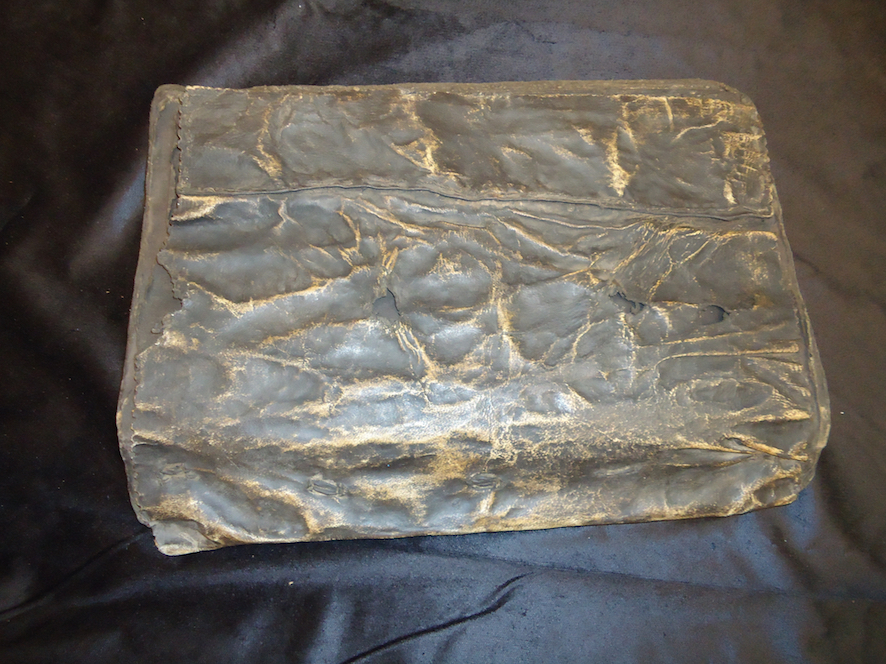
The object that came out of the bag was much smaller than I’d imagined – about the length and breadth of an iPad, but considerably thicker. I realized my expectations about the scale had come from the only format I’d seen it in: the size of the screen of my 17″ notebook computer, which I had been using to zoom in and out, altering the contrast and color range, trying to expose details of its script and the drawings.

Once the book appeared, they handled it gingerly, respectfully, but still with their bare hands. The old man placed it carefully on the cloth, stepped back, then touched one corner and made a minor adjustment until he was satisfied it was centered against the bleached background.

Even the most faithful posters and reproductions of great paintings somehow never do justice to the works themselves, and I had the same impression here. Part of this feeling had to do with its diminutive size, the precision of its outline against the white frame of the cloth. Maybe it became more real by more closely resembling most of the other books in my life.

The leather cover that had been bound around it wasn’t quite as dark the images had suggested. The warped, spotted surface might have been a mummy’s skin. The photographs suggested a pitted, moon-like landscape, but this had exaggerated the depth. Live, it looked more like a wrinkled rubber sheet. At that moment I had no doubt I was looking at something truly ancient, something that had been passed from hand to hand, entombed and lost, resurrected through an accident, finally to arrive to us, in this room, swimming up through the depths of time.

I examined the edges; the spine was more like a fold. From the outside I couldn’t see stitches or any other signs of the means by which the inner pages had been attached to it.

Markus and I walked around and around it, looking at the book from all angles. I had asked a few experts for advice about features to look for that might tell us something about its true age; they hadn’t said much about the cover, but it wouldn’t have helped. My mind was a blank.

At some point I opened my bag to unpack the gloves. Abdullah reached for the book to open it. “Wait,” I said, but by the time George had translated that single word, he’d carefully pulled back the cover with his bare fingers. As if once more made any real difference after they’d surely already handled the book the same way dozens or hundreds of times.

I expected the cover to crumble as he peeled it back, but we were spared that, at least.

In contrast to what I’d seen for the outer leather, the parchment of the inside pages looked quite a bit darker than it had been in the photographs, which considerably weakened its contrast to the drawings and script running across its pages. That might have been due to alterations in the contrast and color values of the image files from their original photos; it could also mean that the manuscript was deteriorating from exposure. I assumed that they’d taken those images using a normal light source that was surely pretty strong. I’d asked the Berlin faction early on to keep to tell them in the strongest terms that it had to be kept away from light, which might massively accelerate its degradation.

I was alarmed, but glad that Markus had equipment for infrared photography. It added urgency to the images we planned to take: unless the Bible could be put into the hands of expert conservationists very soon, subtle features of the pages might be lost forever.

The old man’s finger hovered over the first page, which displayed an image of a cross placed among writing and symbols. George, who was just on intent at looking at the book as we were, fumbled for a moment over the translation.

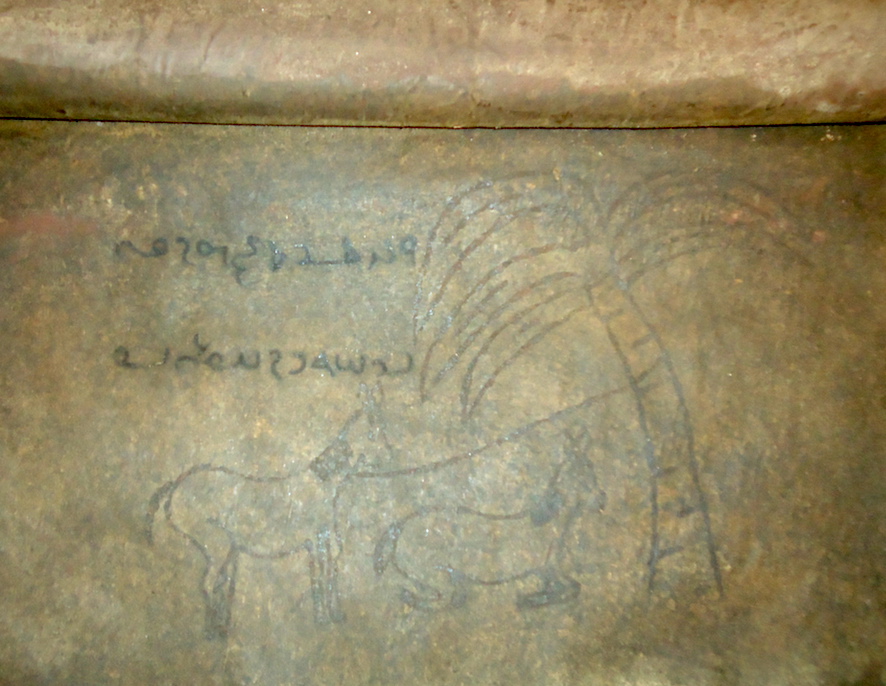
“He says these are the marks of the scribes – the way they signed their work. He says some of the other symbols are a form of representing dates. It’s an old system but he says it’s known and people know how to translate it into the modern calendar. That’s how they came up with the year 232 for when it was written.”

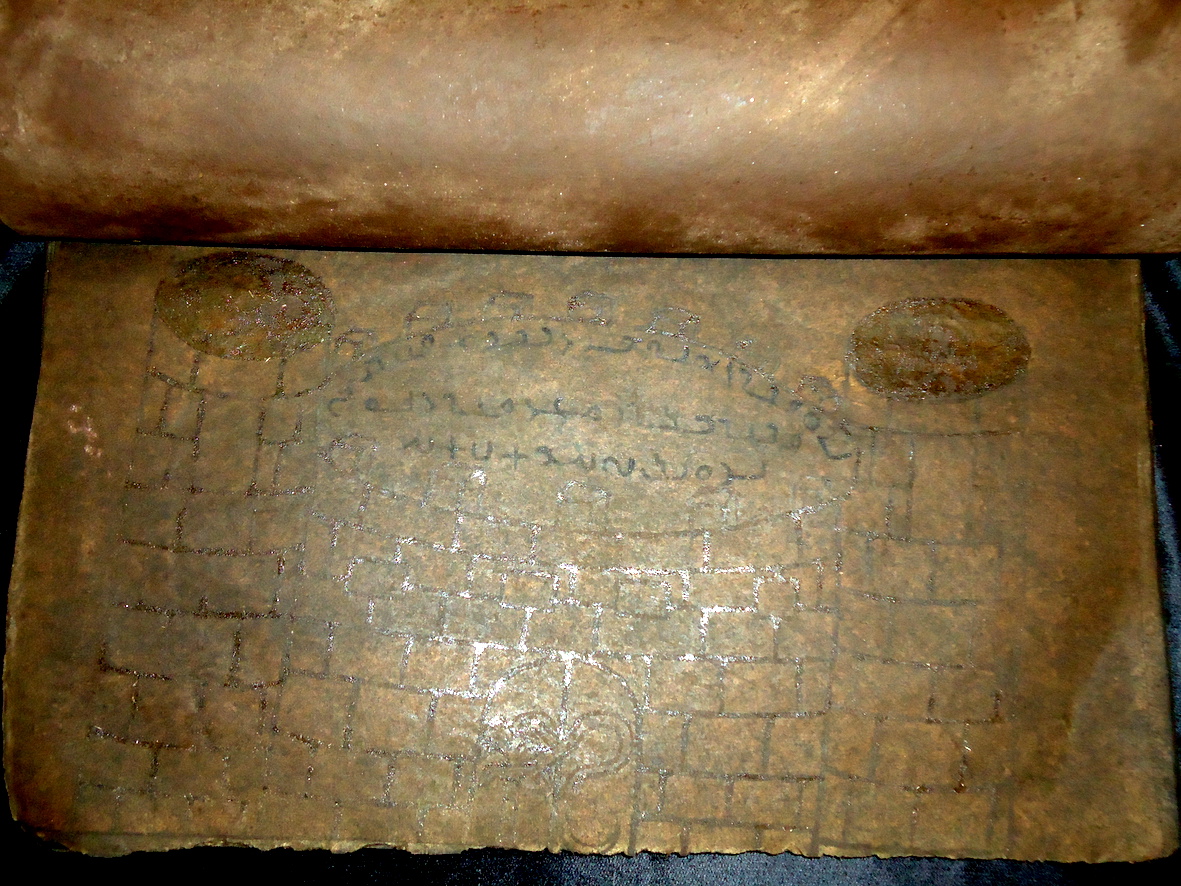
As more pages were turned, the old man kept up a running commentary. We came to one of the first images, of a stone portal structure with two towers. “The ruins of this this structure still exist,” George translated. “In Syria. This place is known – it’s near where the book was found.”

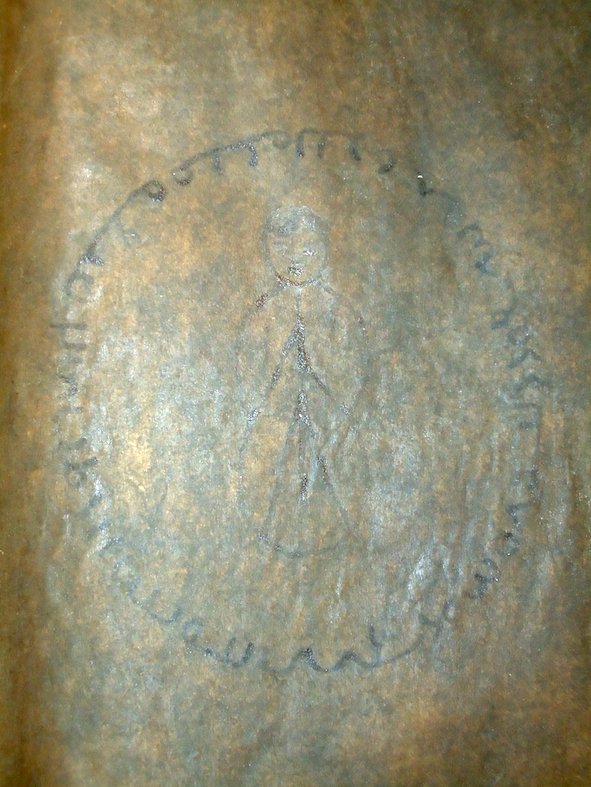
Another drawing – what appeared to be a woman in a scarf and a long robe marked by ornamental spots, under bent palm trees. “You note the shape of the trees? Leaning toward and around her? This was a symbol pointing to something holy, something divine.”

I described my efforts to identify the script, which triggered another long discussion with the old man. Finally George turned back to us. “He says that they showed some of the images to a professor from the university, who thought it might be a form of Old South Arabic. The old man says he has seen it on other documents – and that he can even read parts of it.” Another long conversation in Turkey. “He’s a sort of scholar who has been finding things his whole life. When people learn what is written here, he says, it will change the world.”

* * * * *

Markus hadn’t yet unpacked his equipment, but time was passing and we needed to set things up if we were going to photograph the book. Abullah talked to the old man a while, and then he nodded.

“You can take the photographs,” he said, through George. “But you must leave them here. And also the camera.”

“The camera?” Markus said, astonished.

“Yes, he is very concerned about this getting out, about the story getting on the Internet.”

Markus assured them that once he had taken the images, he would remove the memory card. They could keep it until we had subjected material from the book to Carbon 14 dating and verified that it was as old as they claimed. At that point we would discuss how to deal with the photographs.

More talk. “No,” Abdullah told us. “You’d have to leave the camera. But you will get it back, of course.”

“There won’t be any images on it when we leave,” Markus protested. “I’ll make sure they are erased, and I’ll show you while I’m doing it.” He shot me a pained expression. “If I’d known, I would have brought another camera, or bought one. But I can’t leave this one here.”

“We need the images,” I said. “It was the whole point of the trip – that, and getting a sample.” I added that they had known that was our intent from the beginning; if they were going to make an unreasonable demand, they should have told us.

On this point, however, the old man would not be moved, for whatever reason. We were stuck; one of the main reasons for this whole crazy enterprise had just collapsed beneath our feet. I could ascribe the whole thing to their paranoia – at least until what happened next.

“But he has many pictures they took themselves on his computer,” Abdullah said. “We will let you take some of them with you.”

Markus laughed bitterly. We looked at each other – when dealing with crazy people, what could you do but shrug?

At least they made no objections as I prepared to take get sample for the dating analysis. That, too, had been discussed in advance. And for all the talk that we might be dealing with a forgery, the fact that they were letting us do this had been a major factor in the decision to come.

It had been an argument I had raised many times with my wife, who had never believed the Bible could be real and had objected to my involvement from the beginning. “You shouldn’t waste time and money on this,” she had said – many times.

“When we do the dating, we’ll know for sure,” I told her. “The family in Turkey has to know that the results will be totally unambiguous. If they know the thing isn’t real, why would they ever let us come take a sample?”

She didn’t have an answer but refused to be budged. “They want something from you,” she declared.

“What could they possibly want from me? I’m not going to buy it, so what could I possibly do for them – unless it’s authentic?”

I still had on my latex gloves as I considered the problem of taking the sample. I was determined not to cause any damage to the manuscript, which meant taking great care with the inner pages. The edges of the parchment were frayed, so I gripped the border of a page with a pair of small tweezers. I pulled very gently and a miniscule fragment came off. I placed it in a plastic bag.

I also wanted to have the cover tested, so I had them close the book again. When they had placed it on the table, the cloth underneath had been clean; now a flake about half the size of my fingernail lay there, having crumbled off the leather exterior. It went into another bag. I packed them both into the pouch on my belt I used to carry my cell phone.

Those few moments would haunt me for the next four years, when I would reproach myself again and again. Because everything depended on those samples. And I had quite possibly just made a terrible mistake.

* * * * *

Abdullah and the other young man packed the Bible back in its Aldi bag and carried it into the next room. Out came a Macintosh laptop, where they’d stored the images that the family had taken of the Bible. The old man sat down and tapped his way through folders with his short, blunt fingers. He inserted the memory stick I’d brought along. I sat down beside him and he began scrolling through the images, which were high-resolution versions of those I had seen in Berlin. A few of the drawings were partly obscured by flares from the flash they’d used, but in terms of preserving the text, these weren’t bad at all. Our plan to use infrared had had more to do with capturing details that might be lost as the manuscript deteriorated.

I had assumed that we’d be limited to taking along a few images of pages of script, given their concerns about our use of those taken with Markus’ camera. But the old man was willing to part with any of the photos I wished, including those of the drawings. As we scrolled through the book, we’d come to something and he’d even say, “Oh, you need that one, of course.” In the end I had nearly all the images they’d taken, of the entire book.

I assured him I wouldn’t use them without permission, and he waved his hand, as if this had no importance. Markus was practically gaping as he watched the whole procedure.

As that was going on, one of the women we’d met at the beginning came in and served tea. We were sipping it when Abdullah sprang the last surprise of the day on us.

“He says that when this book was discovered, there were 16 other manuscripts along with it.”

What?

They weren’t Bibles, Abdullah said, but seemed to have more to do with the life of the community that had produced the other book. Maybe we’d like to see some of them?

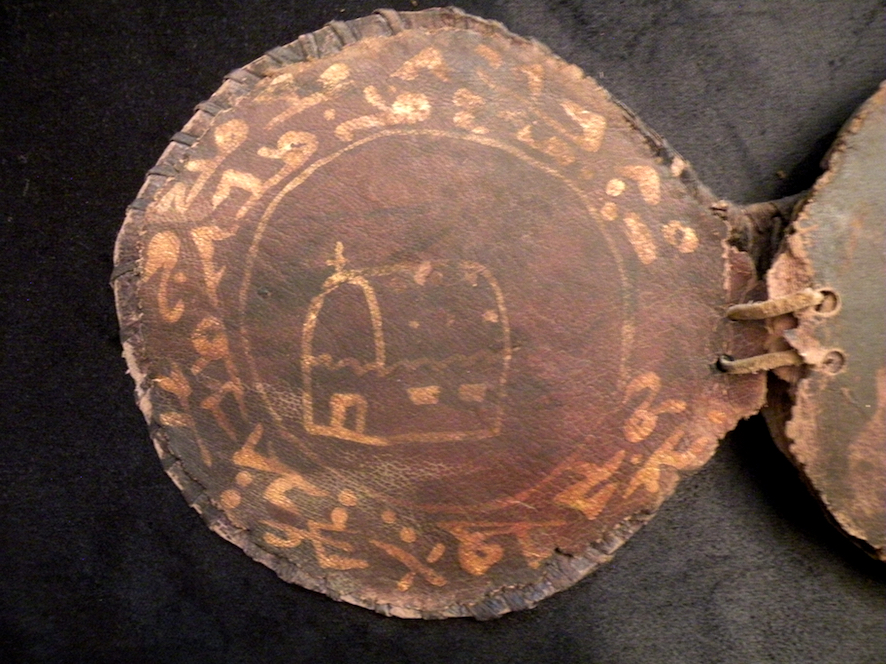
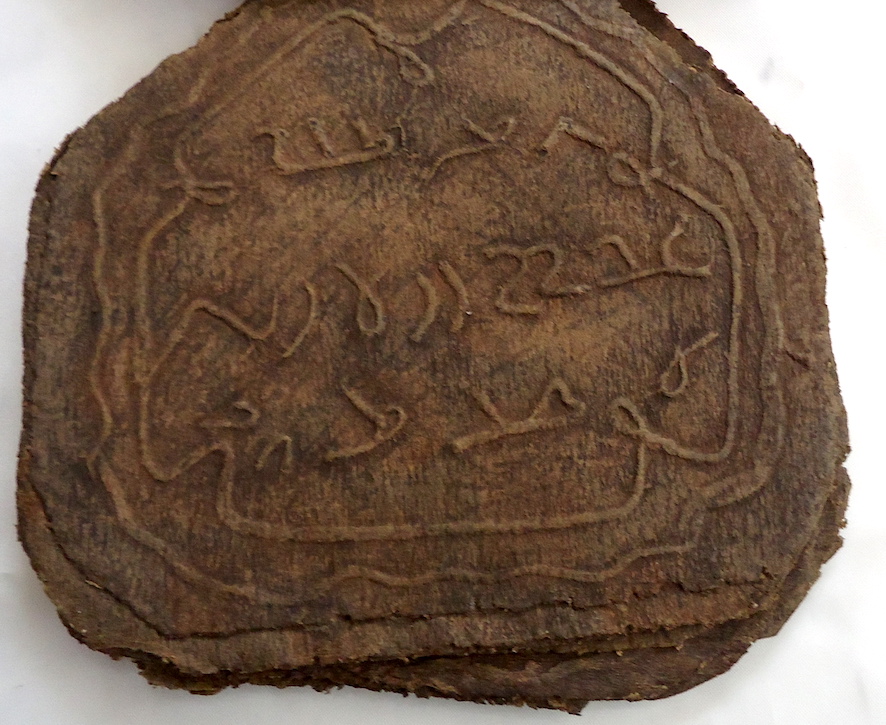
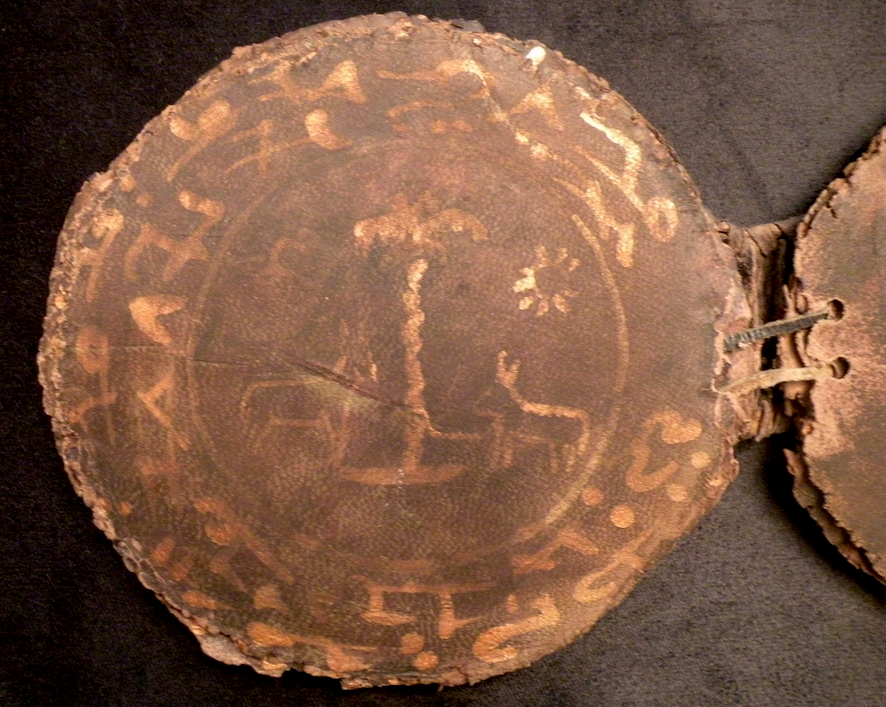
More plastic bags began to emerge from the neighboring room. The objects they brought in were like no books I had ever seen before. All were enclosed in leather covers, but of odd shapes: sewn together in triangles, or circles. The lettering on some glowed in a luminous gold; in others, the pages inside were thicker, possibly made of leather, with characters that had somehow been pressed into the surface.

“He has images of some of these other books, and you can take them as well,” Abdullah said. Out came the stick again, and the old man began dragging entire folders of photographs onto it.

* * * * *

We moved through customs without problems as we caught our flight the next morning to leave Elazığ. In the air the whole trip seemed like a bizarre dream. Markus and I had talked it up and down and were unable to make any sense of the old man’s curious behavior.

Two days later, on a bright Friday morning, I drove to Mannheim to deliver my two samples to the Center for Archeometry of the Curt Engelhorm Museum. Before the trip I had contacted them to find out whether they could handle the dating and how much material they’d need. Also to check prices; I was going to be out a few hundred more Euros. Normally the work would take two months – it could be done faster if I was willing to pay a lot more.

I’d found out they were receiving funding from the Klaus Tschira Foundation in Heidelberg, established by one of the billionaire founders of the software giant SAP. By chance I knew someone highly placed in the foundation who could give them a call – getting me the normal rate for a quicker analysis.

I filled out some forms and turned over the samples at a desk on the second floor. The fragment from the cover was certainly large enough to perform an accurate analysis, they said. The bit from the inner pages, the one I’d prefer to have analyzed, was questionable; they couldn’t guarantee that it had enough mass. I could only afford one test.

“What we’ll do is measure the smaller piece and use it if it’s sufficient,” they said. “If it is, we’ll use it. Otherwise we’ll go with the other one.”

They were curious about the source. “I’ll tell you more when I have the results,” I said.

With that I left the mystery in their hands, and drove home to pack for a three-week vacation with my family.

The conclusion of the story will appear in part 5, coming soon!

The Devil’s dictionary rolls on…

Today’s words: optometry, locus, teleology, microbiome, gravid, gill bars, micromolar, and derivatives of the word -scope, all explained with mathematical models and all sorts of other complicated stuff.

See the complete Devil’s Dictionary of Scientific Words and Phrases here.

3707_001

all entries in the Devil’s Dictionary copyright 2017 by Russ Hodge.

optometry  a science that applies quantitative methods to the characterization of a delusional mental state called optimism.

teleology  the scientific study of 1) television sets and 2) the content they broadcast; i.e., the powerful hallucinations that occur when viewers are exposed to a television’s electromagnetic field. To avoid fatal accidents, the first type of study should only be carried out after disconnecting a television set from its source of electricity. The second should only be attempted after disconnecting the rational parts of the brain.

locus  a site in the genome occupied by a pestilential insect that prefers a diet of corn but in a pinch will eat other things, such as old shoes, slow pets, and rusty cars sitting on cement blocks in the backyard. When satiated, it retires to a tree where it sheds its outer layer, leaving a perfect but hollow replica of itself that you can place on your grandmother’s pillow, if you’re in the mood for some excitement. The plural form is loci, a word which no one knows how to pronounce, but is required when referring to a congregation of at least two locuses, until you discover that one is merely a hollow shell. (In everyday speech the plural of locus is “plague”.) Loci make frequent appearances in the Bible, usually at the moment someone thinks, “It surely can’t get any worse than this.” In one famous scene, for example, the Israelis use trained locuses to carry out a drone strike on Egypt; finding no corn, they eat a pyramid.

The Bible reports that locuses have only four legs, although any fool can see that they have six, like every other insect. Seeing six legs may be the work of Satan, however, who takes pleasure in making people believe they are seeing more legs than loci actually have. The conundrum presented by this Biblical passage remains unsolved despite the best efforts of scientists using million-dollar technology platforms, people in bars, golfers, motorcycle gangs, shoppers in WalMart, NASA, the Locus Genome Project, and the Federal Reserve of the United States of America, which is responsible for determining how much a dollar is worth. (Their reasoning is that the confusion between four and six may also arise in other situations, so no one really knows how much money is actually out there.)

Quite predictably, the nastiest, foulest discussions about locipedia take place within the theological community. At least ten Popes have been assassinated because of their stance on the issue – in fact, the true number may be higher because it is unclear whether whoever counted them used a methodology that took into account the possibility of a four-six switcheroo. Thus the true number of Papal deaths that should be attributed to locimortis may be as low as six or as high as 64. This demonstrates the need to provide a full record of protocols and computational environments in any experiment which produces more than 3 or fewer than -3 pieces of data.

microbiome  one millionth of a biome. This might be somewhat helpful if someone ever bothered to define the size of a biome, but there’s no consensus in the scientific literature. Some use the term “biome” to encompass ecosystems as vast as Antarctica, while others claim you have a whole biome living in your belly button. These two scales are so different that it is hard to see how they can be classified under a single term, but scientists learn mental contortions during their studies that permit them to do this and even stranger things.

Biomes differ not only in size, but also in composition: one of them contains penguins, for example, while the other normally does not. This breaks biomes into the two classical categories of penguin-positive and penguin-negative. Another difference is that Antarctica has almost no plants, whereas flora sometimes sprout from a belly button, through a phenomenon whose underlying mechanisms have not yet been fully characterized but have been negatively correlated to the taking of showers. Despite the lack of a rational, personalized approach to treatment, two methods are usually effective: dabbing a little weed-killer on the thing, or attacking it with a very small pair of garden shears. While the latter is a relatively minor procedure, it should only be undertaken by specialists or trained professionals, due to a risk of perforating the intestines when performing any surgical procedure on the belly button with a pair of shears. (Note that the effects of the two therapies are additive, which suggests that applying both generally leads to shorter sprouts, except in the case of a perforation, which is usually fatal to the plant after killing its host.)

gravid  an adjective used to describe someone whose body is full of eggs, either in anticipation of a pregnancy or in the aftermath of an egg-eating competition, or both. In medical practice it is important to tell the difference, usually by inserting some type of invasive probe. Another method which has performed almost as well in double-blind studies is to squeeze the person really hard. If eggs emerge from the mouth, they most likely entered during a competition. If they emerge from somewhere else, they’re probably the other type of egg, now out on the town and looking to get hooked up.

gill bars  the only regions in an aquarium where a gar can get a real drink.

micromolar  a millionth of a molar, which is a type of tooth. A micromolar happens to be the average distance that a bacterium can bore through tooth enamel in one second, as derived from the following formula:

mm1 = 1/bx (he / f * (t?)[(C – mm2) + mm3]) – DG

where mm1 represents the distance (in micromolars); b is the bacterium; x is the number of bacterium involved in drilling the same hole; h represents the hardness of the enamel, which can only be determined by solving the equation and then inverting and converting and doing whatever else is necessary to it so that he jumps over to the left of the equal sign and everything else is piled up on the right, often upside down; f is the force the bacterium is capable of applying; t is the amount of time spent actually drilling, which has to be corrected by ?, the so-called mystery variable, if t is not being measured in seconds; C is Colgate toothpaste; mm2 stands for the number of M&Ms a person has eaten in the recent past, and mm3  refers to “mom’s madness”, a quantitative measurement of the degree of physical force your mother is prepared to inflict on the anyone who fails to apply C after mm2 (note that as C – mm2 approaches zero, mm3 approaches infinity); and DG stands either for the degree of grinding that a particular molar undergoes when a person has to share the mm2 with someone of the opposite political persuasion, or Director General – I can’t remember which. Replacing the variables with true values produces mm1, which may need to be adjusted to account for the degree of freedom (otherwise known as the “fudge factor”) which means the number of times you are permitted to lie when filling in the values to solve the formula. Note that by definition, mm1 must always end up being 1; if this doesn’t happen, just change the answers for the other variables until it does. There’s a way to do this with Excel tables, but I couldn’t tell you what it was if my life depended on it. I’m having a hard enough time explaining this as it is.

The formula yields the result mm1 in terms of bacterial boring distance per second, but the result can be easily converted to minutes by multiplying mm1 by 60, into years by multiplying mm1 by 1315440, and in relation to the age of the universe up to the present date by multiplying mm1 by 1817938080000000000000000 + sn (where sn is the number of seconds that elapse between the time you read this and the moment you get around to making the calculation).

-scope  an instrument used to “check something out,” usually to determine whether it could serve as an appropriate sexual partner. The first scopes, in fact, were developed to search for genitals before scientists discovered their locations on the body. Later the suffix was attached to other types of instruments, including:

telescope  an instrument developed to look at things so far away they lie in another dimension, called teleology.

colonoscope  an instrument first developed to probe the depths of a person’s ear. Prior to its invention, no one knew the true depth of the auditory canal, so colonoscopes were made very long. With enough force the instrument could be pushed in so far that it emerged from the other end of a person. At some point scientists discovered that more information could be collected about the auditory canal by examining it from the other side, so they began inserting the colonoscope at the former exit point.

endoscope  this term was originally derived from the expression, “end o’ th’ scope,” and referred to the end that was farthest from the person in charge of the instrument, and closest to the victim. If it changed hands in the middle of a procedure, for example when the patient snatched it to end the abuse, endoscope now referred to the end held by the former patient, and the person who initiated the incident was called the endoscopee. This caused confusion in cases where two people both got their hands on the thing. If each tried to tell the other in no uncertain terms what he could do with his end of the endoscope, this produced garbled communication and often fatal results. A national committee was formed to find a solution. Eventually a consensus was reached through the creation of the new terms proximal endoscope and distal endoscope, also sometimes seen in the forms myendoscope and urendoscope, as defined by the end that was cleanest at any given time.

microscope  a type of scope that moves the eye one million times closer to whatever it is you are trying to look at. At the time of invention another theory was proposed to account for the functions of the instrument: it actually made objects one million times larger for a very brief period of time. Fortunately this is not the case, because a lot of the things you see with a microscope are disgusting enough without being made a million times larger. This early “expansion theory” of microscopy was not fully discarded until Einstein published the theory of relativity. Einstein proved that if two people with microscopes were standing on trains that were pulling away from each other at the speed of light, they would never see each other because rays emanating from the microscope’s light source would never reach the slide, unless they turned around and faced the other direction. At that point each would either see what the other person had looked like a million years in the past, or be crushed as the two trains underwent a sudden, million-fold expansion. Since neither outcome was particularly desirable, scientists discarded the theory for the one they liked better.

The microscope revolutionized science because it was so powerful it could detect things so small that they didn’t actually exist, which explained why they had been invisible to the naked eye in the first place. It also played a key role in the deanthropomorphization of science by disproving the concept of the Big Picture. Through a microscope one realizes that the Big Picture is nothing more than a lot of Smaller Pictures containing things so small they defy human cognition, unless they somehow manage to reach it by entering through an ear. Thus the Big Picture can be discarded altogether.

Understanding why this is the case can be demonstrated through a metaphor: Imagine cutting any normal puzzle into a million pieces. Now try to assemble it again. You’ll discover that this is impossible because the maximum amount of information in 1/1,000,000th of an image is an R, G, or B dot, and not even a whole one, and good luck matching that to the picture on the box. But you’ll never get that far because you’ll never find the corners. Theoretically you could, but it would take an amount of time that can be represented by the formula UP * (n)1,000,000/4!, where n = the time it takes you to locate a single corner piece that it has become so small that you have to apply the Uncertainty Principle (UP), which means that whenever you go looking for it, it probably isn’t where you think it is, and even if it were, it would be gone before you could grab it.

A new model of the profound relationship between science and communication

One reason the term “science communication” has broadened to include so many activities is that research is leaping across the boundaries of disciplines and into our daily lives more quickly and profoundly than ever before. Without a basic understanding of scientific results and the methods by which they are obtained, people can’t be expected to digest complex information about their health or the global impact of their lifestyles and respond in reasonable ways. This has stimulated diverse efforts by many types of communicators to broaden and raise the level of scientific literacy in society as a whole. The pace of science has also created challenges for scientists as they confront massive amounts of data that can only be understood by teaching a computer how to cope with them, excruciatingly detailed models, and problems that can only be solved by transcending the boundaries of classical disciplines whose practitioners come from different backgrounds and speak different languages – both literally and figuratively.

Many well-meaning efforts aimed at explaining the significance of a piece of research – or the aims of science as a whole – somehow fail. That’s true at the interface of science and wider sectors of society, but forms of the general problem are also  common within research communities, where communication is fundamental to daily practice. Good communication skills boost careers and the progress of a field. Failing to help scientists develop them, I will argue, has effects not only on their careers but also on the quality of their research. This comes from working in the field a long time and witnessing countless examples demonstrating that excellent scientists are often superb at explaining their work to very diverse audiences. Is there a connection? You don’t truly understand something until you can explain it to someone else; does this old adage hold true for the highest levels of research and communication? If so, can you make people better scientists by making them better communicators? A few years ago I decided to try to find out.

A meaningful approach to answering these questions would have to encompass both theory and practice; it would require a thorough understanding and analysis of not only the strategies people were using to communicate, but the content they were trying to get across. I had access to plenty of examples through the scientists I encountered every day, the difficulties I encounter myself in writing about their work, and from hundreds of students over the years whom I had tried to help write and present their science to many types of audiences. As a general approach I stole a page from the handbook of the early fly geneticists, who uncovered the functions of hundreds of genes by studying how mutations disrupted biological systems. Maybe problems in communication could be used the same way: maybe they could show how things ought to work.

Over several years I followed this strategy in studying communication problems and funneling much of what I learned back into the courses I was teaching. The result was a steady but dramatic change in my understanding of the relationship between communication and science. I believe that these two fields of effort are connected at a profound level that is incompletely understood and rarely explicitly discussed or taught.

This project offers a new model of that relationship which attempts to connect how scientists communicate their work – effectively or not – to deeper underlying aspects of the way they think. It shows how many communication problems stem from chaos in the laboratory: not the physical benches where scientists spend their days, but the mental laboratory they are constantly constructing and rebuilding as they learn science.

It’s in this inner laboratory that real science happens, and understanding this gives communication a fundamental role: it is a means of exposing, exploring, and manipulating the cognitive models that give every scientific question and every piece of data its meaning. Disorder in the mental laboratory almost always leads to chaos in communication, and the act of communicating science offers ways not only to detect it, but also to straighten things out. In fact, it’s often the only way to even notice that the disorder is there. Our minds make assumptions and carry out logical jumps we aren’t aware of; until they are articulated aloud, our innermost beliefs and convictions are prey to influences that lie outside of science. A scientist’s examination of any system – even before a first encounter with it – is already styled by experiences of other systems, expectations, and models built using other systems long in the past; the recognition that this generates bias and can even reach into data in ways that reconfigure it is the reason why double-blind studies are so important. By putting something on paper, scientists can carry out a more careful, analytical scrutiny of their assumptions and models – to ask the questions, “Is this conclusion founded,” or “Are other interpretations possible?” one must first see the whole train of a thought. Then it can be broken down and mercilessly queried, step by step, and weak points can be discerned.

The process of communicating science thus externalises thought to permit a self-critical scrutiny that may otherwise be impossible or at least extremely difficult. Inevitably one becomes aware of gaps that have been invisible. It allows a person, at least to some extent, to look at his or her own ideas more the way another reader would. This skill can be trained, and it is the first step toward developing distance toward a set of ideas – and even to apply the perspective of a potential audience. That process not only improves the quality of a researcher’s communication – it can also affect the work. Sometimes the only thing necessary to discover fascinating new questions and develop better models is to notice the structure of a system in a text or diagram.

Most of the models in today’s science are so complex that they can’t even be thought about clearly without some form of representation – in language, images, or mathematical formulae. Papers and talks and other communicative acts open this complexity to inspection, analysis, discussion, criticism, and correction from the community. Trying to do science without communicating it is like trying to play chess – or teach someone else to play – without a board. For those who aren’t geniuses, a physical board offers a playing field to try things out, move the components around, and probe new strategies. To become a good scientist a person needs to look at many, many games, recorded in the literature, and extract the patterns and rules that lead to success.

Today’s students are constantly flooded with massive amounts of information which they are expected to arrange in their mental laboratories in a certain way. The hypotheses they frame, the experiments they design, and the way they interpret results are manifestations – symptoms – of the architecture they have built in their heads. But the only way to catch a real glimpse of this architecture, and measure their success at assembling it, is by watching how they put their work into the larger, logical framework of a text or talk. Explaining their science to non-specialists requires stepping farther back, seeing the more basic and generic patterns that underlie models, and trying to capture those patterns using tools such as metaphors.

That’s an important process because the inner mental laboratory of science is a metaphorical one as well. When a scientist frames a hypothesis regarding a specific problem – say, the behaviour or structure of a molecule – the form of the question is determined by the concept of a molecule, and what we think others think about it, rather than the molecule itself. The simplest things we think about are highly complex models and they are intermingled in a messy knot of other concepts, abstractions, and many types of knowledge that all come to bear on how clearly we are thinking.

So I am convinced that it is no accident at all that the best scientists I know have a very good understanding of their own thought processes, as applied to science. Often they have arrived at this point intuitively, devining rules and models through an intense study of the games going on around them. There are many parallels to learning a language: small children construct models that allow them to produce grammatical sentences by taking in and imitating the sounds around them, and attaching those sounds to things in contexts that have meaning for them, and testing them against the practices of others. What ultimately comes out is a compromise between the things they want to talk about, social contracts about the meaning of words and sentence structures, genre-like expectations about what is likely to be said when and where, and fundamental aspects of the biology of our brains – the extent of short-term memory determines, to a great extent, how many things we can think about and process at once. That influences how complex a grammar can be, and it also determines how much of a model can be processed without an external reference such as a text or diagram.

The rules for how an adult learns a new language are different than those for a child, and this means that teaching must do more than delivering single facts or pieces of evidence that we expect non-native speakers to assemble properly. People come to science after a long process of intellectual development in which so many concepts and expectations are already fixed, which means that moving into an artificial system of scientific models is more like the second type of language learning. Teachers usually take advantage of their students’ intelligence by presenting them with models of sentences and methods of producing new ones for the real communicative contexts that give them meaning. The same is true for research, and looking at it this way has profound implications for how we teach science and how we teach people to communicate it. I think that these efforts are most likely to succeed with a better understanding of the complex rules by which models give scientific ideas their meaning, and an understanding of the cognitive nature of the models themselves, and an search for methods aimed at resolving these parts of the “communication problem.”

* * * * *

Some of my colleagues and other professionals in the field of science communication might be surprised that this enterprise doesn’t start with a discussion of issues we usually confront and talk about the most, such as the fact that people who have something to say about science and their audiences often have very different agendas in coming together. Their knowledge and interests often diverge very widely. Dialogues that are started as a way of generating mutual understanding sometimes lead to even greater misunderstandings, and in the worst case achieve exactly the opposite response. Audiences sometimes leave “popular science talks” thinking, “Science is so hard I’ll never understand any of it,” “Why can’t scientists ever give me a straight answer to a question?” and even, “They’re trying to hide something from me.”

Miscommunication is often the result of getting off on the wrong foot from the very beginning: a failure to consider exactly what you hope to communicate, which has to be a function of a rational decision about what it’s possible and desirable to achieve with a specific audience, and what you expect them to do with the message. The usual result of this failure is a mis-match: a message doesn’t resonate because it hasn’t taken into account an audience’s interests, needs, or their motivation in entering into a dialogue in the first place.

These situations and less severe symptoms of poor communication are deeply connected to the cognitive models by which we navigate science and nearly everything else in our lives. They constantly arise in teaching because most of the students I deal with have never been introduced to very basic principles of functional communication, where success depends on a good understanding of the message one wishes to share, the expectations and knowledge of the target audience, and the modes and genres that are available to deliver it. The quickest path to a communicative breakdown is a mis-match between any of these things.

My experience is a meaning-based approach to teaching communication – which in science requires thinking about the connection between specific questions, results, and models – is extremely effective at solving these more fundamental problems. In following entries regarding this project I will use examples to explore the details of this model of science communication and how it can be translated into a didactic approach. In science, the first step toward solving a problem is usually to articulate a question very clearly. The same thing is true in teaching: to help a student acquire skills, we should first grasp what they need to learn. Communication begins with the construction of meaning, and the better we understand that process, the better we will be able to teach researchers to explain what they mean – no matter whom they need to address.

Russ Hodge, Sept. 2017

The Bible of Elaziğ (3)

Part three

(For the beginning of this story, see the earlier posts at part 1 and part 2.)
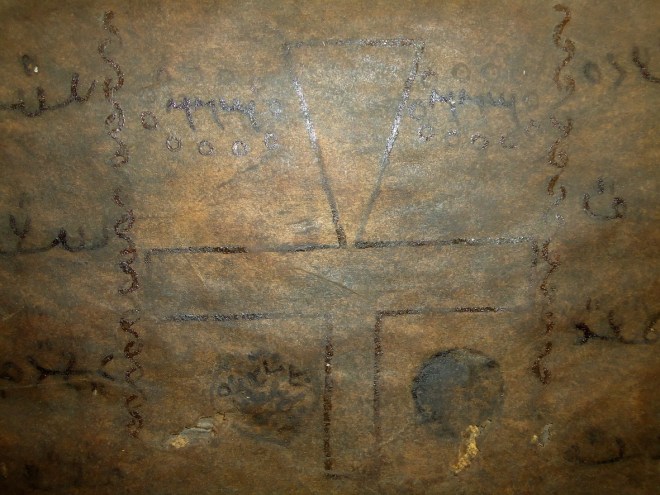
Five months after my reunion with Ali in the S-bahn in Berlin, I found myself on board a small passenger flight from Istanbul to the city of Elaziğ in Eastern Anatolia. My friend Markus and I were glued to the window, watching the drama of the panorama as it unrolled far below. On this late afternoon in March, the rugged landscape had the seemingly infinite detail of an etching traced into copper by the blazing sun.

We were nervous and high with the adventure of it all. At times we felt like characters in a spy novel – fully aware that in real life, they often end badly. Long ago at the university I’d seen the movie Midnight Express, which had left me with inescapable stereotypes of Turkish prisons, weeks of nightmares, and a lifetime phobia of passing through customs. A couple of years before I had been shaking like a leaf as I entered Turkey with Fred Luft’s group, even though – unlike the movie’s antihero – I wasn’t smuggling heroin across the border. (In fact, although my colleagues hadn’t told me this at the time, the cart I was pushing was loaded with drugs. Not heroin, but antihypertensives… When I learned this, later, I thought I’d have a heart attack on the spot.)

This time there was no reason to worry as we entered the country. Neither my name nor that of Markus would mean anything to anyone, and the only people who knew the purpose of our trip were members of a close-knit family who had the best possible reasons to keep it secret.

Coming out of the country might be a different matter.

This trip had been planned in so much haste that we’d arrived in Istanbul that morning with no idea of how we would manage the next leg of the voyage. A travel agent in Heidelberg had assured us that there was an airport in Elaziğ, but he couldn’t make reservations from Germany. “It will be easy from Istanbul,” he assured us.

Markus was cool with this laissez-arriver approach to travel, but it had been 15 or 20 years since I had done the backpacking thing. When you’re young, “Have sleeping bag: will travel” works fine. Now I found myself wondering, “Did I pack my toothbrush? Will I be able to buy one at the airport?”

In fact all we had to do was debark in Istanbul and change counters, at which point we found we could get an amazing rate to Elaziğ – the tickets for a round-trip transfer amounted to something like 100 Euros apiece. It was a relief because my wife and I were footing the bill for this whole adventure (with the help of a very generous sponsor who will remain anonymous until he decides to out himself).

The urgency of our preparations meant that I knew almost nothing about Elaziğ, except its location on the map and that it lay in a province of the same name. The river Euphrates begins in this region. If you follow its flow to the southeast, to the place where it encounters the river Tigris, you reach the purported site of the Garden of Eden. To the east, on the Armenian border, lies Mount Ararat. Mythical or not, this is incredibly exotic fare for anyone imprinted in the Judeo-Christian tradition.

I was traveling farther east than I’d ever been before. Once I had been to the island of Cyprus on another adventure that had taken me into the depths of a prehistoric copper mine, in the company of an archeologist, in pursuit of another story. But Elaziğ lay a few hundred kilometers nearer to the source of the rosy-fingered dawn.

* * * * *

Pursuing the script had reached a dead end. With the family’s consent, I’d finally uploaded a sample to an Internet site devoted to ancient alphabets, without saying anything about the purported content of the text. Maybe it would excite some fanatical devotee of this arcane subject. But aside from a single on-topic but ambivalent response, the posting drew no bites, and the discussion quickly meandered off into matters that were wholly irrelevant.

At the same time my Turkish associates were clearly under stress from their mysterious partners abroad. Word about the manuscript seemed to be leaking out – little wonder, with so much at stake. Yet given their intent to control the situation with the government getting involved, this was extremely dangerous.

Ali kept giving me reports of new events. A team from Switzerland had arrived in Turkey, he said, and was trying to get in touch with the holder the document. Another tale involved a group of Israelis. Both groups had been shown a picture or two, he said, but had never seen the object itself. The Israelis, supposedly, had offered to buy the book for 26 million Euros, sight unseen. In retrospect both stories should have seemed like the wildest exaggerations. But when you’re up to your elbows in something as fantastic as this, the demarcation between the real and the fantastic was easily blurred.

There was still the possibility of trying to decode the text using computational methods. But I was unwilling to start a process that might make a stranger aware of its contents without some sort of authentication. In the meantime another expert had raised a further objection: parchment would have been valuable material in ancient times, he said, so why fill the pages so sparsely? Counterargument: the beauty of the book suggested a treasured document, to be regarded almost as art, rather than a object of practical value to be passed from hand to hand.

Any further involvement on my part, I finally told them, would require a certainty that we were dealing with an ancient manuscript, rather than a modern forgery. That would be impossible without carbon dating the object, which meant obtaining a physical sample.

And I remained intensely concerned about the family’s efforts to preserve it. If they hadn’t done anything, every day that passed was damaging the book; it might become unreadable, or simply dissolve into dust. Since I had been unable to speak with anyone directly – the person they were talking to spoke only Turkish, and I’d only heard the Berlin half of their conversations – I wasn’t convinced they were taking adequate measures.

Regarding the contents, from an academic point of view, one could work with excellent photographic reproductions as well as the original. I had been told that infrared photos stood the best chance of detecting details that might reveal traces of forgery. A perfect record would also be of incredible value itself, in case the book was damaged, siezed, or destroyed.

A flurry of telephone calls passed between Berlin and Turkey. Finally it was agreed: I would be permitted to come see it in person with one friend, who would photograph the entire book. I could also obtain a sample for testing. The only catch: we’d have to travel to the far eastern part of Turkey, on our own dime.

* * * * *

Markus is a talented artist I met many years ago while working in Heidelberg. He worked downtown in a coffee shop where I’d sometimes hole up to write while nursing a monstrous caffeine habit. Markus’ vocation was photography, but the studio route wasn’t his gig. He preferred the unfettered life of a freelancer, paying his rent through occasional hours in the coffee shop. His real work was picking up: recently he’d been hired by the city theater to take images for their posters and brochures. He was also a master of pinhole photography, a method he had used to take beautiful images of Heidelberg for a calendar. He was allowed to hang them in the coffee shop and sell them over the counter to customers.

I’d noticed and asked about them once during a coffee run. “Markus took those pictures,” I was told. He wasn’t in at the moment, but he had regular hours. We met a day or two later and after that, whenever I came in, we’d talk about photography and art.

So he came to mind when I began looking for someone to capture a record of the Bible of Elaziğ. I’d already approached another photographer friend, who reluctantly turned me down. I could live with the legal murkiness of the situation given that the book might turn out to be a forgery. But if we found out it was real, the actions of its owners might well cause a dilemma with ethical and moral dimensions beyond the purely legal ones. I was willing to cross that bridge when I came to it, but I couldn’t expect anyone else to draw their line in the same place. Whoever got involved needed strong nerves.

Markus, on the other hand, was game after we’d talked the whole thing through. He’d do some checking on his own regarding the technical requirements of photographing an ancient manuscript, but in principle he had the necessary equipment. So I went to a travel agent – a Turkish immigrant with whom I had had many conversations and planned many trips – and began looking into flights.

* * * * *

The airport in Elaziğ was a scene of total melee. The moment we debarked, passengers flowed into a throng of relatives, other people pushing forward to board the plane we’d just exited, yet others huddled around simple stands selling soft drinks and chai. Right outside the main exit there was something going on involving crates of chickens that I never figured out.

Markus and I were so obviously strange that people stopped in their tracks and stared, the way they might have regarded a pair of extraterrestrials.

Originally my Berlin contacts had intended to accompany us, but things fell through at the last minute and we were on our own. I had a cell phone number for a person who was supposed to meet us. Each time I tried to call, a man aswered in Turkish; I tried to explain our situation but couldn’t make sense of his response against the din in the backgroud. I shrugged helplessly. We stood in front of the terminal and peered across the parking area, to the long line of cars creeping along the road on the far side.

We decided to walk across the parking lot; the moment we reached the road, a slender man wearing a dark blazer got out of a car, holding a cell phone. By some miracle, it was our contact. There was an advantage to looking like total aliens.

The Berlin contingent had assured me that he spoke German; it was, to put it kindly, another exaggeration. From broken sentences we pieced together that he had spent a couple of years in Hamburg, but it had been a very long time ago. We could barely communicate as he gestured us into his car and drove us to a hotel in the center of town. Markus and I dumped our bags in a double room, then returned to the lobby. Where were served chai.

There our communication with Abdullah, as I’ll call him, seemed to reach an almost total impasse. We understood that he’d pick us up the next morning – and he’d bring along a translator. Another “cousin”, named George, who’d been studying in England.

* * * * *

After a night of tossing and turning, I woke to a stunning view out the window of mountain crests hovering over the colorful chaos of the city. Markus and I made our way down to the hotel restaurant. For breakfast we found the usual fare of joghurt, strong cheeses, bread, and small boxes of cereal – no sliced salami in a country where pork was considered unclean.

Abdullah and George joined us as we ate. We were immediately relieved to find that George had been studying philosophy in Oxford, and his English was impeccable. Finally a way to communicate; we no longer had to untangle Abdullah’s limited German vocabulary distilled through Turkish grammar.

George was there simply to introduce himself. Abdullah would take us around in the morning, he said, and he promised to join us again for lunch. Until that point he had heard nothing of the Bible or the entire situation; as the story came together for him, in two languages, he simply gaped at the three of us. He peppered Abdullah with questions, then us, faster and faster, caught up in the excitement and the madness of the whole thing.

Finally he had his feet back on the ground and could translate. Some of my assumptions were quickly dashed – Abdullah was not really the relative of the Turks I had met in Berlin. Nor did he have the book directly in his possession. He was arranging a meeting with the owner.

We discussed our plan to photograph the entire thing with George. Capturing infrared images of 105 pages, plus the object itself, would require a darkened room and plenty of time. Markus and I had scheduled the work for that day and the next; our return flight was scheduled in two days. It was essential that we see it as soon as possible.

Abdullah peppered George with questions. What, precisely, were our intentions? What would happen to the book?

I tried to explain that our priority was to capture high-quality photographs of the document before it experienced damage through handling or exposure to the air. We would also need a small sample of the document that would be submitted to carbon 14 dating. If it turned out to be authentic, at some point it would pass into the hands of experts who would surely spend years studying it, in a way which would ensure its survival and dissemination to the world.

This was a sort of fencing – edging around the legal and ethical issues at hand. Whoever possessed the book was obviously interested in maintaining control of it, despite the fact that Turkish law dictated it would have to be turned over to the government, at least if it had been found within national borders. But high-quality photographs of the document would be immensely valuable in their own right. They would not only serve as a source of vital information, particularly if it began to disintegrate, but be the basis for a translation. And they could also be used to create facsimile copies that would be of interest to scholars everywhere. Not to mention that a collection of the earliest preserved examples of Christian art would be published on the front pages of newspapers everywhere throughout the globe. The rights to the images alone could be worth millions. It might be a way for the finders to profit from their discovery without committing a severe violation of governmental regulations.

For now, though, we were still acting on the assumption that it might be a forgery. If so, as long as they didn’t try to sell it, it was simply a sort of work of art whose legal status was questionable.

The way the discussion was going had made George nervous. “I don’t think it’s a good idea to talk about anything financial,” he said. I agreed – the main thing at the moment was simply to get access to the book.

George had an appointment and promised to meet us later, for lunch. Until then, Abdullah would “show us around,” he said.

* * * * *
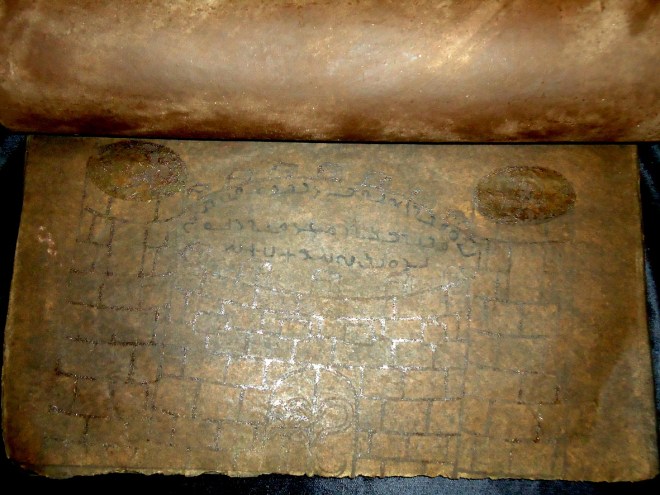
The morning dissolved into a strange sequence of scenes: climbing into Abdullah’s car, driving around, parking and walking by storefronts. He exchanged greetings with nearly everyone he met. At one point we entered a sort of alley between two tall buildings with shops lining either side. The windows along the whole row seemed to be filled with gold, shaped into watches, rings, jewelry, platters… We entered one that was barely large enough to hold the three of us and the shop owner, an aged man with a beard. He produced three stools from somewhere, then disappeared behind a door in the back. When he returned he was bearing a large pot (silver, not gold), from which he poured us – what a surprise – black tea.

A store filled with gold had to have excellent security… I wondered if we were about to get our first look at the Bible. Was it here, locked away in a safe, somewhere in the back?

It turned out this was just a social call. Or something. His eyes moved from Markus, to me, to Abdullah. He’d ask a question and Abdullah would answer. We had no idea what they were talking about. This went on through two cups of tea and lasted about half an hour. At that point Abdullah stood up abruptly and indicated the door.

It was one of three or four such stops, meeting various characters – all men – who offered us a constant stream of chai and cookies. I looked at Markus, who shrugged. I shrugged back. George told us later he never quite learned how Abdullah made his living. Perhaps, he said, going from shop to shop, making obscure deals. If so, it was a type of business that subsisted entirely on conversations carried out between men, and it was impossible to imagine a woman breaking into such a system.

Thinking back, I suppose everything that happened to day belonged to another series of tests, like those I’d apparently passed in Berlin. The paranoia was understandable, given the magnitude of what was going on. But it would have been nice to know a bit about the nature of the game and the criteria for success.

George rejoined us at lunchtime at a fast-food place with long tables and benches that reminded me of picnic tables pilfered from a campground. The food was good, but it was noisy inside – no place to talk about shady undertakings. Then it was back into Abdullah’s car for a ride somewhere else; I don’t remember where. Along the way I kept stressing the time factor to George. Both Markus and I had obligations in Germany that would make it impossible to postpone our flight back. We had less than 48 hours and an immense amount to do in that time.

Later in the afternoon we learned that it wouldn’t be possible to see the book until the next day. But we’d be picked up in the morning – the very first thing. Or so Abdullah promised, speaking through George, who was obviously just as frustrated as we were. He, too, had been infected by the possibility that we’d soon be looking at the earliest known version of a document pertaining to the New Testament.

* * * * *

George joined us for breakfast in the hotel, and Abdullah finally pulled up to the entrance of the hotel in the late morning. He found us waiting in the glaring sun at the curb, nervous and overly aware of the countdown to our departure from the country. Markus loaded his camera and equipment into the car and we headed off on a strange tour of the city, along a zigzagging route through narrow streets. We weren’t fitted with blindfolds! – I thought, ironically – but they weren’t necessary. We never could have retraced the maze of turns through an unfamiliar city.

Eventually we ended up in a suburb of low houses and a couple of apartment buildings set at the very edge of the city; beyond was a field with matted brown grass that stretched into a barren plain, then began a steady rise directly into snow-covered mountains. Abdullah gestured us out of the car, approached one of the houses, and rang the bell. We were greeted by a young man in a dark suit who gestured us inside.

We came into a living room complete with television set and recliner lounge, a long sofa, with a table in the middle and some chairs; the scene might have come straight out of American suburbia except for the bright floral patterns of the sofa cover. During my trips to the North I’d noticed such loud patterning everywhere – on the drapes, the furniture, tiling on the walls, women’s scarves. Minimalist aesthetics hadn’t reached the interior of the country. This room was relatively subdued, with a pale brown carpet and nothing hanging on the walls.

There we were greeted by a short, elderly gentleman wearing a headcap and a loose white robe. He gestured at two younger women and three or four children, who instantly vanished into the kitchen. Later George told us he was a Kurd, the population that made up most of the population of Elaziğ and the southeastern regions of the country. I never learned his name.

We submitted to many more questions. What were our intentions, our interest? I answered carefully and respectfully. I went through the whole story again, starting again, pausing for George to translate. I told him I had seen images and pursued the script through the libraries.

Did we want to buy the book?

No, no, I quickly replied. We wanted to help them determine whether it was truly as old as it appeared. We might be able to put them into contact with scholars who would study it for many years.

The old man nodded from time to time. He spoke for a while and George said: “This man has spent his whole life looking and has found many, many valuable things. He has seen this script and others before, and he says he can even read a part of it. He says that when the contents of the book become known, this will change the world.”

“What has he learned?”

The answer was lengthy. George paused to think and said, “It will change the relations between Christians and Islam.” The old man spoke again. “You are the first people he has ever shown it to, outside the family. There are others who are interested, but they have only seen two photographs.”

“We must photograph the book, to ensure that there is the best possible record,” I said. “We’ve brought special equipment.”

If we were willing to help the family bring the book to the world, the old man said, we could take photographs. And he said we would be free to do with them whatever we wished – as long as we made sure that the world learned about it.

What he meant was completely unclear, but Markus gave me a wide-eyed look. We had discussed the potential value of even just the photographs of the document. None of this meant anything, of course – we didn’t have them yet, and if the book was authentic, there was no guarantee that the law would permit their use.

“Where exactly was the book found?” I asked.

He replied that it had been discovered in a stone box, part of a sepulchre, perhaps, somewhere on the border of Turkey, Syria and Iran. With a war raging in the area, it might be argued that such a find was a desparate means of rescuing an artifact that otherwise might very well have been destroyed. But these were matters of law, about which we could say nothing.

It was finally time to see the Bible. The old man gestured to his young relative, who disappeared into the next room.

part 4 coming soon

More technology transfer cartoons…

More from the OTTers (officers of technology transfer) today… This series is dedicated to my friends in the field, in honor of their patience as they encounter pitches that are… well, a generous way to put it would be “creative”. Often the first step in a project is to reach up and snag a basic researcher and tie him or her firmly to the ground, so they don’t end up sailing toward the stratosphere like a helium balloon. Because we know what happens to those.

For more cartoons, scroll down or select the category “Molecular biology cartoons” from the menu in the banner above. Enjoy! Pass along to your friends!